Fuel’s gone as feral as a goat in the Outback.
You don’t need a finance degree to notice it either. Pull into a servo anywhere right now and you’re staring down numbers that make you briefly consider walking. And with everything going on globally, it’s not settling down anytime soon.
So naturally, the question pops up again around campfires, comment sections, and blokes leaning on bullbars:
Should I be in a petrol or a diesel for touring Australia?
I’ve spent a fair chunk of my life dragging vehicles across this country, towing all manner of vans, running remote tracks, and filling up where the price board feels more like a warning than anything else. And here’s the truth:
There is no perfect answer. But there is a right answer for how you actually travel.
Ready for the rough stuff?
get a quote for insurance that covers you anywhere you can legally go in Australia
Let's Torque Power
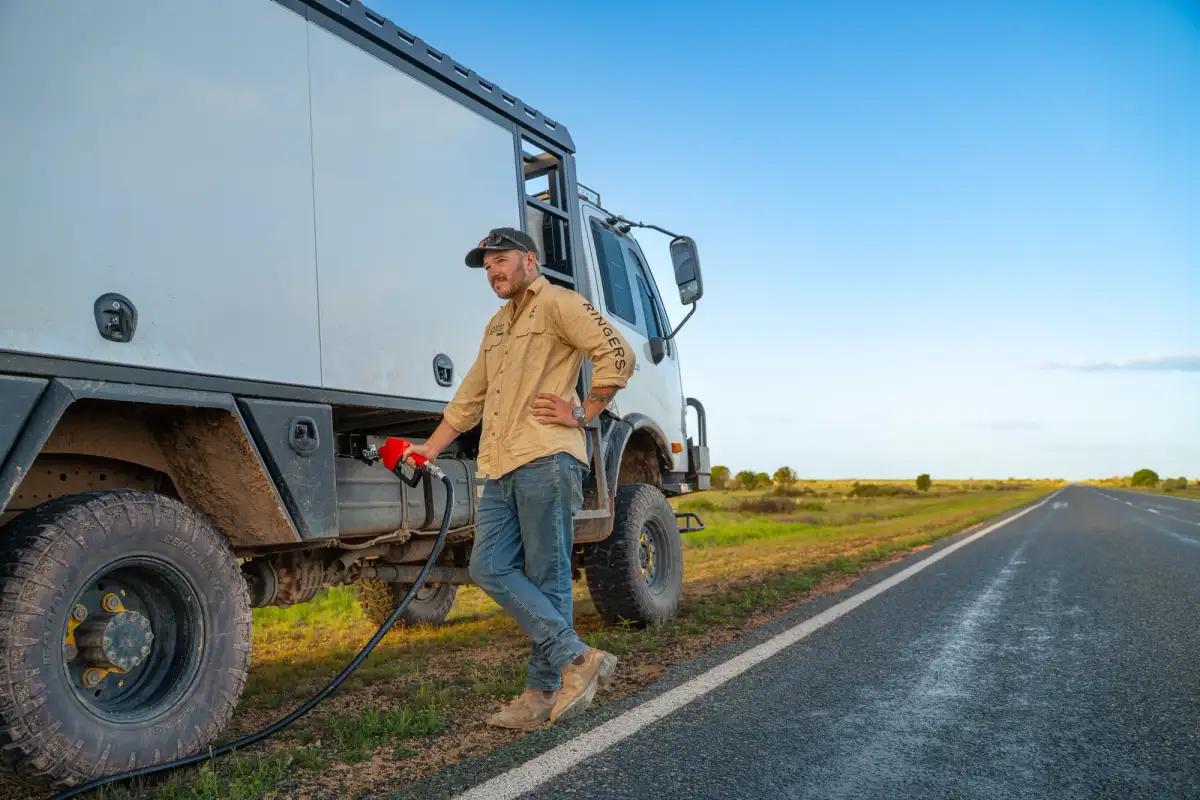
Josh Leonard refueling his Hino 4WD truck
Diesel makes torque. Petrol makes power.
That’s the simple version, but it matters a heck of a lot when you’re touring. Torque is what gets you going. It’s what keeps you moving when you’re hauling three tonnes of caravan up a long, ugly incline.
Most modern diesels deliver peak torque low in the rev range. That means less gear hunting, less noise, and less effort when towing or crawling through technical terrain.
Petrols, on the other hand, like to rev. They’ll happily get the job done, but they tend to feel like they’re working harder doing it. More revs, more fuel, more noise.
That alone isn’t a deal breaker, but over thousands of kilometres, it adds up.
Fuel Consumption and Range
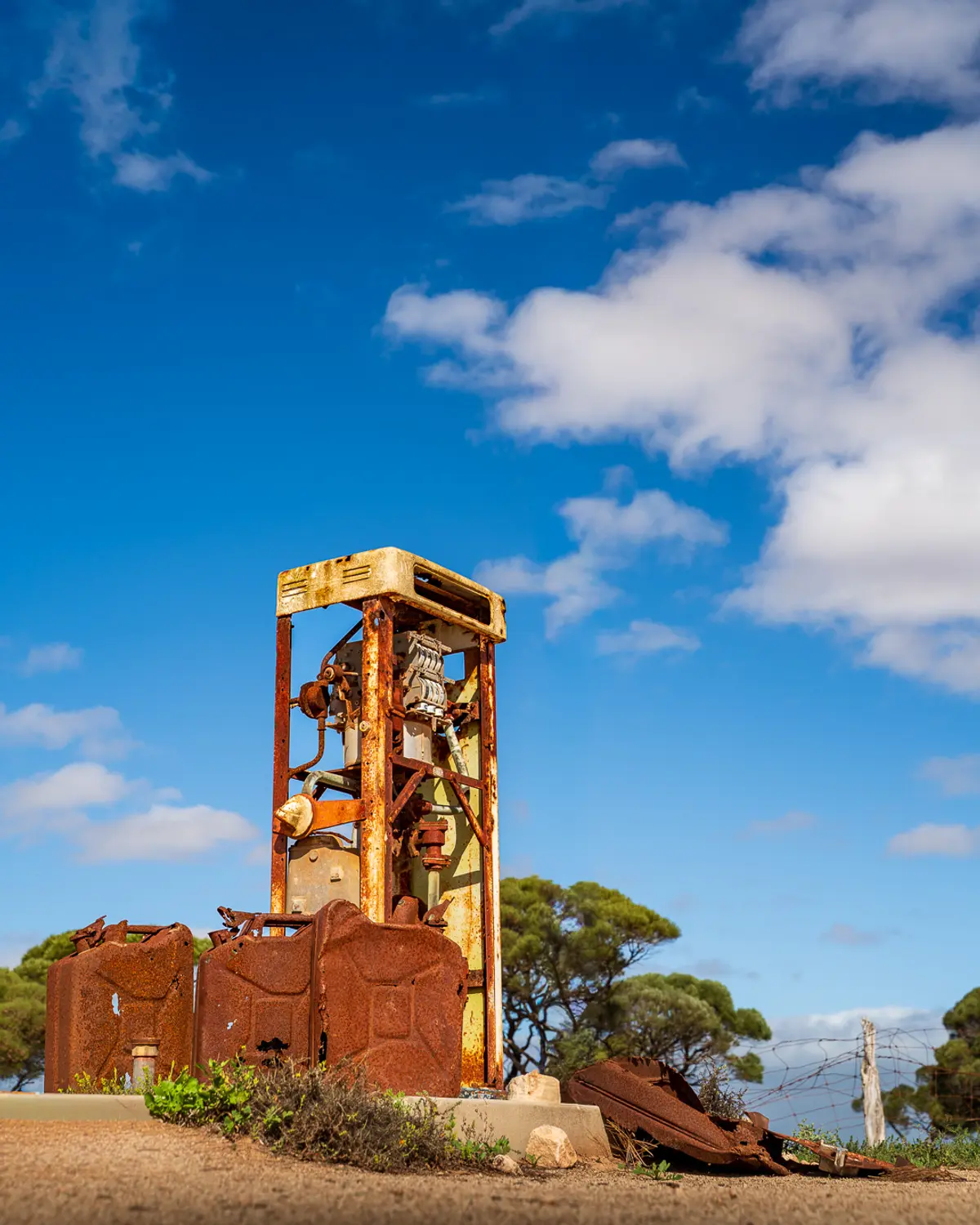
Jerry cans
When you’re touring, fuel range is king.
And this is where diesel has traditionally wiped the floor with petrol.
Diesels are more efficient. That’s just physics. Higher energy density in the fuel and the way the engines operate means you’ll generally use less of it to do the same job.
When I’m towing something heavy, the difference isn’t small. A diesel will generally sit comfortably in a range that still allows decent legs between fills. A petrol doing the same job can feel like it’s got a drinking problem.
Global conflicts aside, out bush availability matters just as much as consumption. You’ll almost always find diesel. Petrol? Usually. But not always in the grade you want, and not always consistent. If your touring involves serious distance between servos, diesel starts making a very strong case for itself.
The Price Problem
Right now, fuel prices are eye-watering. In metro areas diesel prices are approaching close to what I have paid in some of Australia's most remote locations.
There’s wars, shipping dramas, refinery shutdowns and a bunch of very serious people arguing over very important things, which all ends up coming out of your pocket at the bowser.
Petrol is often cheaper when you’re standing there staring at the numbers, while diesel can spike harder, especially once you get regional, because it’s in constant demand from transport and industry, and it’s more expensive to refine.
So people look at that and go, “Well, petrol’s cheaper. Done.”
I’d say not so fast.
If your petrol rig is drinking more, which it likely would be under load, that price gap disappears quicker than a cold beer on the Canning. You might be saving a few cents per litre, but using a lot more of it.
And that’s where people can get caught out. The real comparison isn’t price per litre. It’s cost per kilometre.
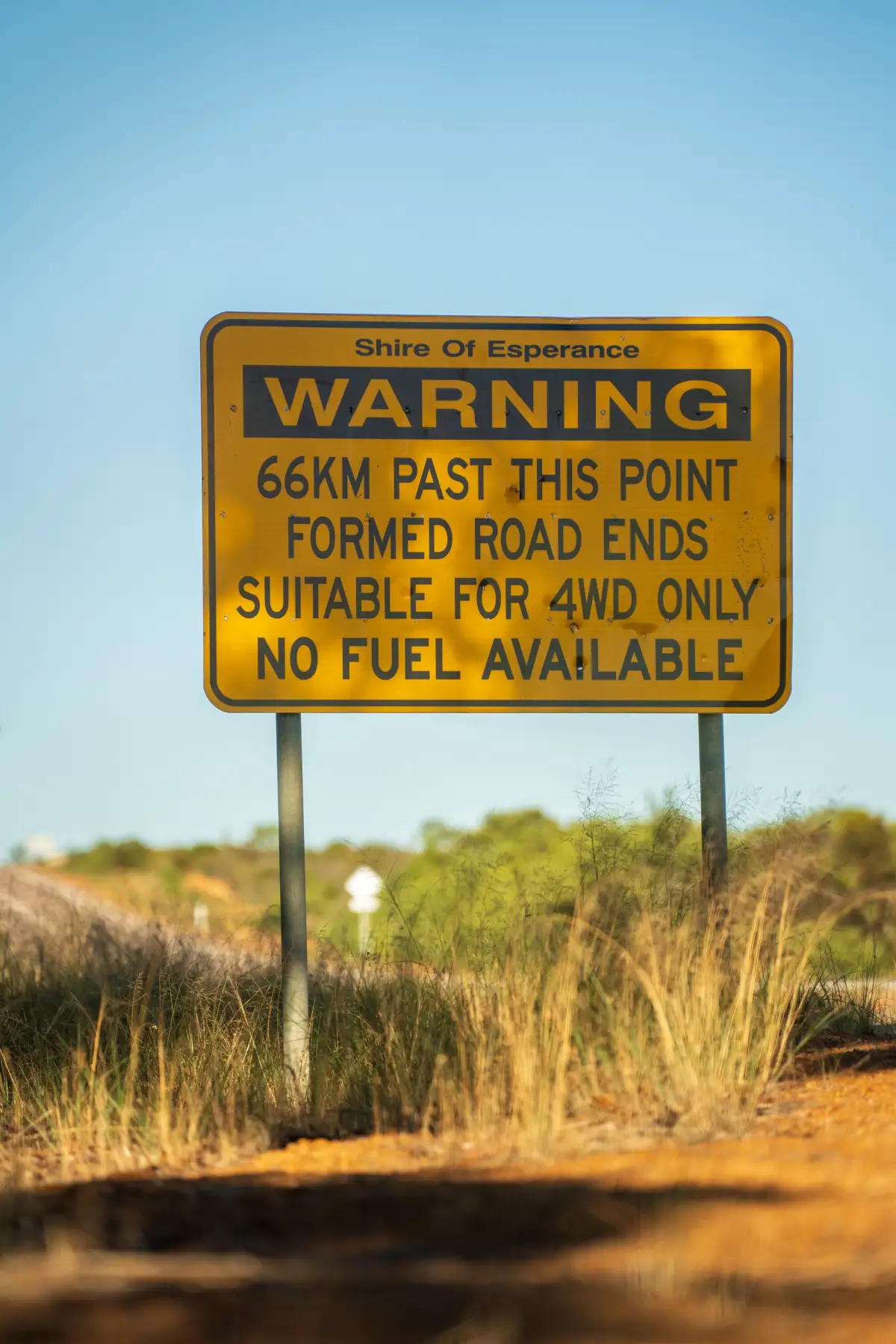
road sign warning of no fuel and 4WD only
Because if one vehicle is using 17L/100km and the other’s chewing through 25L/100km, the maths doesn’t care which one looked cheaper on the sign.
Over a full trip, especially towing or 4X4’ing, you’ll often end up spending much less with diesel, even if it costs more per litre.
And that’s why, more often than not, diesel comes out in front for long-distance touring and wheeling.
Reliability and Complexity

Close up of 4WD badge
This is where things have changed.
Old diesels were simple, mechanical, and about as subtle as a sledgehammer. They’d run on questionable fuel and keep going long after you’d given up on them.
Modern diesels are a different beast.
Common rail injection, emissions systems, sensors everywhere. They’re more efficient and more powerful, but also more complex.
Petrol engines, particularly naturally aspirated ones, can be simpler and cheaper to repair. They can also be more forgiving in certain scenarios and don’t rely on the same emissions gear.
So if your touring style leans towards absolute simplicity and ease of repair, petrol starts to claw some ground back, but only marginally. The days of truly simple engines for either fuel type are gone. You’re just choosing your flavour of complexity.
So Which One Should You Choose?
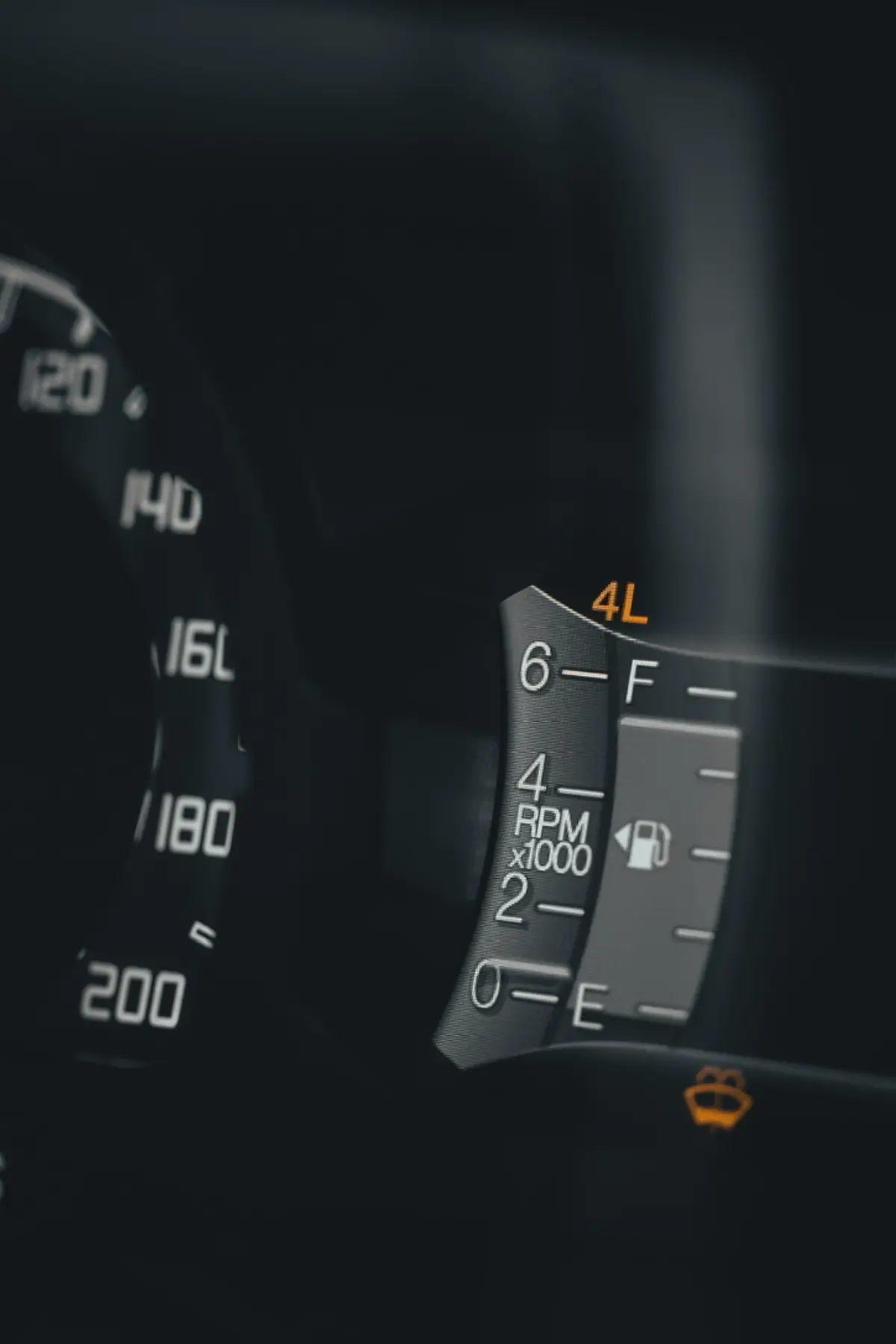
4WD fuel range
Fuel prices will keep moving. Politics will keep doing what politics does. None of that changes the fundamentals.
If your life revolves around towing, remote touring, long distances, and carrying weight… diesel still absolutely makes the most sense. It’s more efficient, better for range, and built for that kind of work. It’s definitely my pick of the two.
If your touring is lighter, less remote, or mixed with a lot of day-to-day driving… petrol becomes a viable option and a bit more quiet and comfortable when you’re not dragging half your house behind you.
Heading remote?
Get comprehensive insurance that can go there too.