Why the Land Rover Defender Still Turns Heads in Australia
From outback stations to modern touring rigs, the Land Rover Defender has carved out a unique place in Australia's 4WD scene. While this Land Rover Defender review focuses on the latest generation, the story starts in Britain in 1948 before extending to Australia, where Land Rovers were assembled locally and earned a reputation for tackling some of the country's toughest conditions. Today, the Defender blends that heritage with modern technology, comfort and capability, but how well does it suit Australian drivers and adventurers?
The adventure starts where the bitumen ends
See how Club 4X4 can help
From Workhorse to All-Rounder: The Defender's Evolution
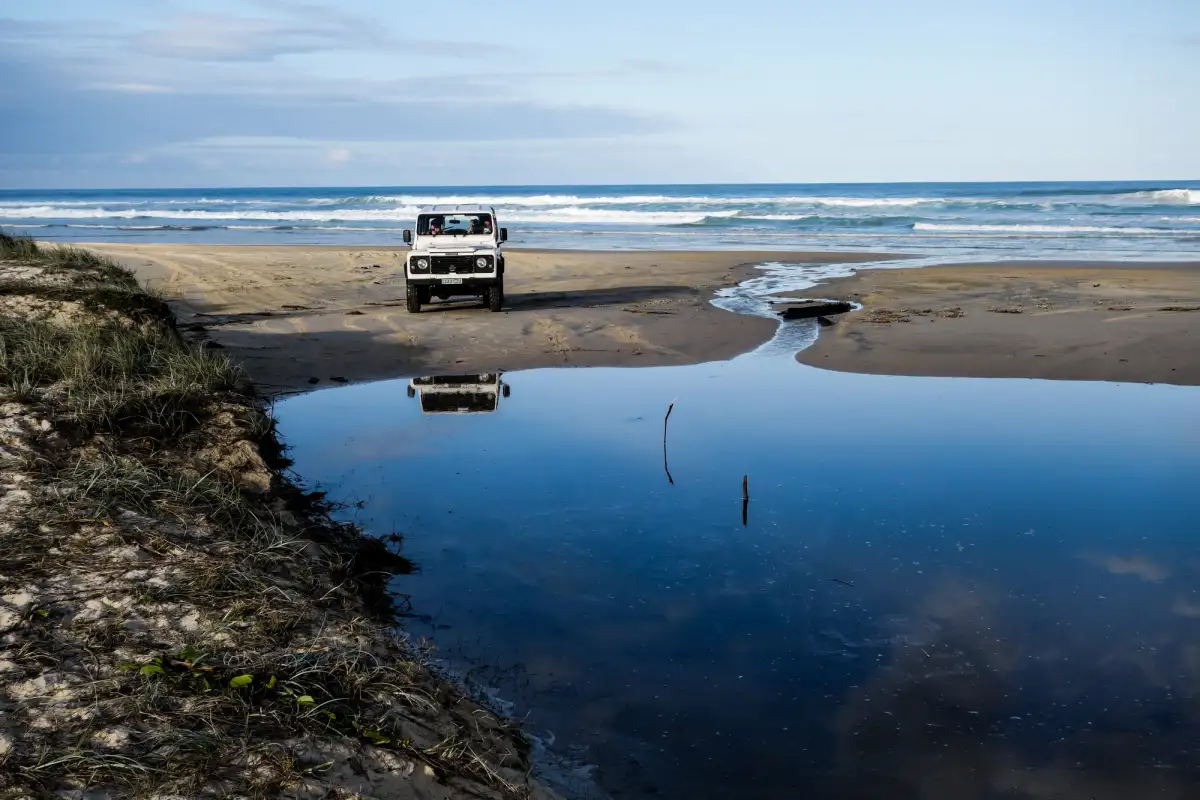
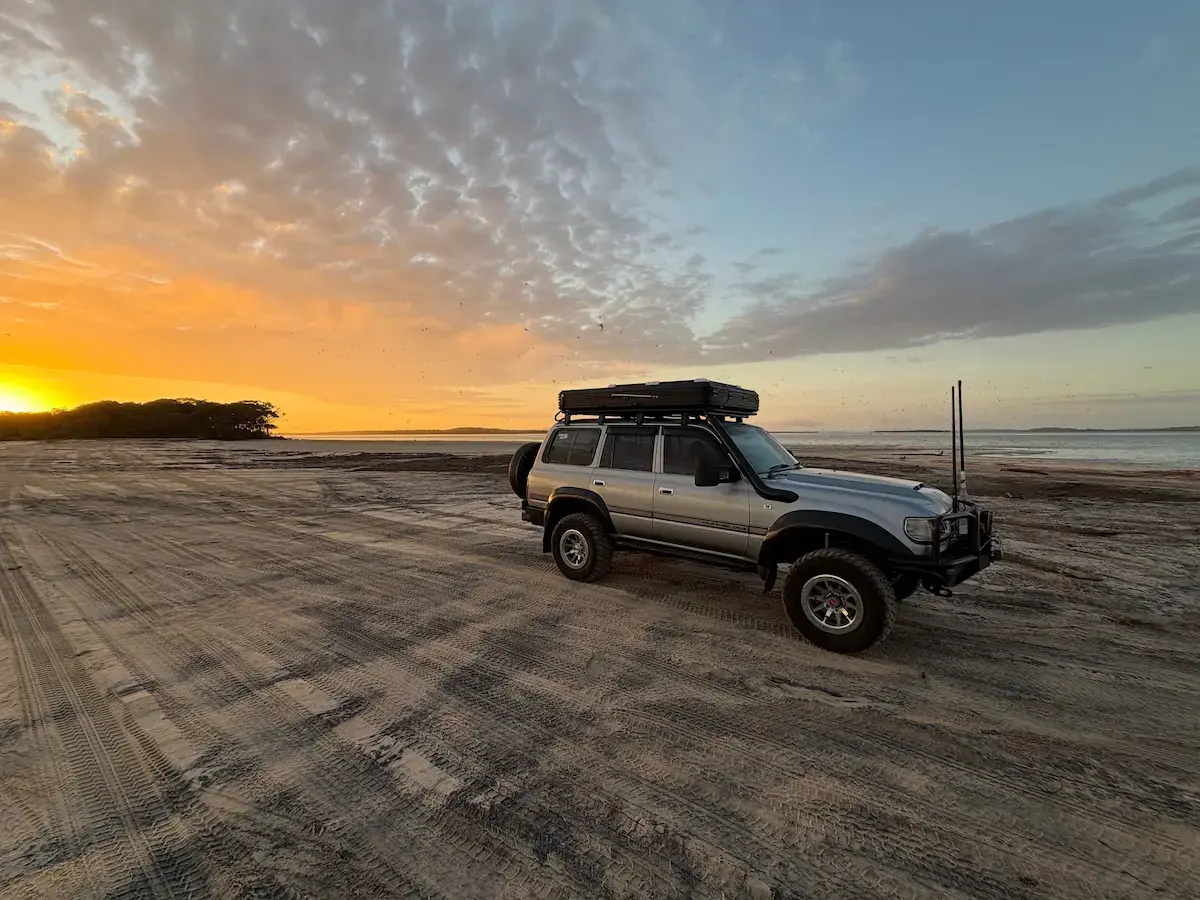
A Land Rover Defender on K'Gari
The 2019 Land Rover Defender represented far more than a model update. It marked the end of an era for one of the automotive world's most recognisable nameplates and signalled a new direction for Land Rover itself. Since the original Land Rover first rolled out of Solihull in 1948, the company had built its reputation on simple, capable vehicles designed to work hard in some of the harshest environments on earth. Australia quickly became part of that story, with locally assembled Land Rovers finding homes on farms, stations, mining sites and remote tracks across the country.
Over the following decades, the Defender became an icon precisely because it changed so little. More than a million units were produced across multiple generations, but development was often evolutionary rather than revolutionary. Turbo-diesel engines arrived, wheelbases extended and coil springs eventually replaced leaf springs, yet the formula remained largely intact. The Defender was still recognisable at a glance, with its upright stance, aluminium bodywork and uncompromising focus on capability over comfort.
The Land Rover Defender combines genuine off-road capability with everyday comfort, making it well suited to Australian touring. Features like Terrain Response, low-range gearing and strong wading ability help it tackle challenging terrain, while its refined cabin and on-road manners make it easy to live with day to day.
By the 2010s, however, the automotive world had changed. Buyers expected improved safety, modern technology, everyday comfort and long-distance touring capability alongside genuine off-road performance. When Land Rover unveiled the new Defender in 2019, many enthusiasts feared the company had abandoned the rugged simplicity that had made the original such a legend. Gone was the agricultural interior and utilitarian approach. In its place sat a highly connected, technologically advanced 4WD designed as much for daily driving as it was for tackling challenging terrain.
Yet viewing the modern Defender as a departure from its roots misses the bigger picture. Rather than replacing capability with comfort, Land Rover set out to make the Defender do it all. Advanced terrain management systems, impressive wading depth and serious off-road credentials sit alongside a refined interior, modern safety features and the kind of on-road manners expected from a contemporary SUV.
How It Drives: On the Road and Off It
Like we've said, the new-generation Defender was designed with versatility in mind. Once a machine built almost exclusively for rough tracks and hard work, it's evolved into a far more refined vehicle without forgetting the job it was originally created to do.
This Land Rover Defender review looks at how that evolution translates to Australian conditions. Can the modern Defender still tackle the corrugations of the Gibb River Road and comfortably make the journey home on sealed roads? Can it cross the Simpson Desert and wear every layer of red dust with pride? These are the questions that matter to Australian buyers, and they're the ones we'll be answering.
On-Road Comfort and Daily Drivability
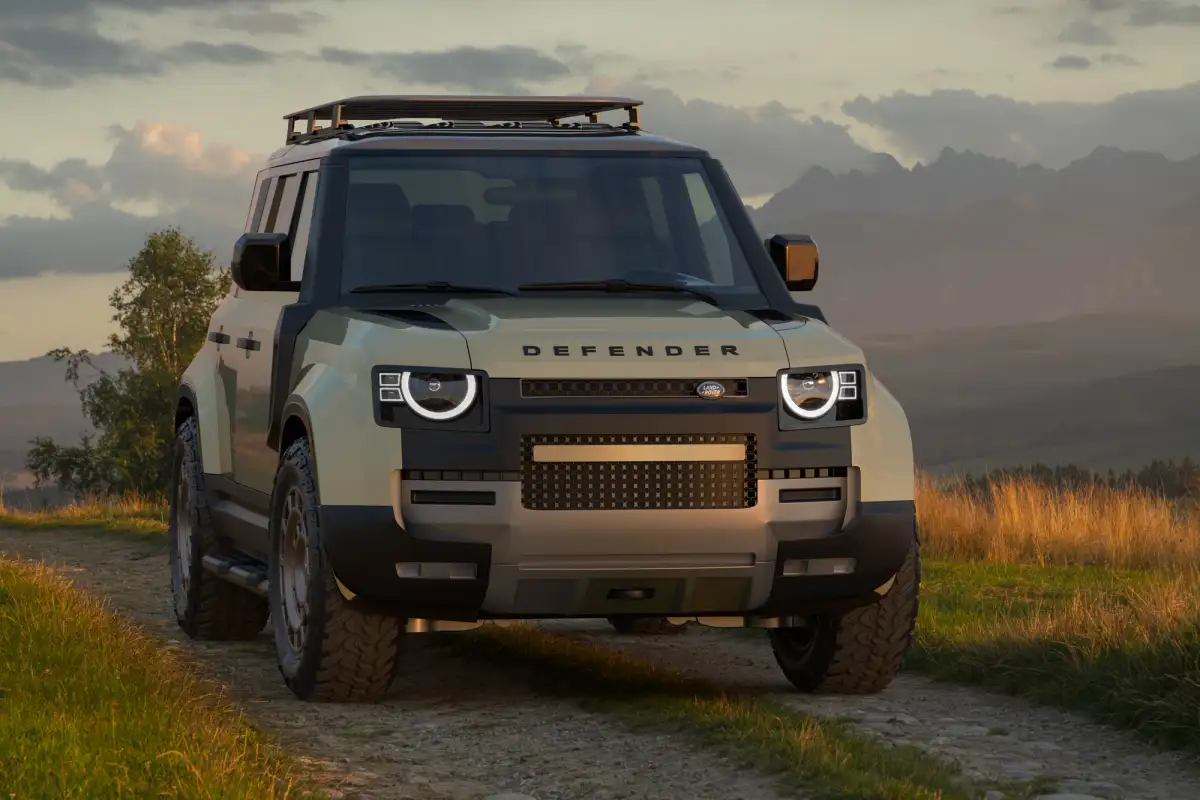
Land Rover Defender
While it's not where we'd ideally be driving a 4WD, it's often where it ends up, and almost certainly where you'll spend your time getting to the rough stuff: the bitumen. The Defender's modern D7x platform lends a good portion of its DNA to life on sealed roads, allowing it to be a comfortable and capable daily driver without losing sight of its off-road roots.
Whether you're commuting to work, towing a camper across the state or simply clocking up highway kilometres between adventures, the Defender feels refined and composed behind the wheel. Ride quality is excellent for a vehicle of its size and capability, soaking up imperfections without feeling disconnected from the road. Cabin noise is also well controlled, making long-distance touring feel effortless rather than tiring.
Late in 2024, Land Rover replaced the D300 Ingenium diesel with the D350, increasing torque from 650Nm to 700Nm, a claim worth verifying against current Land Rover specs. The result is a noticeable boost in pulling power, particularly when overtaking or towing, while maintaining the smooth and refined driving experience the Defender has become known for. Engine options span turbo-diesel, petrol, plug-in hybrid and V8 across the range, but regardless of specification, the Defender's on-road manners remain one of its strongest attributes.
For drivers who use their Defender as both a daily vehicle and a weekend adventure machine, that's perhaps the biggest compliment of all. It feels just as comfortable cruising along the highway as it does pointing its nose towards the next dirt road.
Off-Road Performance on Australian Terrain

Land Rover defender on beach, NSW
We've mentioned the grunt this thing can deliver, and it's certainly enough to tackle the vast majority of Australian terrain. Whether it's picking its way through the rocky climbs of the Victorian High Country or navigating the washouts and creek crossings of Cape York, the Land Rover Defender has the torque and technology to make light work of challenging conditions. With plenty of pulling power available low in the rev range, it won't pin you to your seat, but unless you're planning to settle Mars, that's probably not what you're looking for in a touring-focused 4WD.
From the factory, the Defender is somewhat limited by its highway-terrain tyres, which are better suited to sealed roads than serious off-road work. Fortunately, its height-adjustable air suspension helps bridge the gap, providing additional ground clearance when the terrain demands it. Depending on the model, ground clearance can increase to around 291mm in off-road mode, while approach, departure and breakover angles of up to 38, 40 and 28 degrees respectively give it the geometry needed to tackle steep obstacles. The trade-off is a slightly firmer ride when raised, so whenever conditions allow, the standard ride height remains the most comfortable option.
Traction control is excellent, which should come as no surprise given Land Rover's long history in the space. Terrain Response, first introduced on the Discovery 3 in 2004, remains one of the most intuitive off-road management systems available, automatically adjusting the vehicle's settings to suit different conditions. Combined with low-range gearing and a capable transfer case that engages quickly and easily, the Defender inspires confidence off the beaten track.
Fit a set of quality all-terrain tyres and smaller-diameter wheels, and the Defender becomes an extremely capable off-road vehicle. At that point, its limits are less about the vehicle itself and more about your driving ability.
Defender 90 vs 110: Which Body Style Suits Your Adventure
Choosing between the Land Rover Defender 90 vs 110 is less about size and more about how you plan to use it. The 90 is a two-door short-wheelbase; the 110 is the five-door, longer-wheelbase model that also underpins the seven-seat layout. While both share the same DNA and capability, they cater to different adventure styles, from solo escapes and weekend getaways to long-distance family touring.
Some travellers will appreciate the extra space and practicality of the 110, particularly those packing for extended trips or travelling with family. Others will favour the Defender 90's more compact footprint, making it easier to manoeuvre through tight bush tracks, crowded car parks and narrow city streets. Neither is the wrong choice. It simply comes down to where your adventures take you and who you're bringing along for the ride.
Defender 90: Compact, Nimble, and Built for Tighter Tracks
This is the smaller of the two, but as we know, size isn't everything. The Defender 90 is incredibly capable off-road, with its shorter wheelbase allowing for a tighter turning circle, more agile handling and improved manoeuvrability on technical terrain. Whether it's weaving through dense bushland, negotiating narrow High Country tracks or squeezing into a busy shopping centre car park, the 90 feels right at home.
Its smaller dimensions also contribute to a lighter overall weight, helping improve responsiveness and fuel efficiency compared to its larger sibling. While you lose some cargo space and rear-seat practicality, it's a trade-off many buyers will happily make for the added agility.
Pricing is another point of difference. With the Defender 90 typically starting at a lower price point than an equivalent 110, it can be a more accessible entry into Defender ownership while delivering the same premium feel and off-road pedigree.
For solo adventurers, couples and drivers wanting a nimble daily driver that can double as a weekend warrior's chariot, the Defender 90 makes a compelling case. It might be the smaller Defender, but it's certainly not short on capability.
Defender 110: Space, Comfort, and Long-Haul Capability
The Defender 110 is where Land Rover can really compete with the big boys. Its longer wheelbase brings seating for up to seven people, greater cargo capacity and a smoother ride on the road, making it a natural fit for families and long-distance tourers alike. For many owners, the cargo isn't just camping gear in the boot, but bums in seats as well.
That extra space also makes the 110 a more practical choice for extended adventures. Whether you're loading up recovery gear, swags, fridges or weeks' worth of supplies, the added storage capacity provides greater flexibility for life on the road. It's also a popular platform for camper conversions and expedition builds, with plenty of room to tailor the vehicle to suit your travel style.
Off-road capability remains a strong point despite the larger dimensions. While the longer wheelbase can make tight technical sections a little more challenging than in the 90, the 110 retains the same impressive drivetrain, suspension and Terrain Response technology that have become Defender hallmarks.
As we've explored, the on-road focus of this generation of Defenders means it makes an excellent daily driver. It may feel a little more cumbersome when navigating tight car parks or narrow city streets, but with people driving Chev 3500s around these days, you'll manage just fine.
The extra space and carrying capacity also open the door to a wide range of touring upgrades, making the 110 an ideal platform for owners considering additional gear and future Land Rover modifications.
What the Defender Does Well and Where It Falls Short
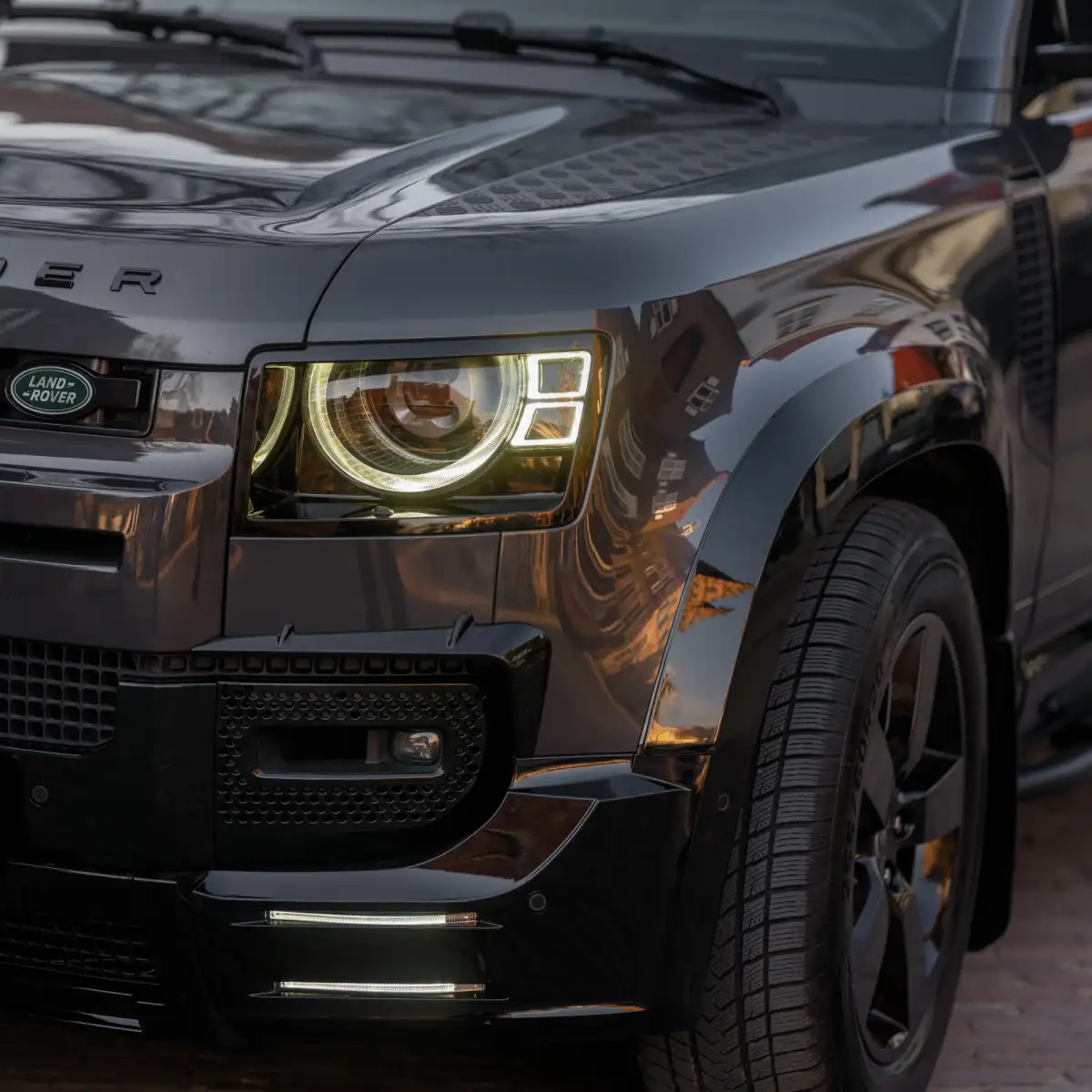
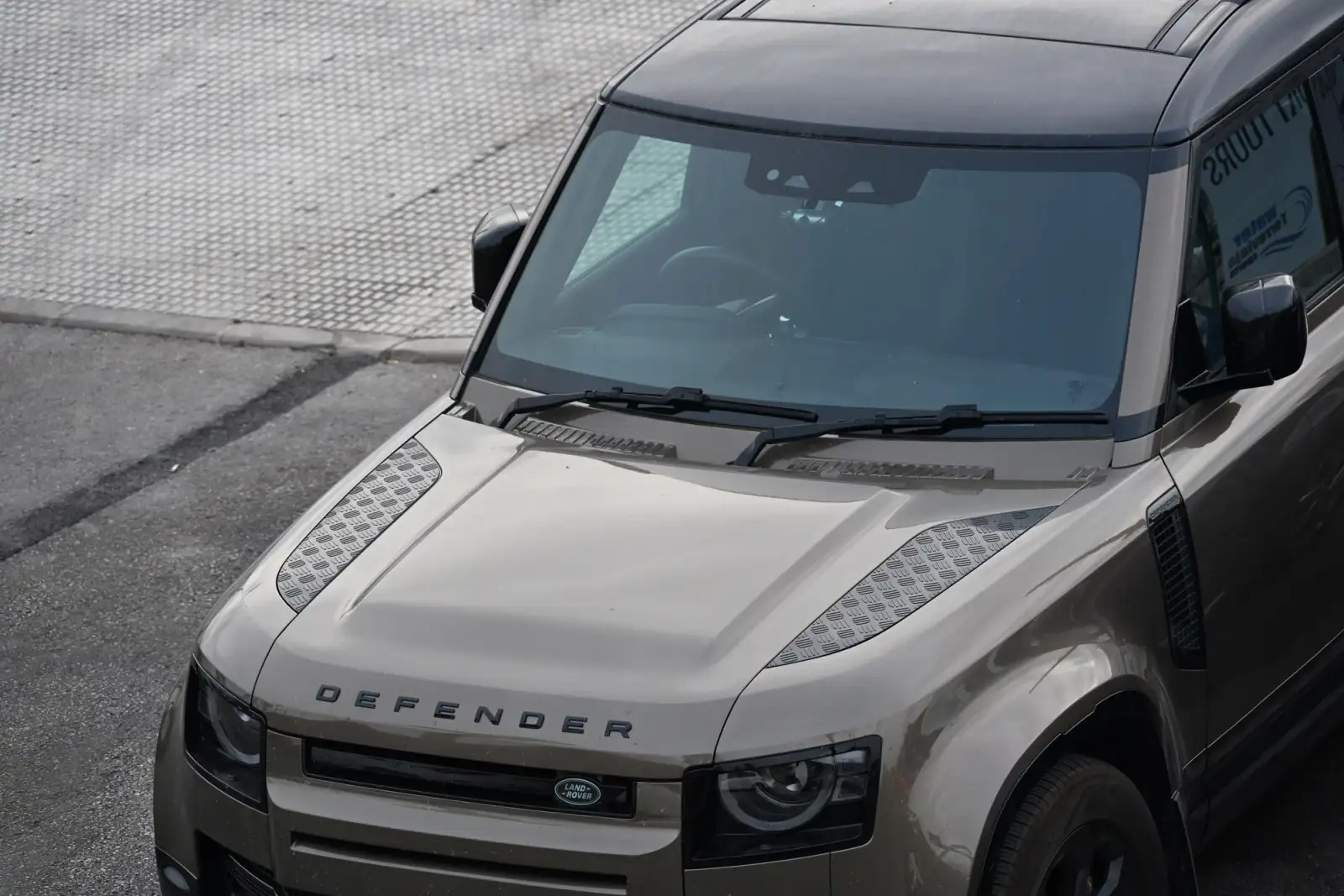
Land Rover Defender with headlights on dim
So, we know the Defender is more than at home on most terrains. It probably isn't best in class in every category of the Australian 4WD market, although its Terrain Response system could certainly find itself on the podium. With that in mind, let's weigh up where it excels and where it falls short.
Strengths:
The Defender's biggest strength is its ability to do most things well. Its off-road capability is undeniable, combining impressive ground clearance, a wading depth of up to 900mm and one of the most effective traction management systems on the market. Whether you're crossing flooded tracks, tackling soft sand or navigating rocky climbs, Terrain Response takes much of the guesswork out of the equation. It's also a surprisingly refined place to spend time on-road, with excellent ride comfort, low cabin noise and a premium feel that makes long-distance touring easy. Then there's the styling. Love it or hate it, the modern Defender still carries plenty of character and remains instantly recognisable wherever it goes. Add braked towing of up to 3,500kg (750kg unbraked), depending on the model, and it's easy to see why so many Australians use them as touring and towing vehicles.
Weaknesses:
Unsurprisingly, all of that capability comes at a cost. The Defender is expensive to buy, expensive to accessorise and potentially expensive to repair if something goes wrong. It's also a large, heavy vehicle, and while the engines do a great job moving it along, fuel consumption can become noticeable when towing or travelling fully loaded. Finally, there's the reliability discussion. Fair or not, questions about Land Rover reliability still linger for many buyers and remain one of the most commonly debated aspects of ownership.
For many owners, those weaknesses are easy to accept given the Defender's strengths. However, among readers searching for an Australian Land Rover Defender review, servicing costs, repair expenses and the complexity of the vehicle's technology are the frustrations raised most often.
Modifying Your Defender: Where Most Owners Start
Yes, after forking out for a Defender, you're probably reluctant to pour even more money into modifying it. But let's be honest, Australian 4WDs never stay stock for long, and Land Rover modifications are readily available for owners looking to get more from their vehicle.
To compensate for some of the Defender's shortcomings, many owners start with a roof rack for additional storage. While the vehicle may look like a box, most of the space inside is already spoken for. Add a weekend's worth of camping gear, a fridge and a few passengers, and things can start feeling a little cramped.
Lift kits are another common Land Rover modification, improving ground clearance and reducing reliance on the Defender's height-adjustable air suspension when tackling rough terrain. Tyres are also high on the upgrade list, with many owners swapping the factory highway-terrain rubber for more capable all-terrain options better suited to Australian tracks and touring conditions.
And as with any serious 4WD build, recovery gear is a no-brainer. Rated recovery points, recovery boards and quality recovery equipment provide peace of mind when travelling beyond the blacktop.
The good news is that many of these popular touring upgrades can be covered when properly declared, making specialist insurance worth considering before you start modifying your Defender.
Taking Your Adventure Further with Club 4X4
The Defender was built to explore beyond the blacktop, but every adventure comes with its share of risks. Whether you're tackling remote tracks, heading off on an extended touring holiday or simply exploring somewhere new, having the right cover in place can provide genuine peace of mind.
At Club 4X4, we understand that touring vehicles are rarely stock. That's why our 4x4 insurance is designed with four-wheel drivers in mind, including cover options for many declared accessories and modifications, along with off-road recovery as a standard inclusion under eligible policies.
As this Land Rover Defender review has shown, the modern Defender is equally at home on highways, remote tracks and everything in between. Whether you're driving a standard vehicle or building a fully-fledged touring rig, specialist cover can help ensure your adventures don't stop when the unexpected happens.
No matter where you are on your four-wheel driving journey, Club 4X4 is here to help you explore with confidence.
The adventure starts where the bitumen ends
See how Club 4X4 can help