Why the LandCruiser 200 Series Is Always Relevant
When V8 performance, heavy-duty towing and a balance of utility and luxury disappear from people’s lists of desires, that’s when the LandCruiser 200 Series will stop being relevant. Until then, and for the foreseeable future, its demand and admiration aren’t going anywhere.
For 14 years, between 2007 and 2021, the 200 Series was Toyota’s flagship large SUV before being replaced by the 300 Series. But even now, you’d be hard-pressed to find a second-hand 200 Series in decent nick for less than $50k. And there’s a reason for that. It was one of the last 4WDs to offer a V8 engine before the broader shift towards smaller turbocharged V6 and four-cylinder engines.
It’s also built a reputation for serious durability, with plenty of examples racking up enormous kilometres and still kicking. They’re capable on-road, even better off it, come equipped with proven off-road systems and offer serious towing capacity.
Whether you’re looking to buy a 200 Series, already own one or want to build one for touring, here’s what you need to know about one of Australia’s most popular and long-lived 4WDs.
The adventure starts where the bitumen ends
See how Club 4X4 can help
Specs at a Glance: Size, Weight and Dimensions
The Toyota LandCruiser 200 Series is a large 4WD, and it's proud of that fact. But when it comes to fitting in the garage, threading a tight track, or working out how much gear you can load it with, the specs matter.
| 200 Series Specifications | Figure |
|---|---|
| Length | Approx. 4,950–4,990 mm |
| Width | Approx. 1,970–1,980 mm |
| Height | Approx. 1,890–1,980 mm |
| Ground Clearance | Approx. 230 mm |
| Wheelbase | 2,850 mm |
| Kerb Weight | Approx. 2,740–2,815 kg* |
*Kerb weight varies by model year and grade. Final Australian-spec models ranged from 2,740 kg for several grades to 2,815 kg for the Sahara Horizon.
Under the Bonnet: Engine, Drivetrain and Performance
This was the real draw factor. Whilst Toyota did offer petrol V8 engines in various markets, here it was all about the diesel variant. (If you’re still weighing up which fuel suits your travels, our guide to petrol vs diesel touring breaks it down.) The 1VD-FTV became the choice for Aussie buyers thanks to its 4.5-litre twin-turbocharged V8 diesel setup. It was an off-roader’s and tourer’s dream. The twin turbochargers worked in sequence to provide boost across the rev range, helping reduce traditional diesel turbo lag whilst building substantial mid-range torque.
Paired with a six-speed automatic transmission engineered for smoothness rather than sporting intent, the combination was met with open arms. It suited everyone from the hardcore off-roader to the daily driver zipping around town. Later versions of the diesel produced 200kW and 650Nm of torque, giving the LandCruiser 200 Series plenty of pulling power for towing, touring and tackling steep tracks.
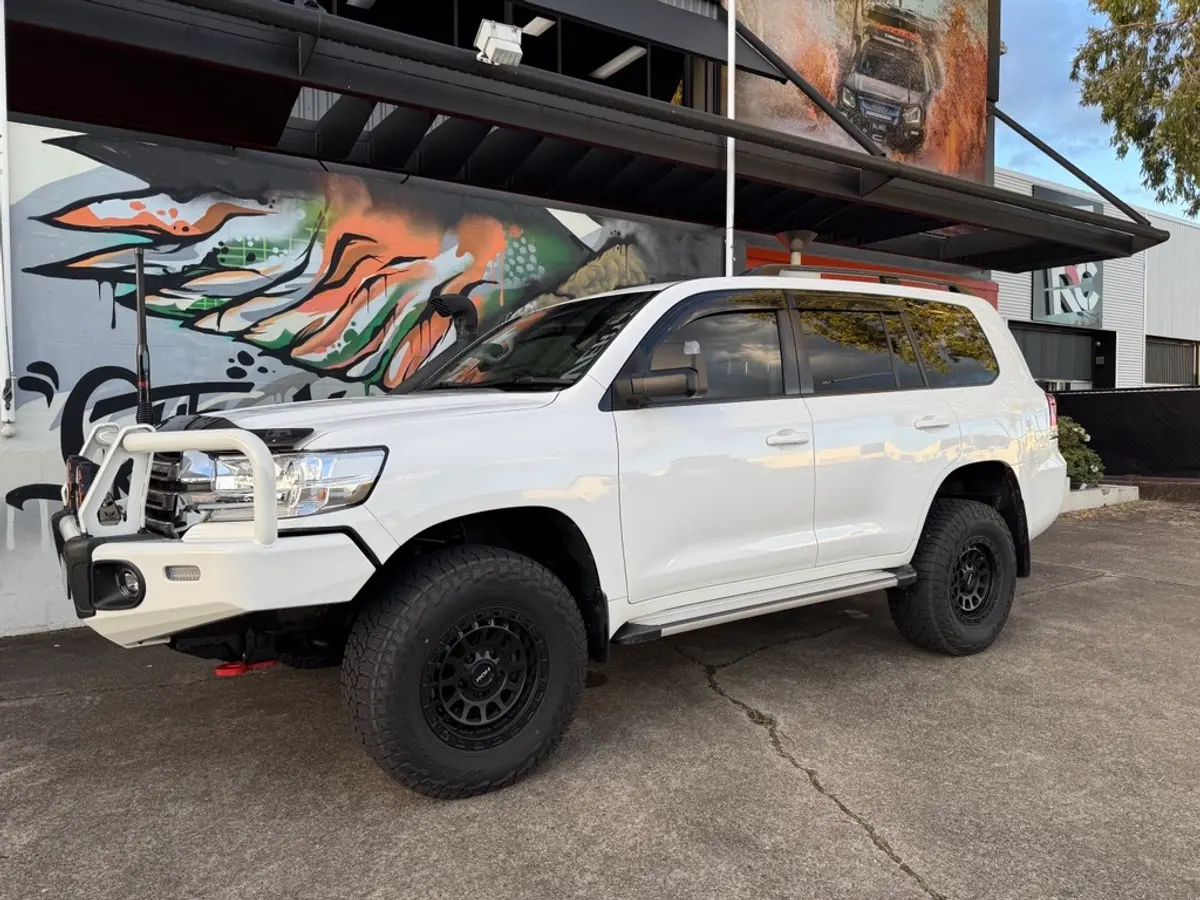
A white Toyota LandCruiser parked next to a building
The full-time 4WD system sent power to all four wheels all the time, meaning there was no need to manually engage four-wheel drive when leaving the blacktop. A lockable centre differential and low-range gearing provided greater control when conditions got properly rough.
This was the combination that made the 200 so appealing: big diesel torque, an easy-going automatic and a 4WD system equally at home around town and out bush.
Off-Road Ability and Touring Credentials
The 200 Series was designed knowing the work it would be expected to undertake and the terrain it would be doing it on. It wasn’t built just to look tough in the school pick-up line.
Depending on the grade, Toyota fitted these bad boys out with systems like Crawl Control, KDSS and Multi-Terrain Select. Crawl Control essentially acted like low-speed cruise control off-road, managing acceleration and braking so the driver could concentrate on steering. KDSS adjusted the resistance of the front and rear stabiliser bars, helping balance on-road handling with suspension movement off-road. Multi-Terrain Select gave the driver different modes to suit the terrain beneath the tyres.
Combined, they made the 200 Series a capable and comfortable 4WD that would suit just about any type of driver.
Beach, Bush and Weekend Tracks
With around 230mm of ground clearance, again, depending on specification, plus low-range gearing and full-time 4WD, the 200 was equally approachable for families and newer adventurers as it was for experienced four-wheel-drivers. It didn’t hold your hand, but it certainly guided you and this is what made it such an Aussie favourite during its run.
Remote and Extended Touring
While it was certainly a common sight in narrow city streets, that’s not to say the 200 Series wasn’t a capable remote tourer. Some configurations featured 138 litres of fuel capacity, combining a 93-litre main tank with a 45-litre sub-tank, giving owners a useful starting point for longer trips. Add common touring upgrades (of which suppliers scrambled to produce) like extra fuel capacity and upgraded suspension, and there’s good reason the 200 became such a familiar sight even deep in the Aussie outback.
So, while the 200 Series was physically capable of going just about anywhere it could legally be driven, there may have always been something in the back of owners’ minds telling them not to push too far. And almost 20 years ago, when this 4WD was first released, owners didn’t have access to off-road recovery. Now, with a Club 4X4 Comprehensive 4X4 Insurance policy, they do. It’s included as standard in all of our 4X4 policies.
So, whether you drive a 200 Series or something else, free your 4WD.
Towing Capacity and Real-World Hauling
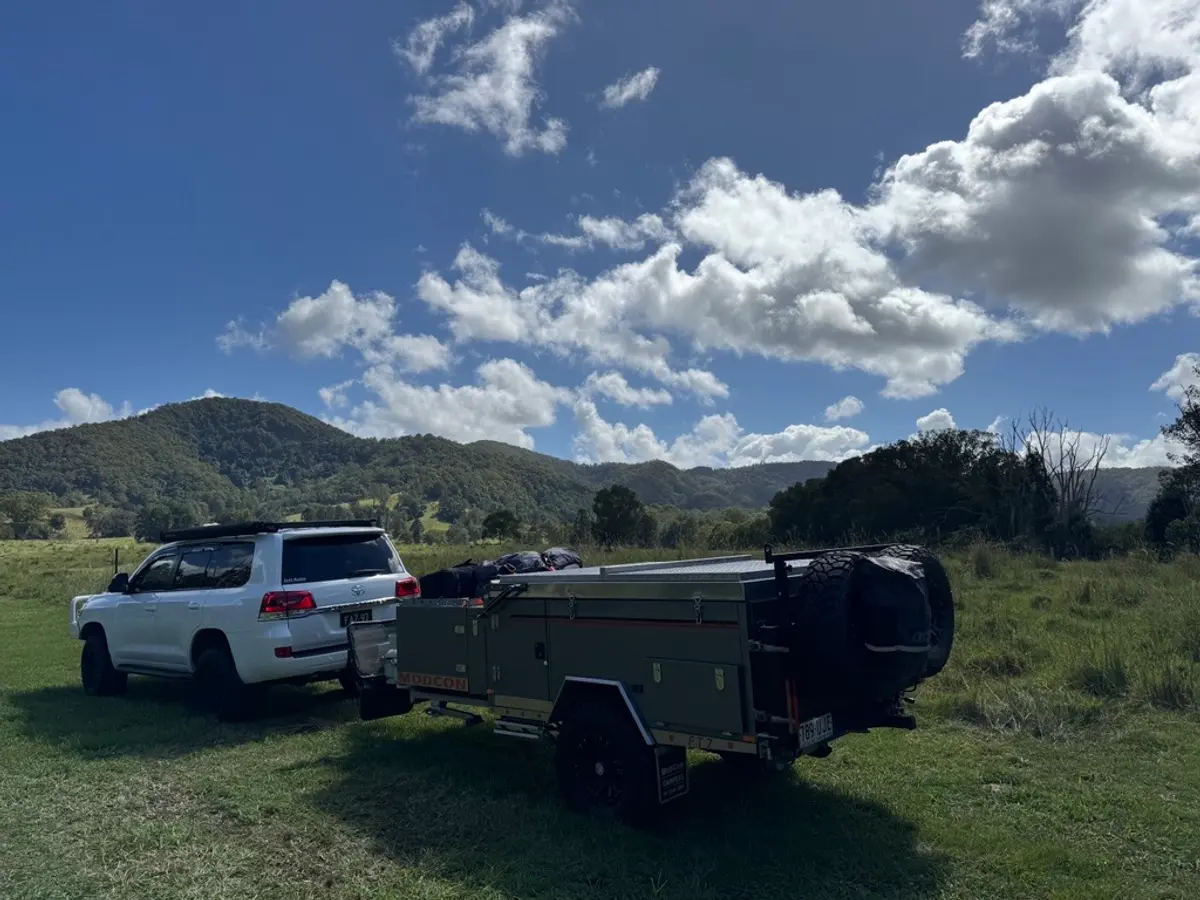
A white Toyota LandCruiser 200 Series towing a camper trailer on grass
We’ve already looked at a lot of what made the 200 Series LandCruiser so popular. Its engine, 4WD-focused engineering and features are magnets for Aussies, and so is its towing capabilities. With a braked towing capacity of up to 3,500kg, touring families immediately saw this 4WD as a prime candidate for lugging around their homes on wheels.
Combined with the V8 diesel’s 650Nm of torque, it had the pulling power for even the largest of caravans.
But those figures weren’t the only numbers owners needed to consider. GVM, or Gross Vehicle Mass, determined how much the LandCruiser itself could weigh once loaded with passengers, accessories, luggage and the weight placed on the tow ball. GCM, or Gross Combination Mass, was the maximum permitted weight of the loaded LandCruiser and trailer combined. For later 200 Series models, the limits were typically 3,350kg GVM and 6,850kg GCM.
So, for families hitching up a big caravan for a lap of Australia, knowing what the 200 could tow was only half the equation. Knowing what the whole setup actually weighed mattered just as much. For tips on getting the balance right, see our guide to building an off-road towing setup.
Trim Levels and Which Variant Suits
The Toyota LandCruiser 200 Series catered to everyone, from the relatively blank canvas of the GX variant to the leather-lined adventure machine of the Sahara. In Australia there were four main models in the core range, with each adding more comfort and equipment.
| Variant | Best suited to | Key equipment/character | Popular touring mods |
|---|---|---|---|
| GX | Serious tourers and practical builds | Entry-level, more utilitarian specification | Bullbar, suspension, snorkel, drawers |
| GXL | Families and all-round adventurers | More comfort and everyday equipment | Bullbar, roof rack, suspension, touring storage |
| VX | Long-distance touring families | More premium interior and technology | Touring suspension, protection, roof platform |
| Sahara | Buyers wanting touring ability with luxury | Flagship comfort, technology and features | Touring tyres, protection, towing upgrades |
The workhorse of the range was the GX. This variant made a strong starting point for a purpose-built touring 4X4. The GXL stepped things up without going overboard, helping to make it the popular all-round pick. The VX added more comfort and tech for families spending serious time on and off the road, while the Sahara sat at the top for those wanting the 200’s capability without sacrificing much in the way of luxury.
And then there was the Sahara Horizon. Based on the flagship Sahara, this limited-edition 200 Series added exclusive styling and luxury touches, including a unique dark-finish grille, Horizon badging, premium leather-accented trim and a heated steering wheel. With only 400 examples offered in each limited run, it remains one of the more distinctive 200 Series variants.
Known Problems and What to Watch For
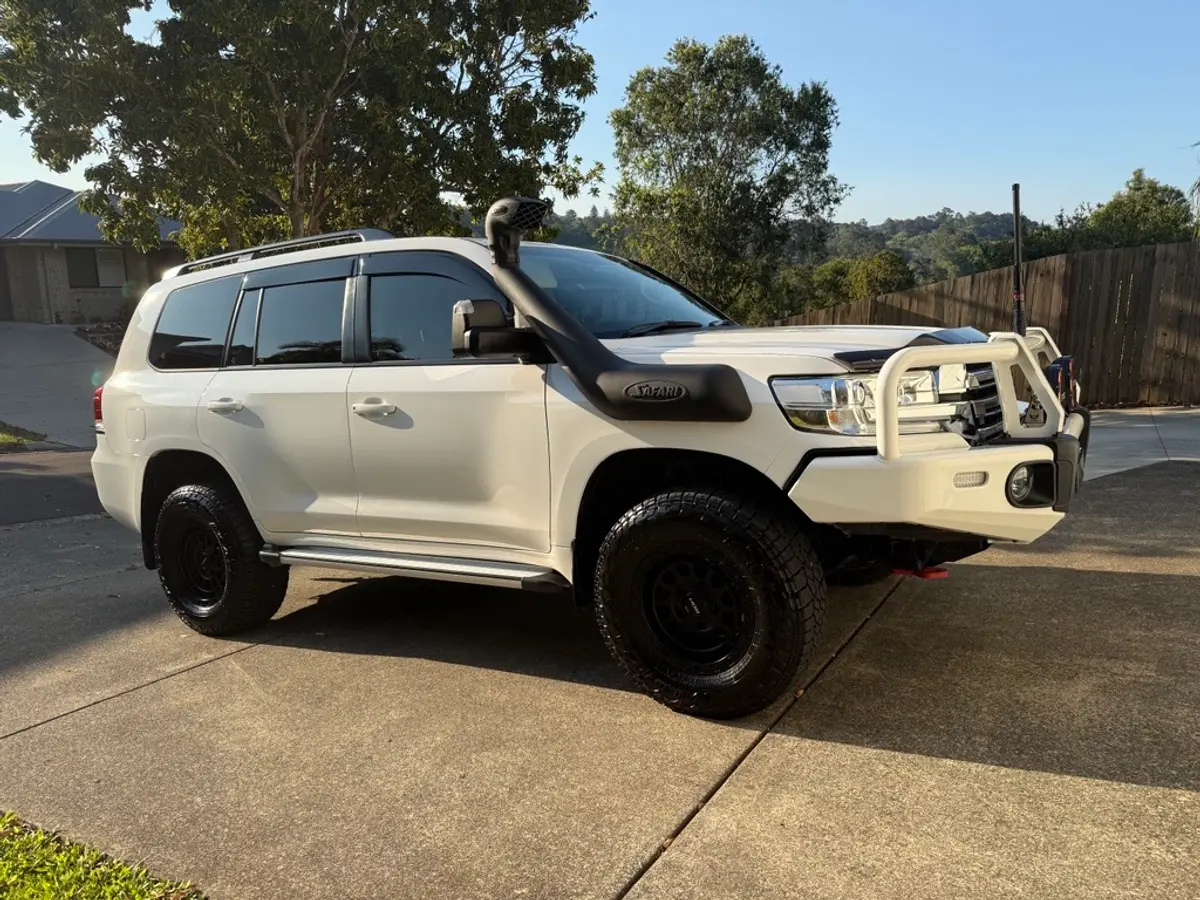
A white Toyota LandCruiser 200 Series parked on a driveway
While we’ve had nothing but the highest of praises for this machine until this point, there are some Toyota LandCruiser 200 Series problems worth knowing about before you buy. That doesn’t make the 200 unreliable, particularly given the kilometres many have covered, but it does mean a thorough inspection and a good service history should be high on the shopping list.
Engine and Drivetrain Issues to Check
On the 4.5-litre diesel, injector wear can cause symptoms including rough idling, engine knock, increased fuel consumption and excessive soot. Later DPF-equipped models can also experience soot and DPF issues, particularly where combustion or injector performance isn’t quite right.
On higher-kilometres examples, problems with the turbocharger should be looked for, although a failed turbo can be the symptom of broader injector, lubrication or cooling issues rather than an isolated fault. Check the service history carefully, particularly regular oil changes, and look for coolant or oil leaks and unusual drivetrain noises.
Chassis, Electrical and Wear Points
Remember, even the newest Toyota 200 Series is now several years old. Suspension bushes and other components underneath can therefore show the effects of kilometres, corrugations, towing and previous off-road use. Driveshaft and driveline clunks are another documented complaint worth checking during a test drive, alongside airbox dust ingress on heavily used examples.
Underneath, look closely for corrosion, damage and signs of hard off-road use, and make sure the electrical equipment operates as intended.
Of course, none of these should automatically rule a 200 out. They’re simply things to be vigilant of before committing your hard-earned cash to one.
Buying Guide: Best Years and What to Inspect
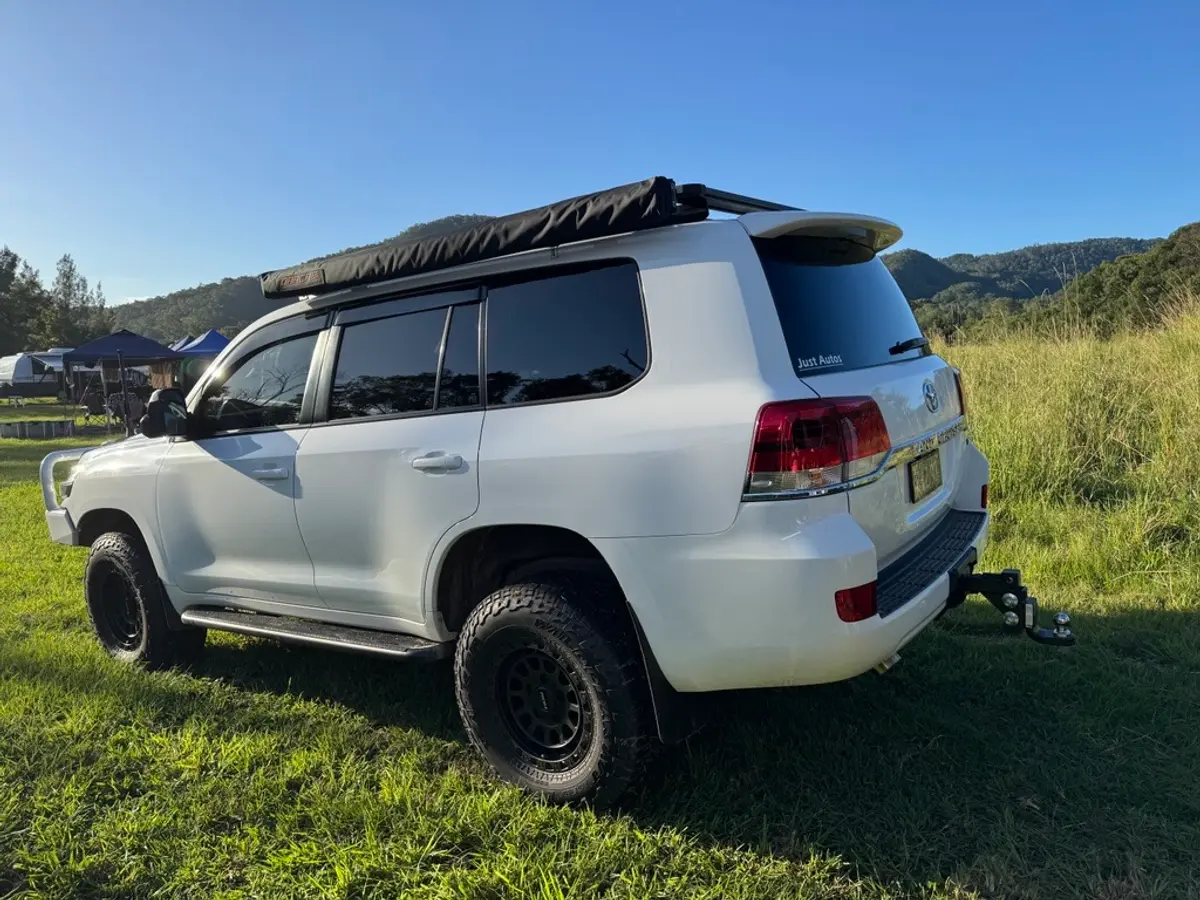
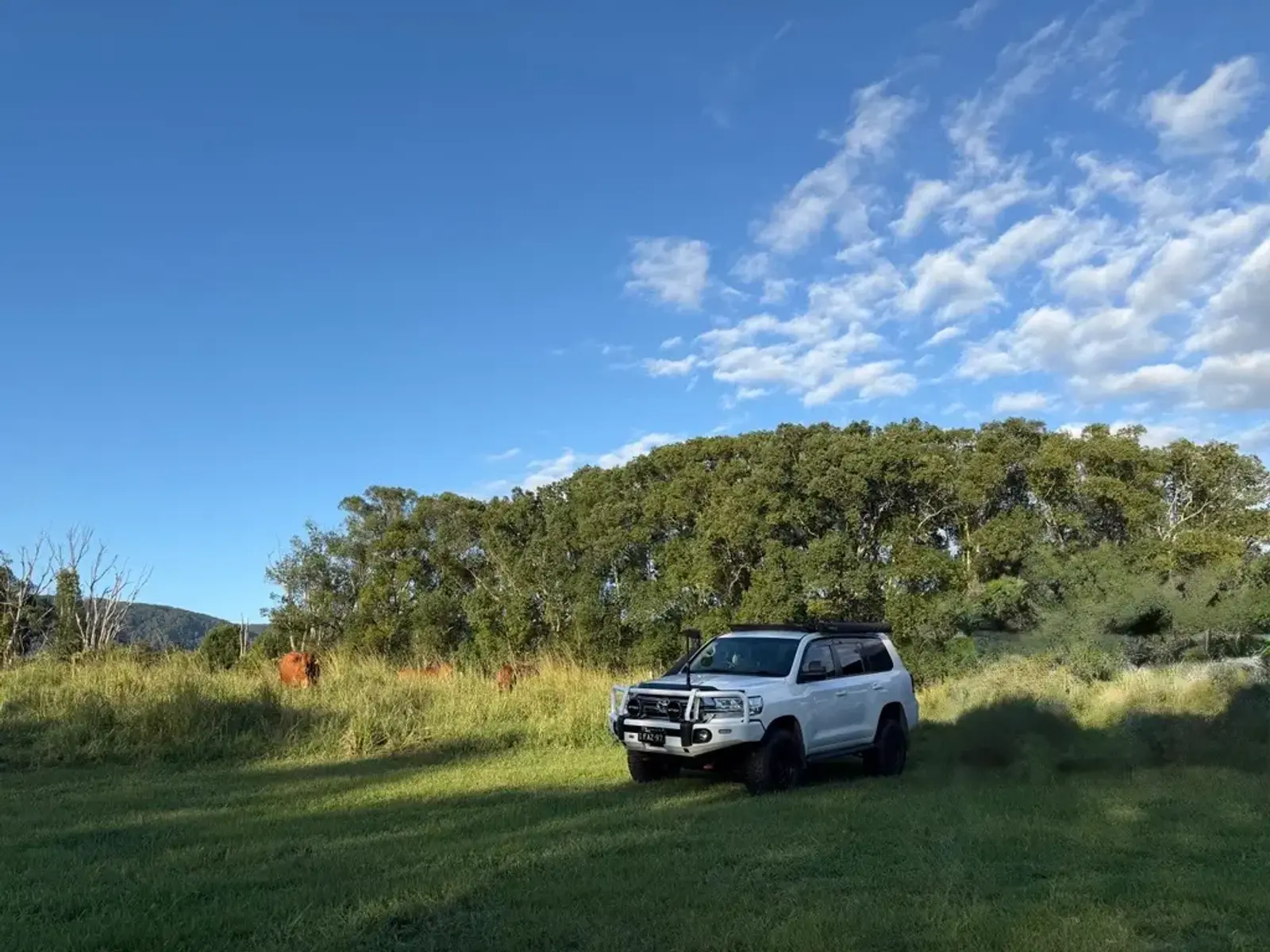
A white Toyota LandCruiser 200 Series driving on grass
Any good Toyota LandCruiser 200 Series buying guide has to start with the same point: the best year isn’t necessarily as important as the best example. Later-model 200 Series are desirable for their updated equipment and refinement, but a well-maintained earlier vehicle with a strong service history can represent better value. Many buyers see 2012-2015 models as a sweet spot, offering updates over the earliest examples while avoiding some of the DPF complications introduced from the 2015 facelift.
And used values show just how desirable they remain. Toyota’s own used-vehicle marketplace currently has 200 Series examples advertised around the $90,000 to $120,000 mark, depending heavily on year, grade, kilometres and condition. Older examples can be considerably cheaper, although even 2015 models are still being advertised around $55,000 to $70,000-plus in some cases.
Before throwing your cash at the shiniest model, check:
- Service history: Look for consistent servicing and oil changes.
- DPF: On DPF-equipped models, check for warning lights and evidence of regeneration problems.
- Chassis: Inspect underneath for rust, damage and signs of particularly hard off-road use.
- Drivetrain: Listen for unusual knocks, clunks or vibrations.
- Modifications: Check that suspension, electrical, towing and touring upgrades have been installed properly and legally. Warranty: Confirm whether the factory emissions warranty (notably the 2015-2016 DPF recall) still applies, as these systems can be costly to replace out of warranty.
- Overall condition: High kilometres aren’t automatically a deal-breaker if maintenance backs them up.
You want to be buying based on condition and history rather than letting the odometer or model year dictate your decision. If you’re weighing up your options, our guide to buying a used 4X4 covers what else to look for.
Ready to Send It? Protecting Your 200 Series
A Toyota LandCruiser 200 Series continues to serve Australians well into its second decade. For those who look after theirs, it will reward them with a capable, reliable and comfortable platform that can reach parts of Australia few vehicles can.
For tourers and those who like to dress up their 200 Series with mods, making sure it’s protected for the way it’s actually used can be important and reassuring. Club 4X4’s comprehensive 4WD insurance policies include cover for anywhere you can legally take your 4WD in Australia, and for when you take it too far, Off-Road Recovery Cover is included as standard. Our mods and accessories cover also lets you insure modifications for a separate agreed value, so that new GVM upgrade, suspension setup or bullbar can be factored into your cover.
With a 200 Series and Club 4X4 Insurance behind you, you’ll be able to explore just about anywhere in this sunburnt country your 4WD can legally take you. And that’s the way it should be.
Ready to free your 4WD? Get a quote from Club 4X4 today. Then, send it.
The adventure starts where the bitumen ends
See how Club 4X4 can help