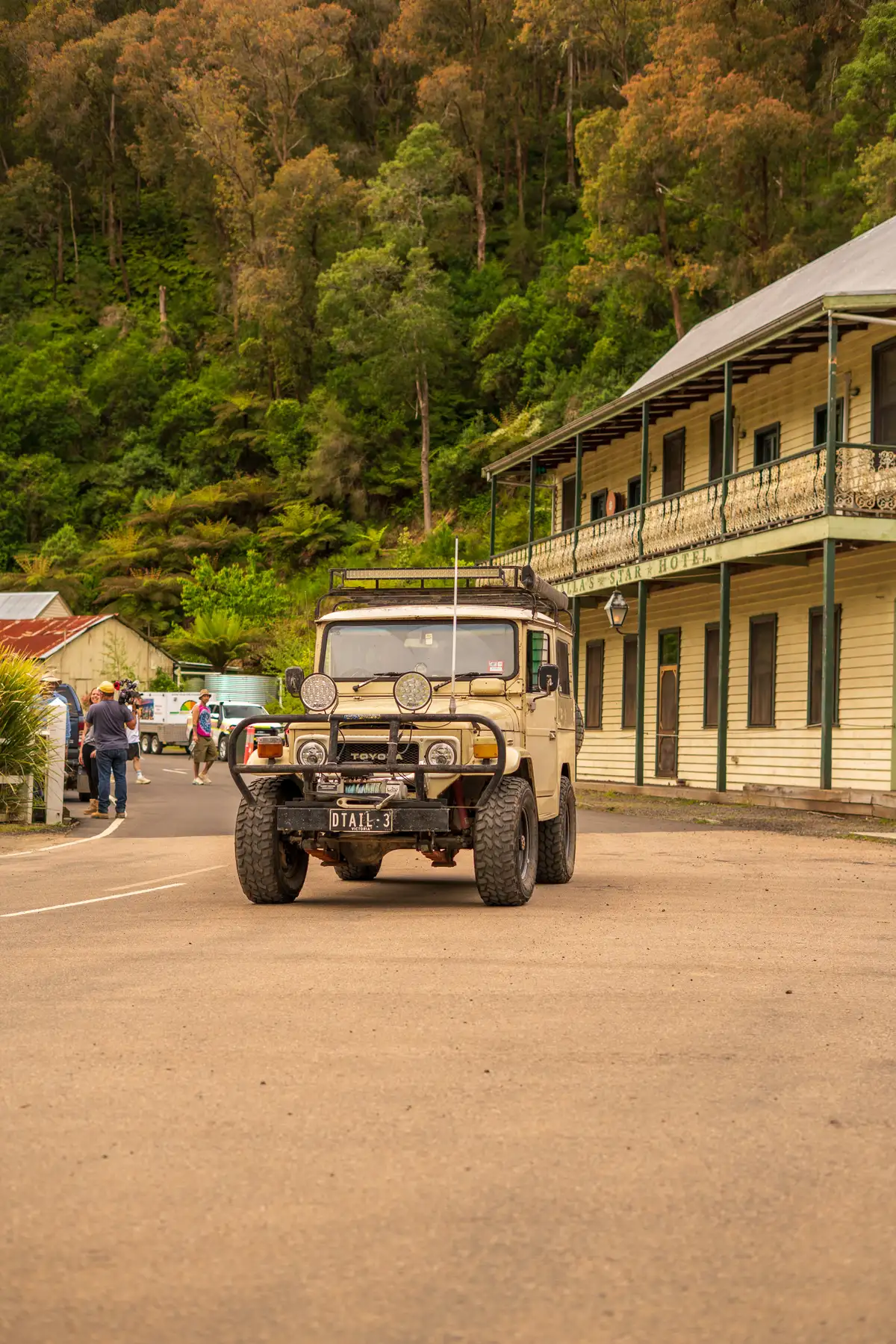
Not too long ago, we ran a bracket on our Instagram of the ultimate 4WD, voted for by our followers. Rather decisively, neither the 100 nor 105 Series made it into the bracket (not sure whose idea that was). Whether that would have affected the outcome, we’ll never know, but Toyota still dominated the bracket with both finalists donning the legendary badge. The winner? The Toyota LandCruiser 80 Series. A 4WD that first arrived in Australia in 1990 and ‘upgraded’ by 1998.
Judging by the people’s opinion, it didn’t need an upgrade. So, what makes this 4WD so good? Is it nostalgia? Or is it the simplicity and salt of the earth nature it possesses? No complicated technology or overengineering, just a real 4WD that can still tour and tow 300,000km later.
Nowadays, it can be difficult to get your hands on one of these. They’re highly valued by their owners and even after 30 years, don’t go for cheap. If you are one of the lucky few, are looking to become one or just want to know what makes this Aussie legend tick, then read on.
Modified, upgraded, still covered
4WD insurance built for GVM upgrades, mods and accessories, on-road or off.
The LandCruiser 80 Series Story
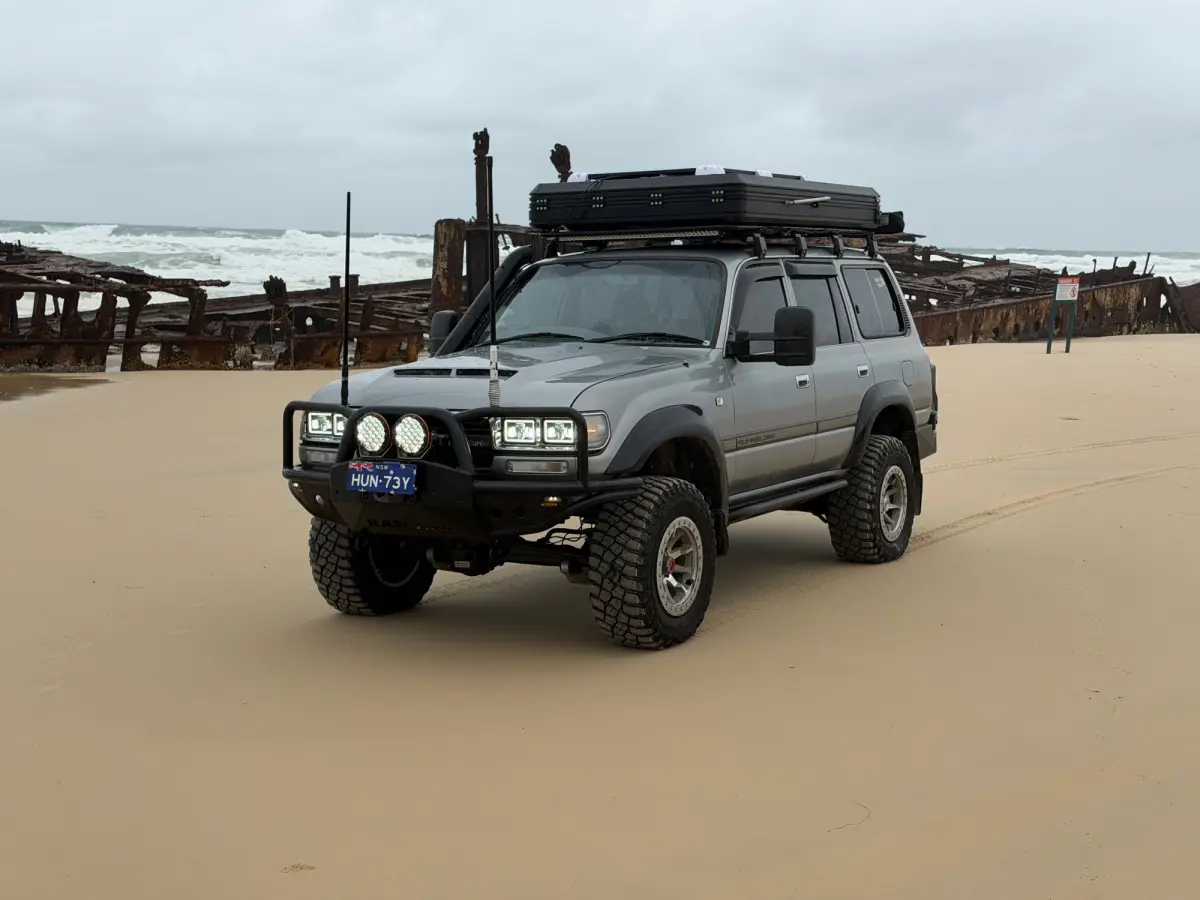
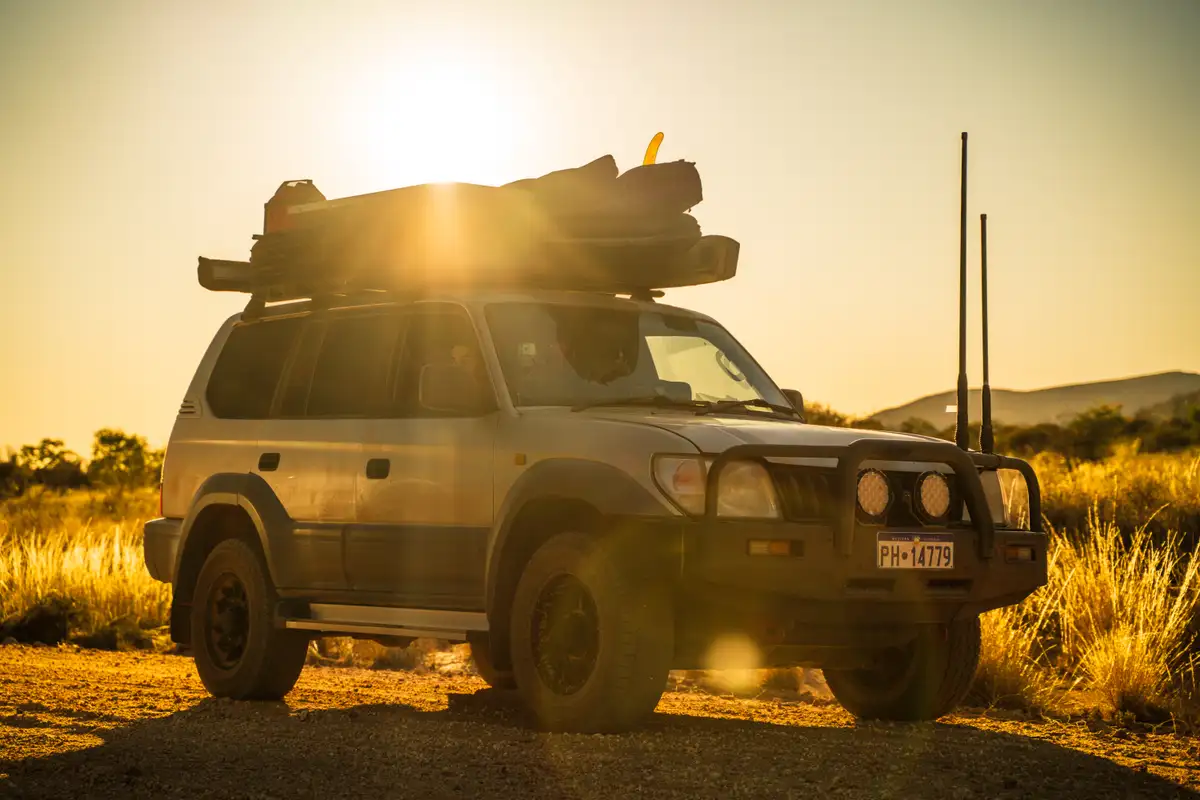
Toyota LandCruiser 80 Series on K'Gari, in front of a shipwreck
It’s the winter of 1990, and Toyota have launched 10 models of the new LandCruiser 80 Series, an upgrade on the beloved 60 Series. The initial base-spec variants had vertically split rear doors and carried over proven 75 Series powertrains. They were still part-time 4X4 and manual-only, but had the choice of a straight-six 4.0-litre petrol or 4.2-litre diesel engine. Unlike the 60 Series, the LandCruiser 80 Series adopted coil-spring suspension at all four corners, significantly improving ride comfort and off-road articulation without sacrificing durability. It marked a shift towards a more refined, touring-focused LandCruiser.
The mid-spec GXL and top-spec Sahara brought full-time 4X4 and expanded powertrain and transmission options, including an automatic gearbox and the new turbo-diesel engine. Both diesel engines were brand new and are legendary to this day. The 1HZ was a naturally aspirated engine, while the 1HD-T brought turbocharged power.
The Toyota LandCruiser 80 Series combines solid axles, coil-spring suspension, strong six-cylinder engines and genuine off-road capability in a relatively simple package. Its combination of durability, comfort, modification potential and touring ability has made it one of Australia’s most sought-after classic 4WDs.
Over its eight-year life span in Australia, the 80 Series also gave us the 1FZ-FE in 1992 and the 1HD-FT in 1995. The range continued to evolve with improvements to its driveline, brakes and technology. Buyers could also option factory front and rear differential locks on selected variants, giving the 80 Series genuine off-road capability straight from the showroom floor. It was an impressive run and one that ensured the name would become etched in Aussie 4WD history books.
Today, the most common Toyota 80 Series variants you'll find on the used market are the base-model Standard, the well-equipped GXL and the luxury-focused Sahara, with asking prices now sitting well above what these wagons once cost. If you even manage to find one for sale, you’re still likely to pay a premium. That’s thanks to the combination of comfort, reliability and genuine off-road ability Toyota injected into this LandCruiser’s DNA. It took the appeal of this type of vehicle beyond farmers and remote-area workers. Something that, given how many you see on your drive home, is hard to believe wasn’t always the case.
80 Series Engine Options Explained
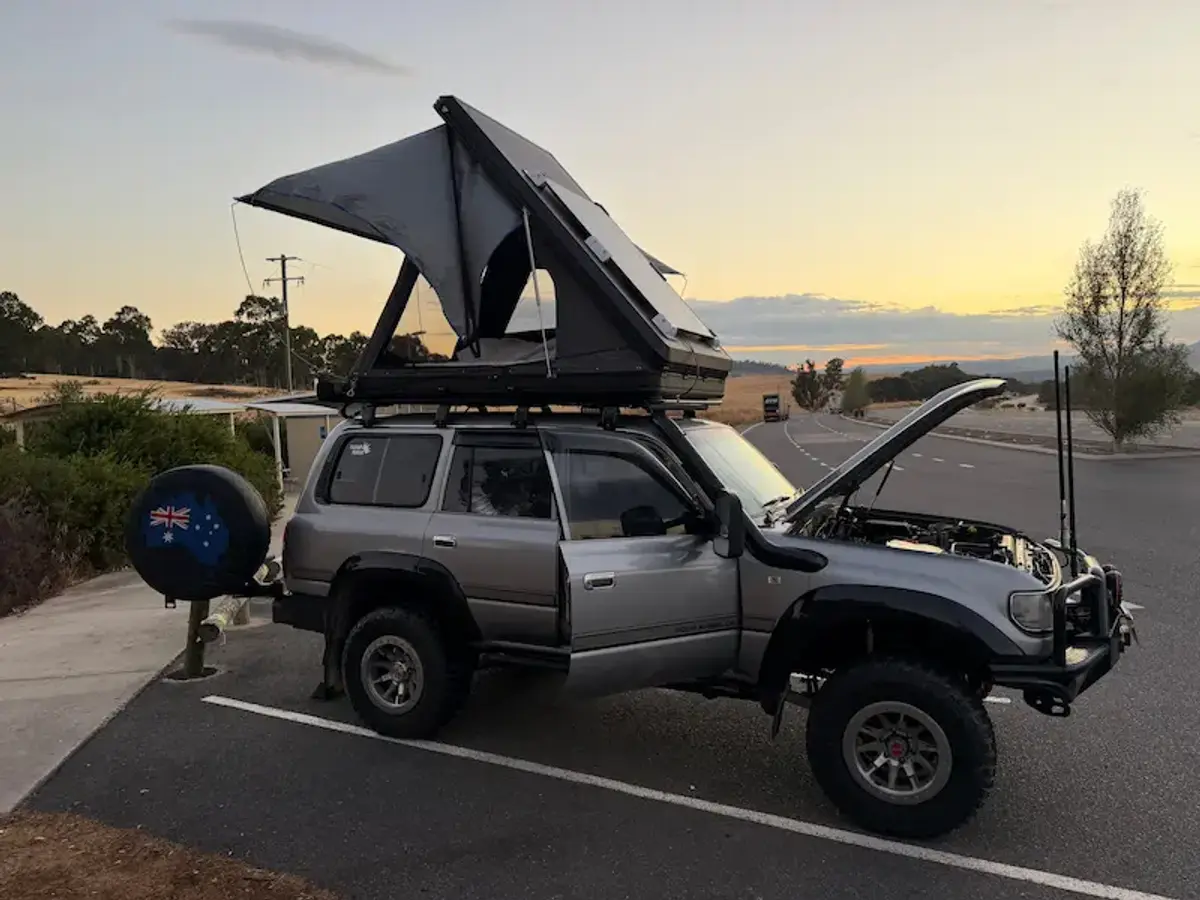
A Toyota LandCruiser 80 Series with rooftop tent
The 80 Series engine line-up ranged from simple naturally aspirated diesels to powerful turbo-diesels and smooth petrol sixes, giving buyers plenty of choice depending on how they planned to use their LandCruiser.
We’ll be looking at the factory options available throughout the model’s production run, although aftermarket engine swaps are common today. If you’re buying second hand, always verify the engine code and supporting paperwork. A turbocharged 1HZ is not the same engine as a factory 1HD-T or 1HD-FT.
Petrol Engines: The 1FZ-FE and 3F-E
The 3F-E was carried over from the 60 Series and became an early petrol option in the 80 Series. This 4.0-litre inline-six featured electronic fuel injection, though some early 4.0-litre models used a carburettor rather than EFI and produced 112kW and 290Nm when paired with the automatic transmission. While it wasn't the most powerful engine in the range, its simplicity and reliability still appeal to enthusiasts today.
Introduced shortly after, the 1FZ-FE would become the flagship petrol option. This 4.5-litre inline-six-cylinder petrol engine produced 155kW and 373Nm, combining sequential fuel injection with a robust cast-iron block. The result was a smooth, refined driving experience with strong performance on-road and enough torque for towing and touring duties.
For buyers wanting a comfortable daily driver that could still handle weekend adventures, the petrol-powered 80 Series LandCruiser remains a popular choice. While fuel consumption is higher than the diesel alternatives, many owners appreciate the 1FZ-FE's responsiveness, smoothness and proven reliability.
Diesel Engines: The 1HD-T, 1HD-FT and 1HZ
When it comes to petrol vs diesel touring, diesel power became the engine of choice for long-distance trips. The naturally aspirated 1HZ was a 4.2-litre diesel inline-six that produced 96kW and 285Nm. While not especially quick, it was reliable, simple and lasted forever. It’s still a favourite among many remote-area travellers.
For those who wanted more, the turbocharged 1HD-T was waiting in the wings. This 4.2-litre six-cylinder diesel delivered 122kW and 361Nm, providing stronger towing performance and effortless highway cruising. Later models received the updated 1HD-FT, which increased outputs to 125kW and 380Nm thanks to a 24-valve cylinder head, improving refinement and response.
Whether fitted with a 1HZ, 1HD-T or 1HD-FT, the Toyota 80 Series earned a reputation as one of Australia’s great touring wagons. Serious off-roaders and long-range adventurers often land on the turbo-diesel options. These are the ultimate 80 Series engines and when combined with the fuel, storage and touring upgrades we’ll be covering, you can’t really go wrong.
Common Issues to Know Before You Buy
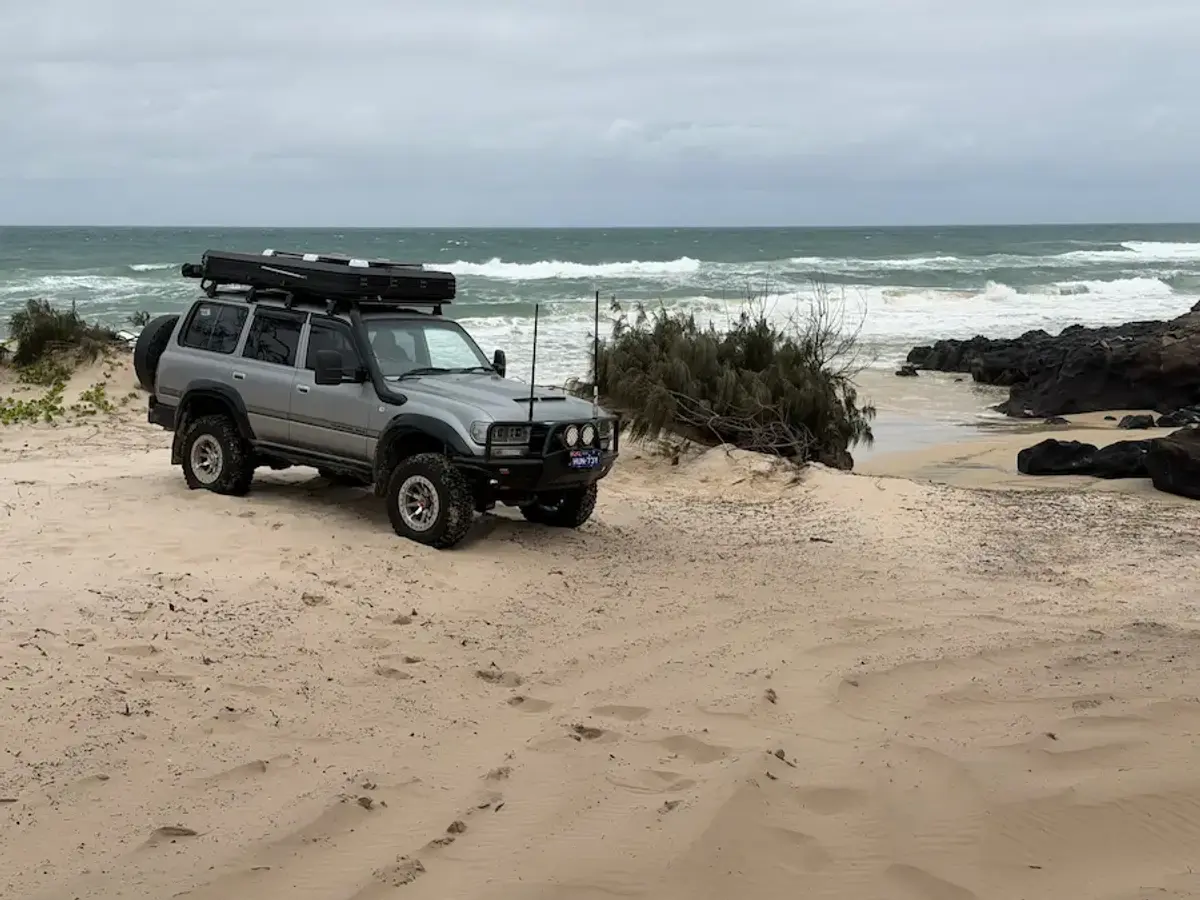
Toyota LandCruiser 80 Series on K'Gari sand dune
While hardcore believers may tell you otherwise, the LandCruiser 80 Series isn't without its hiccups. Whether it's a design quirk from the factory or simply the result of decades spent doing exactly what it was built for, the 80 Series is prone to an issue or two. That doesn't mean they're deal-breakers, though.
If you're in the market for an 80 Series LandCruiser, knowing the common problem areas can help you buy with confidence rather than avoid the model altogether. A thorough inspection can quickly separate a well-maintained example from one that may need significant work.
Mechanical Red Flags to Check
- Check for power steering leaks
Power steering fluid leaks are one of the most common 80 Series concerns. They're often misdiagnosed, leading owners to replace hoses and rebuild steering boxes unnecessarily. In many cases, the culprit is the power steering reservoir itself, which uses a rubber seal beneath the cap that can deteriorate over time. Check for fluid around the reservoir and pump, and ask the seller whether the seal has ever been replaced. It's a simple home fix that may save you a headache and some money.
- Inspect the cooling system
Both the 1FZ-FE petrol and 1HD-T diesel rely on a healthy cooling system. Check for coolant stains around the radiator, evidence of overheating and records showing regular coolant changes. An overheating engine can quickly turn an otherwise good buy into an expensive repair project.
- Check the handbrake operation
A weak handbrake is a common complaint on older 80 Series models, and honestly, most of Toyota’s 4WD models. The issue is often caused by wear in the transfer-case-mounted drum brake, stretched cables or contaminated brake shoes.
Solutions include adjusting it, both at the handle and at the drum on the rear. While there, check there’s enough meat left on the shoes before tightening metal on metal. If that’s not doing the trick, dogbones are a worthwhile upgrade, allowing more contact to be made. Finally, an upgraded handbrake lever kit may be necessary, depending on how much you value a reliable handbrake. The fixes aren’t cheap or especially simple, but it's one you may need to factor into your costs.
- Inspect the chassis around the steering box
This is one of the more serious issues to check, particularly on vehicles that have spent years running oversized tyres, heavy bull bars or tackling tough tracks. Look closely around the steering box mounting area on the driver's side chassis rail for signs of cracking, welding repairs or reinforcing plates. Properly engineered repairs aren't necessarily a deal-breaker, but fresh cracks or poor-quality repairs deserve further investigation. Ask the seller whether chassis strengthening work has been carried out and whether documentation is available. If not, a set of plates of your own should do the trick.
- Ask for maintenance records
A well-documented service history is often worth more than low kilometres alone. Look for evidence of regular oil changes, timing belt replacements on diesel models and any major drivetrain work.
Body and Chassis: Where Rust Hides
Rust is another area worth checking, especially on vehicles that have spent time near the coast or on muddy tracks. Inspect the following:
- Chassis rails - inspect inside and around the rails for scaling or corrosion.
- Rear floor sections - lift carpets and check for trapped moisture and rust.
- Door sills - inspect both outer and inner sill sections for bubbling paint or previous repairs.
- Tailgate and body seams - pay close attention to joints where water can collect over time.
These are standard pre-purchase inspections that can help you understand the vehicle's condition and negotiate accordingly. They aren’t reasons to automatically walk away, especially given the age of these models.
LandCruiser 80 Series Accessories Worth Fitting
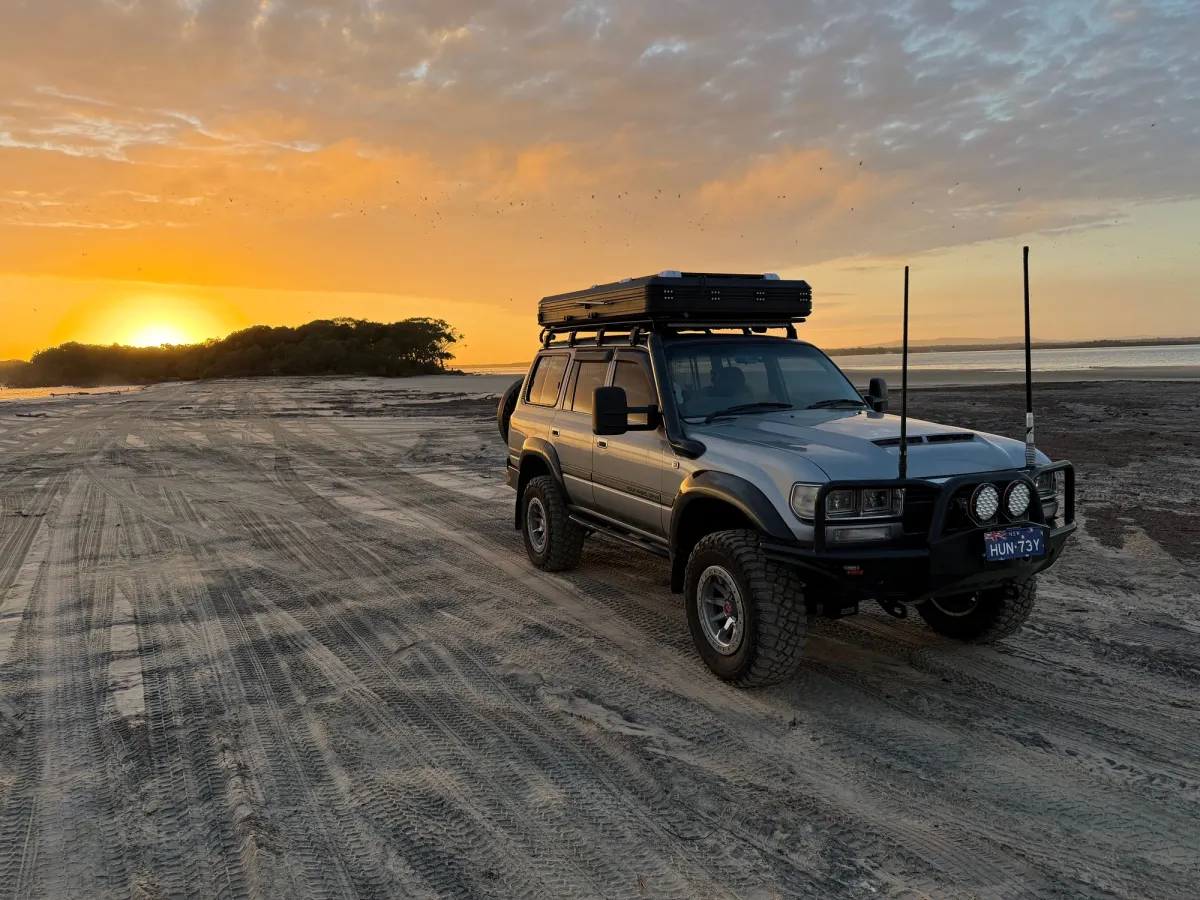
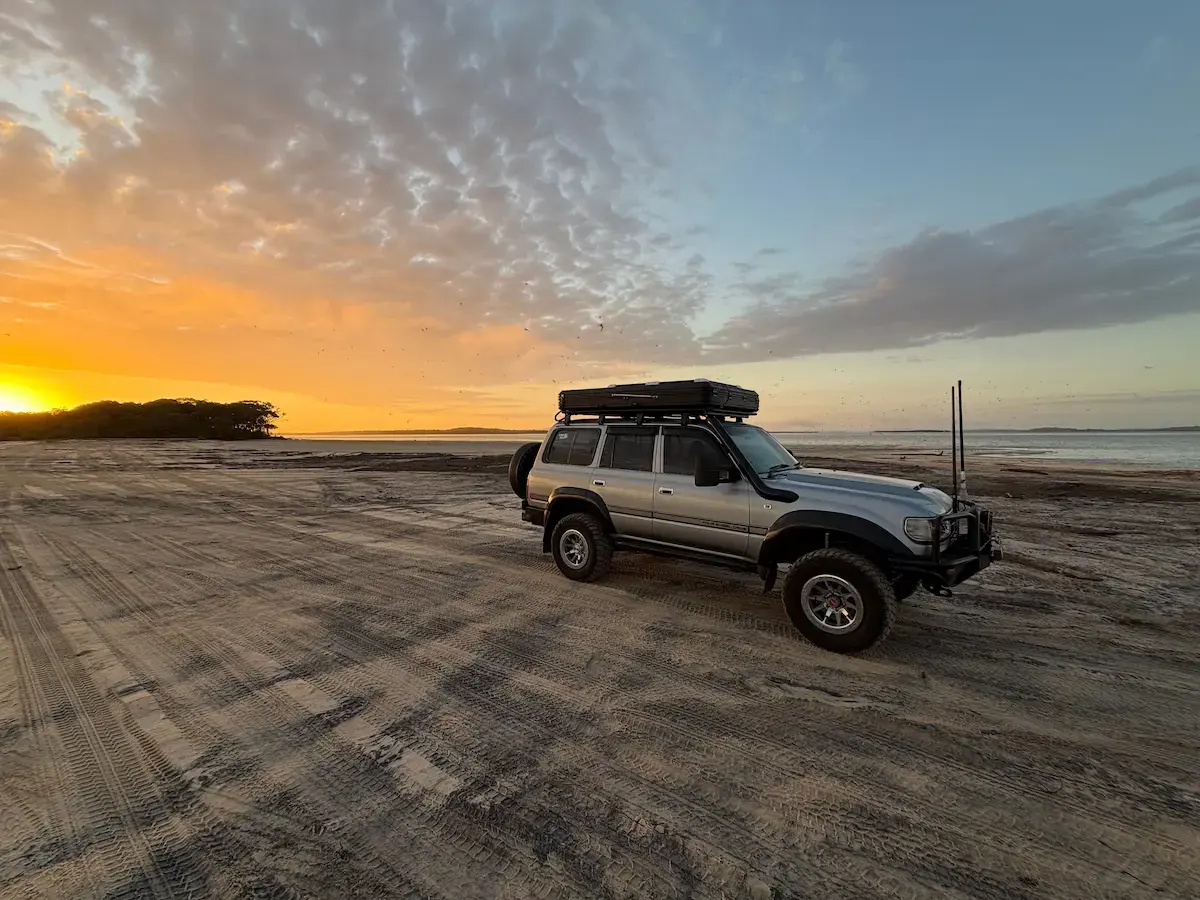
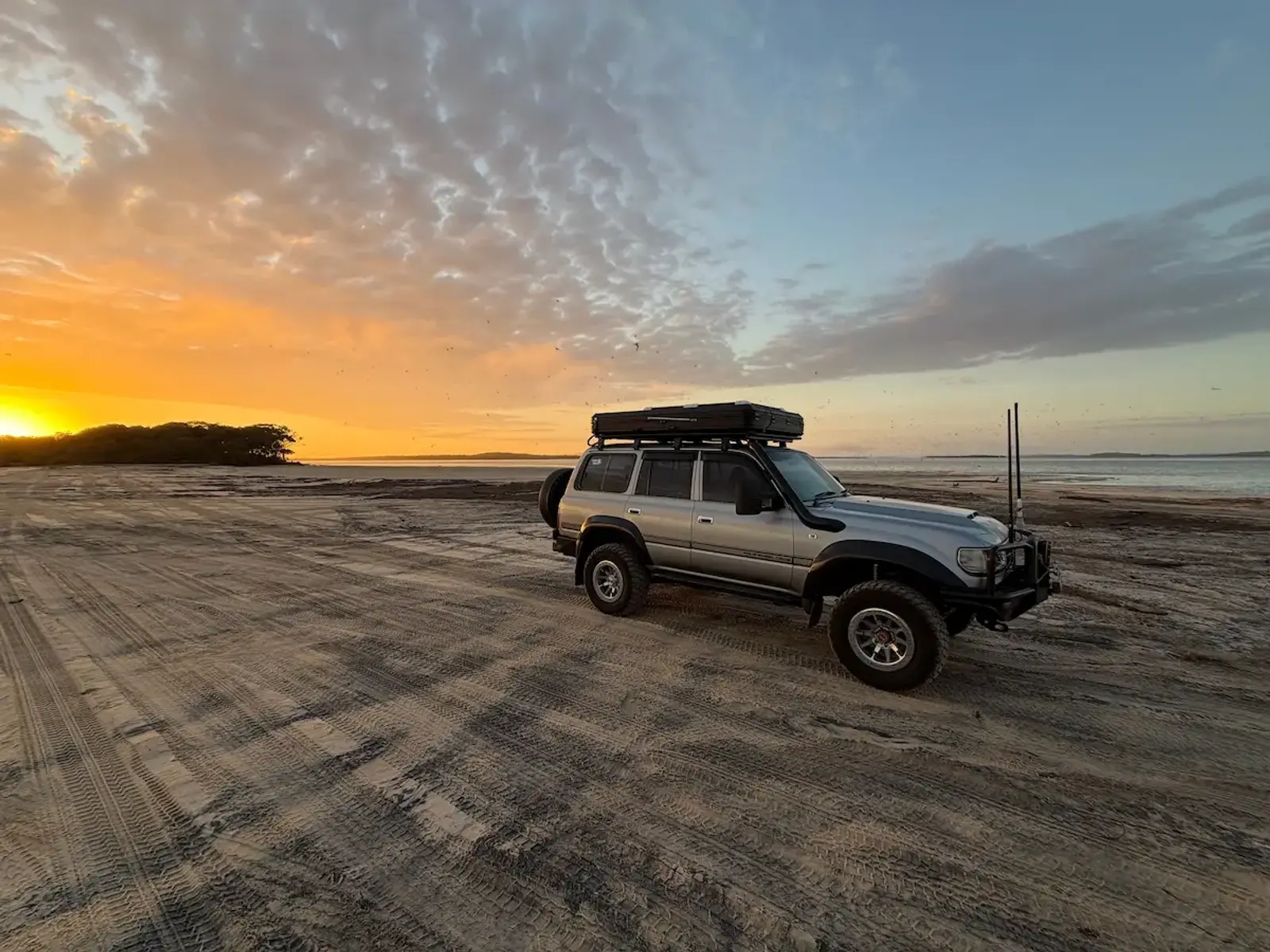
Toyota LandCruiser 80 Series on beach with sunset
A practical 4X4 like the LandCruiser 80 Series deserves practical upgrades. Focus on the mods that actually matter, ones that make the vehicle safer, more capable and easier to live with. This is a vehicle made for tackling remote outback tracks, beach runs and long-distance touring, so equipping it appropriately is key.
Recovery Gear for Remote Tracks
As with any 4WD travelling Australia, recovery gear should be at the top of the outfitting list. A basic recovery kit of rated shackles, recovery boards, a snatch strap and a tyre deflator will get you out of most situations and could be the difference between a minor delay and a very long walk. Winches are also common now, especially for those who travel solo or spend time on challenging tracks.
Lighting for Night-Time Touring
Again, practical. Upgraded lighting is one of the first modifications many 80 Series owners will make, especially those that regularly drive country roads or tour after dark. Modern LED lights or a quality light bar makes it much easier to navigate those remote highways and outback tracks. Then you’ve got campsite lighting like LED light strips under awnings that can be used with white light for cooking and setting up or packing down, or a warm amber or orange for reduced glare and less insects once you’ve settled in.
Storage for Long Adventures
Especially in a wagon, good storage in the rear can improve your travels tenfold. A cargo barrier can improve safety by keeping loose gear secured during rough driving, while drawer systems help organise recovery gear, tools and all your campsite goods. When the interior is full, roof racks provide additional carrying power for those bulky items like swags and kayaks. The 80 Series already has good storage space, so it’s just about how to maximise it.
Protection for Tough Terrain
If you intend to use your 80 Series for its true purpose, some protection accessories will go a long way. Rocky tracks, muddy trails and beach routes are part and parcel of Australian 4WDing, and the wear and tear they can inflict on a vehicle is no joke.
A bullbar not only provides mounting points for winches and driving lights, but also offers valuable protection from animal strikes out on the highway. Rock sliders help safeguard the sills from damage, while underbody protection shields vulnerable mechanical components from impacts with rocks, ruts and hidden obstacles.
The LandCruiser 80 Series already has solid axles and a highly capable four-wheel-drive system, but these are modifications worth the spend when tackling some of Australia's toughest touring destinations.
Protecting Your 80 Series on and off the Road
Physical protection is one thing, but knowing you have protection for when things go off track is another. An 80 Series is more than just any old 4WD. Their value remains strong and with the added investment of touring gear and modifications, appropriate insurance is worth considering.
At Club 4X4, we provide specialist 4X4 insurance for modified touring vehicles, including LandCruisers like the 80 Series. Our modifications and accessories cover protects legal modifications and fitted accessories for their own agreed value, ensuring the money you’ve poured into your project is properly protected.
For vehicles like the 80 Series, Club 4X4’s off-road recovery cover can be particularly valuable, as they’re often driven where others can’t reach. We cover 4WDs anywhere they can legally be driven in Australia, so beaches, 4WD tracks and private property, given the permission. This means you can focus more on where you can go, not where you can't.
To learn more, explore our cover options for modified 4WDs.
Ready to Go Further?
Because that's exactly what a LandCruiser 80 Series was built to do.
Whether you're restoring a classic tourer, building the ultimate weekend wheeler or gearing up for the Big Lap, this 4WD is legendary for a reason.
Take the time to understand the platform's strengths and weaknesses, know what to look for when buying, and equip it to suit the way you travel, and you'll have one of the most capable wagons Toyota has ever built.
When you're ready to hit the road, or leave it behind altogether, Club 4X4 is here to support your adventures. Explore the cover options and benefits we have on offer, from roadside assistance to personal effects cover, then get a quote and join a community of enthusiasts who understand that the journey is just as important as the destination.
Modified, upgraded, still covered
4WD insurance built for GVM upgrades, mods and accessories, on-road or off.