Hooking a camper or caravan on the back of your 4X4 changes the whole equation. On the blacktop, it’s mostly about speed management and leaving a bit more room. But once you peel off onto a dirt road, everything shifts.
Off-road towing puts big loads through every part of your vehicle, and if the setup isn’t right, things can unravel quickly. Broken components, poor control, and near-miss moments usually come back to the same few fundamentals. Get those right, and towing in the bush becomes predictable, controlled, and far more enjoyable.
Here’s how I think about setting up a proper off-road tow rig.
Suspension and the Sag Factor
Most factory suspension is built for comfort and compromise. School runs, highway miles, the odd load in the back. It’s not designed for dragging a couple of tonnes across corrugations all day.
A good way to picture it is like throwing a heavy pack on your back. You immediately slump forward. Your movement gets restricted. Stepping over obstacles becomes harder because you’re already compressed.
That’s exactly what happens to a 4X4 when you load the towball. The rear suspension sags, ground clearance disappears, and suddenly the chassis is right where the rocks are.
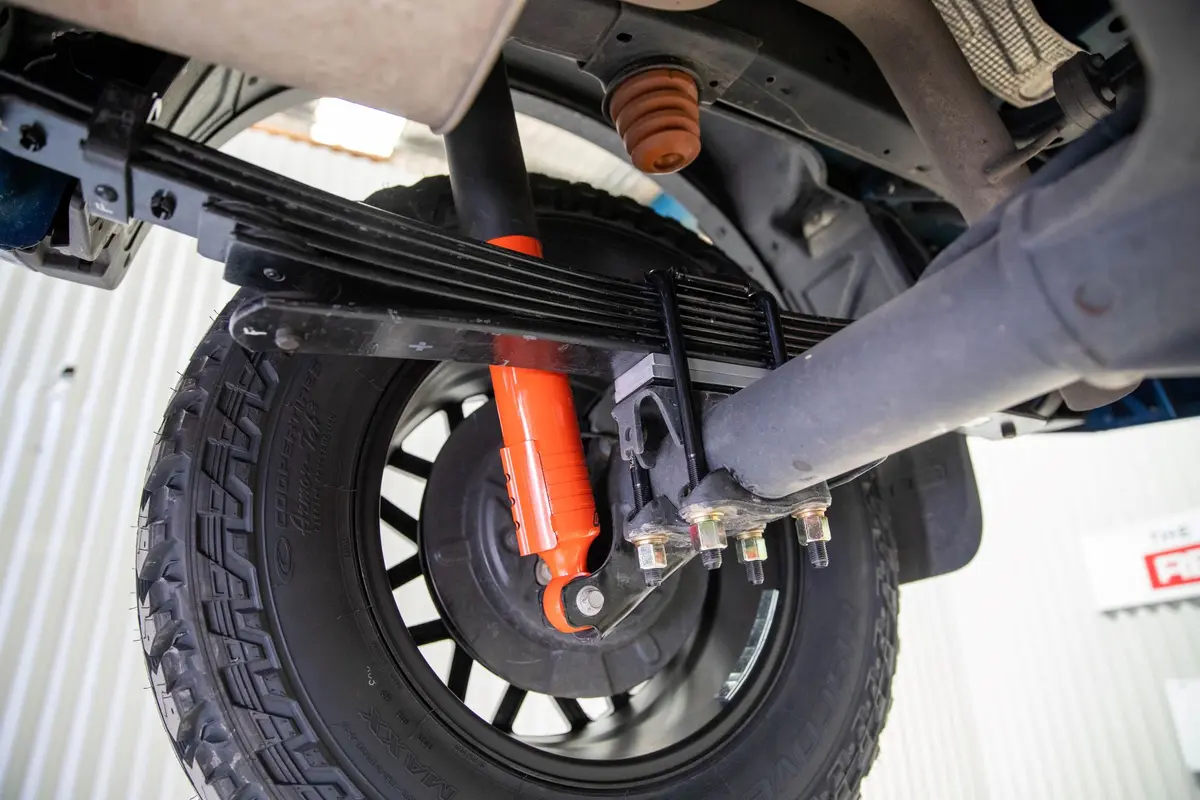
caravan suspension
Off-road, suspension travel is everything. You want the tyres to stay in contact with the ground. But if the springs are already compressed under static load, there’s nowhere left for them to go. The ride stiffens, articulation suffers, and shock loads get transferred straight into the chassis. That’s how cracks and failures happen a long way from help.
The answer is simple, but it needs to be done properly. Heavy-duty springs and quality shocks designed for constant load make a massive difference. Airbags can help level things out, but they’re a fine-tuning tool, not a band-aid. Pump them too hard off-road and you can actually increase stress through the chassis.
The Payload Trap
Towing makes weight management trickier than most people realise.
Towball download is part of your payload. If there’s 200kgs sitting on the hitch, that’s 200kgs you no longer have available for people, gear, accessories, or fuel. It adds up fast.
Bull bar, winch, fridge, drawers, roof rack, passengers, then you hang a trailer on the back and suddenly the numbers don’t look so friendly.
Overloading a tow vehicle affects everything. Steering gets vague as weight comes off the front axle. Drivetrain stress climbs on long ascents. On side slopes, that higher centre of gravity starts to feel very real, very quickly.
The fix isn’t complicated, but it does require honesty. Load the vehicle exactly how you’d travel and put it over a weighbridge. Know the numbers. Distribute the weight evenly and keep it as low as possible. When the trailer starts pushing the car around, that’s the classic tail-wagging-the-dog scenario, and it’s a warning sign worth listening to.
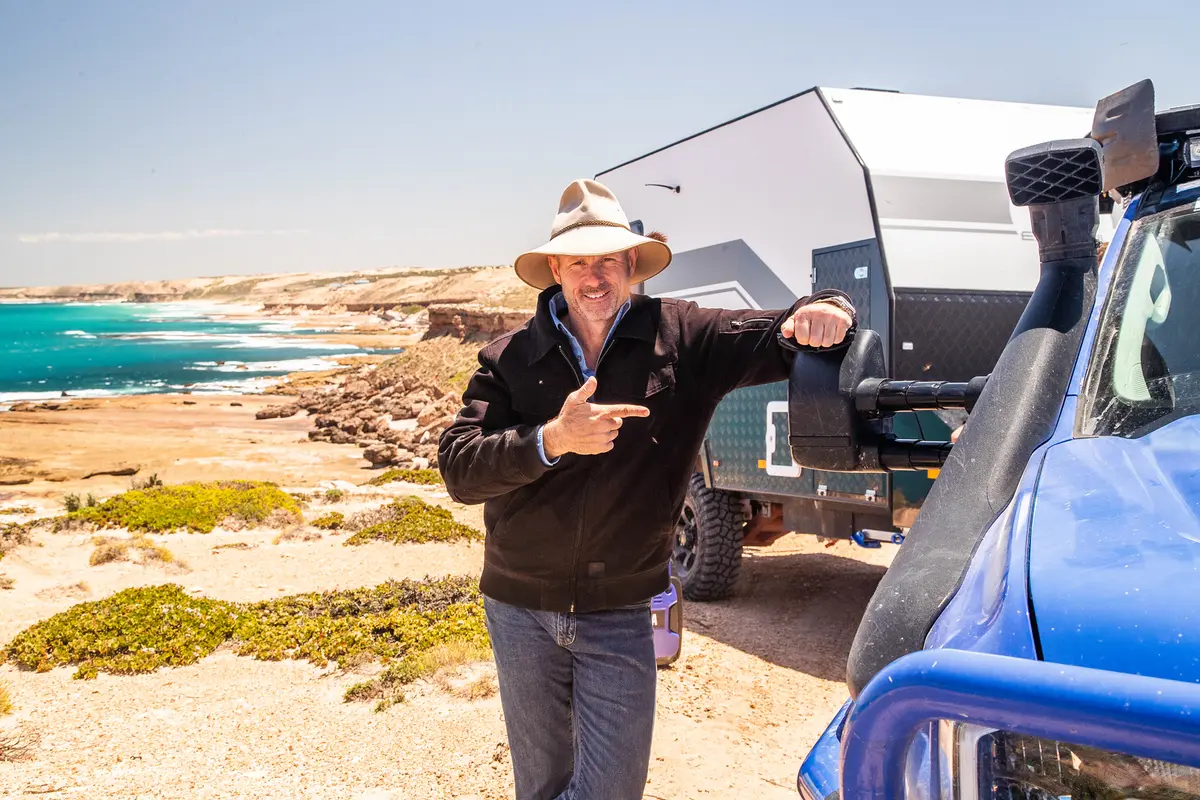
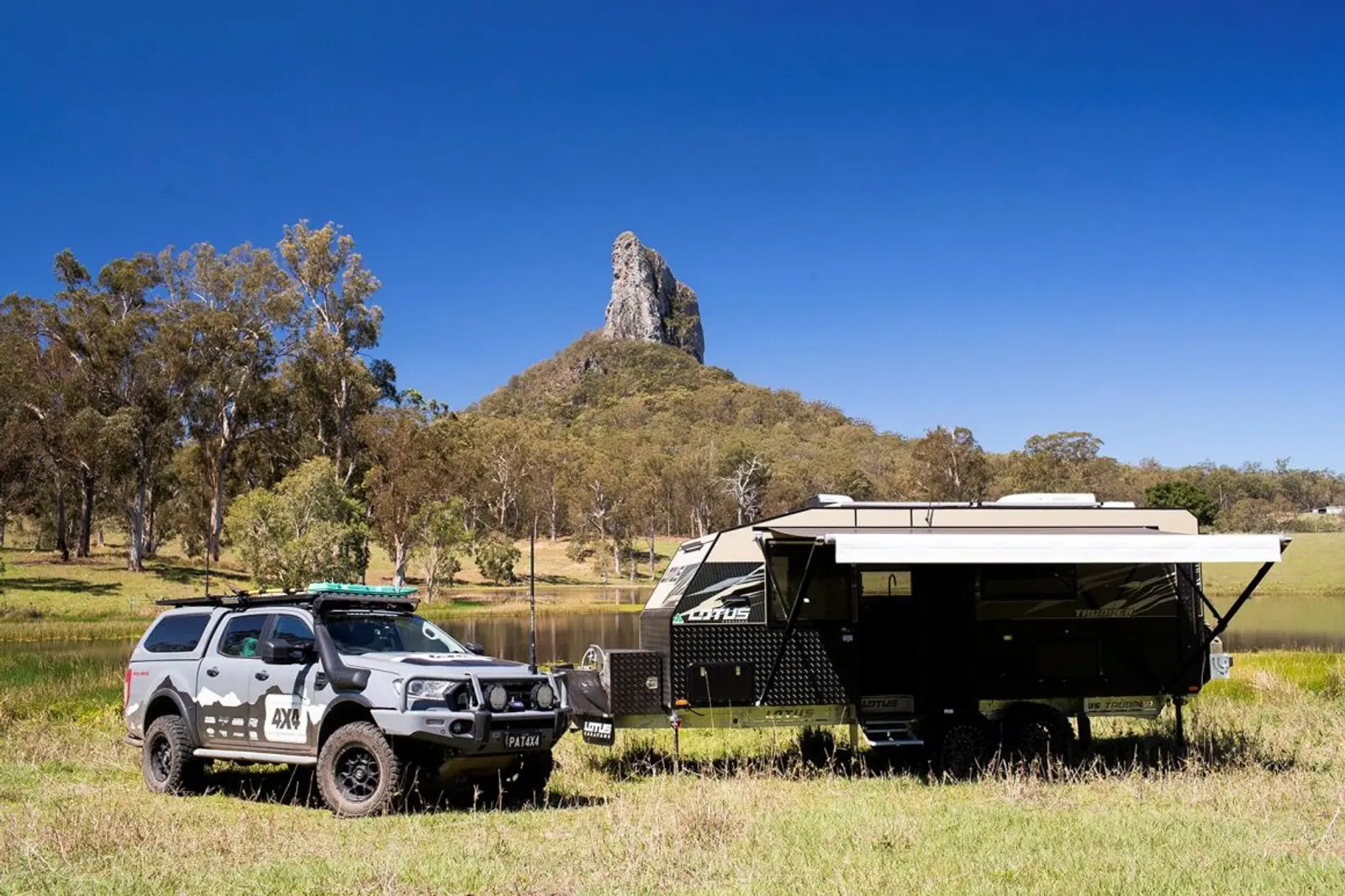
Pat Callinan with his Ford Ranger towing a caravan
Taking Control with Braking
When you’re towing off-road, braking becomes a whole different conversation. Your vehicle’s brakes aren’t designed to stop an extra two or three tonnes trying to overtake you on a loose descent.
Without proper trailer braking, the van or camper keeps pushing. On gravel or steep tracks, that’s when jack-knifing becomes a real risk.
An electronic brake controller is essential, but not all setups are equal. Proportional braking works well on the highway, matching the trailer’s braking effort to the tow vehicle. In the bush, manual control is the game changer.
4X4ing common sense says avoid heavy brake inputs on steep descents. Locking wheels means no steering. With a manual brake controller, you can apply the trailer brakes independently without stomping on the brakes in your 4X4. It acts like an anchor, keeping the rig straight and controlling speed without upsetting the front tyres.
Once you’ve used that technique a few times, you’ll wonder how you ever towed without it. Look for a controller that offers both modes and lets you fine-tune things on the fly.
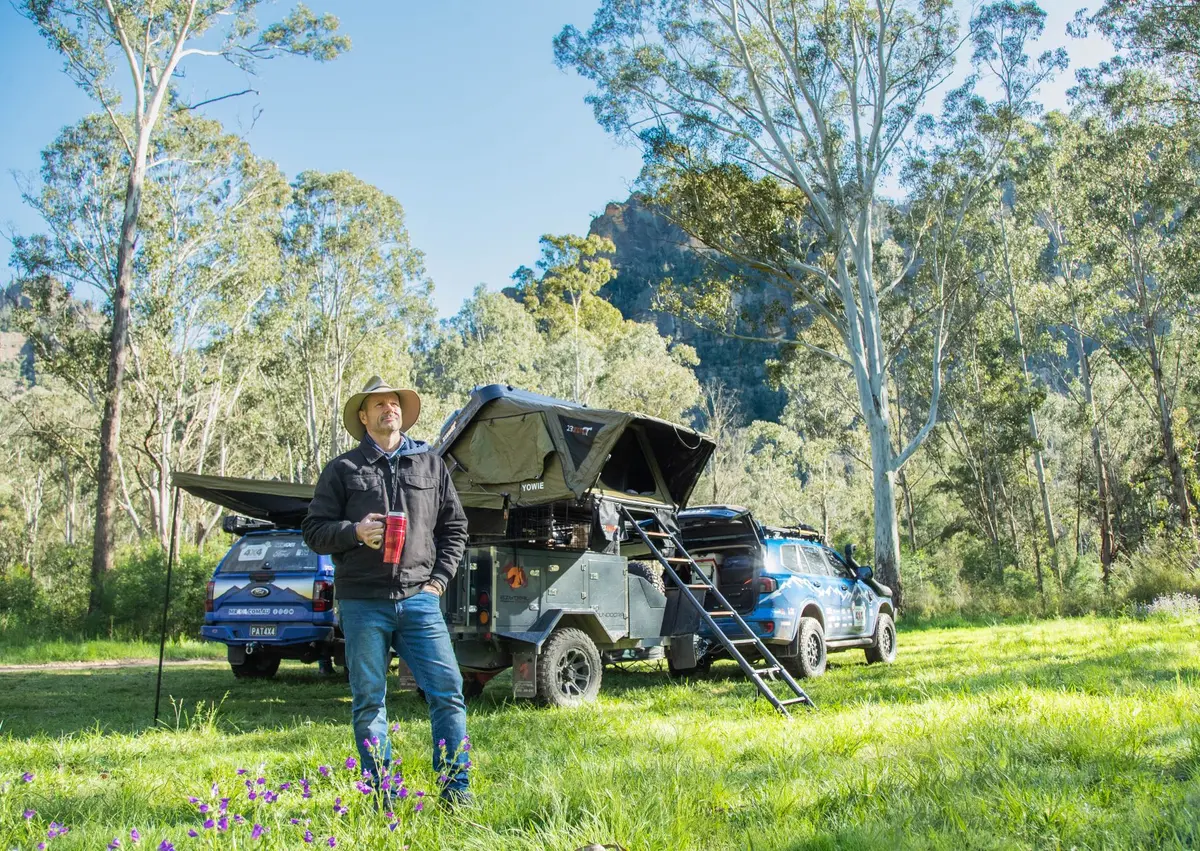
Pat Callinan and his 4X4s towing a camper trailer
The Bottom Line
Off-road towing demands a different mindset. Momentum changes. Stopping distances blow out. Stability isn’t guaranteed, it’s managed.
Set the vehicle up to carry the load without sagging.
Know your weights and balance them properly.
Run a brake controller that gives you genuine control.
And slow it all down. The bush rewards patience.
Get the fundamentals right, and towing off-road becomes less stressful and far more capable. You’ll go further, break less, and enjoy the journey a whole lot more.
Keep the shiny side up.
Pat
Thinking of towing?
Cover anywhere you can legally go in Australia