
Why you need a Brake Controller at all
If you tow anything with electric brakes, the trailer's brakes do nothing until something in the tow vehicle tells them to work. That something is the brake controller. It senses that you're braking and sends a proportionate voltage down the trailer plug to the electromagnets in the trailer's brake drums.
In Australia the rules are simple. A trailer with a gross trailer mass over 750 kilograms must have brakes. Over 2,000 kilograms it must have brakes on every wheel that can be applied from the driver's seat, plus a breakaway system that applies the trailer brakes automatically if it separates from the vehicle and holds them for at least 15 minutes. Almost every caravan and most camper trailers in this country use electric drum brakes, so almost everyone who tows needs a controller.
Proportional Versus Time-Based
There are two kinds, and the difference matters more than the brand.
A time-based controller, sometimes called time-delayed, applies trailer braking that ramps up over a set period after you touch the pedal, regardless of how hard you're braking. It's cheap and crude. A light touch at a roundabout and an emergency stop get the same ramp.
A proportional controller uses an internal accelerometer to measure how hard the tow vehicle is actually decelerating and applies the trailer brakes to match. Brake gently and the trailer brakes gently. Stand on the pedal and the trailer stands on its brakes with you. The result is a rig that stops as one unit, with less wear on the vehicle brakes and far less tendency for the trailer to shove the car around.
For a caravan or a loaded camper, proportional is the only sensible choice. Time-based controllers belong on light box trailers.
Dash-Mount Versus Remote Head
Older controllers were a box the size of a paperback screwed under the dash, with a knob for gain and a lever for manual override. They work, but they're ugly, they take up knee room, and the accelerometer has to be mounted level and square to the vehicle to read properly.
Newer designs put the electronics in a small module hidden behind the dash and run a single rotary knob out to a blank switch position or a neat mount. The module self-levels, so it can be mounted at any angle, and the knob gives you gain adjustment and manual override in one control. That is the style most people fit now, and the one you will see in the majority of new tow vehicles.
Setting the Gain Properly
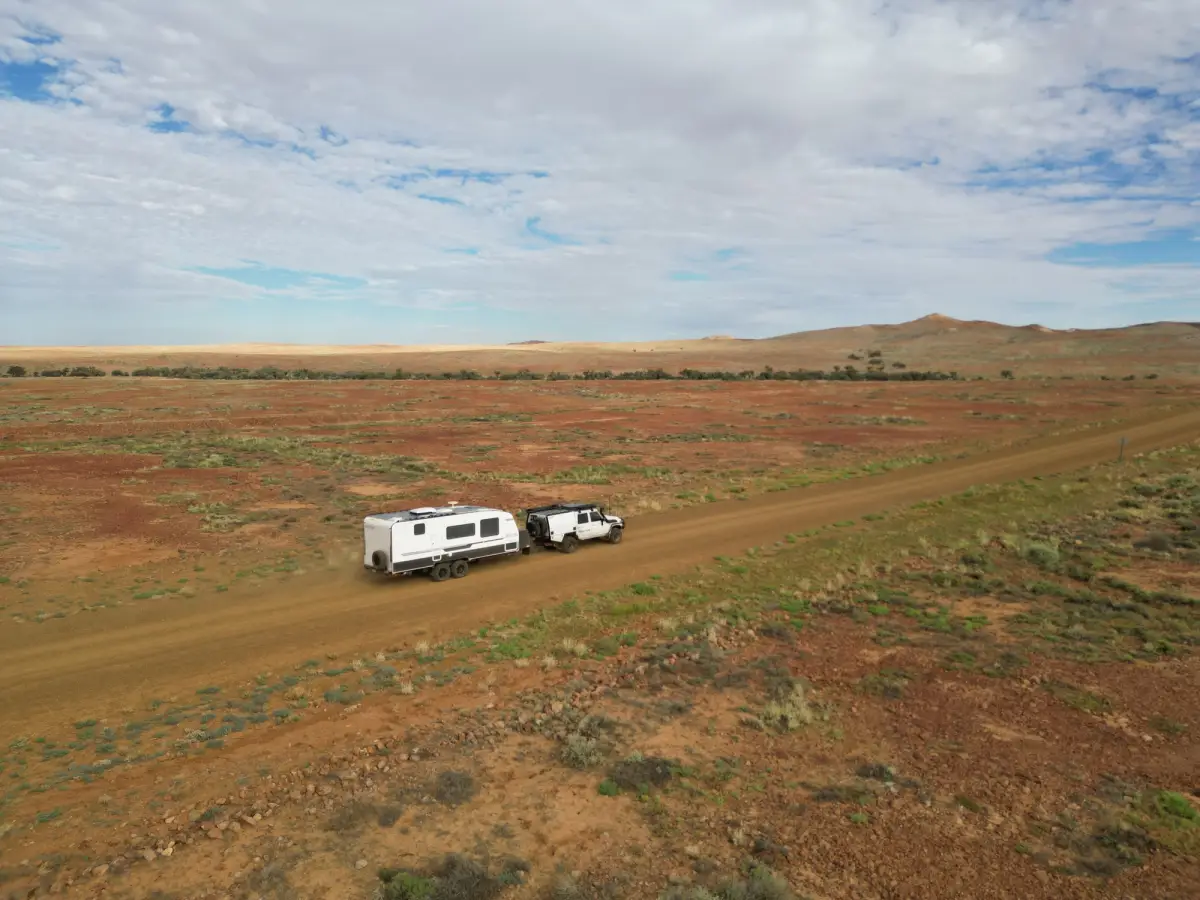
A 4X4 towing a caravan in Outback Australia
Gain is how much braking force the controller sends to the trailer for a given stop. Too little and the vehicle does all the work. Too much and the trailer wheels lock on every stop, flat-spotting tyres and making the rig unstable in the wet.
The setup is the same for any controller. On a quiet road, at around 40 km/h, brake firmly and watch and listen. If the trailer wheels lock, turn the gain down. If the trailer feels like it's pushing the vehicle, turn it up. Repeat until the trailer brakes just short of locking. Do this again whenever the load changes, and again on dirt, where you will usually want less.
Most controllers also have a manual override. Sliding or pressing it applies the trailer brakes alone, without the vehicle brakes. It's the tool for settling a sway before it gets worse, and worth practising on an empty road so you can find it without looking.
Cover that tows the whole rig
Caravan and camper trailer insurance for on-road and off, anywhere you're legally allowed to go.
Mode for Dirt and Off-Road
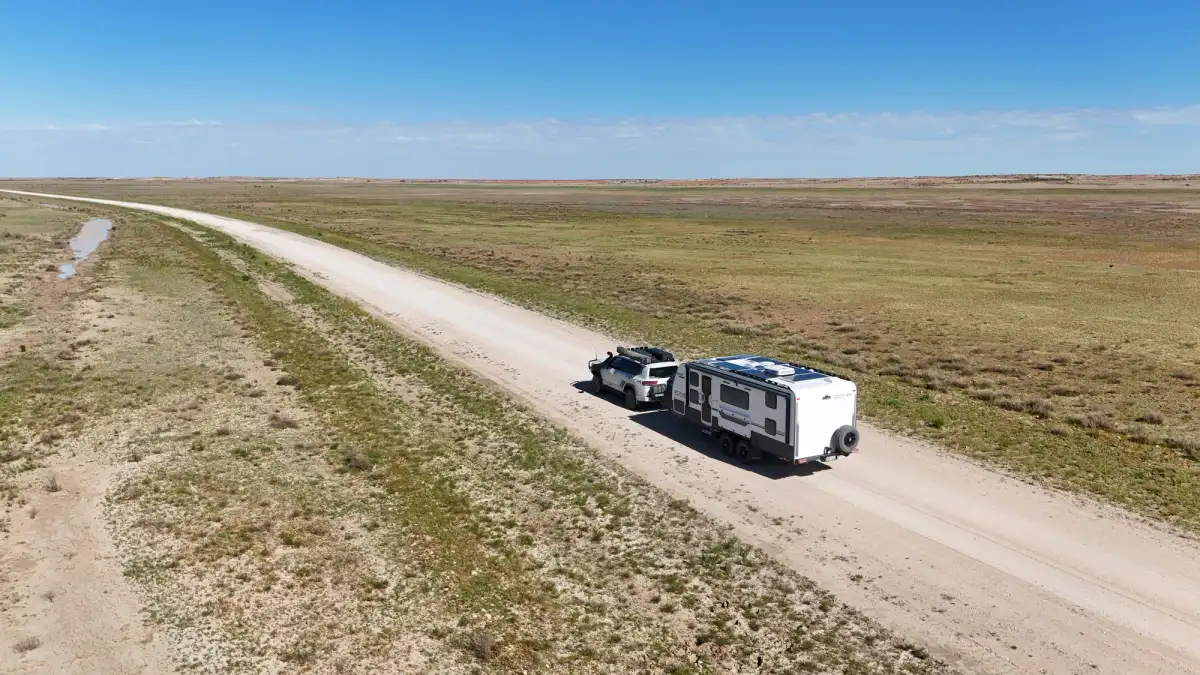
A caravan being towed through the Australian Outback by a 4X4 Toyota LandCruiser
On a loose surface the trailer wheels lock earlier, and some proportional controllers offer a second mode that softens the response for that. If yours has one, use it. If not, turn the gain down a notch when you leave the bitumen and back up when you return.
Installation
Any auto electrician can fit one in an hour or two. The controller needs a feed from the brake light circuit, a heavy fused supply from the battery, an earth, and the output wire to the trailer plug. On modern vehicles with CANbus and factory tow packs, check whether the vehicle already has a factory controller or a wiring provision, which simplifies things. Make sure the trailer plug pin assignments are correct for the trailer you tow. Mismatched pins are a surprisingly common reason for brakes that don't work.
Checking it Works
Before every trip, with the trailer hitched, apply the manual override and feel for the trailer brakes dragging as you roll forward slowly. Check the breakaway battery is charged, because the breakaway system is useless with a flat battery. Our three checks before leaving camp covers the full pre-departure routine, and towing tips for beginners goes through the rest of the setup.
Where it fits with your Insurance
A working, correctly set brake controller is a legal requirement for a braked trailer, so a caravan towed without one is a caravan towed illegally, and that is a conversation nobody wants to have with an insurer after a crash. Club 4X4's caravan insurance and camper trailer insurance cover the trailer on and off road anywhere you're legally allowed to tow, and the controller itself is an accessory on the tow vehicle that can be listed under your 4WD insurance. Getting the weight distribution right makes the controller's job easier too.
The adventure starts where the bitumen ends
See how Club 4X4 can help