I genuinely bloody love a good storm.
There's just something so magnificent and captivating about watching an enormous weather system roll across the Australian landscape. The distant rumble of thunder, the smell of rain in the air and a lightning show that no amount of money could ever buy. I could sit and watch one for hours. In fact, I have, more than a handful of times.
Unfortunately, I've discovered over the years that storms don't always share my enthusiasm.
Some seem to take considerable pleasure in ruining my touring plans, destroying equipment, threatening my personal safety and testing what little remains of my sanity.
And if you've ever been woken at two in the morning by the unmistakable sound of an awning attempting to enter low Earth orbit, you'll understand exactly what I'm talking about. Ask me how I know.
Now, I've been fortunate enough to spend a fair portion of my life travelling through some of the most remote corners of Australia, and I've learnt that it doesn't take much for an otherwise perfectly good adventure to descend into absolute chaos when the weather decides to get involved.
One moment you're sitting back on cloud nine admiring Mother Nature's handiwork, and the next you're standing in your undies, ankle-deep in mud, desperately trying to prevent several thousand dollars' worth of camping equipment from becoming somebody else's problem (don’t ask me how I know about that one either).
And while there's usually a good story to be told afterwards, there's a point where an entertaining inconvenience can become something considerably more serious.
Knowing where that point is, and what to do before you reach it, is what I want to talk about.
The adventure starts where the bitumen ends
See how Club 4X4 can help
When Four-Wheel Drive Becomes Four-Wheel Slide
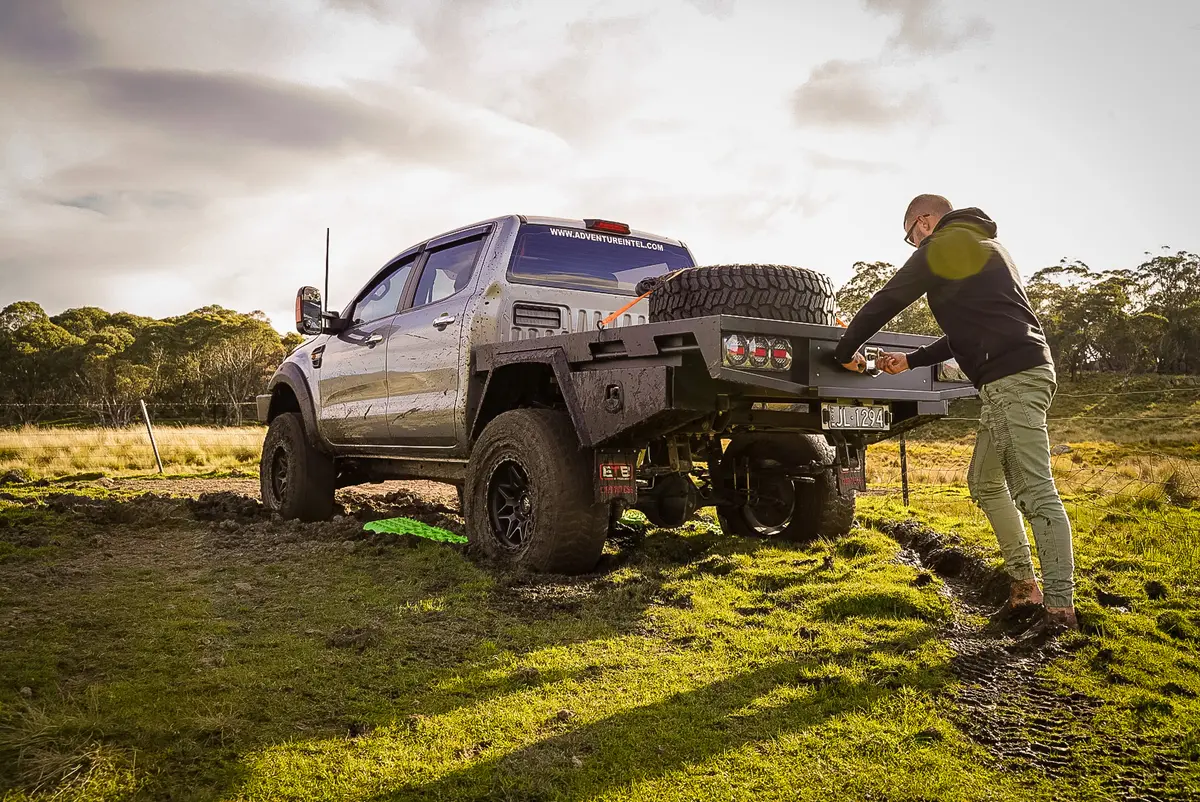
A man recovering a 4X4 Ford Ranger ute from mud
There's a particular type of Australian mud that I reckon deserves its own classification as a controlled substance.
Blacksoil. It’s a proper bastard of a thing.
When it's dry, it's generally unremarkable. Add a decent shower though, and suddenly you're attempting to drive across something with the consistency of axle grease.
Tyres clog, steering becomes almost non-existent, and your three-tonne touring rig develops an alarming interest in travelling sideways. Which, I’ll admit, is kinda fun. For the first four seconds.
Monitor weather warnings and road closures, avoid floodwater, reconsider wet or damaged tracks and move away from dangerous campsites before conditions deteriorate. If you're already somewhere secure, staying put may be safer than attempting to drive out through severe weather.
I've spent enough time driving through difficult country to appreciate what a capable 4X4 can achieve, but that’s also taught me there’s a considerable difference between challenging tracks and conditions that have become fundamentally unsafe.
Lockers, aggressive tyres and a winch are wonderful things, but they don't exempt you from the laws of physics.
Neither does dropping your tyre pressures. It can improve traction in some conditions, but it won't magically restore braking or steering grip on saturated soil.
If a road's been closed, respect it. Apart from the obvious safety implications, tearing up a saturated track can cause damage that affects an entire community long after you've disappeared down the road.
One of 4X4’ings BIGGEST Dangers: Ego
You've driven a thousand kilometres, spent enough on fuel to restore Greece’s economy, organised time off work and promised the family the adventure of a lifetime.
Then the forecast turns to shit.
Suddenly, abandoning the trip feels like admitting defeat. Psychologists call this “the sunk-cost fallacy.” Essentially, we're reluctant to walk away from something because of everything we've already invested in it.
And it's easy to fall victim to, particularly when you've got a convoy of mates and somebody confidently declaring they've driven through worse.
I've always reckoned there's a fine line between perseverance and stupidity, and unfortunately, a decent set of muddies can make that line surprisingly difficult to see.
The best wheelers I've met aren't necessarily the ones who'll attempt absolutely anything. They're the ones who recognise when the conditions have changed enough to warrant a different approach.
There's no shame in turning around. But… There can be an awful lot of consequences in refusing to.
Is YOUR Campsite Trying to Kill YOU?
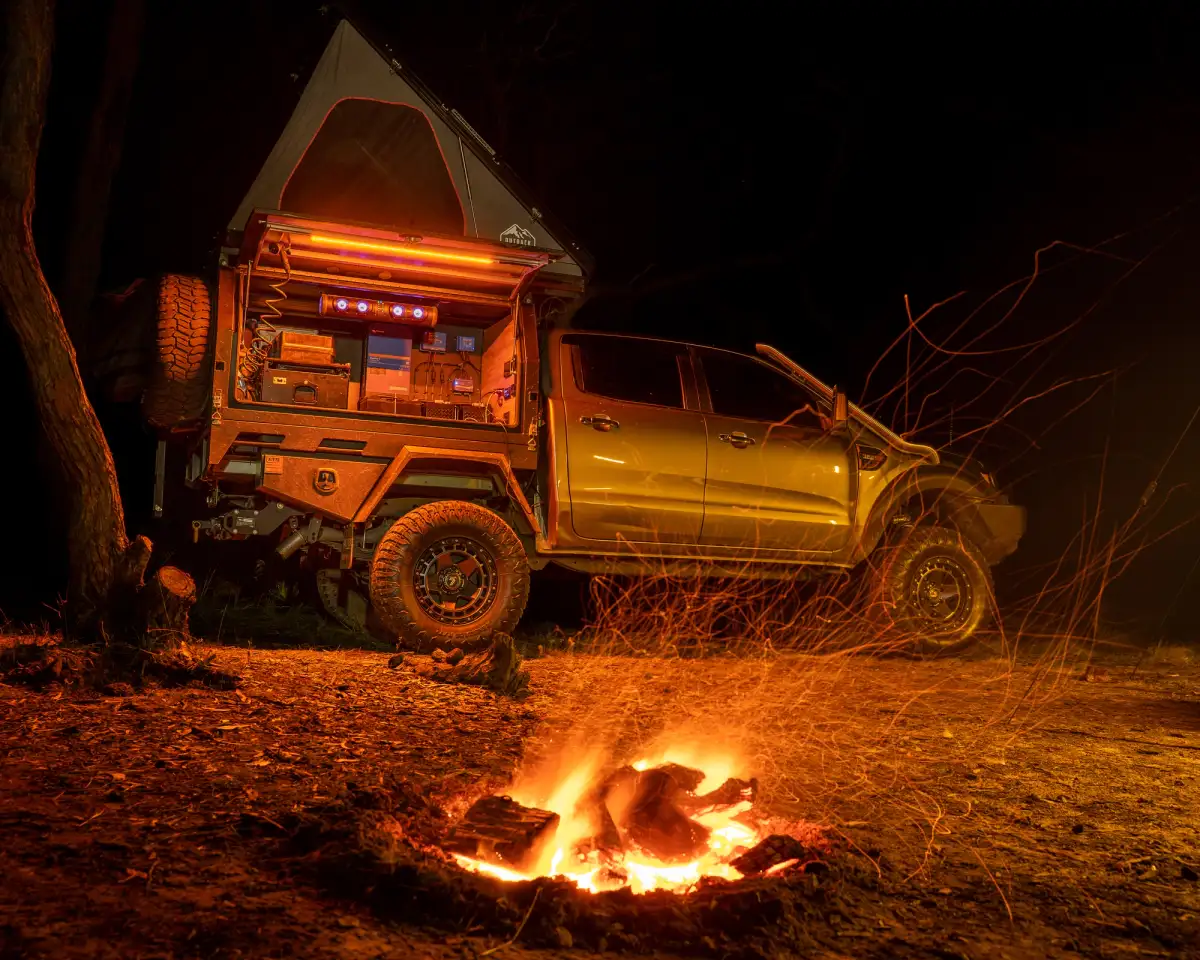
A 4X4 Ford Ranger ute with a set up rooftop tent by a campfire
That beautiful flat campsite beside the creek? Potential floodplain.
The enormous gum tree providing lovely afternoon shade? Potentially several hundred kilograms of timber waiting to come crashing down.
And that exposed ridgeline with the spectacular views? Probably not where I'd choose to wait out a lightning storm.
A campsite that seems perfect in fine weather can become a bloody terrible idea when conditions deteriorate, let’s be real.
Before a storm arrives, consider drainage, nearby waterways, dead or overhanging branches and whether you've actually got a safe way out.
And for goodness' sake, pack away the awning before the wind arrives, in fact, pack it away before you pack yourself into your sleeping bag. I can assure you that trying to wrestle one into submission during a thunderstorm is considerably less enjoyable than it sounds.
During lightning, a fully enclosed, hard-topped metal vehicle is generally a safer refuge than a tent, provided you're parked somewhere safe and away from floodwater and falling trees.
But this truly is where sound judgement becomes important.
If you're already camped somewhere secure and elevated, with adequate supplies, attempting to drive out through dangerous conditions might be considerably riskier than staying put.
Conversely, if you're camped in a dry creek bed, waiting until the water arrives before deciding to move is a spectacularly bad strategy.
Make those decisions early, while you've still got options.
SIT REP: Floodwater Doesn’t Give an F About What You Drive
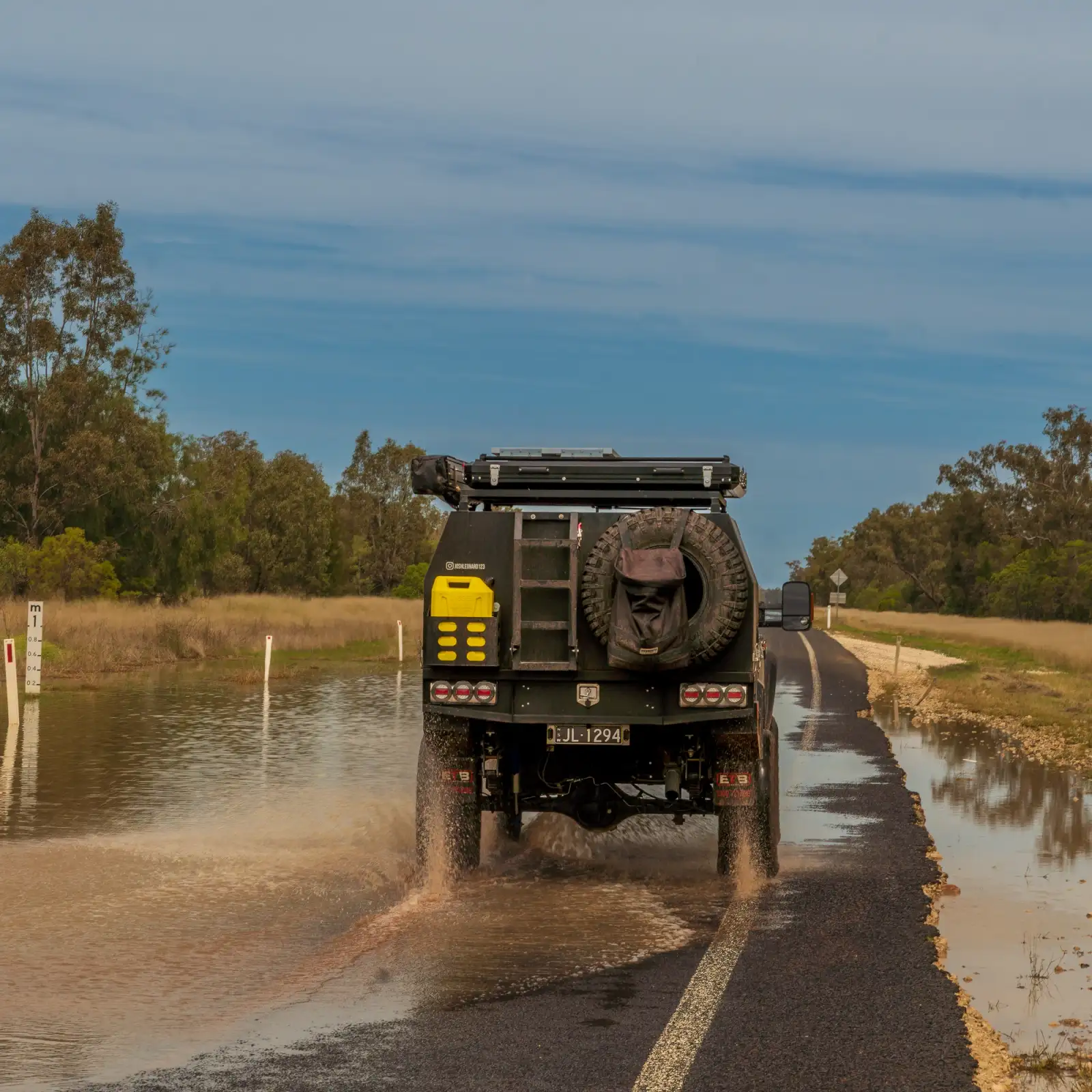
I don't care whether you're driving a Suzuki Sierra or a six-tonne expedition truck and neither does the moving floodwater. A snorkel doesn't make your vehicle waterproof, and a suspension lift won't save you from an undermined road, submerged debris or a strong current.
Even relatively shallow flowing water can be dangerous, and the depth you can see tells you very little about what's happening underneath.
A crossing you've driven a hundred times might have been completely reshaped by the previous night's rain. And once a vehicle starts floating or being pushed sideways, your lockers and expensive tyres become largely irrelevant.
There’s a legitimate reason you’ll hear real wheelers say you should never drive through floodwater. Your holiday might be delayed, but that's considerably preferable to discovering your touring rig has developed the handling characteristics of a poorly designed houseboat.
Plan B Should Exist BEFORE Plan A goes to Absolute Sh*t
I've always maintained that good remote-area preparation isn't necessarily about carrying every accessory known to mankind. It's about giving yourself options when things don't go according to plan.
Extra food and water, sensible fuel reserves, downloaded and physical mapping, reliable comms and a realistic understanding of your vehicle's limitations are all important.
So is having an alternative destination, knowing which roads are likely to close and keeping someone informed of your movements. A satellite communicator can be invaluable outside mobile coverage, while a registered personal locator beacon provides a dedicated means of raising the alarm in a serious emergency.
And if you become stranded remotely, remaining with your vehicle in a safe location is generally preferable to wandering off into unfamiliar country.
I'd also encourage people to establish a few non-negotiable reasons to change their plans before setting off. ‘Cause y’know, boundaries are important. Just ask my therapist.
Severe weather warnings, rising waterways, deteriorating r
oad conditions or a threatened escape route should all prompt you to reassess what you're doing.
The trick is making those decisions before circumstances start making them for you.
When the Sunshine Returns
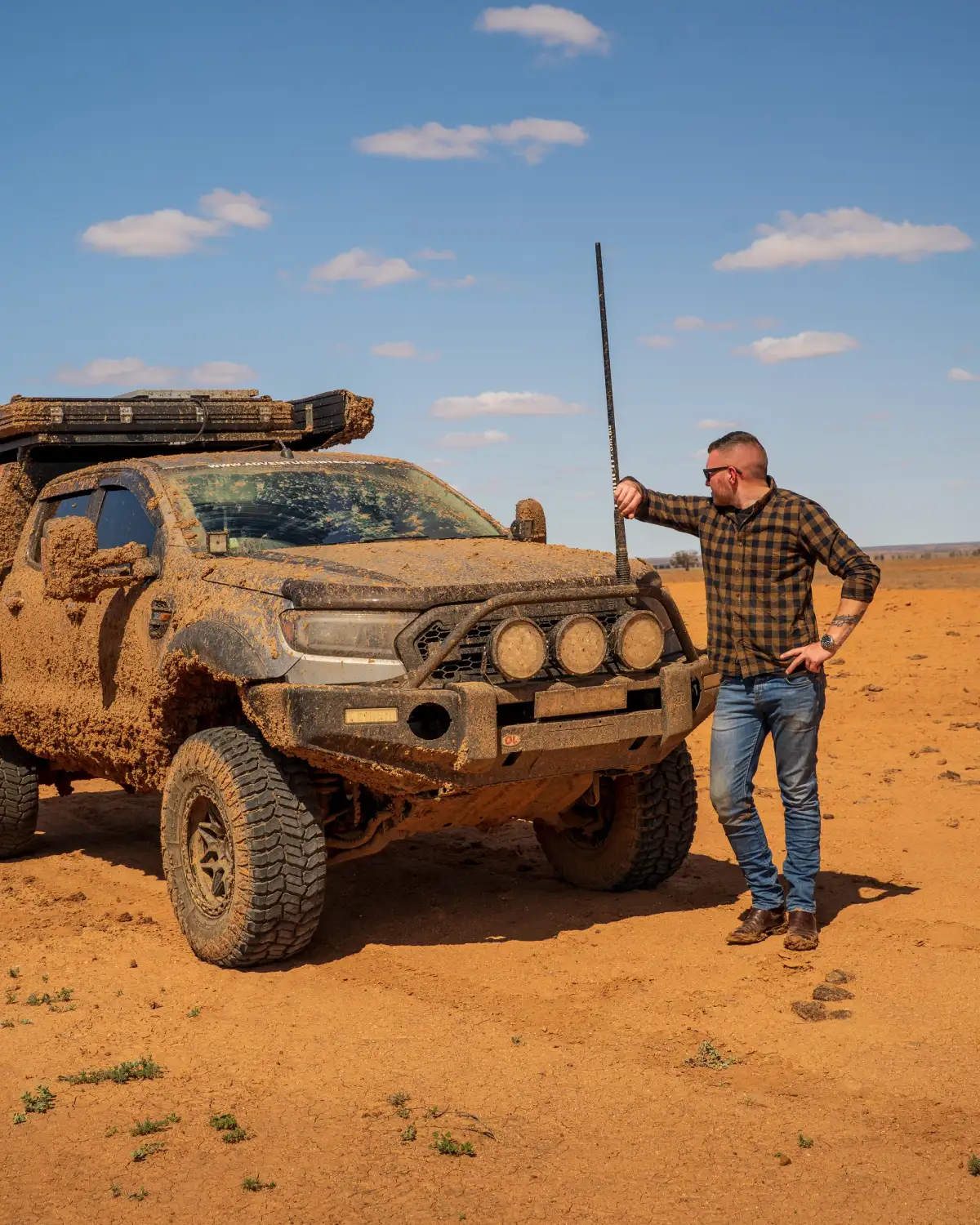
A man and his mud-covered 4X4 Ford Ranger ute in Outback Australia
A significant trap exists in assuming that once the storm has passed, everything can return to normal. The fact is, creeks can continue rising long after the rain stops, trees may have been weakened and roads that were perfectly trafficable yesterday can remain impassable for days.
And while I understand the frustration of being stuck somewhere longer than anticipated (trust), there's little point surviving the storm only to come unstuck because you've become impatient with the aftermath.
I suppose that's one of the things I've come to appreciate about travelling this country. For all the preparation, experience and expensive equipment we accumulate, there are still occasions when the most sensible thing we can do is absolutely nothing.
And I reckon there's something rather humbling about that.
I'll never stop loving a good storm. There's something extraordinary about witnessing nature at its most powerful, particularly in the remote parts of Australia where the landscape seems to amplify everything.
But I'd much rather be watching the lightning with a cuppa in hand than explaining to my insurance company how my caravan ended up three kilometres downstream.
After all, the best stories usually involve something going spectacularly wrong.
The trick is making sure you're around to tell them. Want to learn more about reading and understanding the weather forecast? Check out my article on exactly that, right here.
The adventure starts where the bitumen ends
See how Club 4X4 can help