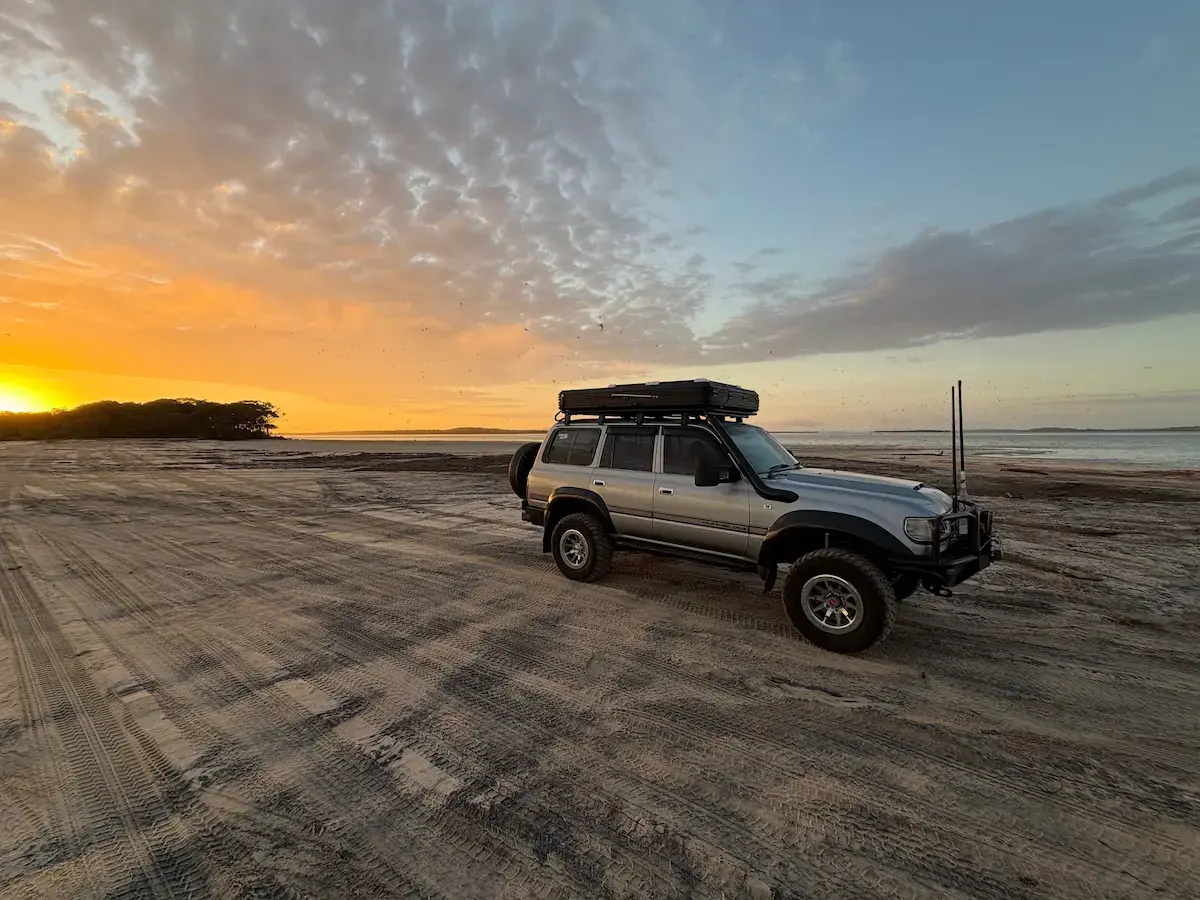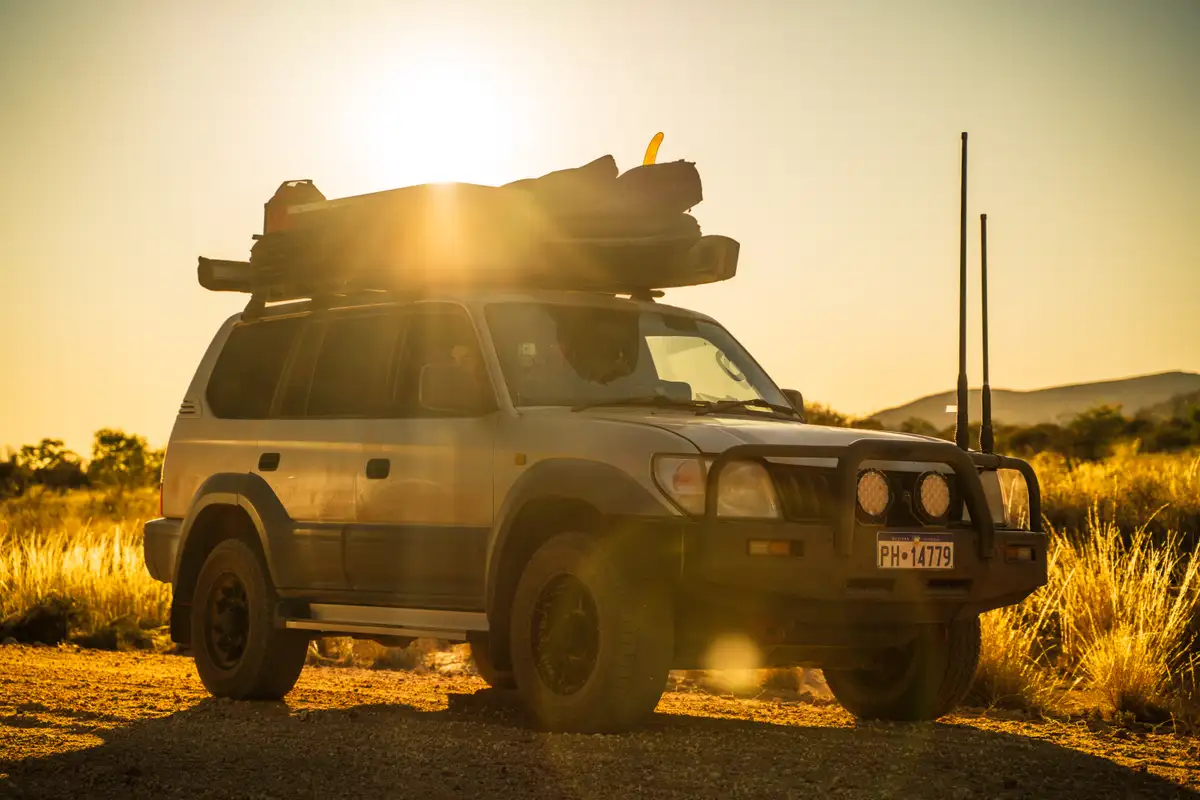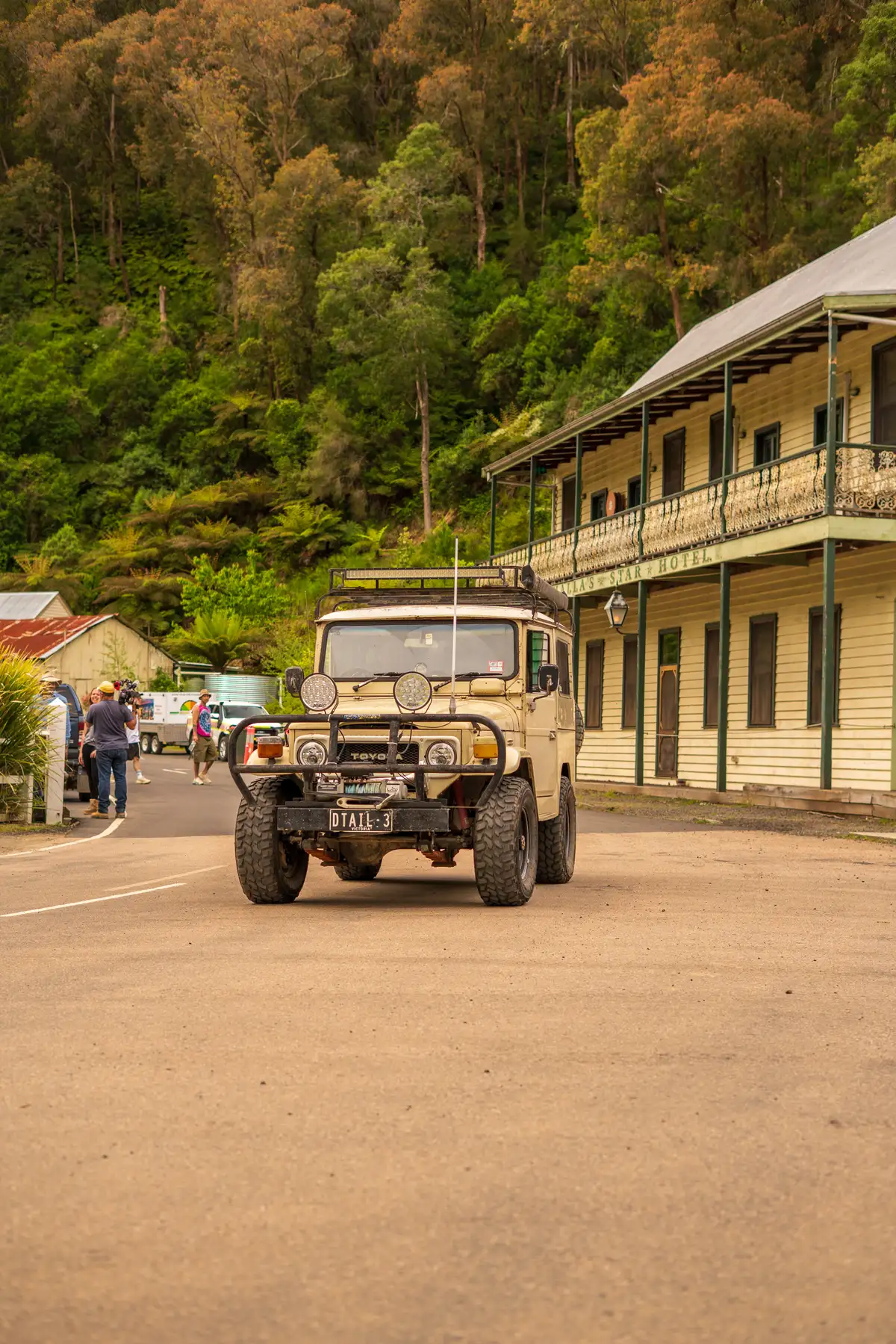
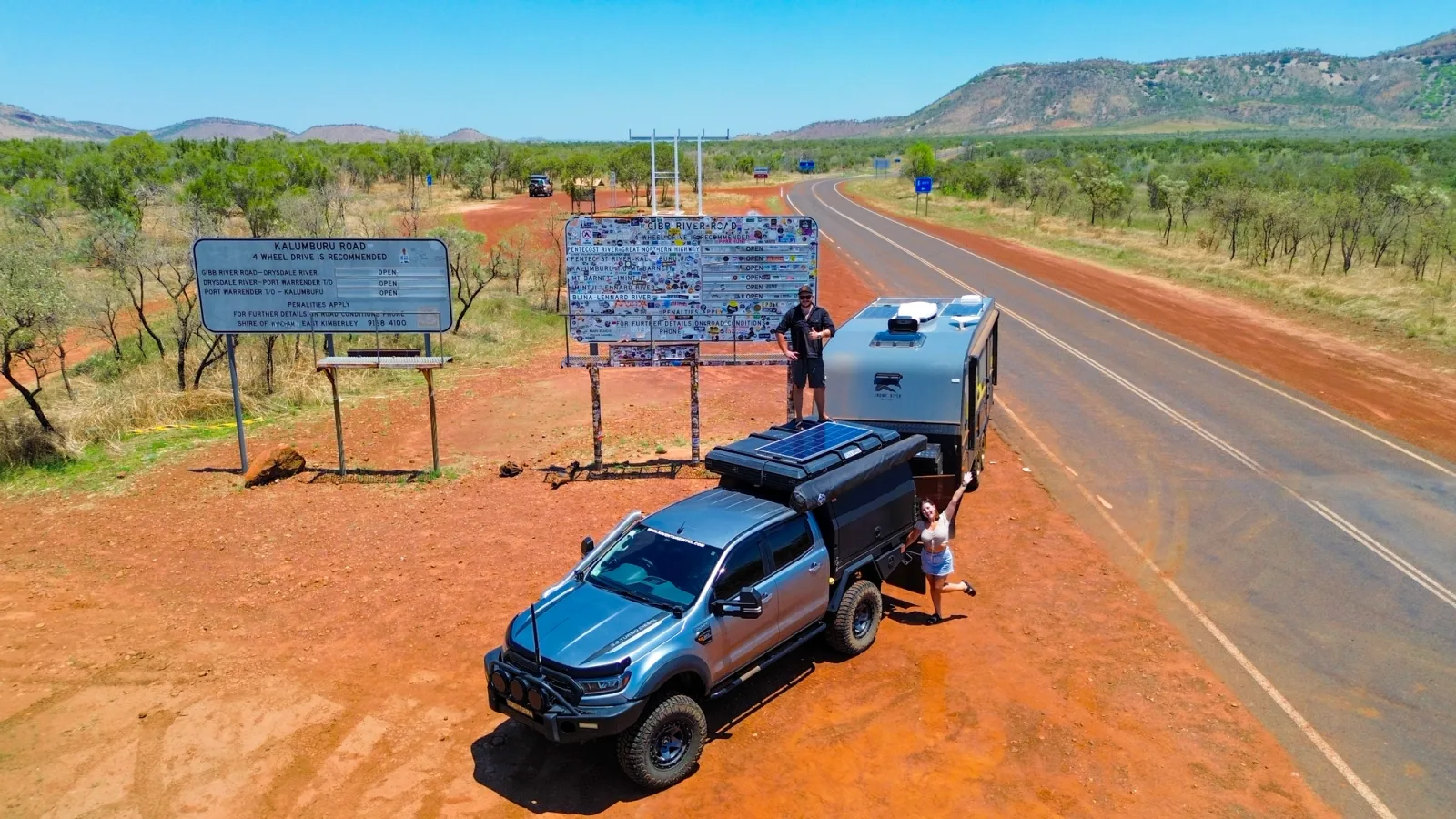
You’d have to be living under a rock to not have heard of the “Big Lap”, a dream Australian road trip adventure that involves a full circumnavigation of our incredible land down under. Undertaken by digital nomads, families, retirees, and curious travellers alike, a big lap of Australia allows you to chase freedom and adventure, typically for a 12-month stint (though many of us fall in love with the lifestyle and choose to stay on longer!)
A lot goes into planning a big lap: what vehicle you’ll rely on, how you’ll budget for your time away, what timeframe you’re looking at, what you’ll pack, whether you’ll swag it or caravan around, plus so much more.
One huge aspect of big lap planning is working out how you’ll chase the seasons along your route that’ll allow you to experience the utmost comfort, safety, accessibility, and of course enjoyment. Timing your journey around Australia’s shifting climate patterns requires strategic planning, and a decent understanding of regional weather cycles. Which is exactly why I’ve mapped it out for you in this yarn.
Understanding Australia’s Seasonal Divide
Australia’s climate is broadly divided into two contrasting zones and if you’ve spent the majority of your life in the southern half of it, it’s highly likely you’d be unaware of how the north performs. What you’ll find up in the northern half of Australia is a tropical climate that has distinct wet and dry seasons. The southern half follows a more traditional temperate pattern with summer, autumn, winter and spring.
It’s important to note that the northern regions are shaped by monsoonal weather patterns and from roughly November to April, these areas experience intense rainfall, humidity, flooding and cyclone activity. Trust me, you don’t want to be caught off guard by a cyclone whilst you’re trying to enjoy your downtime in Exmouth! In contrast, from May to October you’ll see the dry season, which brings clear skies, lower humidity and accessible roads. Naturally, this is the more popular time for travellers to head up north.
Southern Australia has cooler winters and warm to hot summers. You’ll find that the coastal winds, cold fronts, and rain systems are what primarily dominate the winter months down south, while summer provides those long days which are ideal coastal travel conditions.
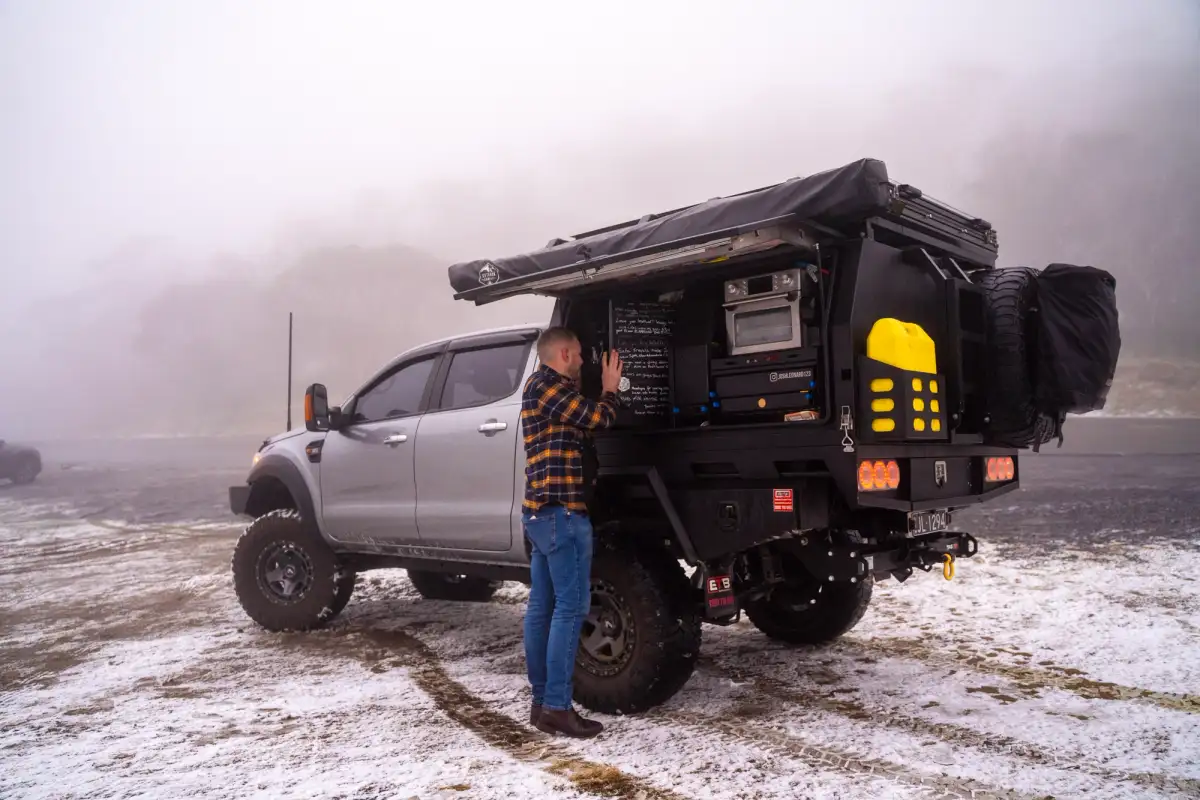
Ford Ranger and man in snow
The idea of chasing the seasons on your big lap, centres around staying as warm as possible in winter and staying cool in summer. Although you will still feel the heat in summer in the southern half of Australia, it’s not at all comparable to the dry heat up north! Travellers tend to travel north during winter and south in the summer to chase comfortable weather conditions year-round.
Starting your Big Lap in the South: During Summer
In an ideal world, if you were heading off on your big lap, trying to chase its peak seasons, then you’d begin your journey in the southern states during summer, between December and February. This period showcases southern Australia at its most vibrant. The coastal destinations you’ll find along Victoria’s Great Ocean Road, Tasmania’s national parks and South Australia’s Eyre and York Peninsula shine their brightest during these months.
The summer allows you to enjoy warm swimming conditions, access national parks, and experience the lively coastal towns whilst they’re buzzing with activity and tourists. Tasmania, which is known to be cold and unpredictable in winter, becomes particularly inviting with its mild temperatures and spectacular hiking conditions. Not to mention those iconic 4WD tracks that are on most wheeler’s bucket lists!
It is important to keep in mind that summer is the peak travel season, especially when you throw school holidays and Christmas breaks into the mix. Campsite availability can be difficult to lock down and prices often rise during peak periods, so it’s worth booking as far ahead of time as you can manage.
Although flexibility and spontaneity are two things travellers not only embrace but enjoy, if you don’t plan and book ahead you’re highly likely to miss out.
Autumn Transition: Moving West and North
With those epic summer memories now under your belt, your big lap will see you heading west as autumn surfaces during the months of March and May. And in order to get over west, you’ll be crossing the Nullarbor, another bucket-list item that Big Lappers tick off as they go (make sure to grab your pictures at the roadhouses and with the signs!). Autumn is considered to be one of the best times to cross the Nullarbor Plain as the daytime temperatures are milder and the winds are typically less severe. Two things that will make your journey far less arduous on Australia’s longest straight road.
Once you’ve enjoyed swimming at the incredible beaches at Esperance, exploring the Margaret River area and heading north around Perth, this is a great time to head toward Western Australia’s Coral Coast. Doing it this way, you’ll experience incredible marine environments, such as the world-heritage listed Ningaloo Reef, during its most optimal conditions.
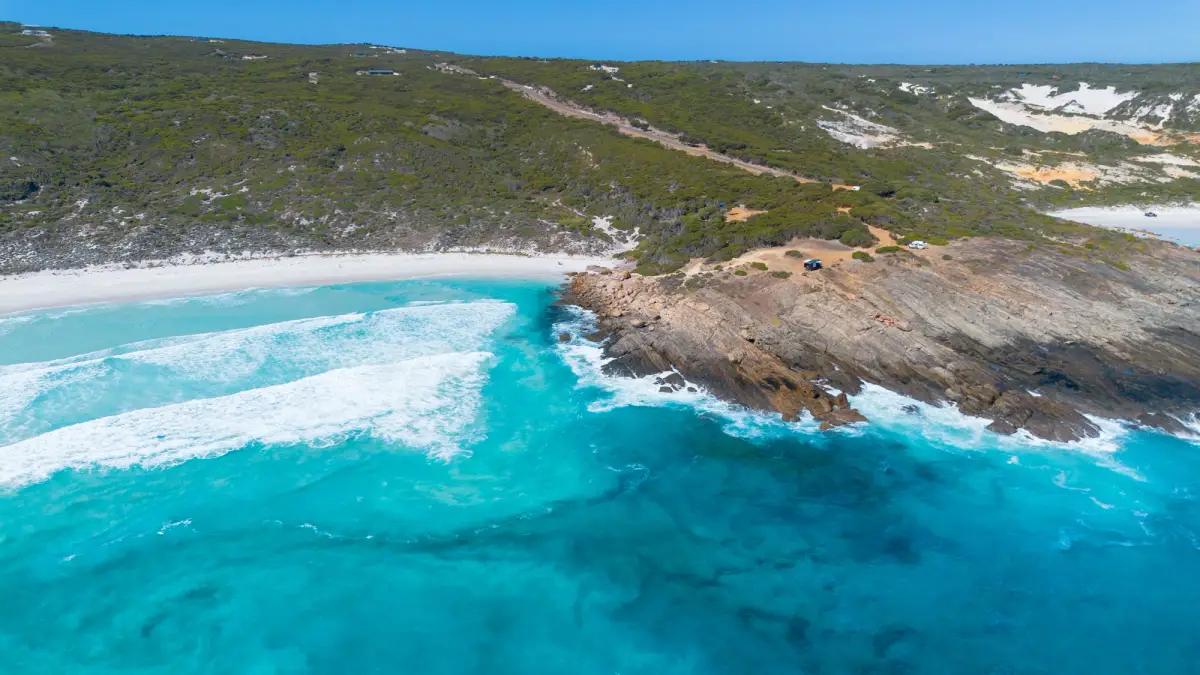
Bremer Bay, WA
Further inland from the Ningaloo Coast, national parks such as Karijini become accessible before winter crowds arrive. Waterfalls still flow from the previous wet season, gorges glow in rich red hues, and hiking temperatures remain manageable. All very valid reasons to chase the season!
Winter Migration: Exploring the Tropical North
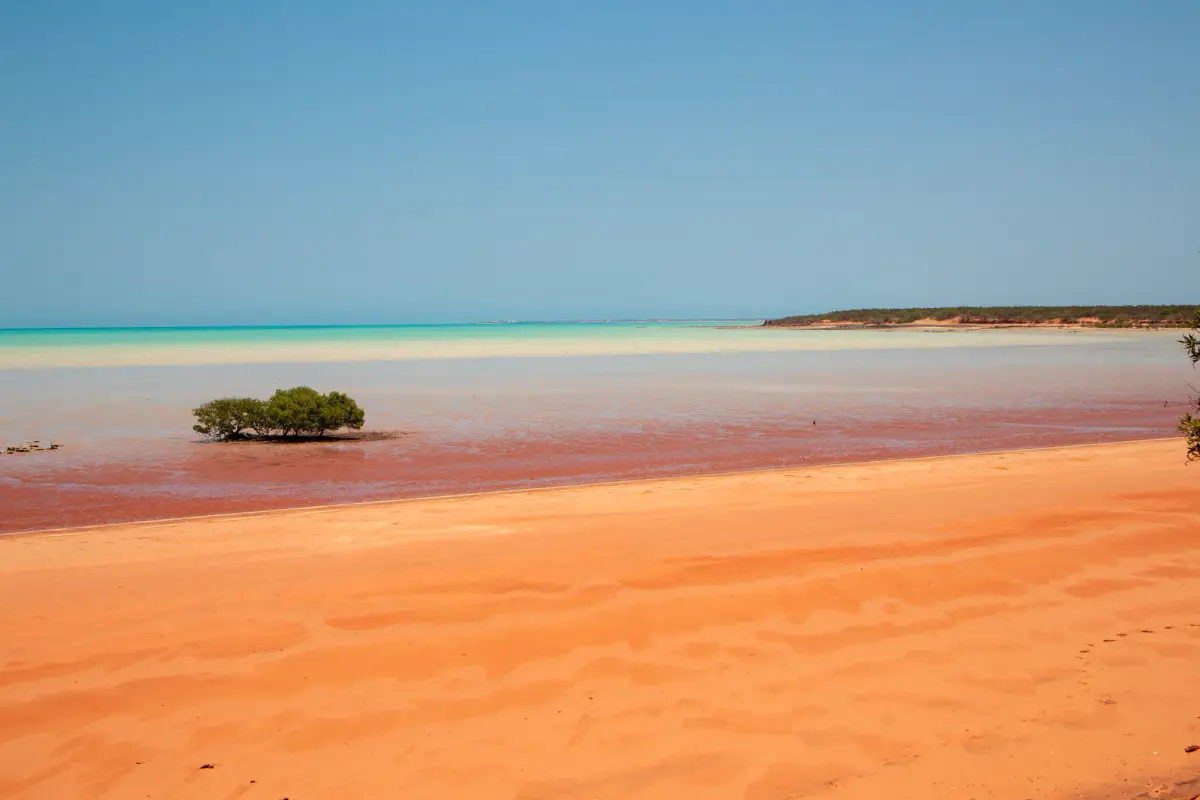
Broome, WA
By June, July, and August, you’ll have reached northern Australia in its tropical dry season. This period is widely regarded as the best time to explore iconic northern destinations such as Kakadu National Park, Litchfield National Park, Broome, and the gorgeous Kimberley region. During the dry season, the humidity of the area drops significantly allowing for much more bearable temperatures, roads reopen that had been closed for the wet and the floodwaters recede. You’ll have access to beautiful waterfalls, swimming holes, gorges and cultural sites.
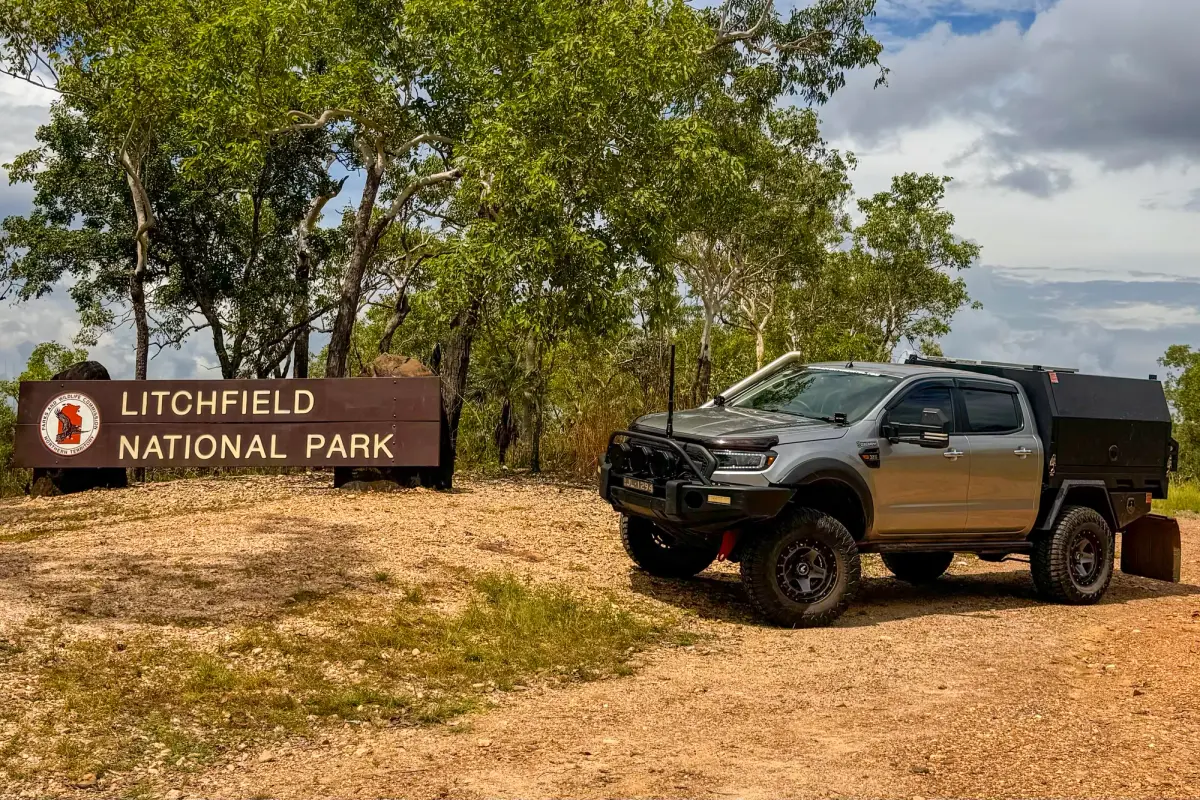
Litchfield National Park, AUstralia
If you’re wanting to conquer the infamous (and sometimes notorious) Gibb River Road, then you have no choice but to head up during this time as it’s only accessible during this period. Once the wet season comes, the road closes due to flooding and safety hazards and the skeleton staff at the stations in the area hunker down for some intense tropical weather.
Spring Return: Queensland and the East Coast
As temperatures begin rising in September through to November, you’ll begin travelling down the Queensland coastline, enjoying a balance of warm weather, lower humidity, and reduced cyclone risk, three things that go out the window when the wet season begins. If Cape York is on your bucket list (it should be) this is when it’s accessible for thrill-seekers and adventurous wheelers who are keen to tick off Australia’s northernmost point. Not to mention the exhilarating sections of the Old Tele Track on the way up that leave you with a tonne of memories, covered in mud and if you’re unlucky, a bunch of vehicle repair fees!
Further south, the Great Barrier Reef and the Whitsundays provide outstanding snorkelling and sailing conditions during this period. Continuing along the east coast reveals a string of iconic beach destinations that you may want to visit, such as Airlie Beach, K’gari, the Sunshine Coast and Byron Bay.

Lake McKenzie, K'Gari, QLD
If you’re a wildlife lover, spring is one of your best bets for whale sightings as they migrate, visible from most coastal lookouts. Although it is a great time to be there, spring is generally considered shoulder season along much of the east coast. For that reason, you’re likely to run into less travellers and can enjoy fewer crowds and better campsite availability when compared to the summer months.
Travelling Against the Crowd
Let’s say you’ve read everything I’ve just said and you’re thinking to yourself “hmm, that sounds an awful lot like huge crowds, limited campground availability and zero ability to feel remote”. Well, you wouldn’t be wrong! It’s an ideal time to do it, which makes it very popular and means many people are chasing those conditions at the same time as you. If you were to deliberately travel against the seasonal flow, you’ll avoid the peak crowds and inflated prices, which is what Josh and I now do. We’ve already experienced the typical lap, following the crowd and chasing the seasons and we loved it and lived it up. However, what we now value in our day to day lives whilst living on the road is the ability to be alone, have waterholes to ourselves, book campsites on a whim, be spontaneous and work it out as we go. That lifestyle lends itself to off-season travel.
However, the risks of off-season travel must also be carefully considered. The extreme heat you find yourself in can also place significant strain on your vehicle, particularly if you’re towing a caravan. Plus the road closures of the wet season can completely lock you out of some places, like the Gibb River Road.
Cyclone season presents serious safety hazards across northern coastal regions and you need to have an escape plan or at least a reliable shelter to wait the storm out in. Travellers choosing off-season routes should monitor weather forecasts closely, maintain flexible travel plans, and prepare for sudden changes.
Vehicle and Safety Considerations
As is the case with all road trips, no matter how big or small, safety is a top priority when planning for your big lap. Choosing whether or not to chase the seasons is not all about comfort; it’s also about protecting your vehicle and ensuring road safety. High temperatures that come with travelling against the crowd increase engine strain, and the heavy rainfall of the wet season can destroy road surfaces and you run the risk of being isolated in remote areas.
It doesn’t mean you can’t do it, but it does mean you need to be prepared for things to go wrong and have a plan of attack. To be honest, it’s more of a ‘when’ things will go wrong than an ‘if’ when you’re travelling during off-season. I’d strongly recommend carrying spare tyres, emergency water supplies and satellite communication devices (such as an EPIRB and Starlink Internet) for remote travel, regardless of whether you’re taking a clockwise or anti-clockwise approach to your big lap. You also need to be checking road conditions through local councils and park authorities before entering isolated regions, especially in northern Australia.
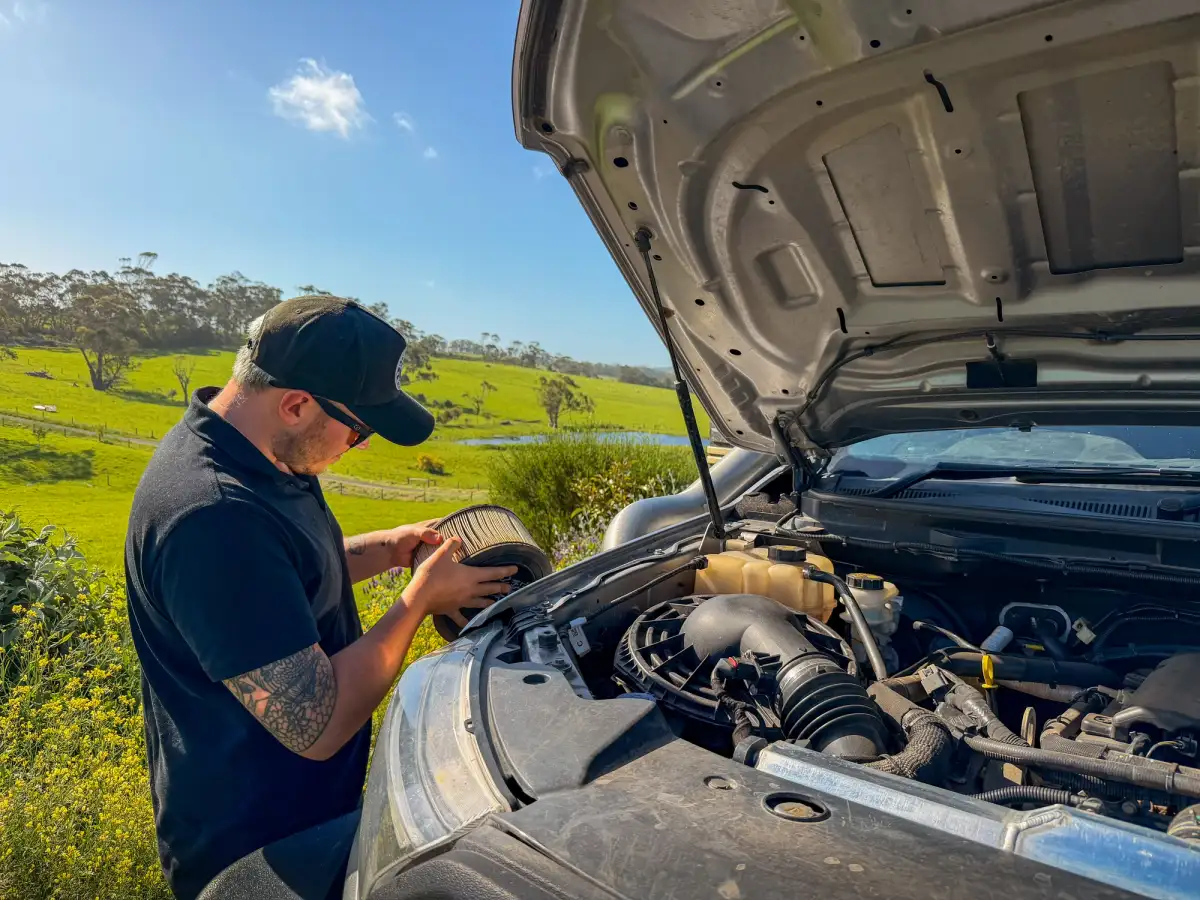
Josh Leonard inspecting his Ford Ranger's air filter
Regular vehicle maintenance becomes particularly important during long-distance touring as dust, corrugations, and long periods of towing can accelerate the wear and tear on your rig. Although it’s an added cost to what’s already a very expensive undertaking, scheduled servicing is a vital part of the journey and it’ll cost you more in the long run if you choose to ignore it.
Flexibility is the key to a successful lap
Even if you meticulously plan each element down to the very minute, you can’t account for everything. Weather can shift unexpectedly and dramatically, bushfires can arise that alter routes or force you to evacuate, and other destinations may capture your interest along the way calling for a re-route. Remaining flexible doesn’t mean going in without a plan, it just calls for you to be a bit more fluid and roll with the punches.
If you were to ask seasoned travellers what they’d recommend, I’d bet they’d tell you that planning general seasonal directions rather than strict itineraries is the key. This allows you the time for detours, rest days and local recommendations.
The Reward of Seasonal Travel
Let’s circle back to what we came here to yarn about: chasing the seasons around Australia whilst undertaking your big lap. This plan offers more than comfortable weather; you can have the chance to experience Australia’s natural beauty at its peak. The Big Lap becomes less about how far you’ve travelled and more about how much you were able to see and experience.
So whether you choose to follow the crowds or forge your own path against the flow, the key lies in your preparation, adaptability, and curiosity. The Big Lap is not simply a road trip; it is a year-long journey through one of the world’s most diverse and dramatic natural environments. For those willing to chase the seasons, Australia offers an adventure that changes with every kilometre and rewards travellers with memories that last a lifetime. I can certainly speak from experience and say I am not the same person who first walked into the big lap and once I return from my trip I’m expecting to hear people say “Welcome back to the real world” when in actual fact, it was me that experienced the real world. That’s the gift that only a big lap can give you.
Big lap planning?
Get comprehensive insurance that can go there too.
Part of our complete guide to planning your Big Lap of Australia.