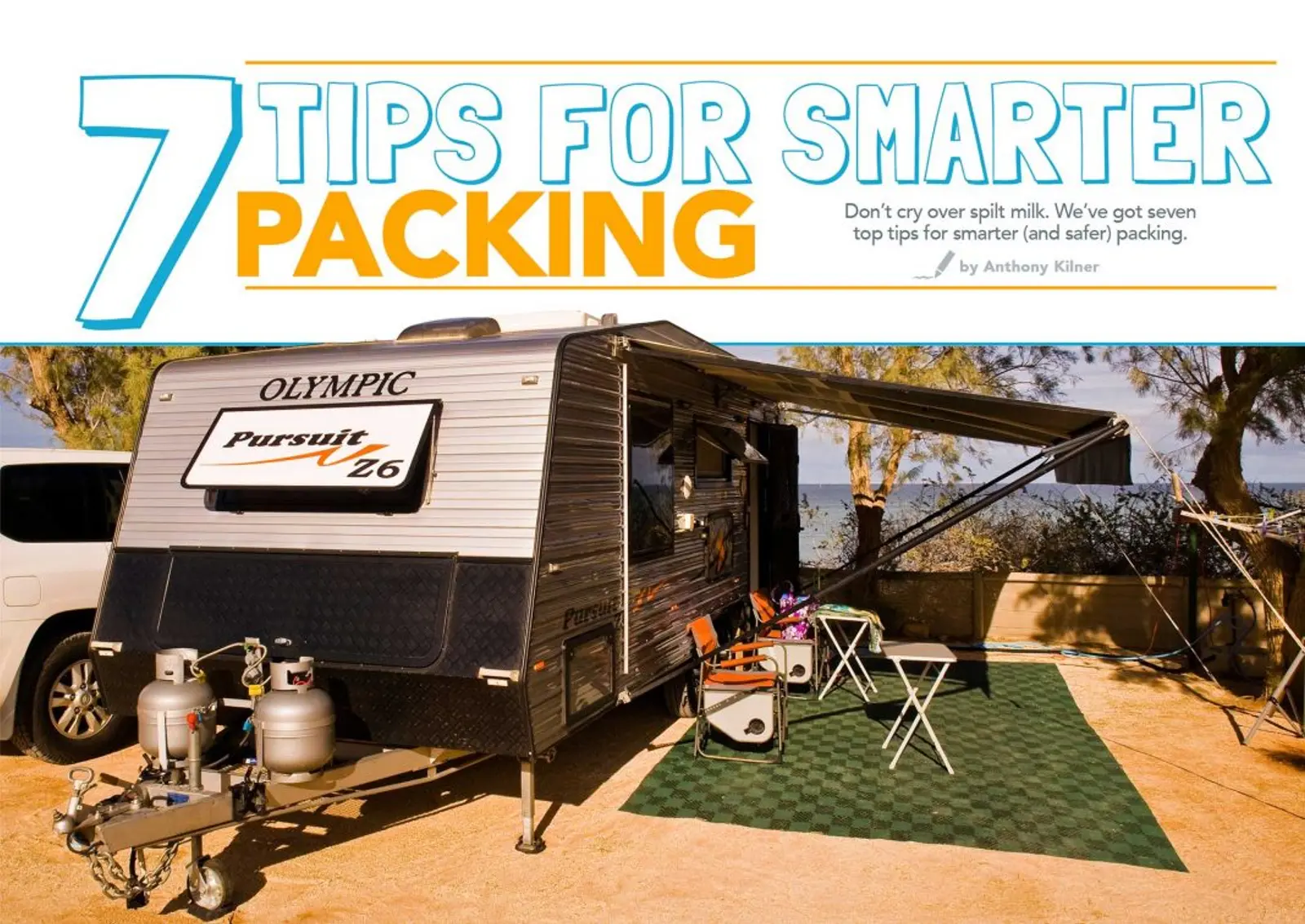
Don’t cry over spilt milk. We’ve got seven top tips for smarter (and safer) packing.
There’s nothing like pulling up to a camp and having everything – within mere minutes – set up, nibbles chucked in the bowl and a cool drink close to hand. Packing isn’t exactly fun, but if it’s done right, it saves you from a damaged van, strewn belongings and unwanted veggie mash. There’s no shortage of stories going around campfires on bad packing and wise words about how to avoid it. It’s an art that can be learned the easy way or the hard way. The easy way is to load ‘n’ go with some careful forethought. The hard way is to pack ‘n’ go in a rush, and when disaster strikes, try and learn from the terrible consequences. Let’s remove the latter from this equation and help you to pack safely.
Tip 1 – If in Doubt, Chuck It Out
Manufacturers don’t specify aggregate trailer masses for fun. They do it so buyers can safely remain within the correct loading weights. Many sensible travellers get their packed van weighed to avoid accidents and potential insurance issues and follow the ‘less is more’ rule to pack. It’s a tendency for newbies to over-the-top pack, meaning everything including the kitchen sink goes in the van (and who needs two of those?). The most practical tip we can offer is: if in doubt, chuck it out! You’ll find most of what you need in local shops along the way.
Tip 2 – Balance The Load
When packing, work out the location of your water tanks. Spread any heavy loads low down and balance it from left to right, then front to back. Also take into account the weight of a full fridge and its location. If the van and car still aren’t sitting evenly, then a weight distribution hitch is critical to balancing the load of the van and car as a package. It will restore steering and braking for safer towing.
Tip 3 – Slide control
Anti-slip matting is indispensable for the inside of drawers and cupboards, and on benches to stop items sliding about. This matting also protects the van’s surfaces, which is useful when considering a re-sale.
Tip 4 – Think containers!
Consider where, and for how long, you are traveling. Bulk buy and vacuum seal foods, use the best containers you can to avoid breakages, and mix n’ match clothing for the climate and carry the appropriate tools.
Tip 5 – A Full Fridge Is A COOL Fridge
The best way to run a fridge economically is to keep it full. When food or drink is removed, replace it. This stops food rolling around and being damaged and also means a cold beer is always at hand.
Tip 6 – Avoid Veggie Mash
Secure heavy vegetables at the bottom of the container and lighter vegetables and fruit on top so they can’t roll around in their own version of pinball, leaving you with a bruised mess to serve for dinner.
Tip 7 – Keep The Chocolate Close
Caravans offer a multitude of storage areas, meaning stuff can get lost very easily. A practical tip is to keep things you use often in locations that are easy to access by everyone on the trip. Avoid frantic searches for toilet paper, the first aid kit, or just the chocolate stash.