Log in to our new Customer Portal

24/7 access to your policy, documents and claims

News

Ford ‘Science of Truck’ Ranger uses Non-Standard Tyres in Challenge

‘The Science of Truck’: a smart phrase that Ford’s marketing side has coined, where they are looking to marry up mechanical toughness and sharp electronic aids as the ultimate ute. It’s a slick piece of …

Image
Club 4X4 Insurance
Feb 08 2017

Feb 08 2017

Image

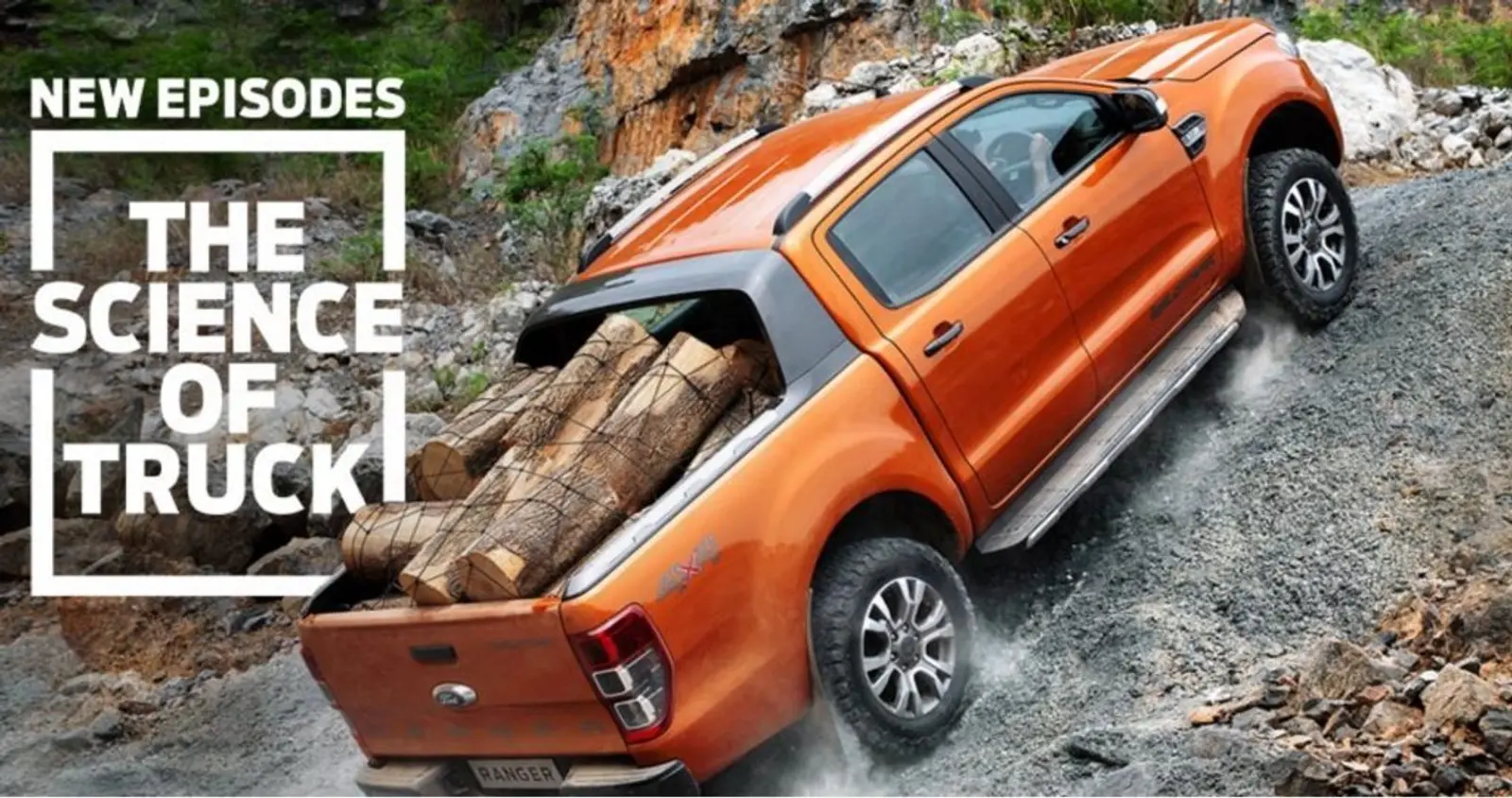
‘The Science of Truck’: a smart phrase that Ford’s marketing side has coined, where they are looking to marry up mechanical toughness and sharp electronic aids as the ultimate ute.

It’s a slick piece of marketing by Ford, but the first thing I noticed was the tyres: ‘they’re not standard’, I thought. ‘They look like BF Goodrich All Terrains’. I watched the video, and was impressed by the combination of action and technological explanation. Like I said, slick marketing for the 2nd best-selling 4X4 ute in Australia.

Part-way through the video, a small blip of text pops up, saying “Overseas Ranger WildTrak Model shown with aftermarket tyres”. I think this points out that the standard tyres fitted to a Ranger, some passenger-construction highway terrain, simply aren’t up to the task of serious off-road work. If they can’t make a climb when a vehicle sitting close to GVM, then in my opinion, they aren’t fit for purpose. Let’s be honest, OEM 4X4 tyres are more often than not just a bad combination of chasing good off-road manners and a low price.

If I started harping on again about the importance of a quality tyre with a strong, light-truck construction, you’d probably reach through that screen and punch me in the throat. This little detail, revealed in Ford’s own promotion material, just seems to vindicate it. If you haven’t seen the video footage, check it out below.

On another note, I’d have to voice my concerns against putting your driveline under heavy duress in reverse. The way that gears mesh together, in your differentials particularly, have a ‘strong’ side and a ‘weak’ side. Towing, dragging or recovering something in reverse, especially in low-range is never a good idea.

What do you think? Are you happy with OEM-spec tyres on your 4X4? Or do you think they need replacement straight off the bat?

This article was originally posted by Mr4X4.

Image
Club 4X4 Insurance
Blog

Discover other stories

View all

Warm up with weekly articles aimed at adventure

First aid kit laid out for remote 4WD travel

Expert Advice

4WD First Aid Kit Checklist: What to Carry for Outback and Remote Travel

The kit that came with the car is built for a world where the ambulance is ten minutes away. Here's what a real 4WD first aid kit needs for remote travel: the base checklist, the snake bite gear most kits skimp on, the remote-area extras, and where to keep it so you can actually find it.

Read more  

The kit that came with the car is built for a world where the ambulance is ten minutes away. Here's what a real 4WD first aid kit needs for remote travel: the base checklist, the snake bite gear most kits skimp on, the remote-area extras, and where to keep it so you can actually find it.

Tyre pressure monitoring system sensor on a 4WD tyre valve

Expert Advice

Tyre Pressure Monitoring Systems for 4WDs and Caravans: Do You Need One and How to Choose

A factory TPMS only watches the four tyres on your 4WD. If you tow or drive remote tracks, an aftermarket system is the one accessory that tells you about a failing tyre before it takes the wheel arch with it. Here's how they work, internal versus external sensors, and what to look for when you buy.

Read more  

A factory TPMS only watches the four tyres on your 4WD. If you tow or drive remote tracks, an aftermarket system is the one accessory that tells you about a failing tyre before it takes the wheel arch with it. Here's how they work, internal versus external sensors, and what to look for when you buy.

A 4WD towing a caravan on an outback track in Australia

Expert Advice

DC to DC Charger Explained: What It Does, Whether You Need One and How to Choose

If your 4WD is newer than about 2012 or you run a lithium battery, a plain isolator will never fully charge your second battery. Here's what a DC to DC charger does, how to size it, where it goes and the wiring mistakes that cost people their charge rate.

Read more  

If your 4WD is newer than about 2012 or you run a lithium battery, a plain isolator will never fully charge your second battery. Here's what a DC to DC charger does, how to size it, where it goes and the wiring mistakes that cost people their charge rate.

View all