If you've spent any time around 4WDs, caravans, campers or the dual-battery systems now commonly within, you've probably heard someone mention an Anderson plug. Who is Anderson? Where does it plug into? What does it do?
Well the humble Anderson plug is one of the most common connectors in the touring world, yet they're also one of the most misunderstood.
Ask three different people what an Anderson plug does and you're likely to get three different answers. Some use them for charging caravan batteries. Others connect solar blankets through them. Some use them as a dedicated fridge outlet. The truth is an Anderson plug isn't designed for one specific job. It's simply a safe, reliable way to move large amounts of DC power from one place to another.
Understanding which size you need, how to wire one properly and what it can safely power can make the difference between a dependable electrical system and one that leaves you stranded with flat batteries.
From the Simpson to the High Country
We cover anywhere you can legally go in Australia
At a Glance: What Anderson Plugs Are Commonly Used For
| If you want to... | Typical Solution |
|---|---|
| Charge a caravan battery while driving | 50A Anderson plug and DC-DC charger |
| Connect a portable solar blanket | 50A Anderson plug |
| Run a fridge in the rear of a vehicle | 50A Anderson plug |
| Charge a camper trailer battery | 50A Anderson plug |
| Connect high-current battery banks | 175A Anderson plug |
| Power very large DC systems | 350A Anderson plug |
What Is an Anderson Plug?
Anderson plugs are high-current DC electrical connectors designed to safely transfer power between batteries, chargers, solar systems and other accessories. Unlike a cigarette socket, it can handle substantial current loads without overheating or suffering significant voltage loss.
They were originally developed by Anderson Power Products, so there's the Who. In Australia the name stuck, and like Doona and Glad Wrap before it, it's now the generic term. Read a product's label closely, and it'll likely be called "Anderson-style".
Their main advantage is simple: they carry substantially more current than a traditional cigarette socket while creating a secure connection that won't vibrate loose on rough tracks.
That's why you'll find them everywhere in modern touring setups:
- 4WD dual-battery systems
- Caravans and camper trailers
- DC-DC charger installations
- Portable solar blankets
- Battery boxes
- Portable power systems

A 4X4 Ford Ranger ute towing a caravan in Australia
Wiring an Anderson Plug Properly
Installing the connector itself is easy. Building a system that performs properly is where most people get caught out.
Size Your Cable for Length, Not Just Load
The longer the cable run, the greater the voltage loss. This becomes particularly important when charging caravan batteries from the rear of a tow vehicle.
Typical Cable Recommendations
| Application | Current Draw | Recommended Starting Point |
|---|---|---|
| Portable fridge | 3-10A | 6mm² cable |
| DC-DC charger up to 25A | 25A | 8 B&S |
| DC-DC charger up to 40A | 40A | 6 B&S |
| Caravan charging | 25-40A | 6 B&S minimum |
| High-current systems | 50A+ | Calculate to suit installation |
A fridge may work perfectly through smaller cabling over a short distance, but a caravan battery located seven metres away from the alternator? That's another story entirely.
Always Fuse at the Source
One of the most common DIY mistakes is installing an Anderson plug without properly protecting the circuit. The fuse should be installed as close as practical to the battery supplying the power.
If a cable becomes damaged anywhere along its route, the fuse is what prevents a short circuit from becoming significantly more serious.
Crimping Versus Soldering
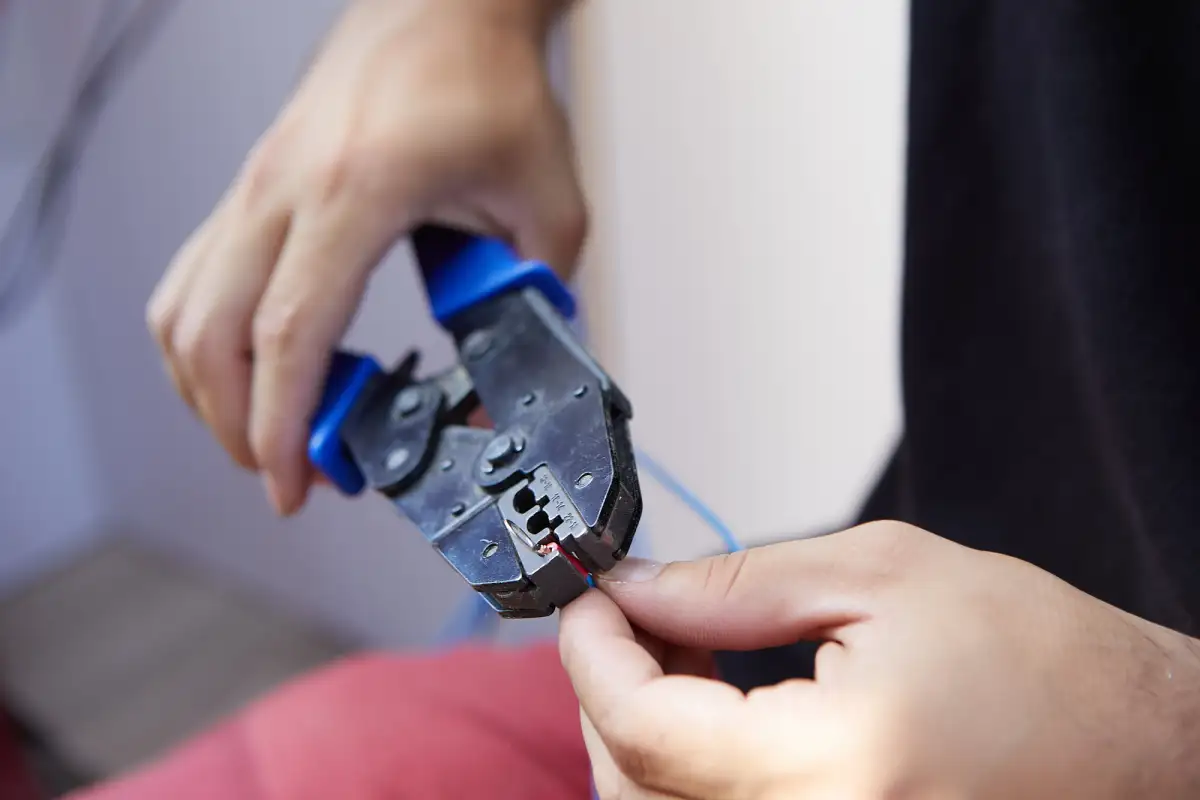
A crimping tool being used on a cable
A proper Anderson plug crimping tool is worth the investment.
While soldering is sometimes used, quality crimps generally:
- Cope better with vibration
- Provide excellent conductivity
- Remain mechanically secure over time
Poor crimps are a common source of heat build-up and voltage loss.
Running an Anderson Plug Extension Lead
An Anderson plug extension lead can be useful for:
- Portable solar panels
- Battery boxes
- Temporary charging setups
However, longer extension leads increase resistance and voltage drop. Keeping an extension lead as short as practical ensures the cable gauge matches the intended current draw.
Anderson Plug Mount Options
Where you mount an Anderson plug depends entirely on how it will be used.
Flush Mount Anderson Plug
A flush mount for your Anderson plug provides a neat factory-style finish.
Popular mounting locations include:
- Rear bars
- Canopies
- Tub sides
- Trailer drawbars
Tow Bar Mount
This is one of the most common locations for caravan charging. It provides easy connection between vehicle and van.
Under Bonnet Mount
This mount is useful for:
- Jump-start terminals
- Portable battery chargers
- Solar charging
Bull Bar Mount
This is often used by travellers running portable solar at camp.
Running an Anderson Plug to the Rear of a 4WD
This is arguably the most common installation in Australia. The basic flow often looks like this:
Battery → Fuse → Heavy Cable → Anderson Plug → DC-DC Charger → Auxiliary Battery
Modern vehicles with smart alternators are particularly dependent on well-designed charging systems.
In many cases, simply connecting a rear Anderson plug is not enough to achieve proper battery charging. A quality DC-DC charger may be required to ensure your caravan or auxiliary battery receives the correct charging voltage.
Anderson to Cigarette Socket Adapters
Anderson plug adapters are increasingly popular. You'll commonly see:
- Anderson plug to cigarette socket
- Anderson to cigarette plug
- Anderson plug splitter
- Triple Anderson plug adaptors
These can be extremely useful, but they also create a potential bottleneck.
When They're Fine
Adapters are generally suitable for:
- LED lighting
- Small accessories
- Device charging
When They're Not
Problems arise when users attempt to run high-current devices through wiring designed for much lower loads.
A typical cigarette socket is a poor choice for:
- Large fridges
- High-current charging circuits
- Inverters
The Anderson plug may be capable of carrying the load. The adaptor may not.
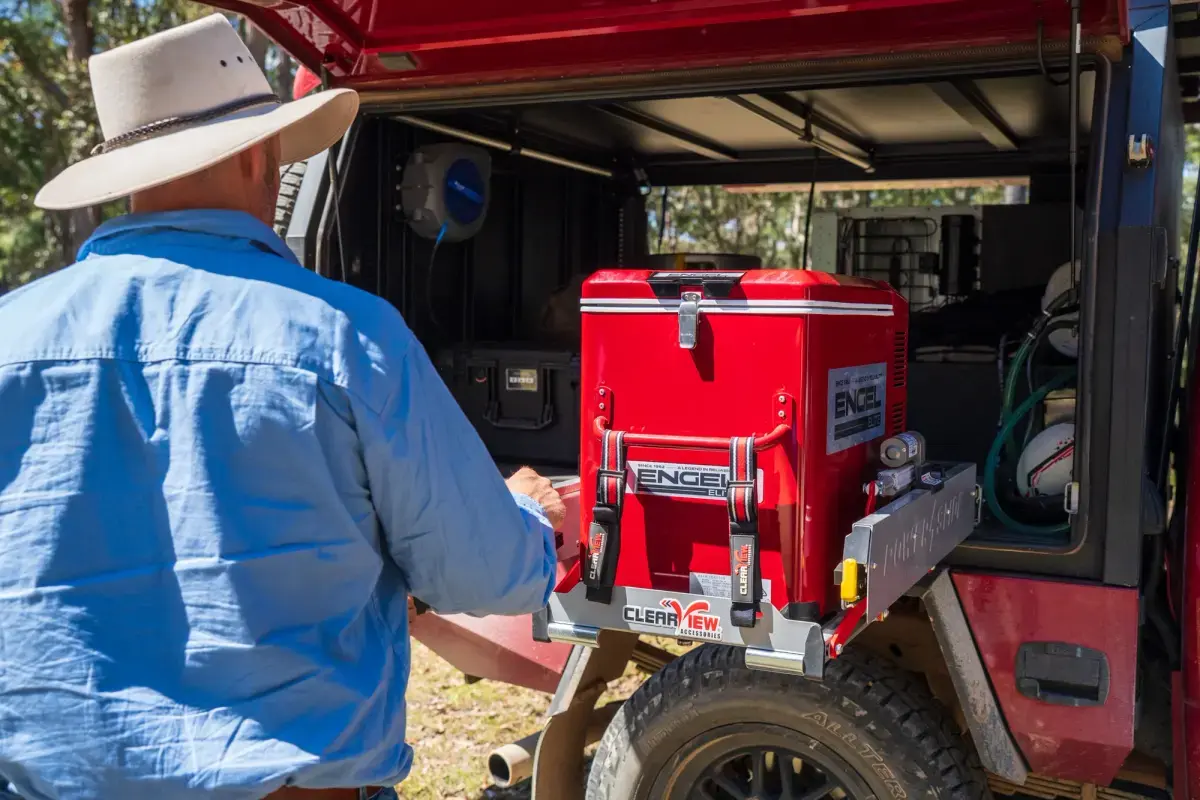
Pat Callinan's Ford 4X4's canopy with a fridge on a slide
The Mistakes That Cause Fires
Most electrical issues aren't caused by the Anderson plug itself, but by everything connected to it. The most common mistakes include:
Undersized Cable
Creates heat, voltage drop and poor charging performance
No Fuse Protection
A damaged cable without adequate protection can quickly become dangerous.
Poor Crimps
Loose connections create resistance, which creates heat, and then you get problems.
Corroded Contacts
Particularly common in beach environments or vehicles regularly exposed to water crossings.
Overloading One Circuit
Trying to run multiple high-draw accessories through a single circuit can place excessive stress on wiring and connectors.
A Real Lesson from Touring Setups
The connector itself is rarely the weak point. More often, failures originate from undersized cables, poor installation practices or inadequate circuit protection. That's why careful planning matters just as much as choosing the right components.
Insurance
Because Anderson plugs are most commonly installed as part of larger electrical modifications, it's worth remembering that the quality of the installation matters just as much as the components themselves.
Modifications that improve your touring setups are generally a good thing when they're installed correctly.
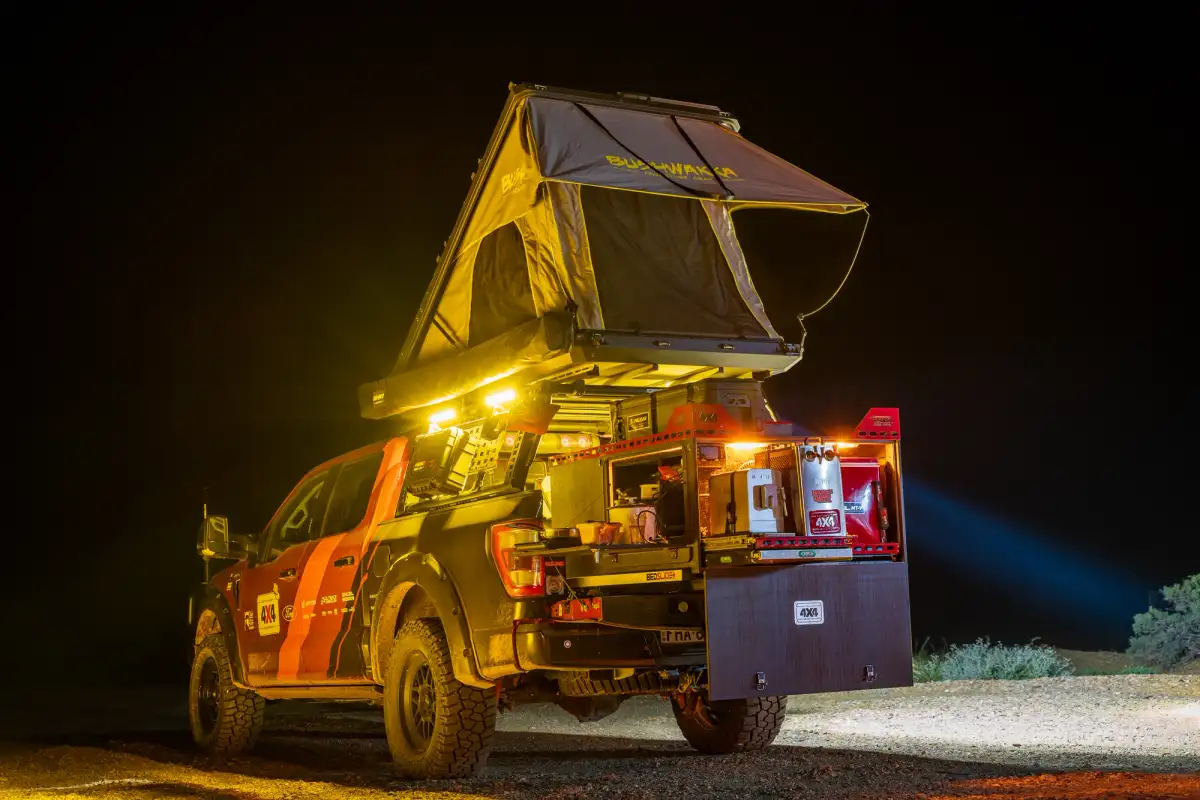
A 4X4's canopy open with lights, a fridge and other accessories
If you're adding significant electrical modifications to your vehicle, camper or caravan, it's worth understanding how aftermarket accessories fit within your insurance cover and ensuring your work is completed to an appropriate standard.
Final Thoughts
An Anderson plug is one of the simplest components in a modern touring electrical system, but it plays a critical role. Whether you're charging a caravan battery, connecting portable solar or powering a fridge in the back of your 4WD, choosing the right plug, cable and installation method can dramatically improve reliability.
For most travellers, a properly wired 50A Anderson plug will do everything required.
After all, the best electrical setup is the one you never have to think about when you're hundreds of kilometres from the nearest power point.
From the Simpson to the High Country
We cover anywhere you can legally go in Australia