People ask us all the time what modifications they should prioritise when building out their touring rig.
And our answer is always the same: tell us where you want to go first.
Because after seven years and more than 200,000 kilometres of full-time travel across Australia, what we've learned is that the modifications that get the most attention at the 4X4 show aren't always the ones doing the most work out on the road. The ones you're genuinely grateful for are often the ones you barely think about, right up until the moment you really need them.
Here's our honest list, built across three tow vehicles and seven years of finding out the hard way.
Ready for the rough stuff?
get a quote for insurance that covers you anywhere you can legally go in Australia
Suspension and GVM
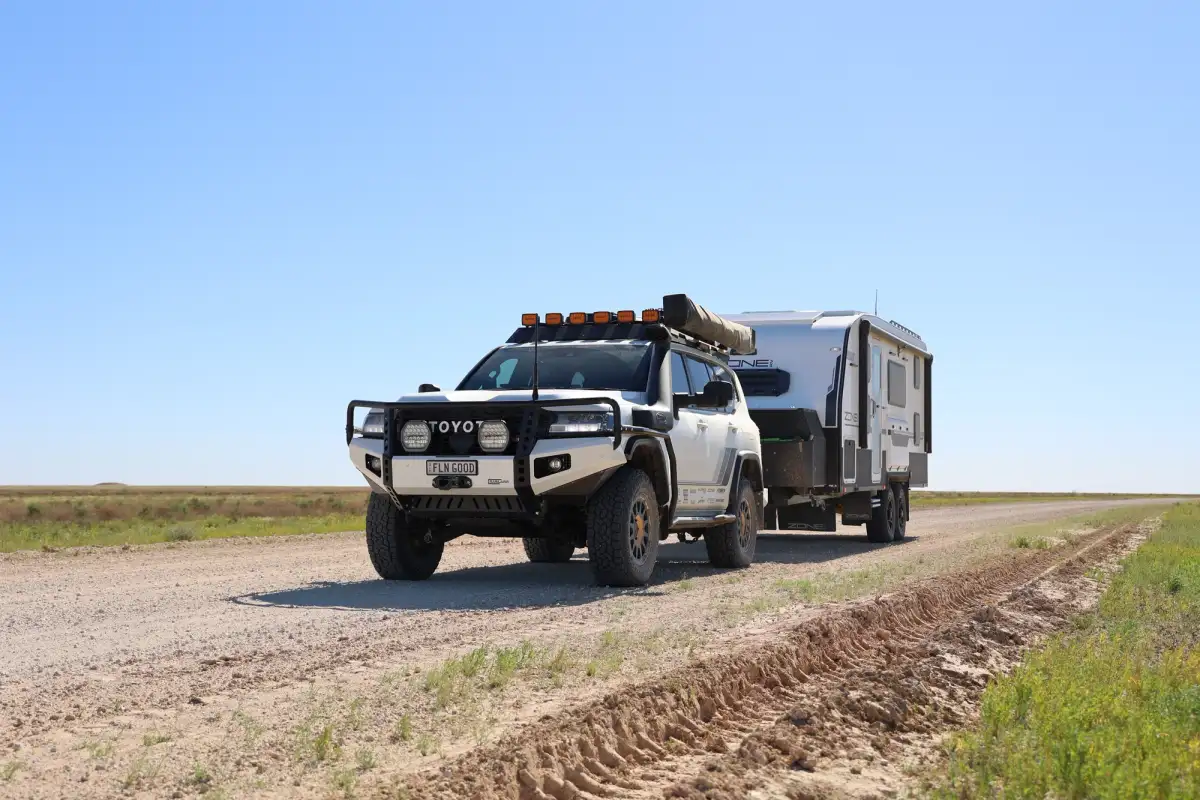
White Toyota LandCruiser towing a caravan
Every vehicle we've ever owned has had a suspension and GVM upgrade. Our Hilux Rugged X when we set off in 2019, our 79 Series LandCruiser, and now our 300 Series. No exceptions.
When you're towing a 3.5 tonne family caravan to places like Cape York or the Gibb River Road, a properly engineered suspension and GVM solution isn't something you just add to the wish list. It gives you a more stable, more comfortable ride under load, keeps you within your compliance limits, and means you're not white-knuckling it every time the road gets interesting. If you're serious about touring Australia with a van in tow, this is where the build starts.
Bar Work
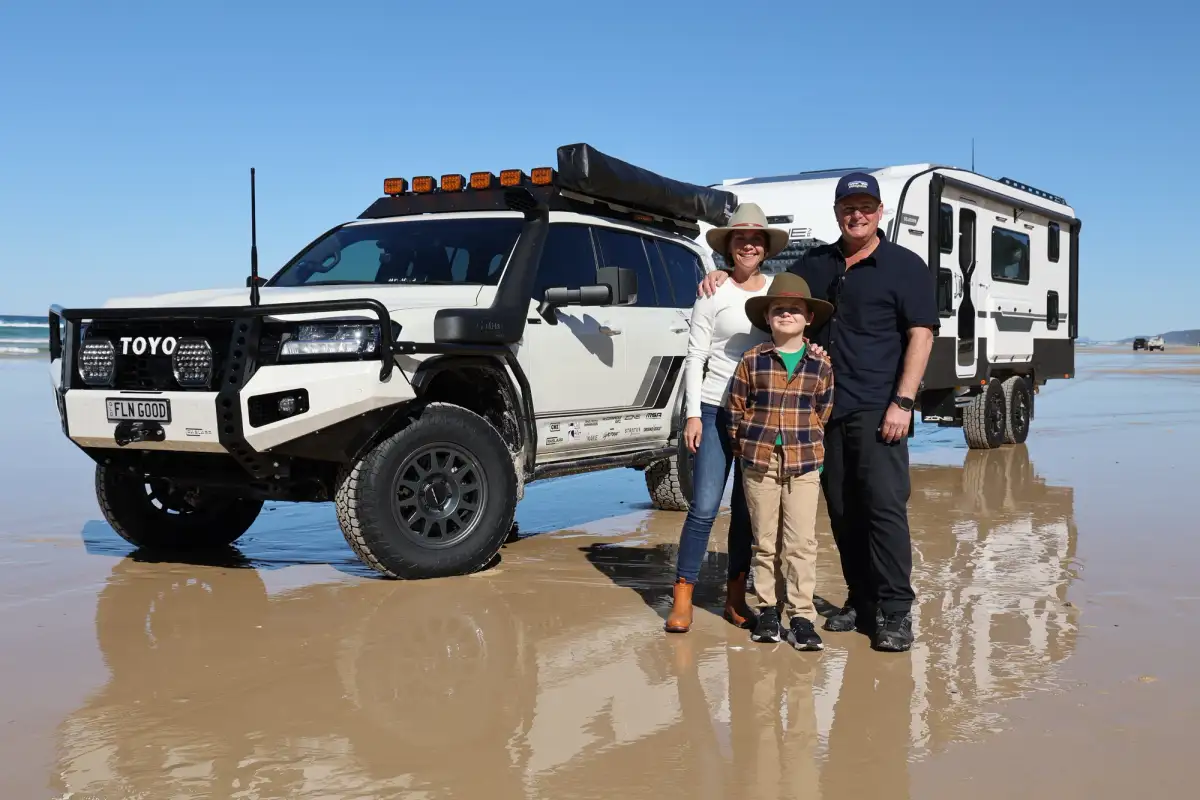
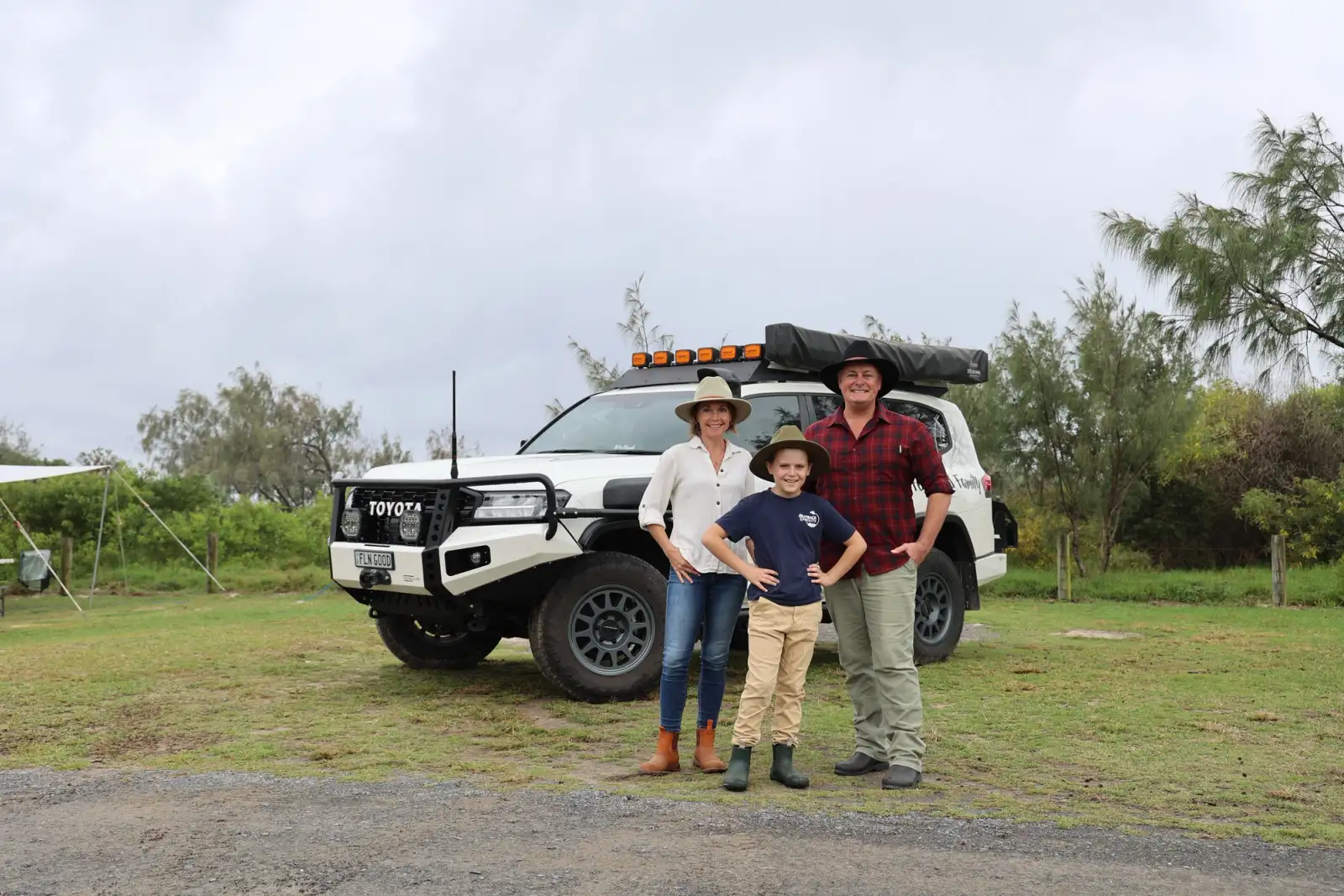
A family of 3 in front of their white Toyota LandCruiser and caravan, highlighting the bar work on thr front of the 4X4
We'll be honest with you. The bar work on our 300 Series looks absolutely brilliant and we love it. But that's not why it's on this list.
When we rolled our 79 Series, the bar work absorbed the impact and saved the vehicle from significantly worse damage. In that moment it did exactly what it was designed to do. A quality bull bar and side protection isn't just a style choice, though it's certainly that too. It's the part of your build that's quietly working in the background every time you're on a remote country road, and working very hard indeed if things go sideways.
Power Management
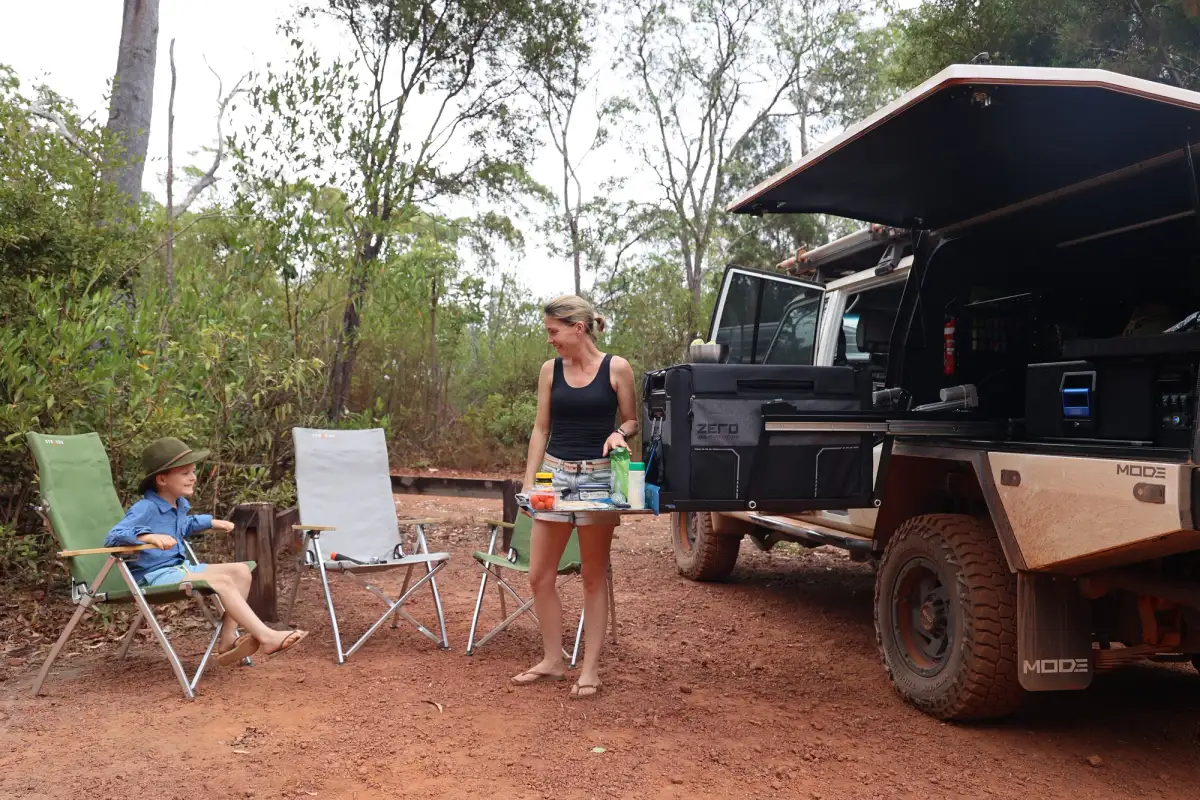
A mother and son cooking out the back of a Toyota LandCruiser in Australia
Our favourite memory from Cape York has nothing to do with the scenery, though trust us, that part was pretty good too.
It's pulling off a remote track, setting up the camp kitchen off the back of the 79, and making lunch in the middle of one of the most remote locations in the country. Coffee on, drone batteries charging, completely self-sufficient with no mental arithmetic running in the background about what we could and couldn't have on. That's what a quality battery management system actually delivers. Not just the technical ability to run a fridge or charge devices, but the freedom to stop wherever you want, for as long as you want, without the trip becoming about managing your power instead of enjoying where you are.
Storage Systems
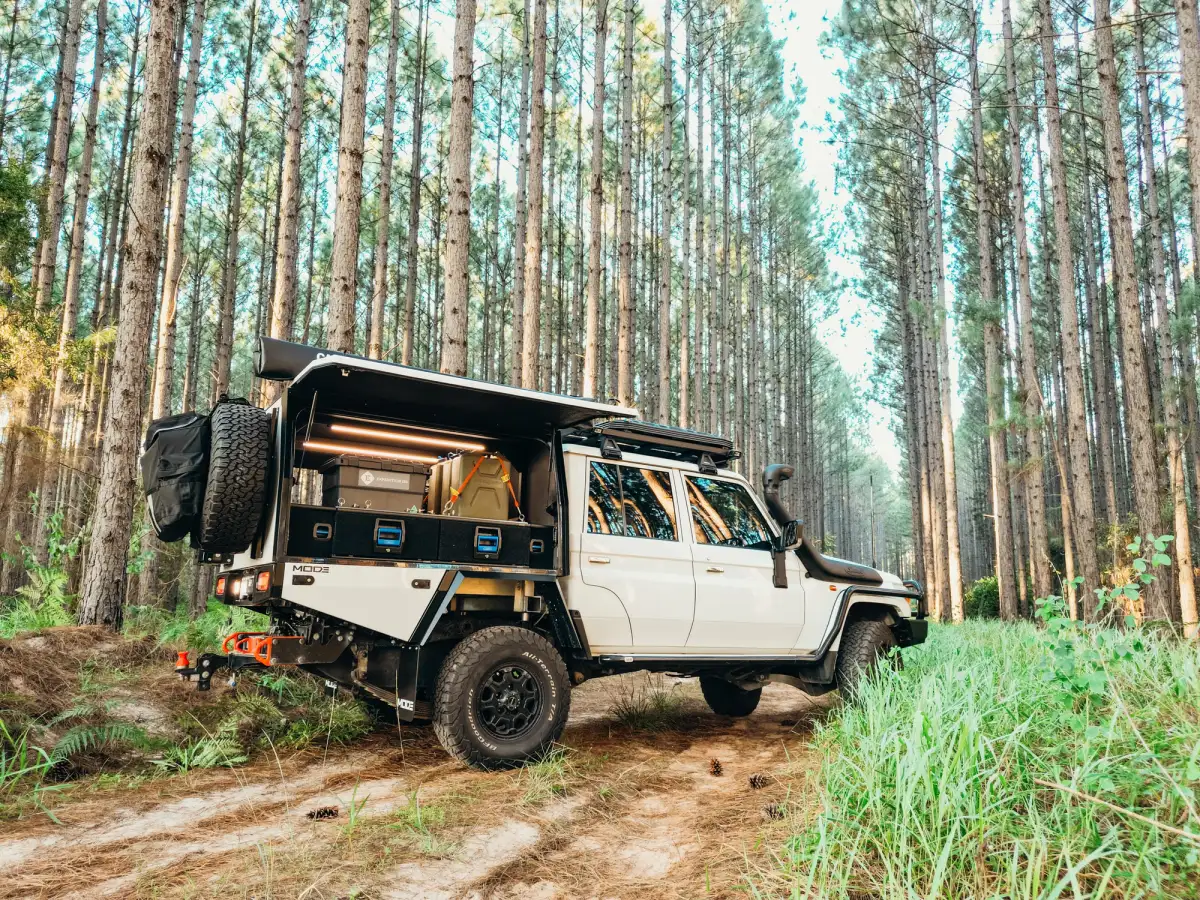
An open canopy on a Toyota LandCruiser in a forest
We've had drawers in the back of every tow vehicle we've built, and the reason is simple. When everything has a home, two things happen:
- You know exactly where your gear is when you need it
- You get very clear answers very quickly about what you actually need versus what's just taking up space.
On rough corrugated roads, properly packed drawers keep everything secure and protected. In an emergency you're not pulling the vehicle apart looking for the thing you need because it's there, where it always is. Organisation sounds unglamorous but after seven years on the road, we'd back it against almost any other mod for day-to-day impact on how a trip actually feels.
Recovery Gear
We recently upgraded to a MaxTrax beach kit, and the timing turned out to be rather important.
Coming off Teewah Beach with the van in tow, we got seriously bogged. It's an already stressful situation, and the last thing you need in that moment is to be digging through a disorganised vehicle looking for gear that may or may not all be there. Having everything together in one dedicated bag, easy to access and ready to go, made a real difference to how we handled it. Good recovery gear is also good etiquette out on the tracks. Having your own reliable kit means you're prepared to look after your own situation rather than relying on the goodwill of whoever happens to be passing. Come prepared.
UHF Radio
When phone reception disappears, and in most of the places worth going in this country it will, UHF becomes your primary communication tool. It's how you talk to oncoming vehicles on narrow single-lane tracks, how you call for assistance if something goes wrong, and how you stay connected to the people around you when you're genuinely remote. Not optional touring equipment. Essential.
Tyre Pressure Monitoring System (TPMS)
Your tyres are the only thing between your vehicle and the road, and everything else depends on them.
On the Stuart Highway in outback South Australia, our TPMS alarm sounded at the exact moment our rear passenger tyre blew out. We were towing the van at highway speed. That alarm gave us the critical few seconds of awareness to respond rather than react, and in that situation a few seconds is everything. Our TPMS has also alerted us to slow punctures and overheating on multiple occasions, giving us the chance to deal with something manageable before it became something serious. It's one of those modifications that quietly earns its place on every single trip.
Towing Mirrors
It’s worth saying plainly: if you're towing a caravan in Australia, extended towing mirrors aren't a suggestion, but a legal requirement. Beyond compliance, they give you the visibility to properly see what's happening behind a wide load, which changes how safely and confidently you can tow. Don't skip this one.
Driving Lights
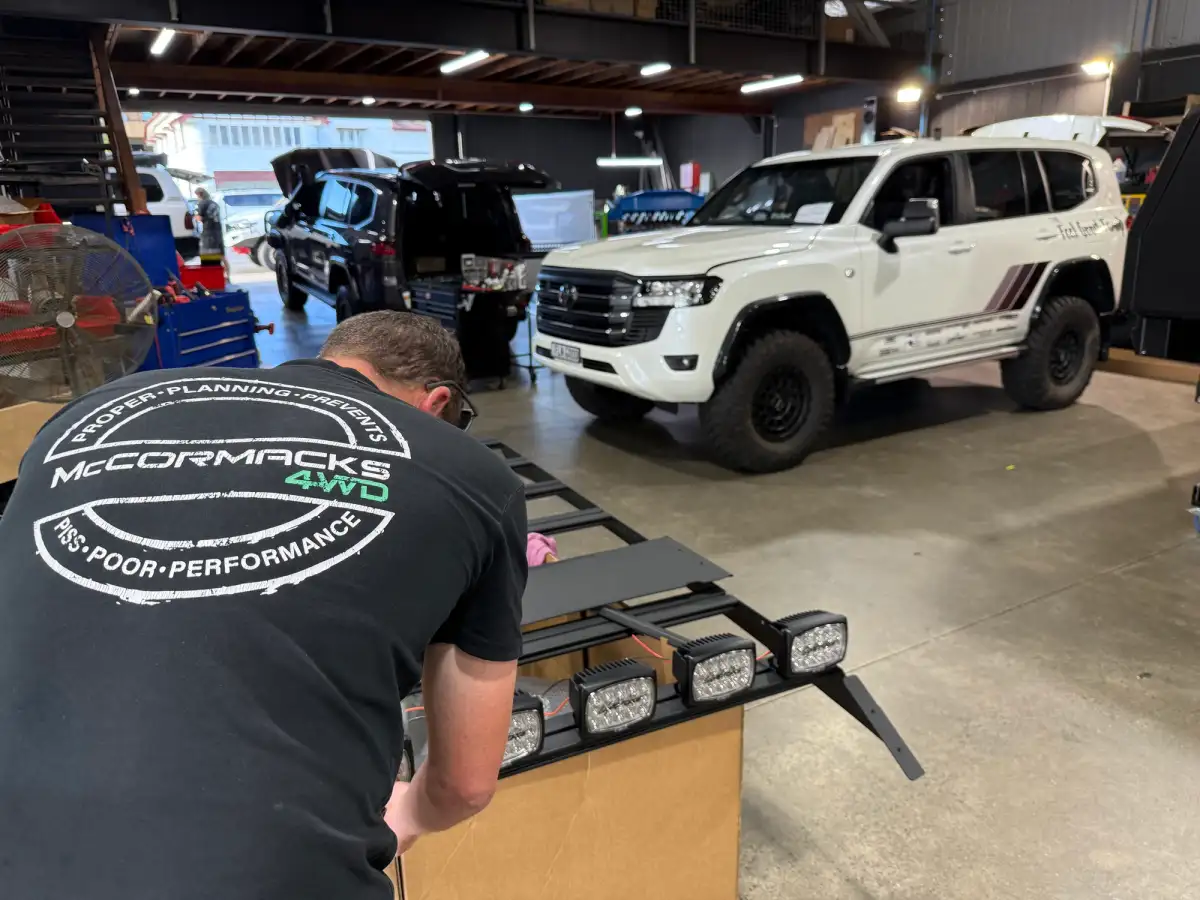
Man in a workshop installing driving lights to a 4WD
On Cape York there were stretches of road where oncoming vehicles would disappear entirely into the dust thrown up ahead of them, with only their headlights giving away their position. Quality driving lights aren't just about seeing where you're going after dark. In outback and off-road conditions they're about being seen, and in thick dust on a remote track that distinction matters more than you'd hope to find out firsthand.
Winch
We've used our winch once in seven years. After the MaxTrax and the recovery boards had done everything they could at Teewah Beach, the winch was what finally got us out. One time in seven years, but in that one time there was genuinely no other option left. A winch can be the last thing you reach for when everything else has been exhausted, and for most families it might sit unused for years. That's not a reason to leave it off the build. It's exactly the point.
The Build That Gets You There
No two touring rigs look the same, and they shouldn't. Every family's trip is different and every build should reflect where they're headed and what they're towing.
But across three vehicles, seven years, and more than 200,000 kilometres, the thread connecting every modification on this list is the same thing. It's not about how impressive the rig looks at the 4X4 show, (although we won't pretend the 300 Series doesn't turn a few heads), it's about how the build performs when you're a long way from help and something unexpected happens. That's the standard worth building to.
Get that right, and the only question left is where you're going first.
Touring mods installed and ready to hit the road (or lack of)?
Get a quote for insurance that covers you anywhere you can legally go in Australia