

The code on the sidewall
Every tyre carries a size and rating code moulded into the sidewall. On a typical 4WD tyre it looks like this:
LT265/70R17 121/118S
That one string tells you the tyre's type, width, profile, construction, rim size, how much weight it can carry and how fast it can safely go. Here is what each part means, in order.
LT, P or Nothing
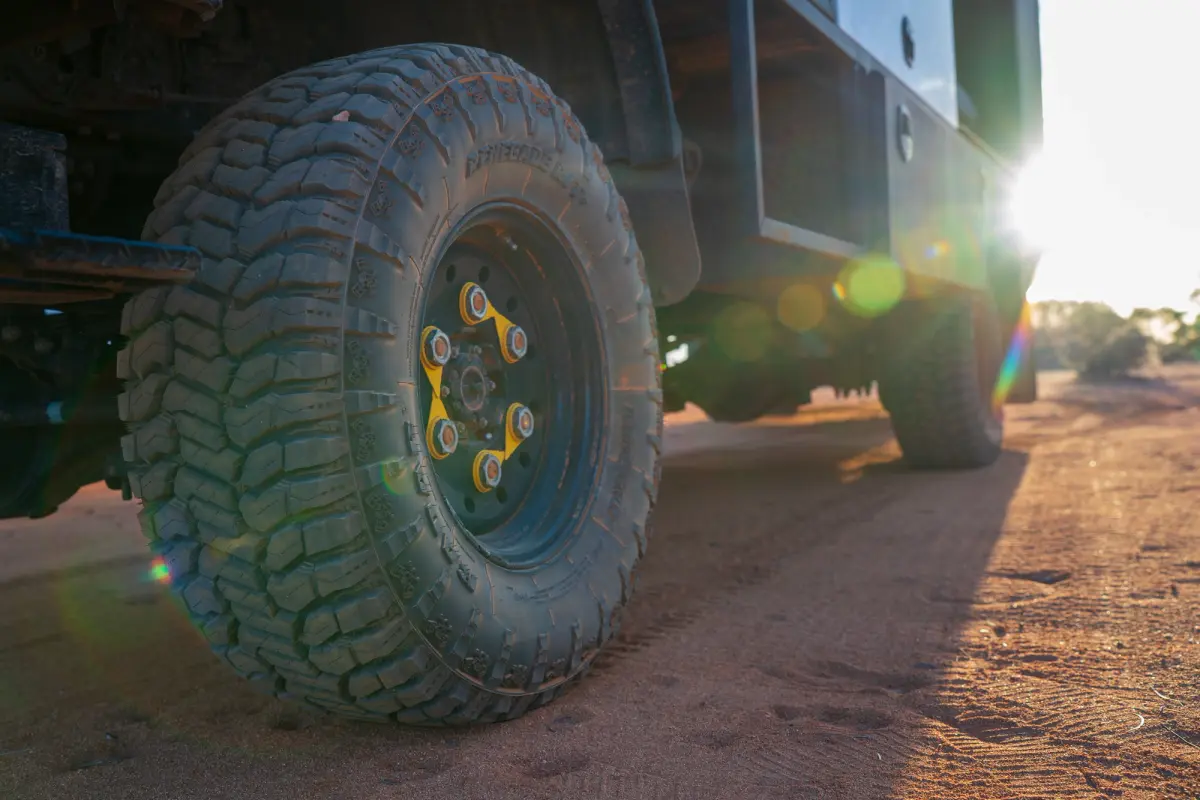
Tyres on a light truck 4X4 on a dirt road
The prefix is the tyre's intended use. LT is light truck, built with stronger casings and higher load capacity, and it is what most 4WD and caravan tyres should be. P is passenger, designed for cars and some soft-roaders. No prefix on a metric size usually means a Euro-metric passenger tyre.
The prefix matters more than people realise. Two tyres can be the same size and look identical, and the LT version can carry several hundred kilograms more per tyre while running higher pressures. On a loaded 4WD or a caravan, the P tyre is the one that fails.
265: Section Width
The first number is the tyre's width in millimetres from sidewall to sidewall. A 265 is 265 millimetres wide. Wider tyres put more rubber on the ground and float better on sand, but add rolling resistance and can rub on suspension and guards.
70: Aspect Ratio
The number after the slash is the sidewall height as a percentage of the width. A 265/70 has a sidewall 70 per cent of 265 millimetres, about 186 millimetres tall. Lower numbers mean shorter sidewalls, sharper on-road handling and less cushioning off-road. For touring, a taller sidewall is usually the better compromise.
R: Construction
R means radial, which is every modern tyre you will buy. You may occasionally see D for diagonal or bias-ply on old trailer tyres. Do not mix constructions on the same axle.
17: Rim Diameter
The wheel size in inches. The tyre has to match the rim exactly.
121/118: Load Index
This is the part that decides whether the tyre is legal on your vehicle. The load index is a code for the maximum weight each tyre can carry at its rated pressure. Where two numbers are shown, the first is for single fitment and the second for dual wheels, which only matters on trucks. Common values on 4WD tyres:
- 100 carries 800 kg per tyre
- 104 carries 900 kg
- 108 carries 1,000 kg
- 110 carries 1,060 kg
- 112 carries 1,120 kg
- 114 carries 1,180 kg
- 116 carries 1,250 kg
- 118 carries 1,320 kg
- 121 carries 1,450 kg
- 123 carries 1,550 kg
Your vehicle's tyre placard, usually inside the driver's door, states the minimum load index the tyres must have. Fitting tyres below that is illegal and unsafe. Fitting tyres above it is fine and often wise on a vehicle with a GVM upgrade or a heavy touring load.
S: Speed Rating
The letter at the end is the maximum speed the tyre is rated to sustain. Common ratings on 4WD and caravan tyres:
- N is 140 km/h
- P is 150 km/h
- Q is 160 km/h
- R is 170 km/h
- S is 180 km/h
- T is 190 km/h
- H is 210 km/h
As with load index, the placard sets the minimum. Mud-terrain tyres often carry a lower speed rating than the highway tyres the vehicle came with, and in most states fitting a tyre with a lower speed rating than the placard is not permitted without approval, with some allowance for light truck tyres rated at or above a set minimum. Check your state's rules and the placard before you buy.
Wheels, tyres and the rest of the build covered
4WD insurance that lists your modifications and accessories, including upsized wheels and tyres.
Working out the Overall Diameter
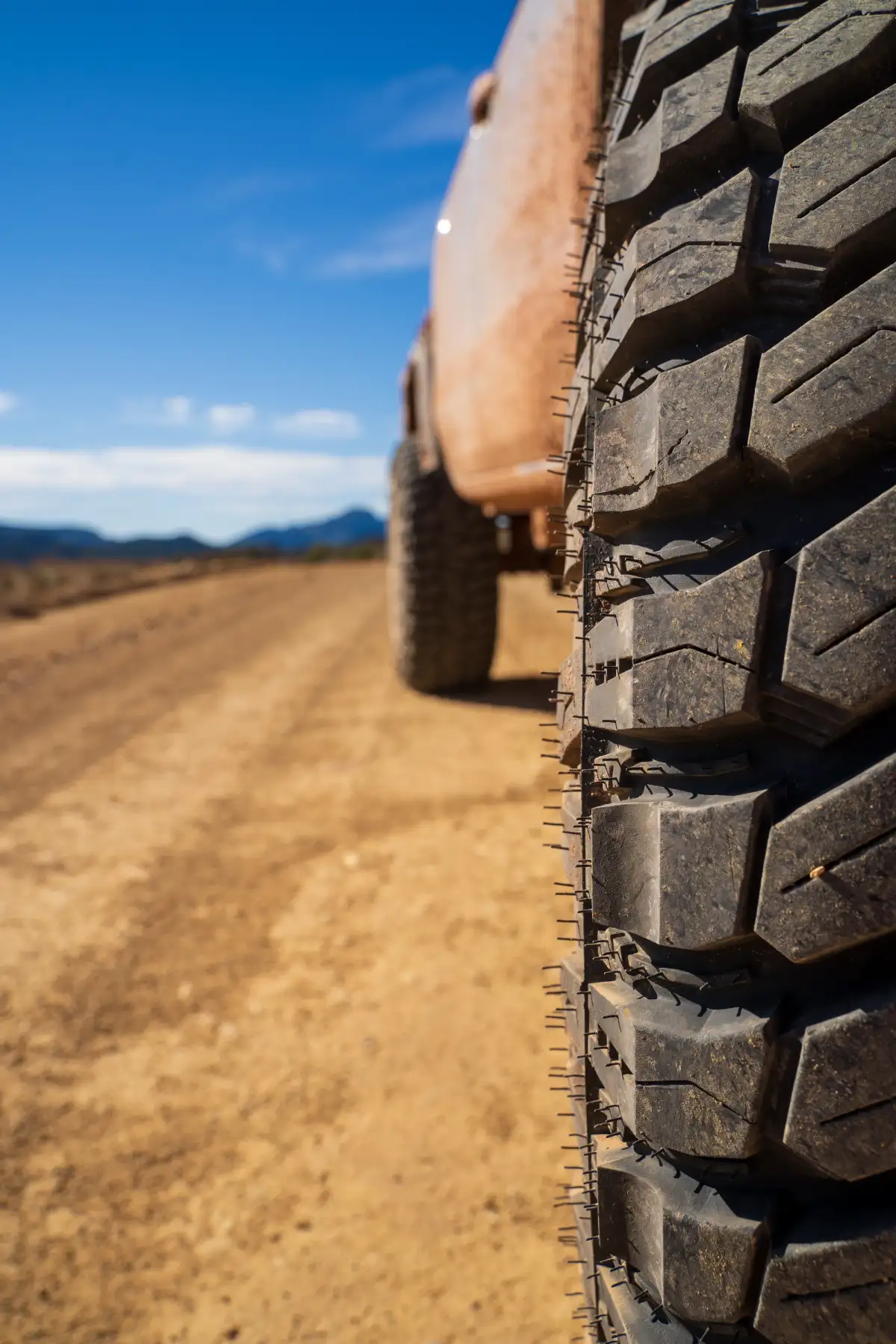
4x4 tyres, shot from behind the back tyre
If you are changing tyre size, you will want the rolling diameter to compare with the original. The sidewall height is the width multiplied by the aspect ratio, and the diameter is the rim size converted to millimetres plus two sidewalls.
For the example tyre: 265 multiplied by 0.70 gives a 186 millimetre sidewall. The 17 inch rim is 432 millimetres. Two sidewalls plus the rim is 804 millimetres, or about 31.6 inches. That is the number to compare when you're weighing up a taller tyre, and the one that tells you how far out your speedo will read.
A tyre more than a few per cent larger than standard also needs checking against your state's modification rules, and against the vehicle's gearing, brakes and guard clearance.
The Other Markings
Two more worth knowing. The DOT code ends in four digits that give the week and year of manufacture, so 2325 is the 23rd week of 2025. Tyres age even when they are not used, and most manufacturers recommend replacement at six to ten years regardless of tread. Caravans that sit for months are the classic case of tyres that look fine and are not, which our caravan tyre guide goes into.
You'll also see a maximum pressure. That is the pressure at which the tyre reaches its rated load, not the pressure you should run. Running pressures come from the placard and from the load you're carrying, and a tyre pressure monitoring system helps keep an eye on them.
Where it fits with your insurance
Tyres below the placard's load or speed rating make a vehicle unroadworthy, and an unroadworthy vehicle is an easy reason for any insurer to decline a claim. Upsized tyres and wheels are a modification and should be declared. Club 4X4's 4WD insurance covers modifications and accessories when they are listed, including wheels and tyres, and the spare tyre guide covers why the spares should match.
The adventure starts where the bitumen ends
See how Club 4X4 can help