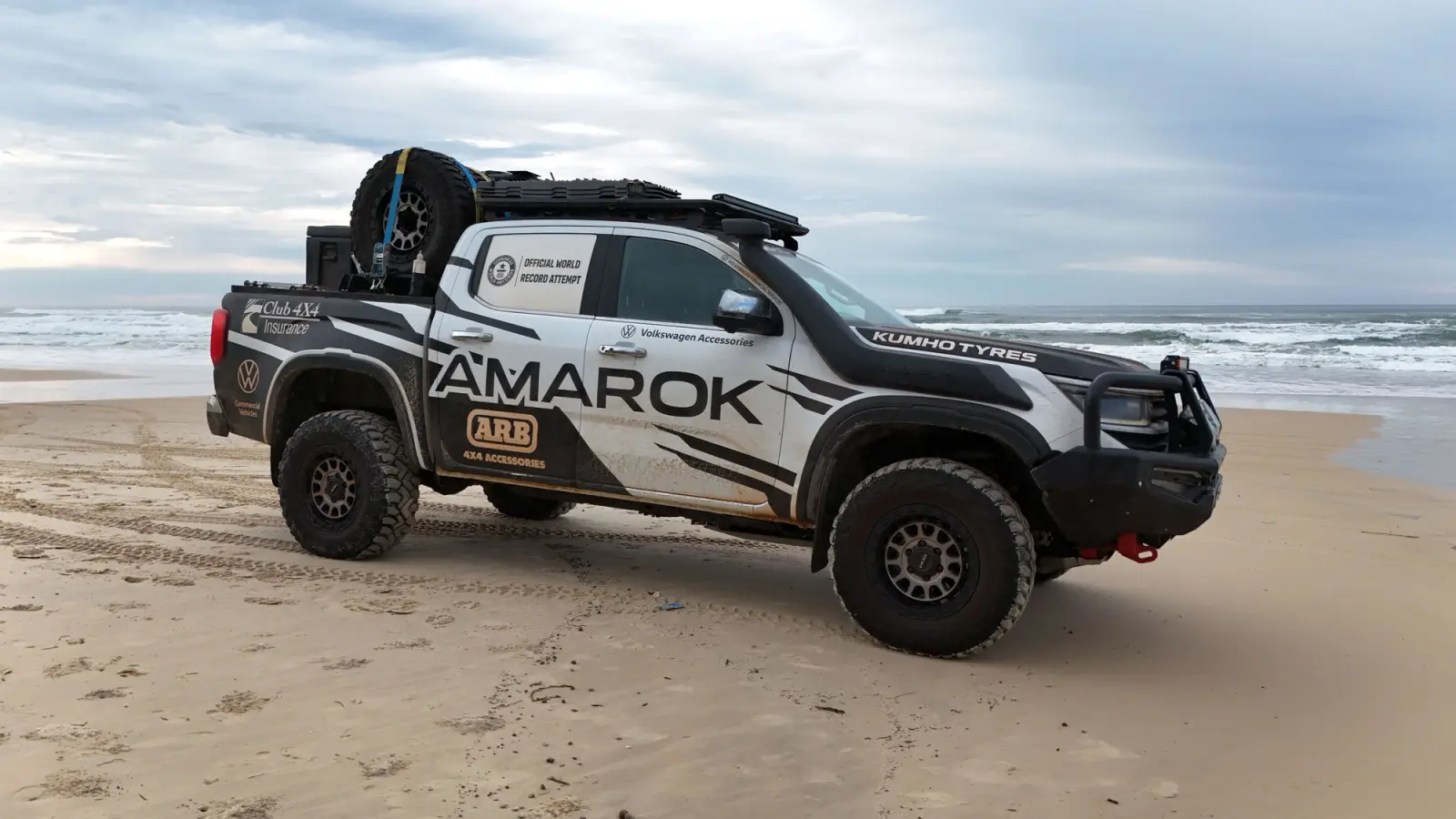
We already knew the Volkswagen Amarok could handle itself in the rough stuff - after all, it made headlines last year with a world record set crossing 10 Australian Deserts in under 10 Days! But it’s one thing to read the headlines, and another to load up two Amarok's with gear, head off-road, and put them to the test yourself.
That’s exactly what we did on our recent trip to K'Gari (Fraser Island) for the annual K'Gari Clean-Up. It’s an event we’re proud to support, and this year, we had a pair of Amarok's come along for the ride.
Safe to say, they didn’t just meet expectations... they blew them out of the (crystal-clear, salty) water.
On the Sand: Comfort Meets Capability
From the moment we rolled onto the barge, the Amarok's made a statement. With V6 power under the bonnet and a solid stance on the sand, they cruised up 75 Mile Beach like it was bitumen. We ran them in 4H with traction control switched off and tyre pressures down to 18 PSI.
The Amarok's absolutely ate it up - no complaints, no bogging down, just smooth, confident driving the whole way up the coast.
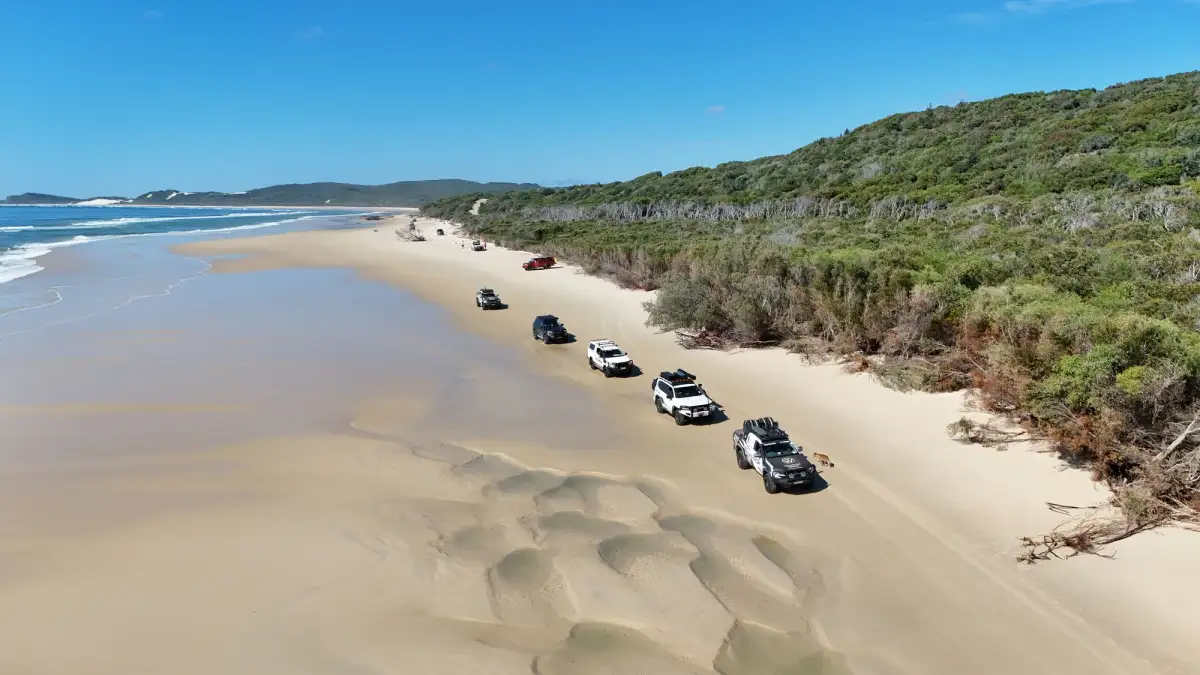
amarok leading convoy fraser island kgari
Tackling the Tough Stuff
But it’s not all wide-open beach driving on K'Gari. While 75 Mile Beach makes for a stunning start to the adventure, the real test of a 4WD comes when you leave the coastline behind. Inland tracks through to Lake McKenzie and the island’s western side quickly throw a mix of challenges your way: steep climbs, sandy ruts, deep root drop-offs, and the occasional water crossing thrown in.
There were several moments where the suspension setup in the Amarok’s really proved its worth. From tackling sandy corrugations that had lesser setups bucking and bouncing, to confidently dropping into and out of wombat holes, the Amarok's remained planted and controlled. Even when faced with sharp, off-camber descents or root-covered climbs that could easily unnerve a lesser 4WD, both vehicles felt balanced and capable.
And it wasn’t just about the clearance and capability - the Amarok’s steering and handling impressed too. On narrow, one-way sections of tracks where we had to make way for oncoming convoys, the ease of manoeuvrability was a standout. With a light but precise steering feel and good visibility all round, tucking the Amarok into tight sidings or backing up around a corner didn’t feel like a mission, it was all surprisingly stress-free.
All in all, the inland sections were where we really got to appreciate just how well-rounded these Amarok's are. They’ve clearly been built with more than just a showroom floor in mind. They’re made to be driven through the sort of terrain Australia is known for.
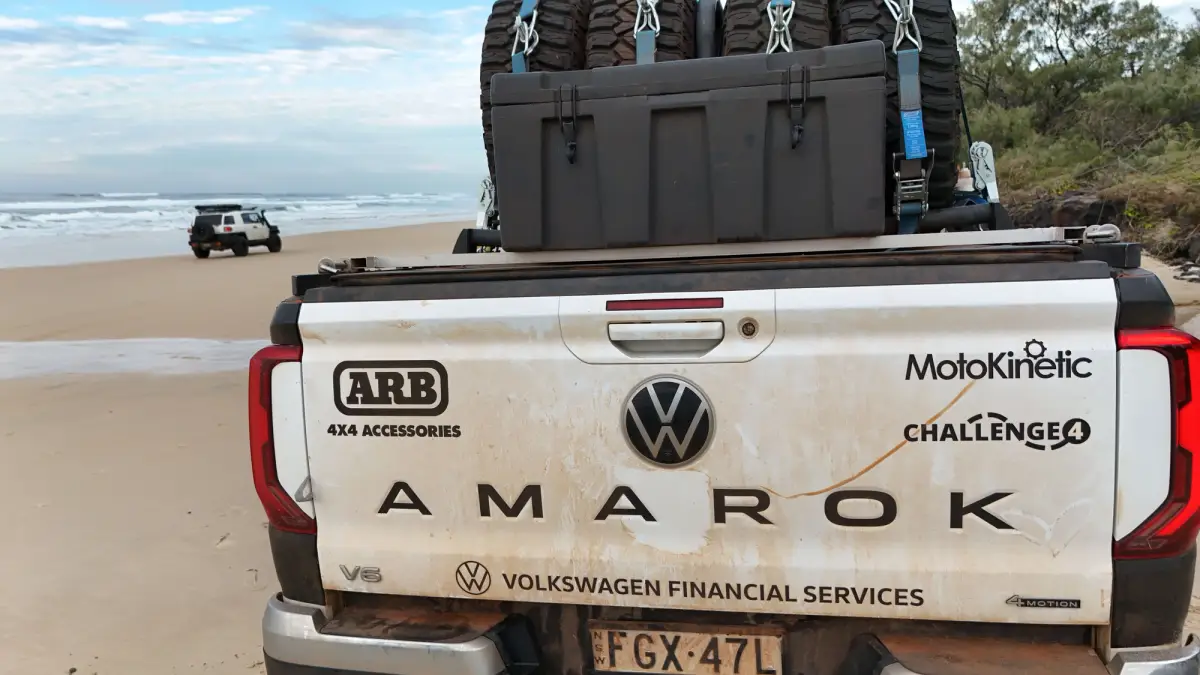
dirty amarok tailgate offroading adventure
Creature Comforts in the Bush
Let’s be honest - long days behind the wheel can really take it out of you. After hours navigating soft inland tracks, negotiating beach washouts carved out by recent weather (cudos Cyclone Alfred), cuttings and soft boggy sections, the last thing you want is to climb into a 4WD that feels like a tractor. That’s where the Amarok really stepped up.
It’s not just capable, it’s comfortable. Both Amarok's were kitted out with all the mod-cons you’d expect from a high-end daily driver, not just a weekend warrior. Plush leather-appointed seats that didn’t leave you with a sore back after a full day on the tracks? Tick. Dual-zone climate control to keep the cabin cool and sand-free while the sea spray did its best to fog everything up? Also tick.
Then there’s the 10-speed automatic gearbox, which made both highway cruising and low-speed technical driving a breeze. Wireless phone charging meant no one had to fight over cords, and the large infotainment touchscreen kept us on course (literally) with clear mapping and an intuitive display.
Honestly, it felt a bit like cheating. You’re bouncing through cuttings, sand flying up behind you... and inside, you’ve got climate control dialled in, your playlist humming along and the Amarok makes it feel easy, like it was built for this kind of trip, because, well… it kind of is.
The Amarok is just a genuinely nice place to be. It’s the kind of 4WD that works hard on the outside but pampers you on the inside - and we’re absolutely here for it.
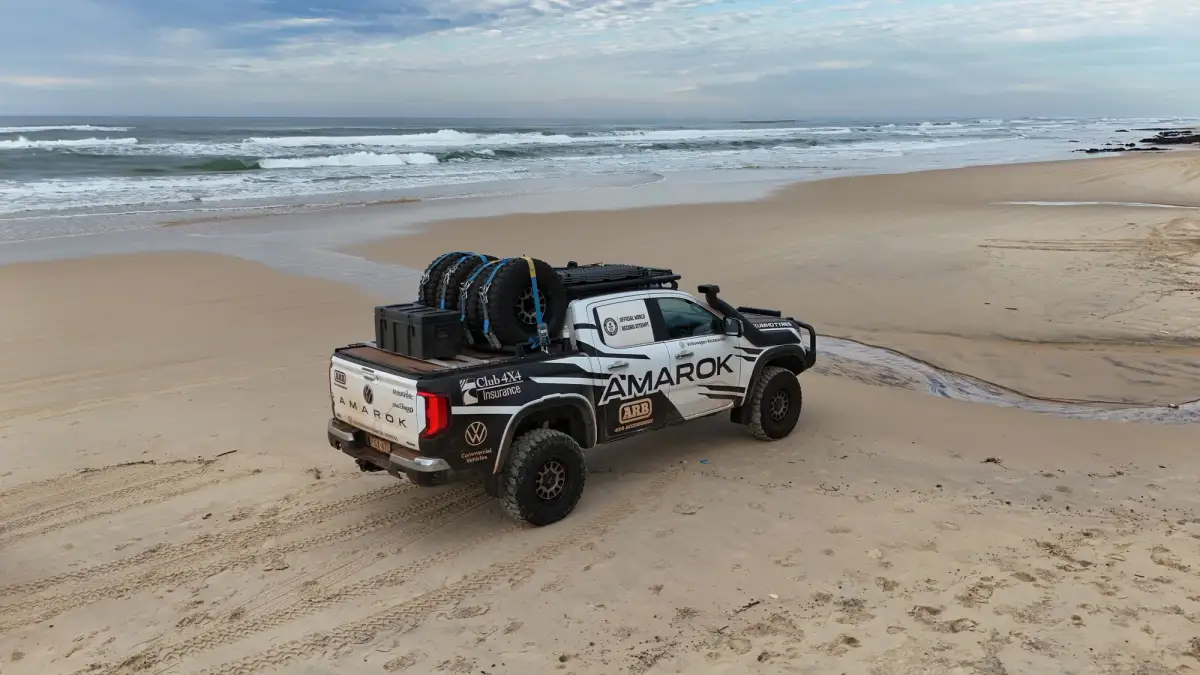
ariel image of volkswagen amarok on beach fraser island kgari
Our Verdict
After covering everything from bitumen to beach highways, rainforest tracks and water crossings, the Amarok's came away with nothing but respect from the Club 4X4 team. They’re rugged, reliable, and ready for a challenge, but also refined enough to feel like a modern vehicle.
Whether you’re after something comfortable enough for the school run and the weekly grocery haul, or tough enough to tackle the beach tracks on your next long weekend, the Amarok feels built to handle both with ease. It certainly earned its stripes on K'Gari.
Comprehensive Insurance
Specialising in 4WDs, Caravans and Camper Trailers