Just 90 minutes across Moreton Bay from Brisbane, Mulgumpin (Moreton Island) feels considerably further from civilisation. There are no sealed roads, beach conditions dictate your movements and almost every turn leads to another stretch of sand worth exploring. For 4WD owners, it’s one of South East Queensland’s great weekend escapes.
This two-day itinerary takes in the Tangalooma Wrecks, the island’s wartime history, remote northern beaches, Cape Moreton and two cracking sunset camps before a Monday morning run back to the MiCat.
From Moreton to the High Country
We cover anywhere you can legally go in Australia
Saturday Morning: Straight off the MiCat and into the Sand
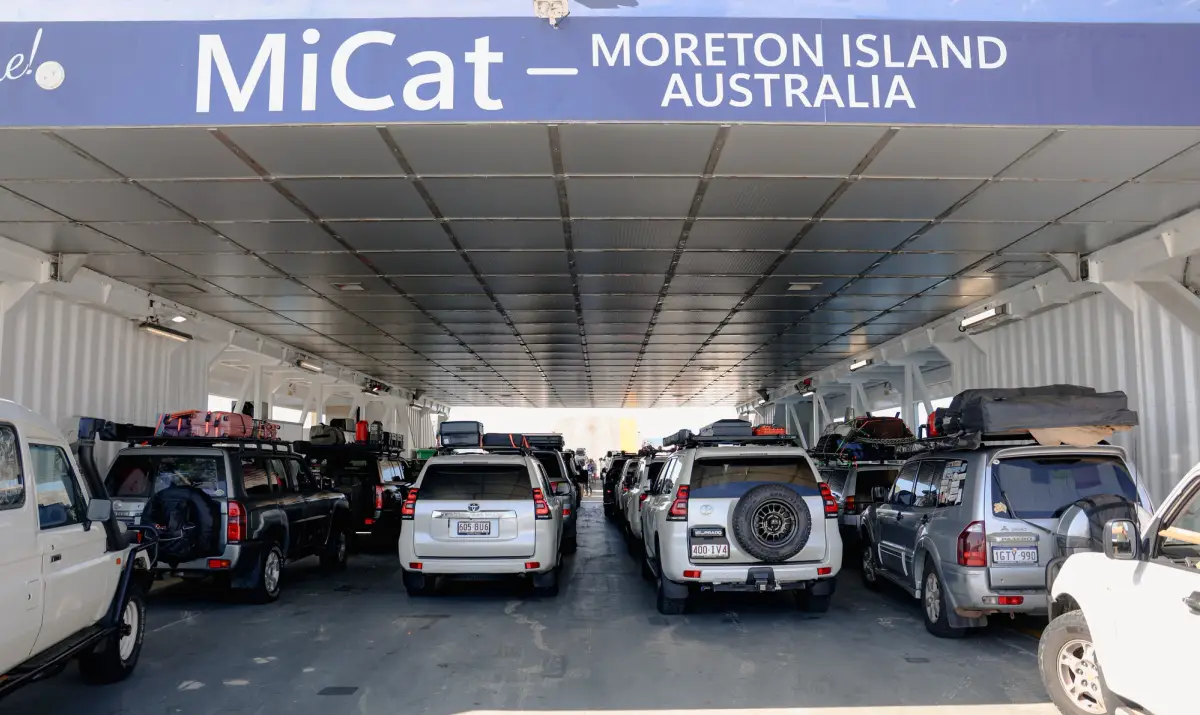
4WDs on the MiCat to Moreton Island
The adventure begins before you’ve even reached the island. Once your 4WD is loaded onto the MiCat at the Port of Brisbane, use the crossing to prepare for the sand ahead.
Airing down your tyres onboard is a great way to make sure you’re ready to hit the beach from the moment the barge lands. The ideal tyre pressure will depend on your vehicle, tyre setup, load and conditions, so always adjust accordingly. Locals recommend anywhere from 16-18psi for standard 4WDs.
Around 90 minutes later, the MiCat lands directly onto the sand on Moreton’s western side, almost alongside the island’s most recognisable landmark.
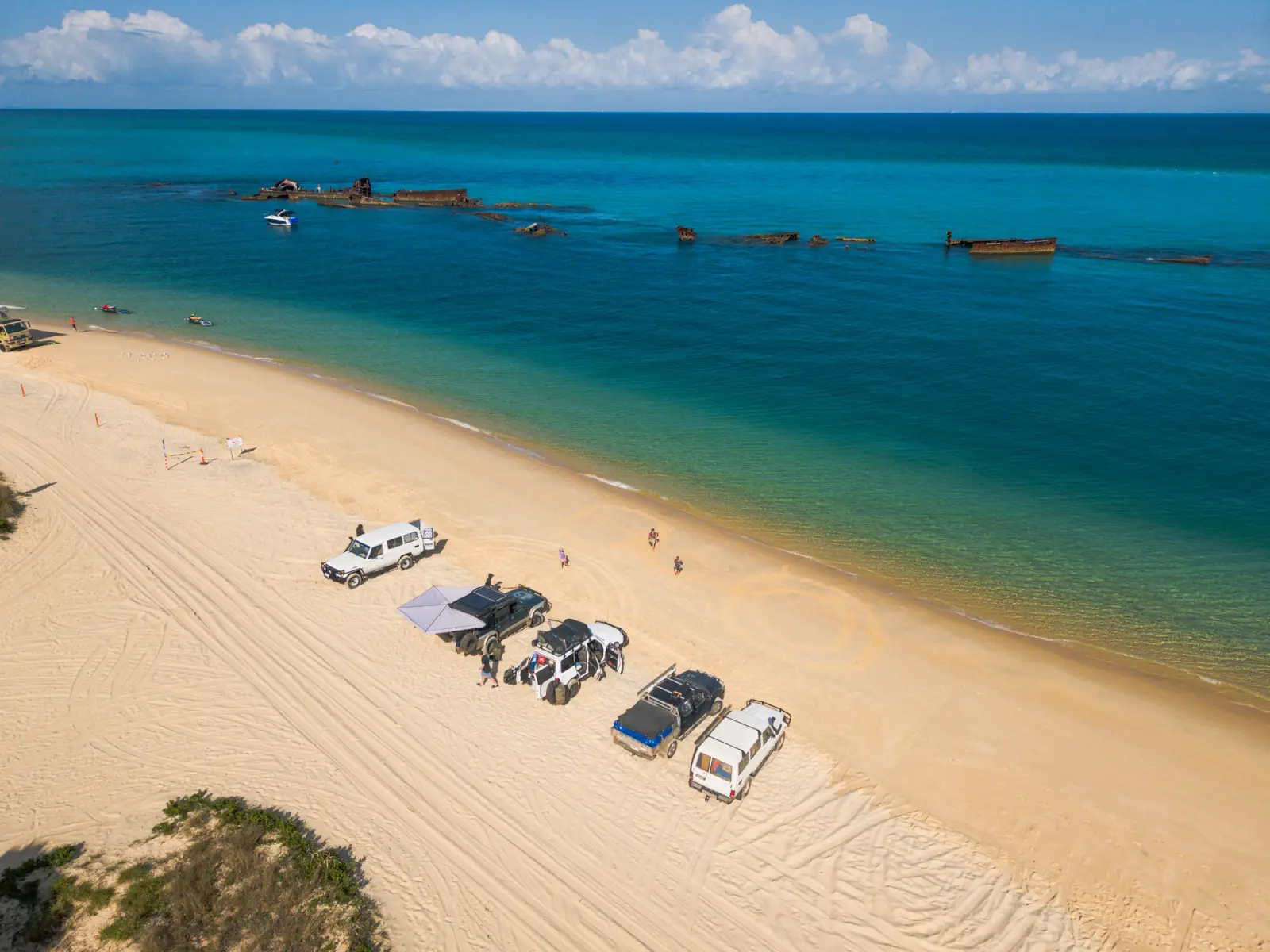
Turn right off the barge and within minutes you’ll arrive at the Tangalooma Wrecks.
It’s about as good an introduction to Moreton Island as you could ask for.
Saturday midday: Snorkel the Tangalooma Wrecks
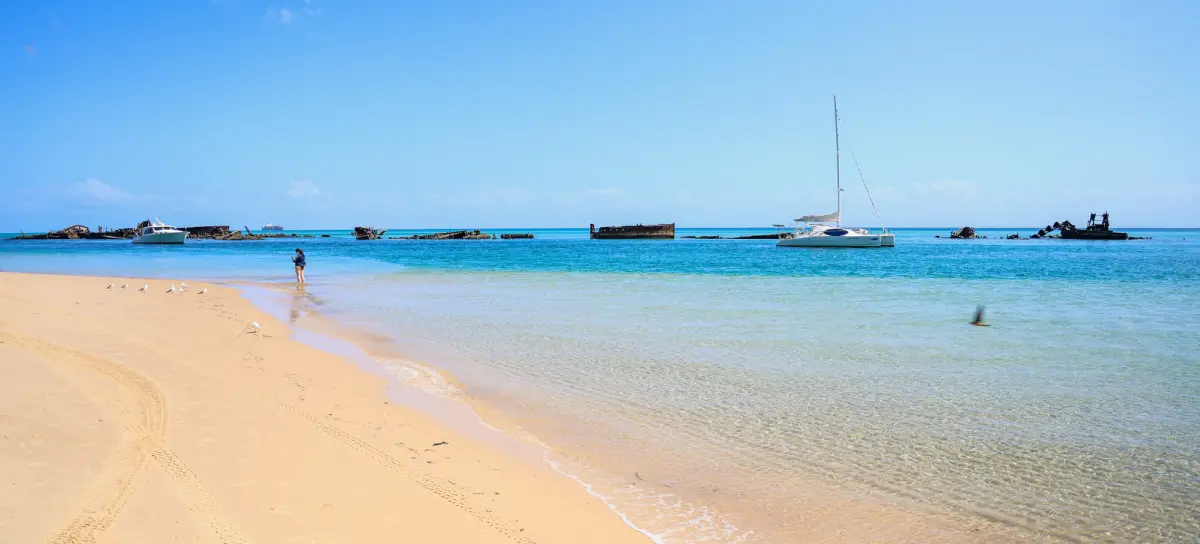
Tanaglooma Wrecks, Moreton Island, QLD
Park up on the beach and swap the driver’s seat for some goggles and a snorkel.
The Tangalooma Wrecks create an artificial reef teeming with marine life, making this one of the island’s standout swimming and snorkelling spots.
If you haven’t brought your own equipment, snorkelling gear hire is available through Sunset Safaris near the wrecks, including snorkels and goggles, fins, wetsuits and lifejackets.
For less-confident swimmers, visiting around low tide can be a good option. Shallow sections allows for less swimming and more standing on sandbanks. Conditions around the wrecks can change quickly, however, and currents can be strong, so always assess conditions and swim within your ability.
If in doubt, opt for a guided snorkelling experience or wear appropriate flotation equipment.
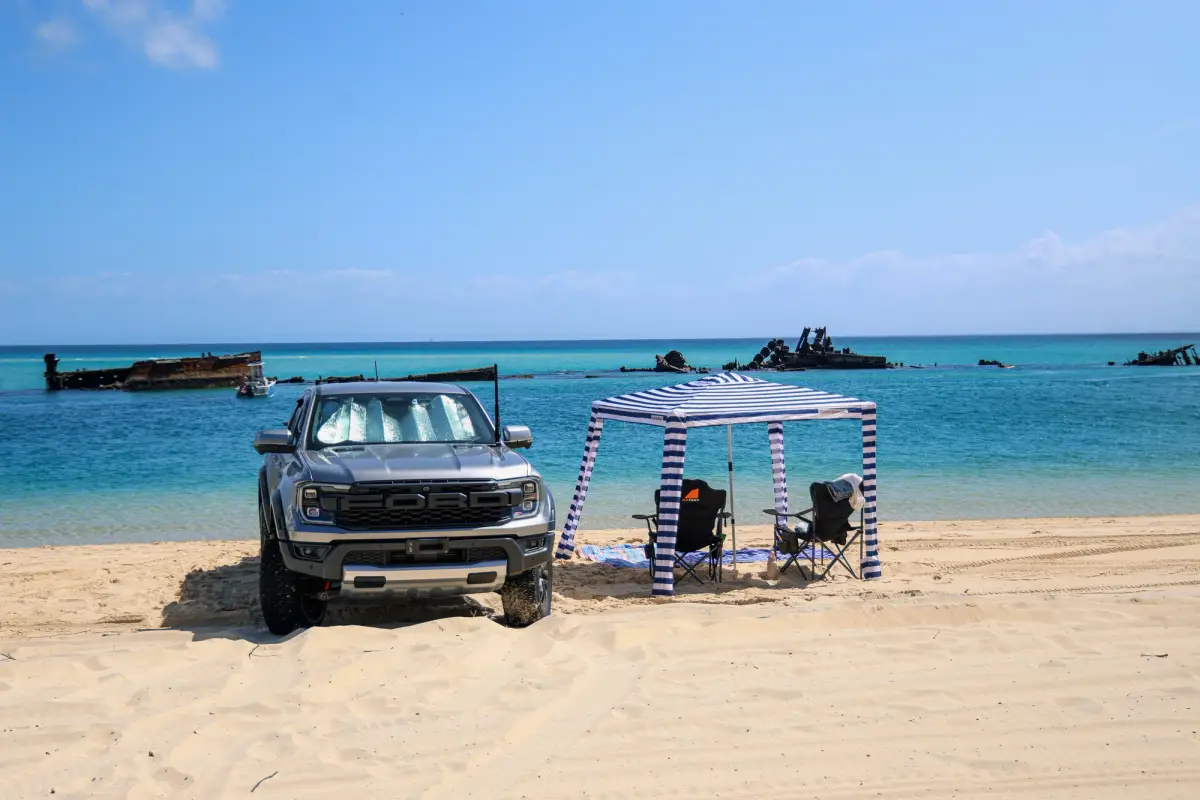
Tangalooma Wrecks, Moreton Island, QLD
Saturday Afternoon: Discover Cowan Cowan’s Wartime History
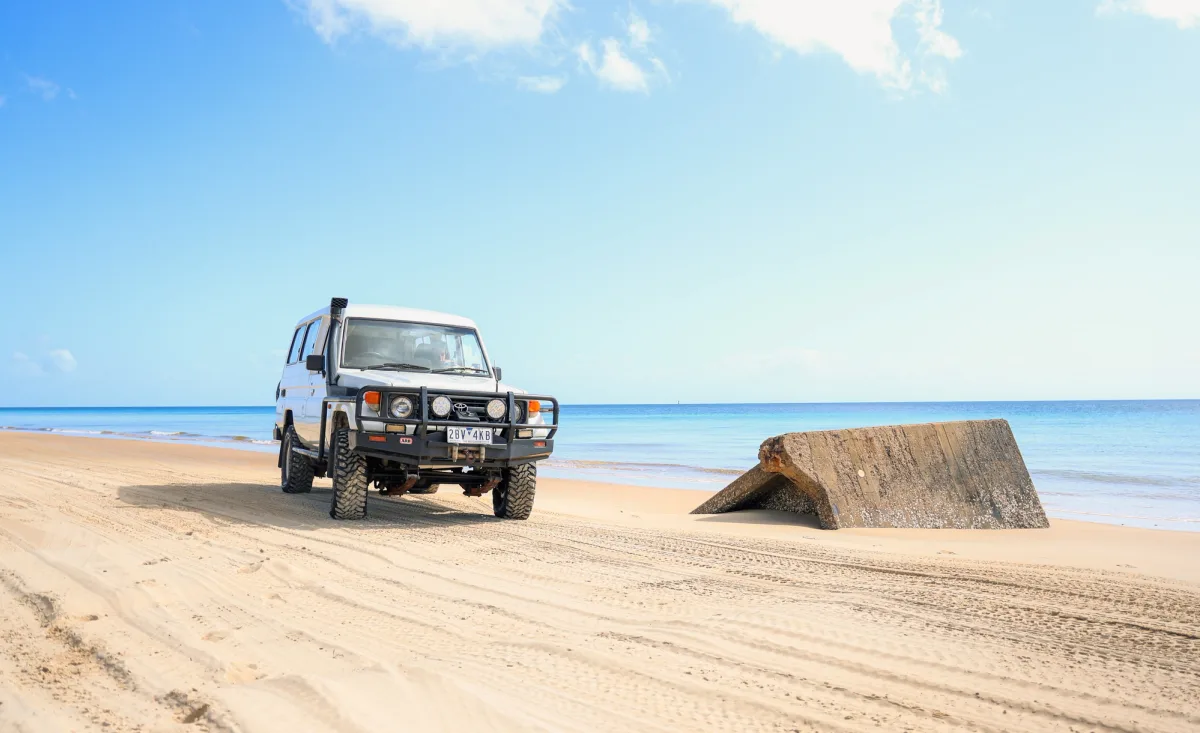
A 4X4 Toyota LandCruiser on Moreton Island
Back in the 4WD, point north along the western side towards Cowan Cowan.
Today it’s a quiet coastal settlement, but the surrounding dunes contain reminders of a very different chapter in Moreton Island’s history.
During World War II, Cowan Cowan became part of an extensive coastal defence network built to protect the approaches to Brisbane. Remnants of military fortifications can still be found around the area, offering a fascinating look into the island’s wartime past.
It’s an easy stop to add some history between the water-based adventures.
Saturday Evening: Camp on the Western Side
Continue north and settle into your booked campsite somewhere along the western side below Bulwer.
There’s a good reason to spend your first night here.
As daylight fades, the sun drops across Moreton Bay towards the Glass House Mountains, often creating one of the most impressive sunsets on the island. The protected western waters can turn glassy in the right conditions, making it the perfect place to pull out the camp chairs and settle in for the evening.
If sunset is high on the priority list, the western side is where you want to be.
Make sure your camping and vehicle access permits are organised before travelling, and always camp within designated areas.
Sunday Morning: Coffee and Breakfast in Bulwer
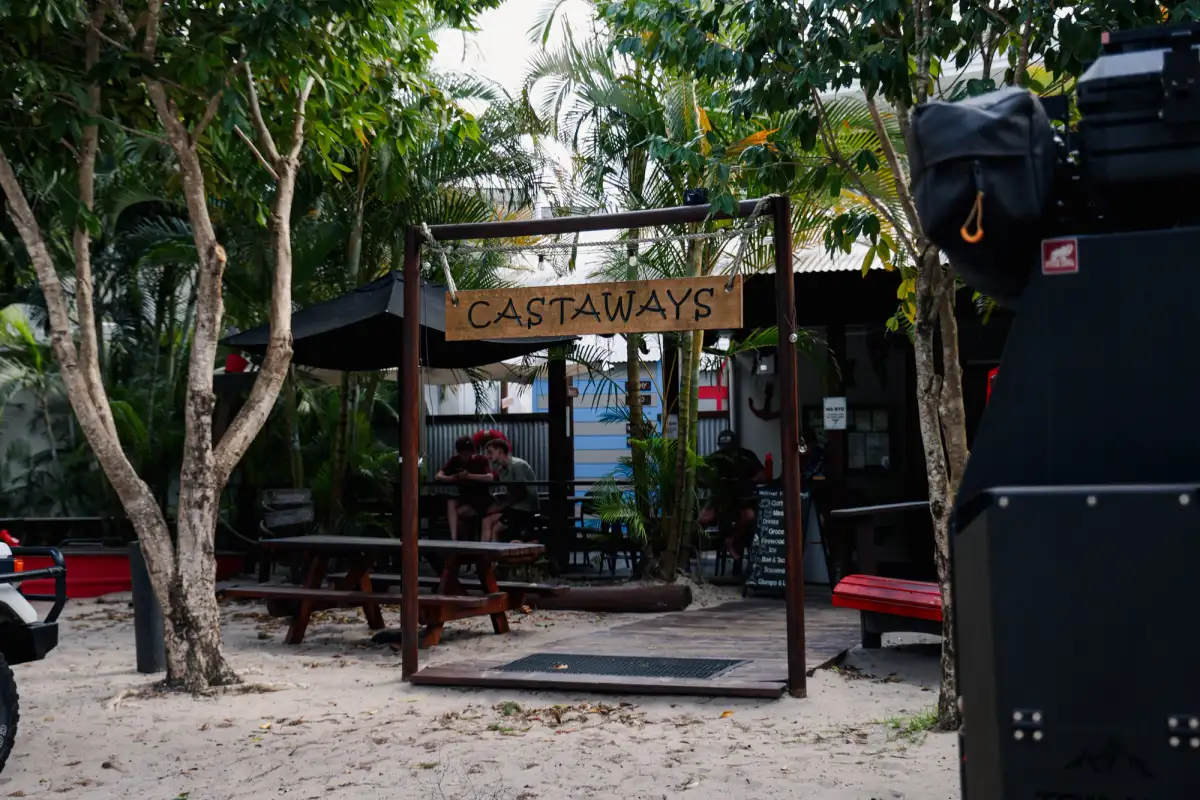
Castaways, Moreton Island
Break camp and head into Bulwer for breakfast at Castaways.
Part café, part general store and part island institution, Castaways is an ideal pit stop before heading into the more remote northern sections of Moreton.
Grab a coffee and breakfast, stock up on any essentials and make sure the 4WD is ready for another full day on the sand. Once you leave Bulwer and continue north, services become limited.
Sunday Midday: Yellow Patch
From Bulwer, allow roughly 45 minutes to an hour to make your way towards Yellow Patch, depending on tides, sand and track conditions.
The reward is an enormous stretch of beach backed by towering dunes and the northern landscape of the island.
Pull up, unpack lunch, have a swim or simply spend an hour doing very little. It’s one of those classic Moreton Island stops where the location itself is the activity.
Access around Yellow Patch can be heavily influenced by the tide, so plan this section around low tide and check current beach and track conditions before committing to the route.
Sunday Afternoon: Cape Moreton and Blue Lagoon
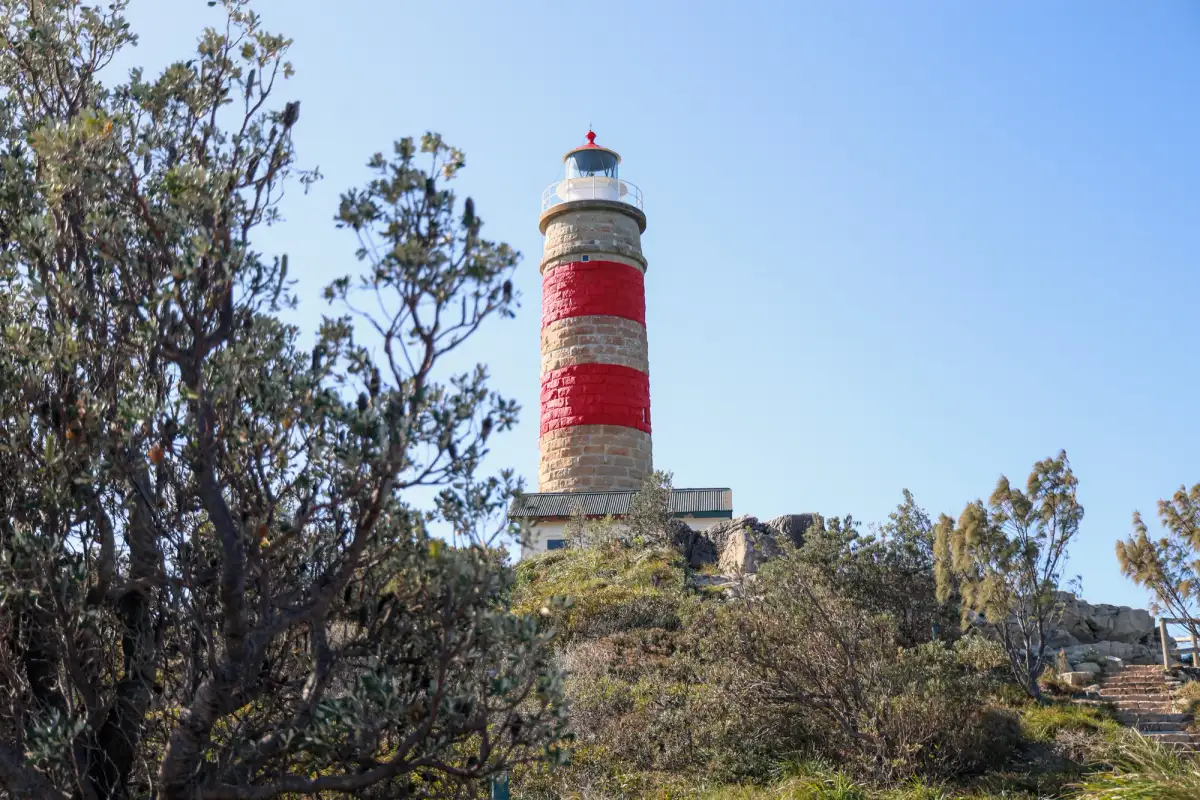
Cape Moreton Lighthouse, QLD
From Yellow Patch, continue around towards Cape Moreton Lighthouse.
Sitting high above the coastline, the headland offers one of the best elevated views on the island. During the humpback whale migration season, it’s also an excellent place to scan the ocean for passing whales.
Cape Moreton Lighthouse was constructed in 1857 and is Queensland’s oldest lighthouse, making it one of the island’s most significant historic landmarks.
Take some time to explore the headland before continuing south.
If tides and beach conditions permit, the next leg should take you along Moreton’s rugged eastern coastline towards Blue Lagoon.
One of the island’s best-known freshwater swimming spots, Blue Lagoon offers calm, tranquil water away from the open ocean.
It can also be a particularly handy destination when strong southerly or easterly winds make spending time on the exposed beach less appealing.
Sunday evening: Camp at North Point
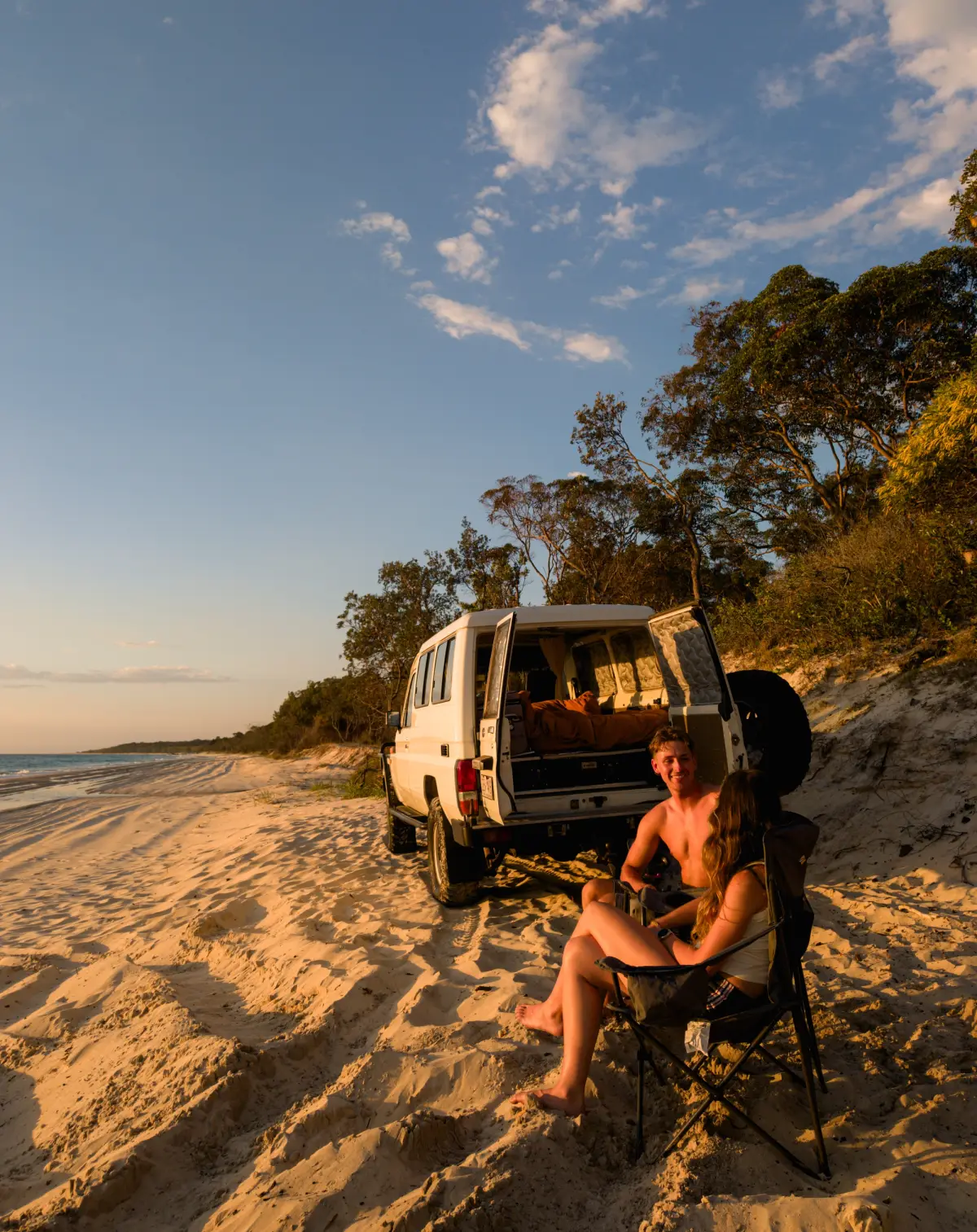
Two people camping on Moreton Island
For the final night, head back towards North Point.
This northern corner of the island provides a completely different sunset experience to the western side.
As the sun gets lower, the light catches the enormous beach areas and surrounding dunes. In the right conditions, the sand glows a brilliant orange as the last light bounces across the landscape.
With Honeymoon Bay and the northern beaches close by, North Point also makes an excellent base to finish your weekend.
Set up camp, cook dinner and enjoy one final night with nothing but sand, ocean and your best company.
Monday morning: Back to the MiCat
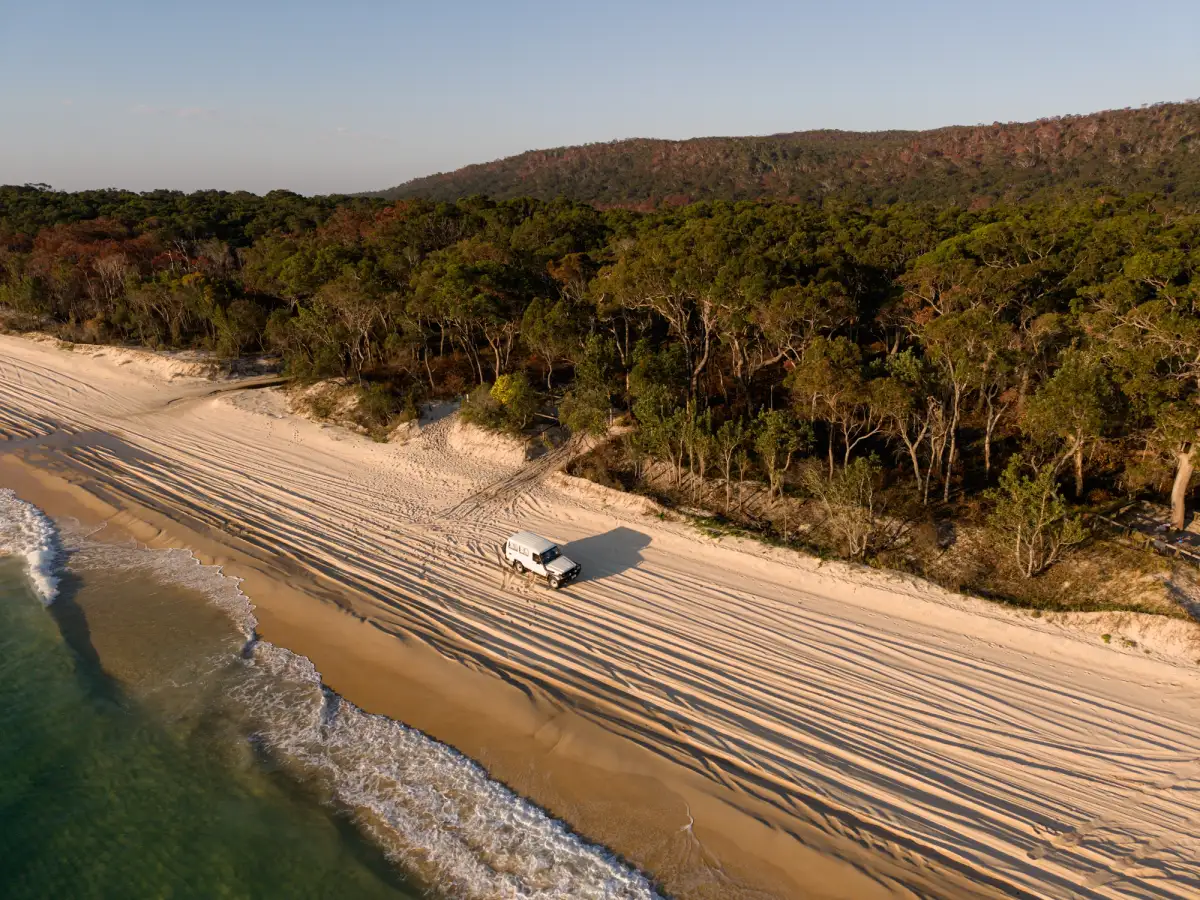
A Toyota LandCruiser driving on Moreton Island
Pack up early and give yourself plenty of time to return to the Tangalooma landing.
One of the most important lessons on Moreton Island is that distance doesn’t always equal travel time. Soft sand, creek crossings, inland tracks and changing beach conditions can turn a relatively short drive into something considerably slower.
Build a generous buffer into your return trip rather than trying to race the tide or ferry departure.
Once you’re back aboard the MiCat, air your tyres back up before returning to sealed roads.
Then it’s around 90 minutes across Moreton Bay before the island disappears behind you.
Have more time? Head south
If you’ve got another day to play with, the southern end of Moreton Island is well worth adding to the itinerary.
Time the tides correctly and follow the beaches south towards Kooringal, where a visit to the Gutter Bar has become something of an island tradition.
The drive itself is part of the experience, with long stretches of remote coastline and classic beach driving along the way.
Like much of Moreton, however, access is heavily tide-dependent, so make sure your timing is right before heading south.
Let the Weather Shape the Trip
One of the best ways to experience Moreton Island is to stay flexible.
If strong westerly winds are hitting the bay side, spend more time exploring the eastern beaches. If easterly or southerly winds are making the surf coast uncomfortable, Blue Lagoon and the western side can offer more protected alternatives.
And if the tide doesn’t suit the route you originally planned, change the route - not the rules.
Before every trip, check current tides, weather, park alerts and track conditions.
Carry the essential sand-driving and recovery equipment, including an air compressor, tyre gauge, shovel and suitable recovery gear, along with adequate drinking water, first aid supplies and communications.
Queensland road rules still apply on Moreton Island’s beaches and tracks, so drive to the conditions, stay on designated routes and keep vehicles off the dunes.
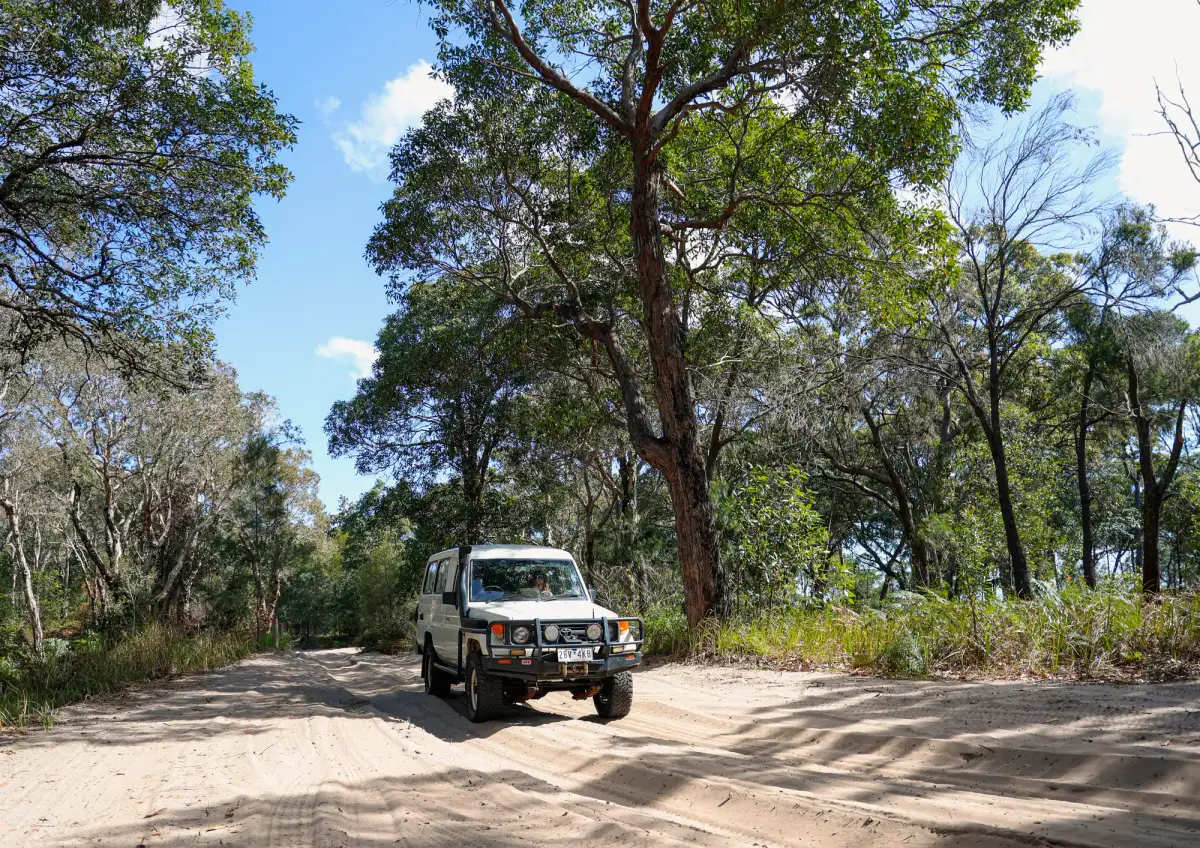
A white Toyota LandCruiser on Moreton Island in a forested area
A little preparation goes a long way on Mulgumpin.
Get it right and this two-day loop delivers just about everything you could want from a Moreton Island escape: beach driving, snorkelling, history, remote camps, huge landscapes and two very different sunsets.
Chances are, you’ll already be planning the next trip before the MiCat reaches Brisbane.
From Moreton to the High Country
We cover anywhere you can legally go in Australia