Driving a 4WD around K’Gari is absolutely the best way to see it. There’s no shortage of routes to some of the most stunning sights Australia’s east coast has on offer. From the wide, open beaches to tight jungle tracks, it’s a little different than sitting in traffic on the Brucey, so here’s some top tips for navigating the K’Gari ‘roads’.
Know Your Tides
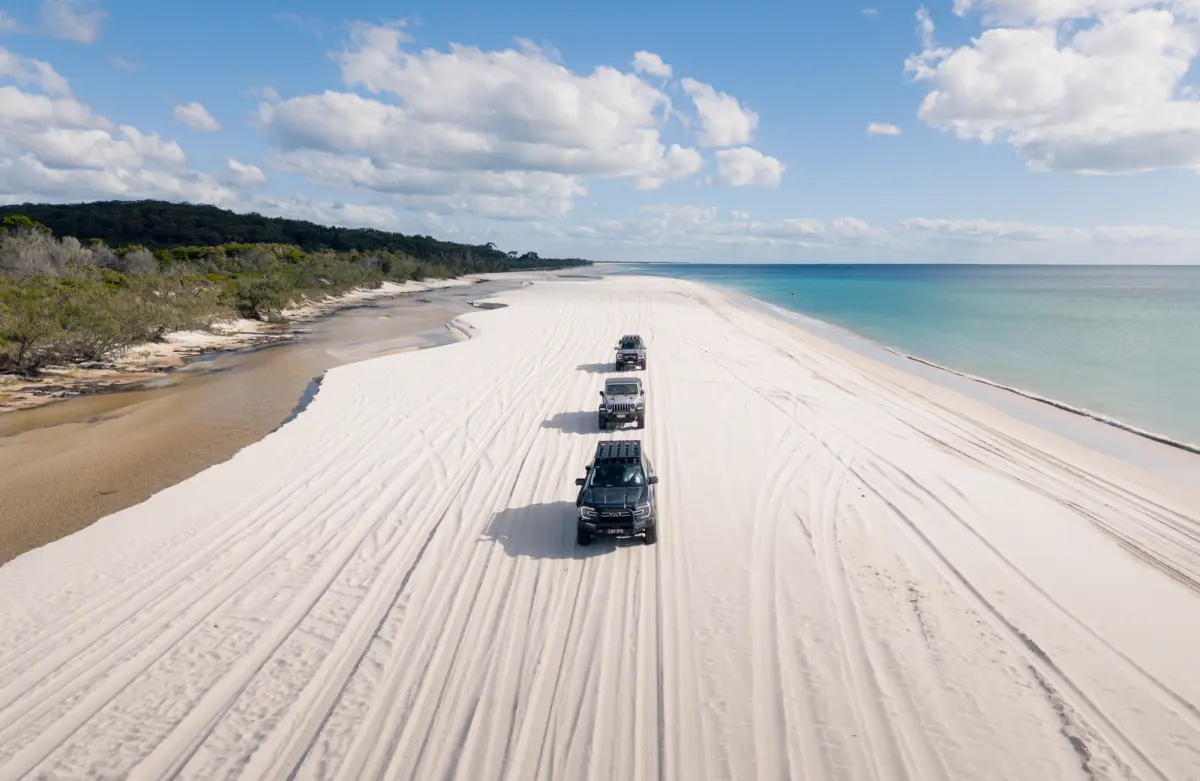
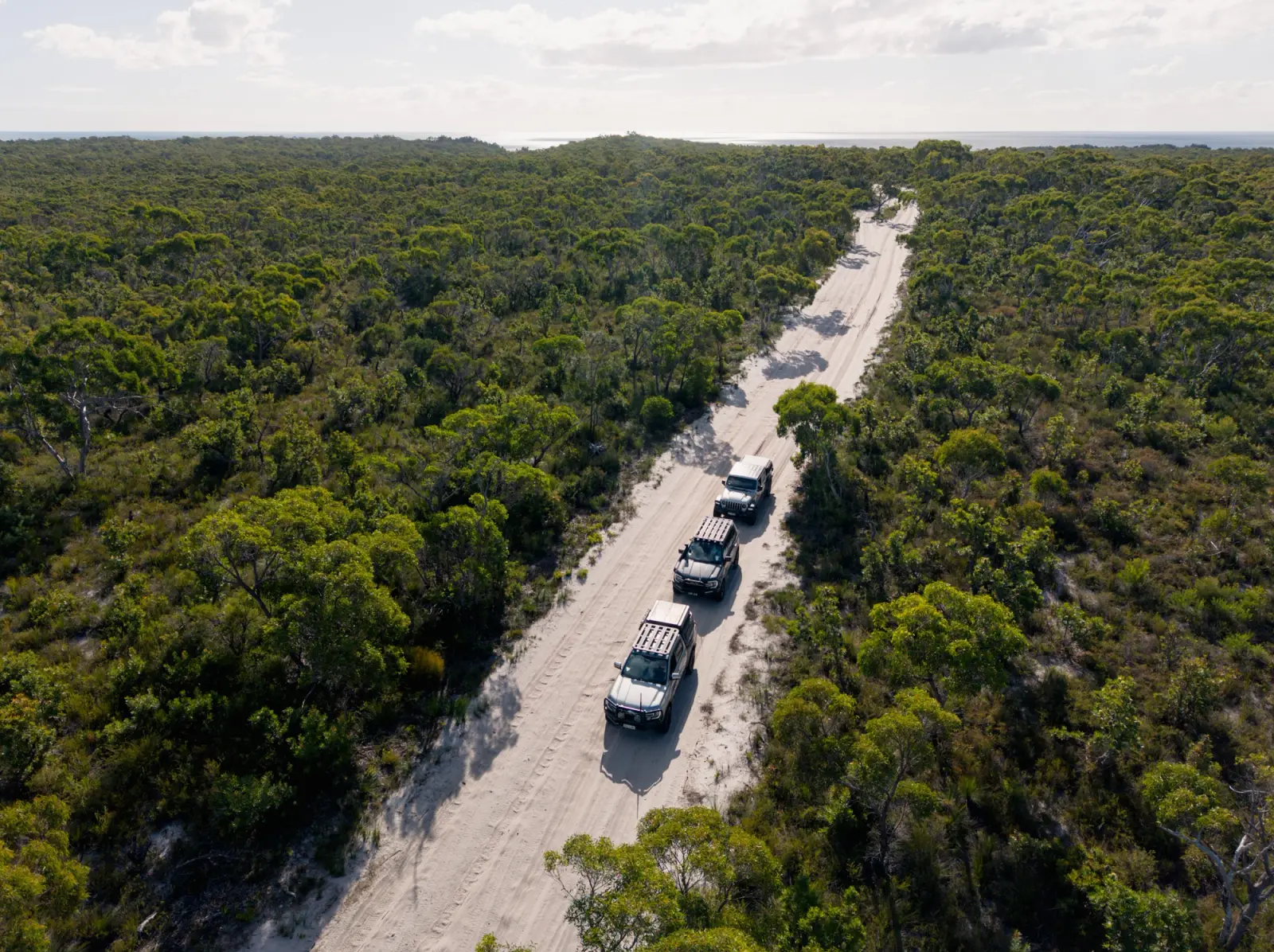
convoy of 4WD on K'Gari's 75-Mile Beach
This is the first thing that should be on any driver’s mind. Plan ahead and drive as close to low tide as possible. Two hours each side of low is the safest but also consider wind and the height of the tide for the best driving conditions.
When that tide is favourable, drive on the harder (darker) sand between the waterline and the high tide mark for the best driving surface. You may need to divert into the soft stuff depending on traffic and tide, but you should be able to stay on the firmer sand most of the time.
Responsible Driving
K’Gari is a recognized UNESCO World Heritage-listed site, so visitors should consider how and where they drive to preserve this precious ecosystem. When crossing water, drivers should check where other drivers have crossed, avoiding the formation of new crossing points if possible. This not only limits the damage 4WDs have on the beaches, but a regularly used crossing will be safer.
When driving, the dunes should be constantly scanned for signs of creek crossings as they can come out of nowhere and cause serious damage to vehicles approaching them unknowingly with speed. Once spotted, they should be tackled at a slower speed.
When approaching new terrain (e.g. firm sand to soft sand) it is advisable to approach head on, so that both front wheels engage with the new surface at once. If one wheel meets it first, you are at risk of your 4WD becoming unbalanced and even rolling. This is because the new terrain may cause a change in speed drastic enough to change your momentum.
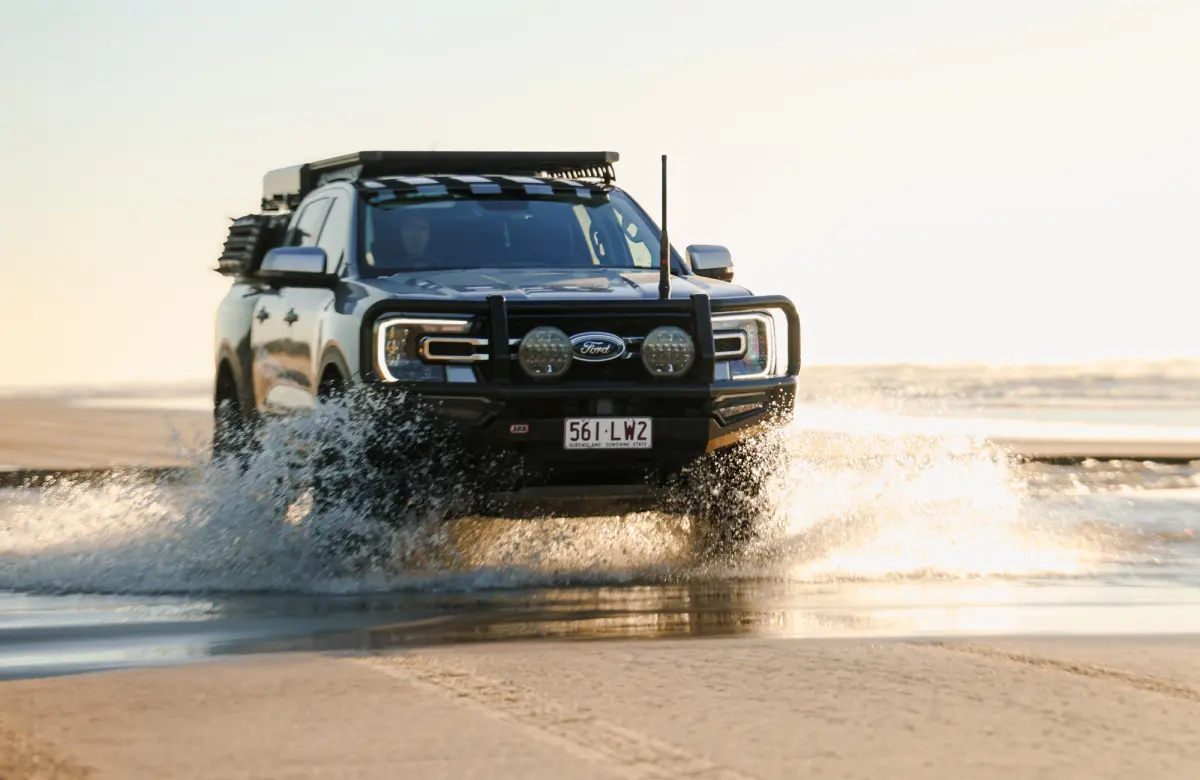
4WD driving through a creek crossing on K'Gari
Queensland road rules apply on the tracks, and each one has its own speed limits:
- Eastern Beach - 80 km/hr
- Shared Zones on Eastern Beach - 40 km/hr
- Hook Point Inland Roads - 50 km/hr
- Other Inland Roads - 30 km/hr
You definitely won’t need to go any faster than these limits and police regularly patrol the beaches with speed cameras and RBTs. Apart from the enforced rules of law, there are some unspoken rules when driving on K’Gari.
- If you come across a stuck or bogged traveller, always stop to try and help. Many hands make light work, especially when racing the incoming tide.
- Try and avoid driving at night, and if you do, drive slower. The beaches are littered in hazards that are much harder to avoid in the dark. Things like incoming tides, unexpected creeks and people fishing can come out of nowhere.
- When pulling over to park for the day or a rest, park at the top of the beach. It’s advisable to park at an angle so others know you aren’t planning to move. This keeps you out of the way of moving traffic, just don’t park on the sand dunes.
- Give way to pedestrians and wildlife. Try to drive around any dingoes or resting flocks of birds. If you do encounter a dingo, remain in your vehicle.
- If approaching an inland track entry point, always give way to drivers coming downhill.
- When driving on 75-Mile Beach, it’s common practice to use your indicator to let other vehicles you’re aware of them and your intention is to remain on your side. Without road lines or signs and so much distracting scenery out the windows, it can be easy to be distracted and panic when you do see another car, so this keeps everyone in line.
- On inland tracks, always give way to buses and heavier vehicles by using the installed passing bays. If one isn’t nearby, pull over as far as you can to the side and let them pass.
Tyre Pressure Guide for Sand Driving
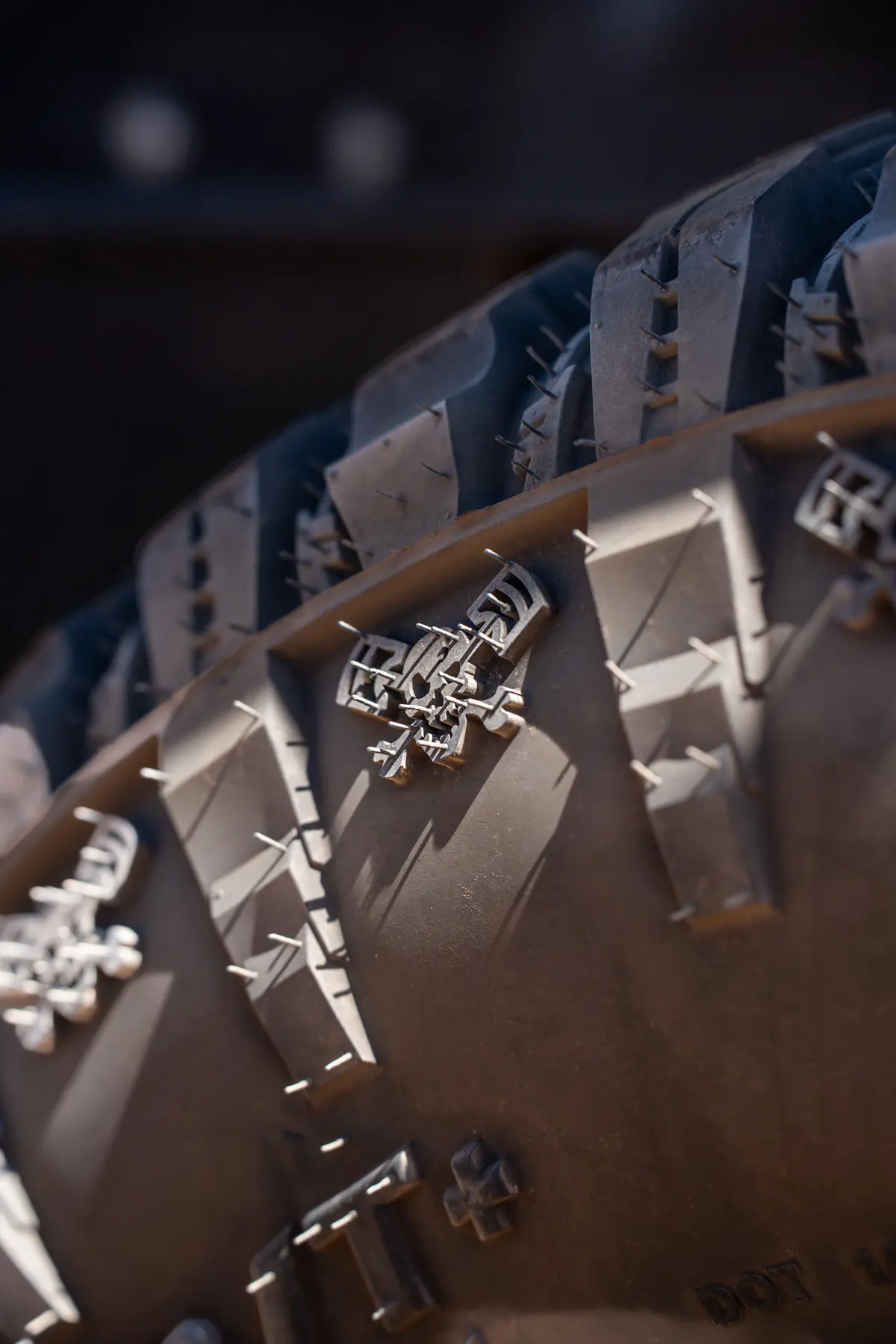
close up of a 4WD's tyre
Understanding your tyre pressure is a great place to start for beginner sand drivers.
Dependent on your vehicle and tyre size, your tyre pressure will vary, but as a rule of thumb, if you’re driving a full-size 4X4 wagon, start at around the 20psi mark and head south from there depending on the conditions. Sand is constantly shifting and can have different densities. Down near the water where it’s firmer and easier to drive on, a higher psi may work, but on the soft stuff, a lower psi will help to get more surface area and therefore more traction.
Don’t go lower than 16psi as that’s where the risk of rolling the tyre bead off the rim begins, but if you’re below the high tide mark and you get stuck it may be worth lowering your psi to try and get out. Just make sure that once out, that number goes back up.
Soft Sand Driving
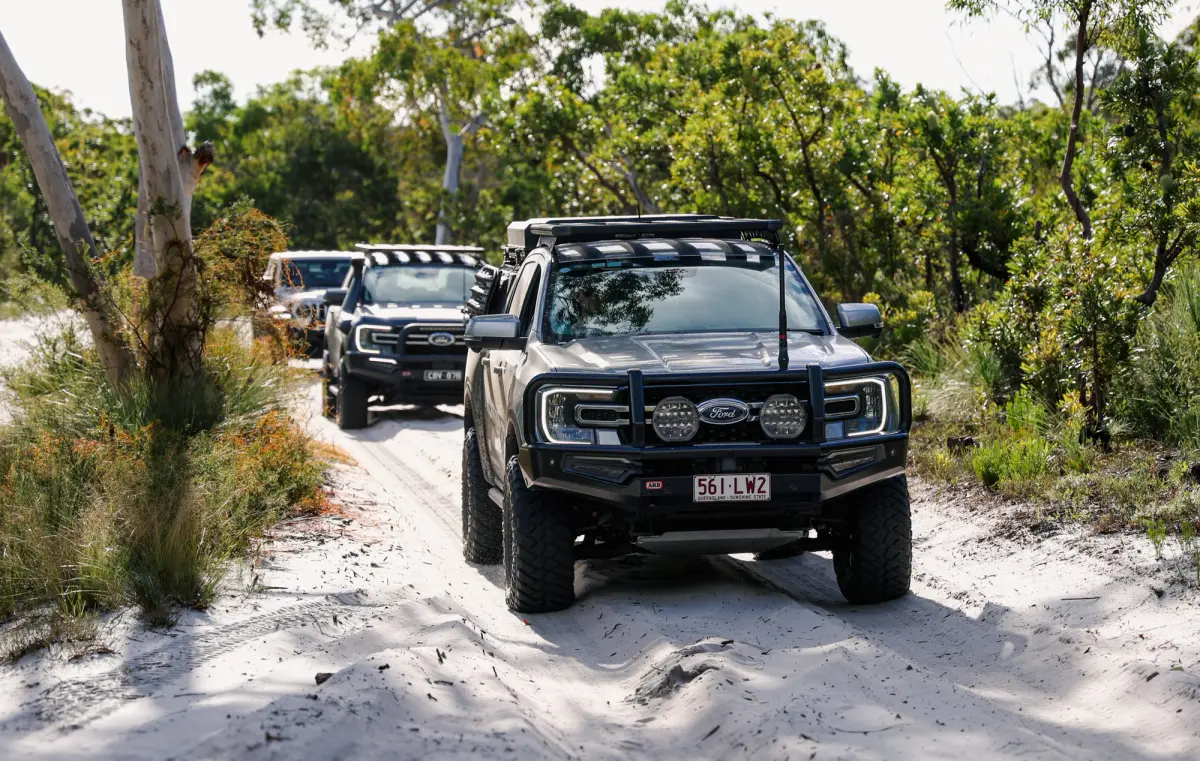
Convoy of 4WDs on a soft sand track on K'Gari
For when you do find yourself on the soft sand, whether because there’s limited firm ground left or you’re entering or exiting an inland track, it’s important to know how to handle it. Sharp turns and sudden braking should be avoided as steering is as much about throttle input as it is about turning the wheel.
The sand will try and dictate which way your 4WD goes, so applying a little throttle when turning means your vehicle is encouraged to push through the sand rather than follow any previous lines. It can be a bit disconcerting to begin with, but after a while, it becomes second nature.
While we’re on the subject of turning, make sure you only apply smooth input into the steering wheel too. If you jerk the wheels too sharply, the low tyre pressures you’re running can cause the bead of the tyre to roll off the rim. While this is not the end of the world, it is a pain in the backside. To reseat the bead, clean all the sand out of the rim and tyre and wrap a ratchet strap around the circumference of the tyre before attaching a compressor and reinflating. There’ll be an audible ‘pop’ when the bead resets.
Remember that once your home and hosed, there is some essential post-trip care that should be enacted. Read more here.
What to do if you get Bogged
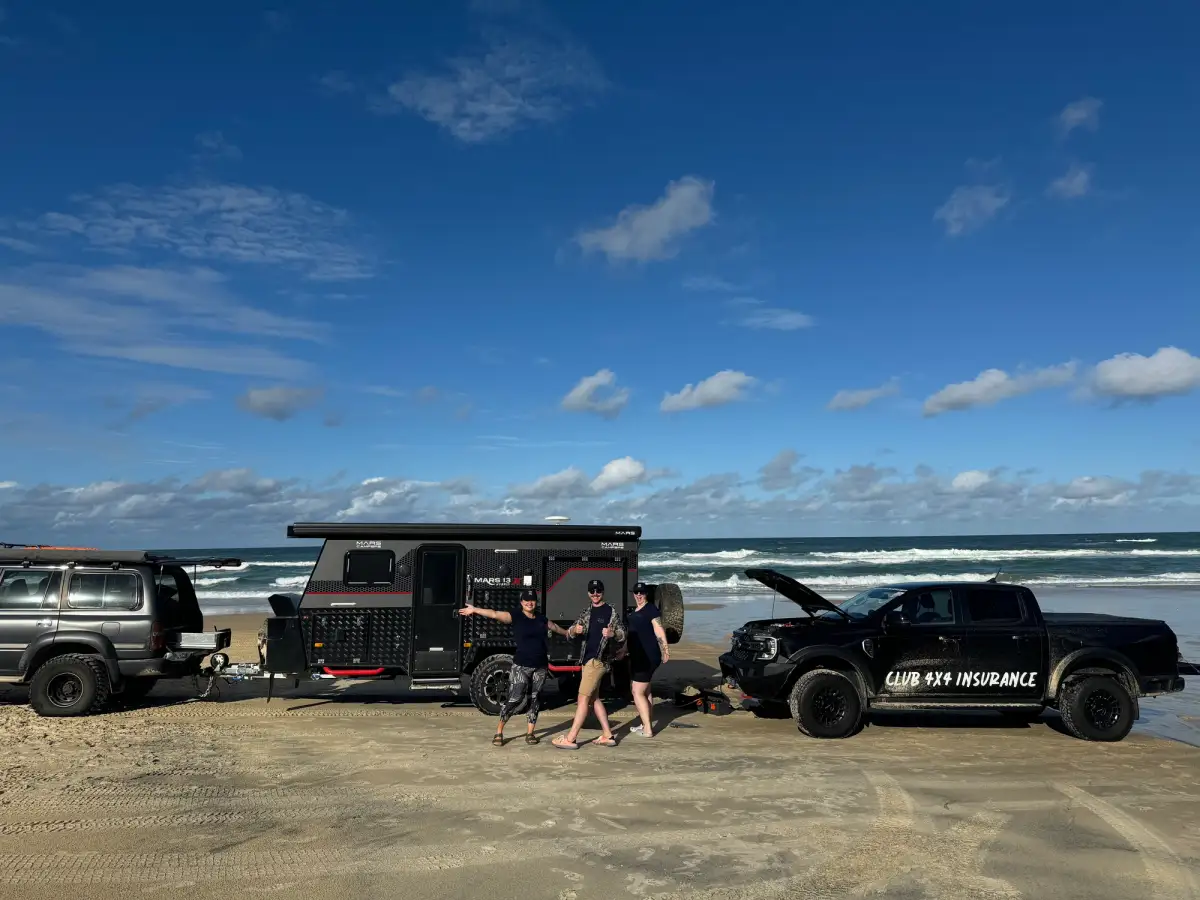
Bogged caravan being recovered on a beach on K'Gari
If 70,000 4WDs visit K’Gari every year, imagine how many get bogged…
If you do find yourself bogged, it’s important to start simple. You will find dropping your tyre pressure down to 16 psi or even 12 will have a massive impact. The increased footprint will greatly increase the chances of simply being able to drive out of a hole.
If this proves useless, it’s time to grab the recovery boards. Slide the traction boards under the front of the tyres, clear a path, and gently ease onto the throttle. No wheelspin, that just melts the boards and makes you look like you’ve never done this before. This method’s especially handy when you’re solo. No snatch required, just a bit of grunt work and some mechanical sympathy.
If the basics aren’t working, it’s time to step it up. If you’ve a mate or someone willing to assist, whip out the snatch straps and hook them up. Always use rated recovery points. Never hook to a tow ball unless you’re looking to create a projectile that can take out a windscreen or a someone’s head. Communicate clearly, keep the line straight, and keep people well clear in case something does let go.
If you’re still not budging, it’s important to know when to give up. Make the call. Call the local recovery company and remain patient. This is where packing enough water, food and comms is key. There’s no shame in getting help.
Common Beach Driving Mistakes:
- Driving at high tide
- Not airing down enough
- Turning too sharply
- Overusing throttle (wheelspin)
- Not carrying recovery gear
Must-Have Recovery Gear for Beach Driving
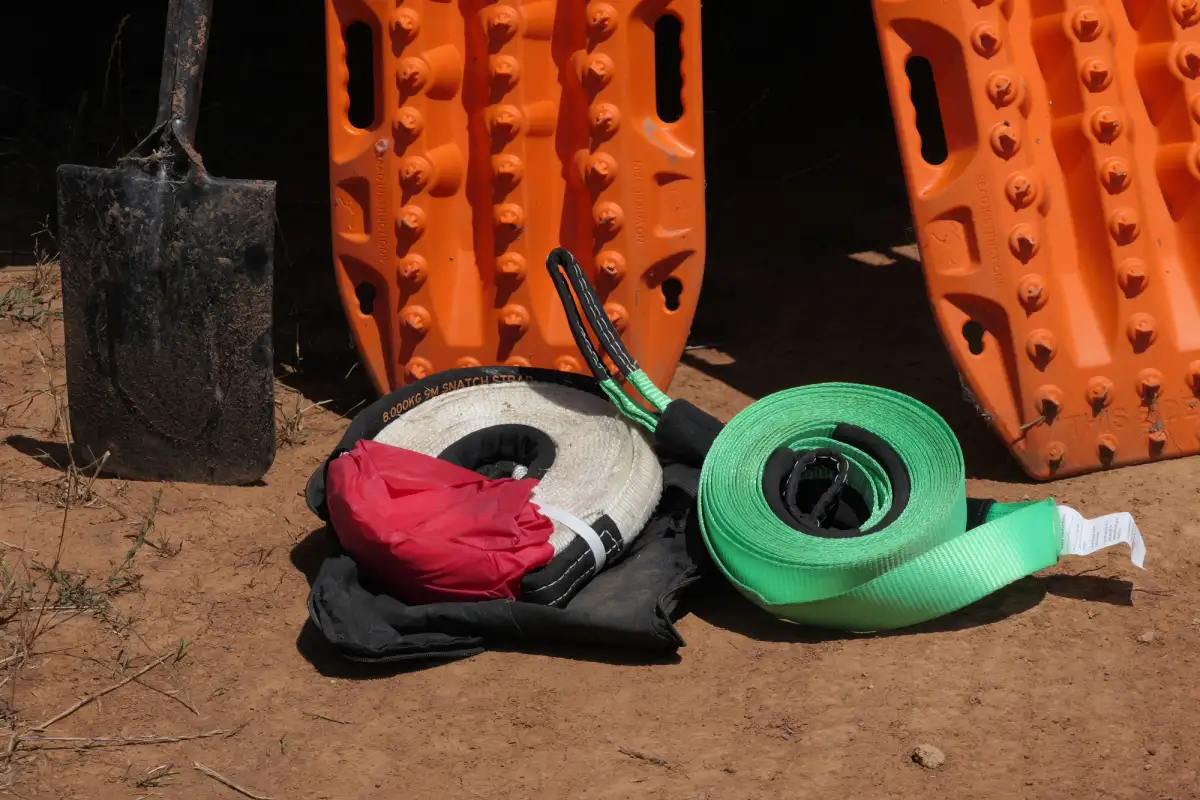
4WD recovery boards, shovel and snatch straps
When it comes to beach driving, some recovery gear shines more than others. The humble shovel and recovery board combo is an all-too-common flash of orange spotted on beaches nation-wide, and K’gari is no different. There is, however, a whole arsenal of gear that should probably be kept somewhere in your 4WD, just in case.
Our picks for a basic recovery kit are as follows:
- Snatch strap
- 2x shackles or soft shackles
- Gloves
- Tyre Deflator
- A set of recovery boards
- A jacking plate and vehicle jack
- A long-handled shovel
- A tree trunk protector if you have a winch (optional)
- Recovery dampener
Vehicle Setup Tips for Soft Sand
There are a few bits of gear that are essential for sand driving on K’Gari. Whether full-time mods or temporary fittings for the beach, they make the adventure safer and easier.
Here’s what we would suggest:
- UHF radios for communication
- Tyre deflator (or a stick)
- Tyre pressure gauge
- Air compressor
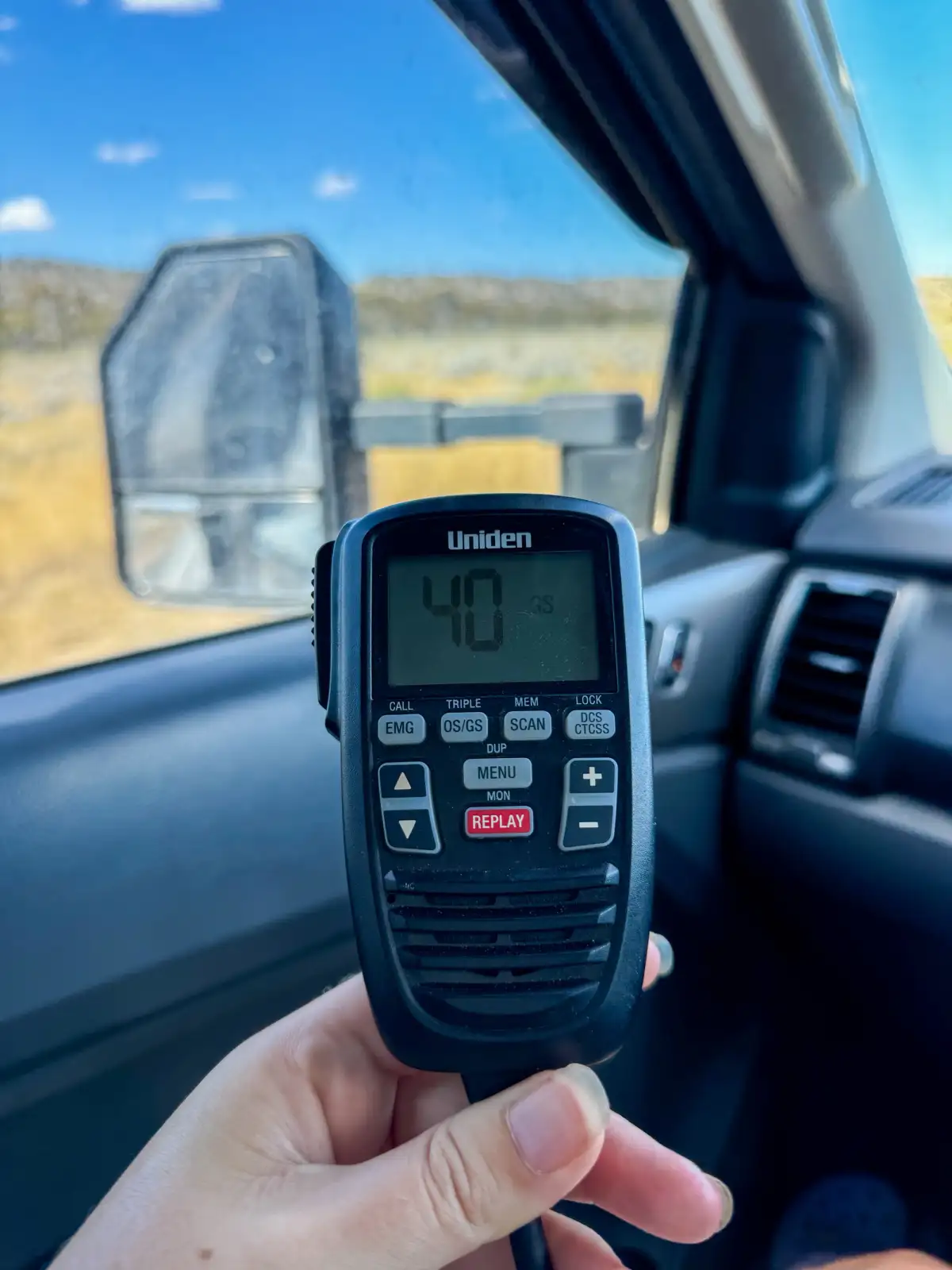
UHF radio in 4WD
Now, realistically, a trip to K’Gari probably only requires something to deflate your tyres and the aforementioned recovery gear with the shovel and recovery boards being the minimum in that department.
UHF radios are handy if you are by yourself and get stuck and are also fun if travelling with others and lets you warn of anything on the beach that could affect driving conditions.
The tyre gear is self-explanatory and while a proper tyre deflator isn’t required, it can help. Anything from a stick to a key will deflate your tyres. Having the portable air compressor is handy if the terrain changes and the pressure gauge will help you accurately judge your psi.
Even with the bare minimum, you should be able to manage a K’Gari adventure. As one of the most travelled beach driving destinations in the country, there will likely be someone to help if you can’t help yourself. Stay safe, pack smart and have fun.
Beach Driving Golden Rules:
- Air down early
- Keep momentum, not speed
- Avoid sharp inputs (steering + throttle)
- Stick to firm sand where possible
- Always check tides
Part of our K'Gari travel guide series.
If 70,000 4WDs visit K’Gari every year, imagine how many get bogged…
Get a quote for cover that includes off-road recovery, anywhere you can legally go in Australia