Australia’s great outdoors is breathtaking and wild. One minute you’re waking to kookaburras by the campfire, and the next you might be watching dark clouds roll in with a cyclone or flooding rain on the horizon. If you’re caravanning or camping, having a caravan evacuation plan isn’t optional. It can save your life.
In this guide we’ll walk through practical steps to prepare, stay informed, and confidently move when conditions turn dangerous.
Why You Need an Evacuation Plan for Your Caravan
Travelling and camping off the beaten track is part of the adventure. But when floodwaters rise, bushfires spread, or cyclone warnings go up, your mindset needs to switch from “good vibes only” to “prepared and moving early”. Waiting too long to leave increases the risk of road closures, dangerous conditions, and being blocked in by debris.
Australia’s weather can go from calm to critical in a matter of hours. Your evacuation plan should make responding fast clear and stress-free.
Step 1 – Know the Weather Risks in Your Area
Before you set up camp, take a few minutes to understand what Mother Nature might throw at you.
Flood Risk
- Find out if your campsite or touring route crosses any creeks, low fluvial plains or old flood channels.
- Flash floods can happen with little warning after heavy rain.
Bushfire Danger
- Bushfire danger ratings can change fast depending on wind, humidity and temperature.
- Fires spread quickly uphill and can cut access roads without warning.
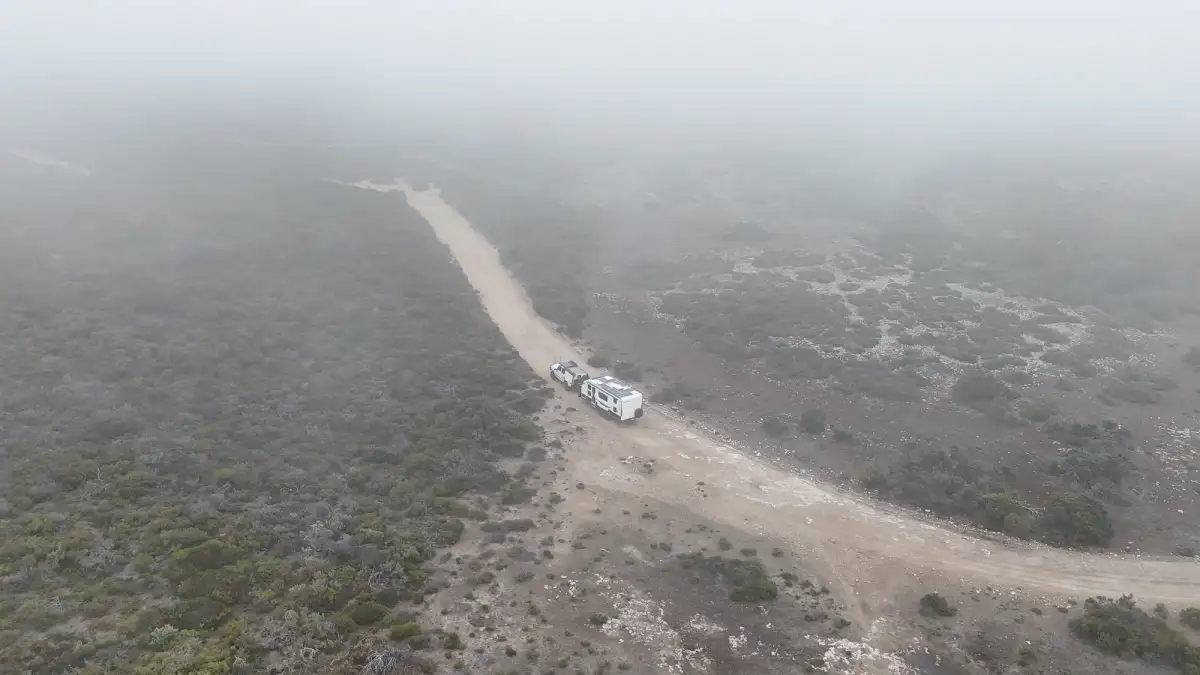
Toyota Landcruiser towing a caravan through Whalers Way
Cyclone Potential
- If you’re near the coast during cyclone season, you need to know which direction a storm is tracking and where local evacuation shelters are located.
Most locals and state emergency services publish risk maps and warnings. These maps give you a snapshot of likely hazards before you commit to a location.
Step 2 – Stay Informed with Trusted Alerts
Weather in Australia changes fast and your best defence is real-time information.
- Official Apps: Download the Bureau of Meteorology (BOM) app and your state emergency services app.
- Alerts: Enable push notifications for warnings like flood, wind, fire danger and storm fronts.
- Radio Backup: Keep a battery-powered radio ready if mobile coverage drops out.
Being informed early gives you time to act instead of react.
Step 3 – Prepare a Grab-and-Go Emergency Bag
When authorities advise evacuation, you may have only moments to leave. That’s why a pre-packed emergency bag kept easy to reach in your caravan is essential.
Include:
- Personal documents: ID, insurance, digital copies
- First-aid kit and essential medications
- Torch or headlamp with spare batteries
- Phone cables, power bank and emergency contacts
- Water and quick-energy snacks
- Spare clothes and essential toiletries
- Pet supplies (food, medications, leash)
If you’re travelling with kids or pets, make sure their comfort and essentials are covered too.
Step 4 – Keep Your Caravan Ready to Roll
When an emergency looms, you want to drive away, not fiddle with gear.
Prepare your setup:
- Always keep your tow vehicle fuelled (never below half a tank).
- Regularly check your hitch, brakes, lights and tyres before each trip.
- Know at least two exit routes from wherever you’re staying.
- Stay hitched up if a weather system is approaching so you can move fast.
If you enjoy a touring setup focused on remote travel, these checks should be second nature.
Note: If you are on corrugated roads, rough shingle or remote tracks, tyre pressures and caravan load balance matter. Make sure you’re comfortable managing tyre pressures and safety gear for unpredictable surfaces.
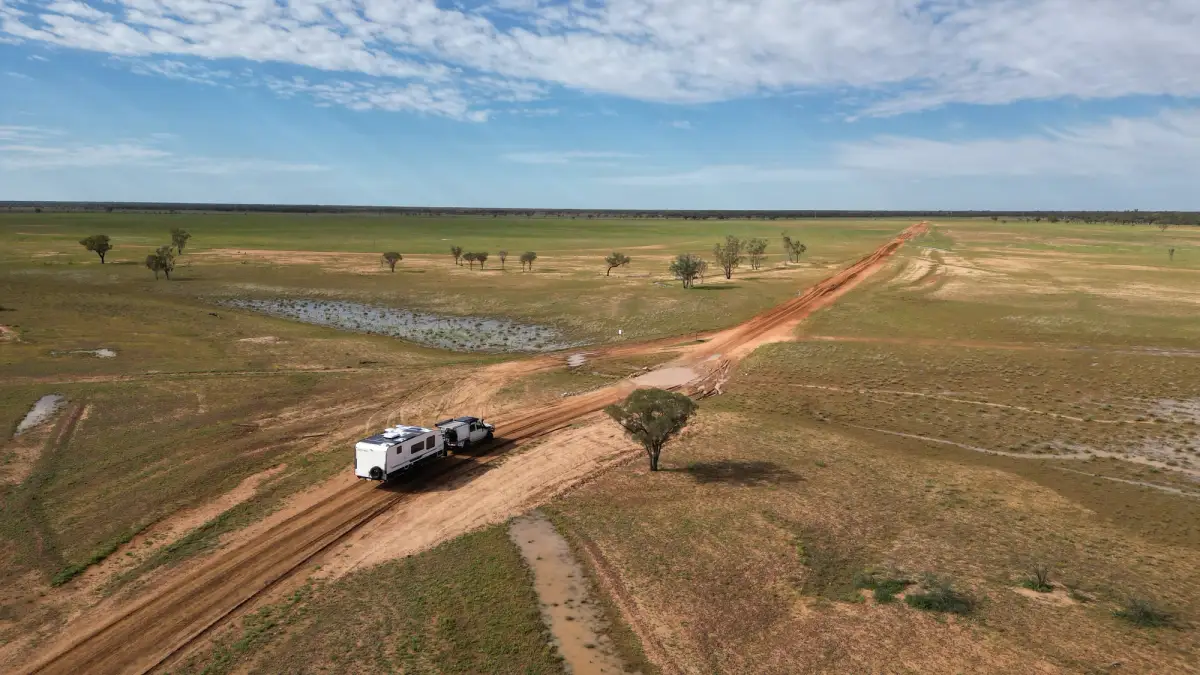
Toyota Landcruiser towing a caravan through Quilpie after a flood
Step 5 – Don’t Wait to Leave
Waiting for an official evacuation order can be risky. Conditions can deteriorate rapidly and road closures, fallen trees or washouts can trap you.
Key safety rules:
- Leave early: If a storm, fire or flood risk looks imminent, get moving before it feels urgent.
- Never drive into floodwater: Just 30cm of moving water can sweep away a car.
- Travel clear of smoke: Thick smoke reduces visibility, chokes air filters and spells danger.
Your caravan and possessions can be replaced. Your life cannot.
Evacuation Essentials Checklist
Use this quick checklist the next time you set up camp:
- Weather forecast checked and worst-case scenarios planned
- Evacuation routes plotted (at least two)
- Emergency bag packed and accessible
- Rig ready to go (fuel, tyres, service checks done)
- Official alerts enabled on your devices
- Communication plan with family/friends
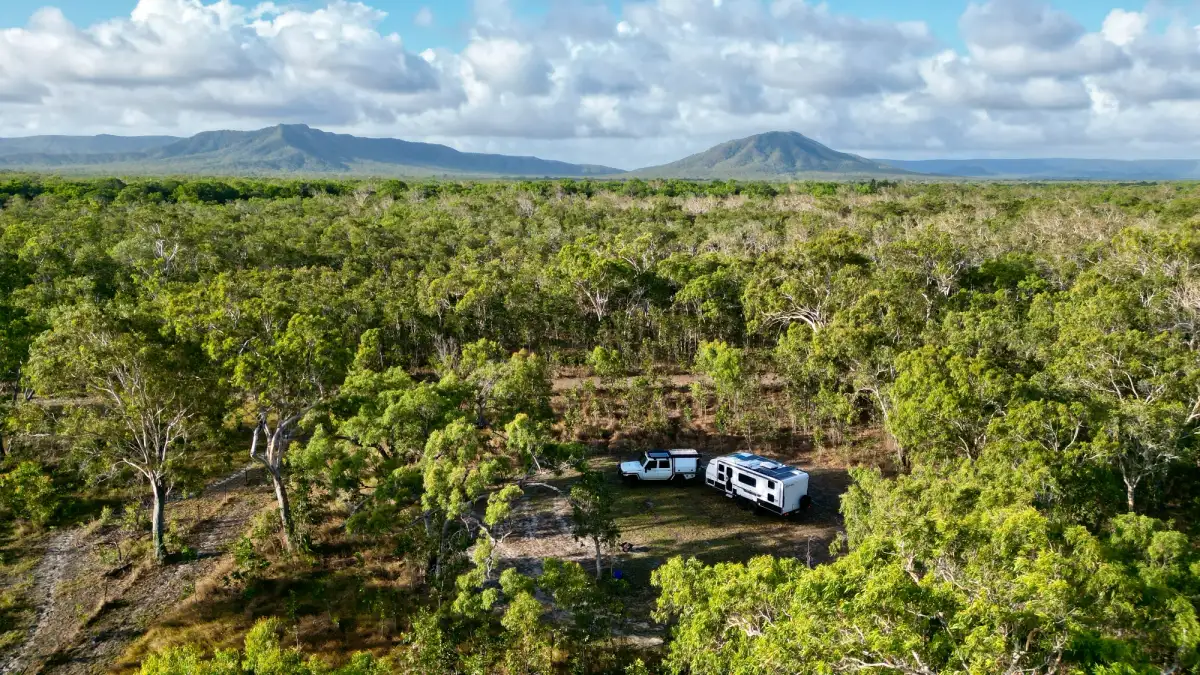
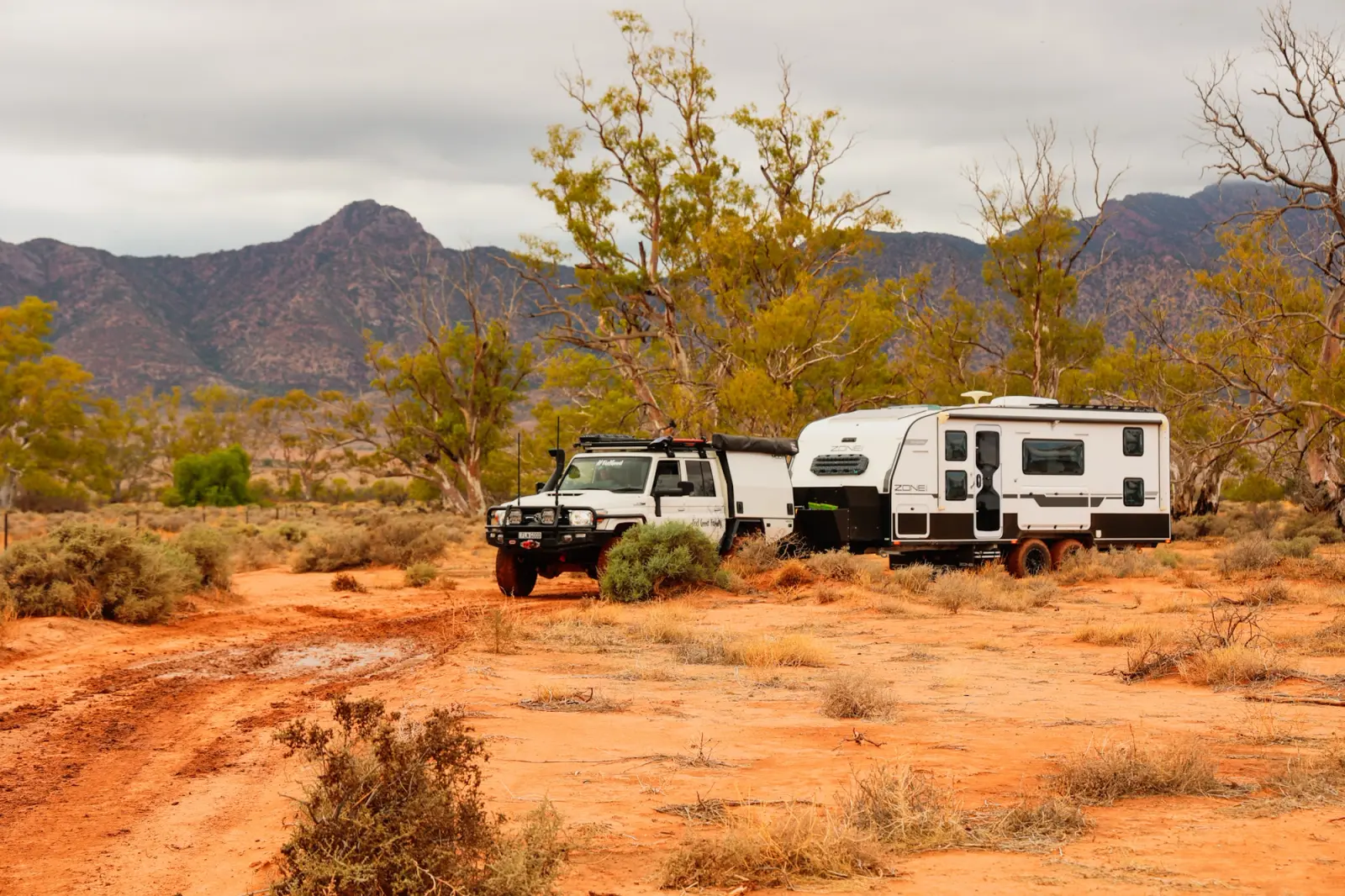
Toyota Landcruiser and a caravan in a remote camp in Cooktown
Real Stories Where Preparation Makes the Difference
Out in the bush, real travellers share common advice: if you are prepared early, you move early. Whether it’s a fast-moving storm in the Kimberley or a flash flood in the hinterland, those who planned ahead rarely panic.
Read more about remote travel readiness in “Safety Tips for Remote Country Travel” and sharpen your skills on long touring trips.
Related Articles for Travellers
- Safety Tips for Remote Country Travel
- The Ideal Off-Grid Camp
- Off-Road Towing Tips: Steep Hills with Caravans
- How to Set Up Your 4X4 for Towing the RIGHT Way
- How to Protect Your Caravan & Camping Gear from Theft
Protect yourself from storm damage
With Club 4X4 Insurance