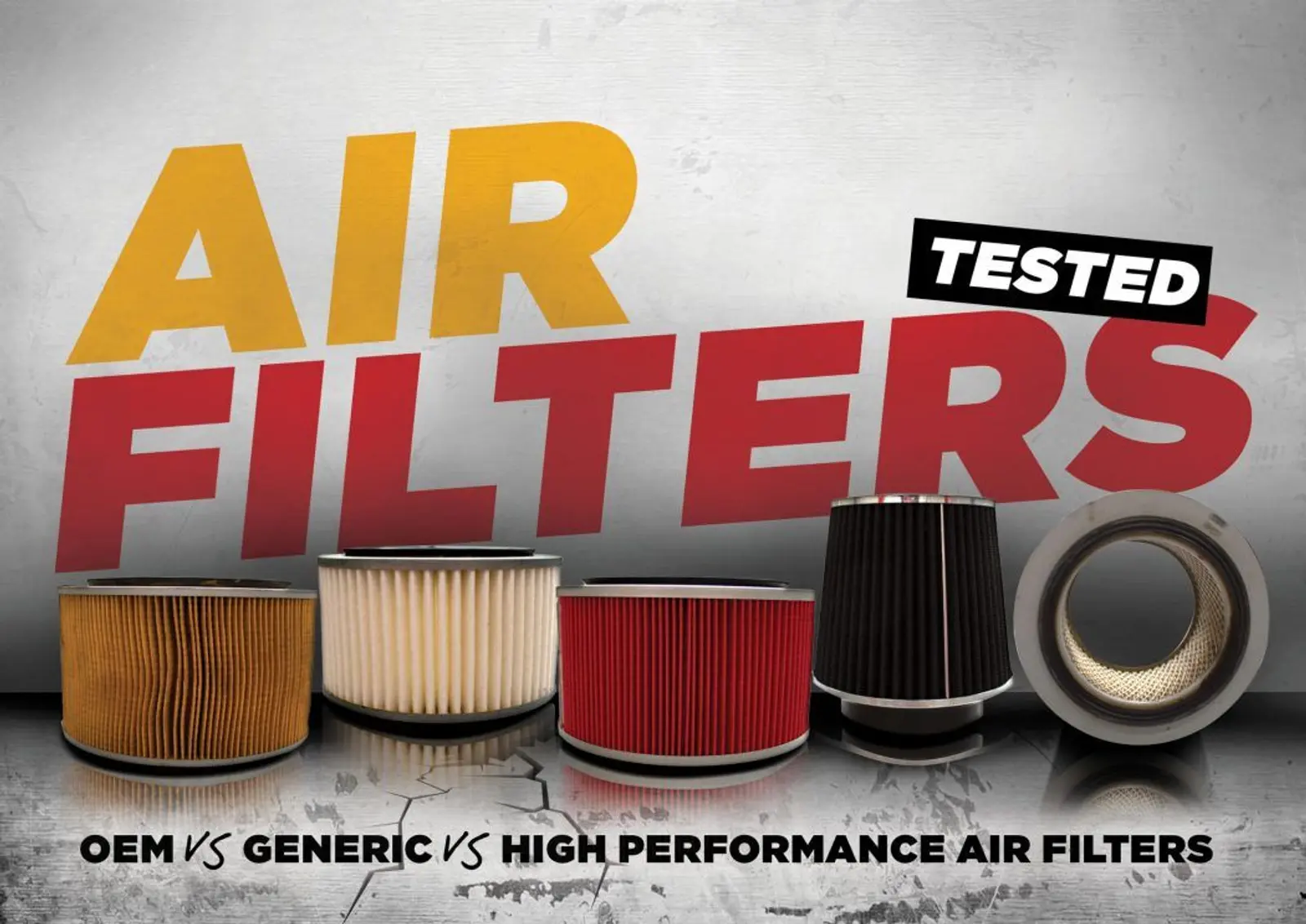
OEM vs Generic vs High Performance air filters – What’s really best for your engine? We combine a leaf blower with talcum power to find the best type of air filter for your 4WD… SCIENCE!
Unless you are a drag racer chasing the maximum amount of power before rebuilding your engine every few weeks, you need an air filter. And a good one at that! As you are reading a four-wheel drive publication, it is safe to say you are a four-wheel driver (not a drag racer), and as such you would understand that we place our vehicles under insane amounts of stress. Dirt/sand/mud/snow/water… fun to explore, but these gifts of nature are trying their hardest to kill your engine. So what is the best option for off-road tourers? Genuine OEM parts, a cheaper aftermarket replacement or a high-flow pod filter? And what will actually be the best option for four-wheel drivers in Australia?
TESTING PROCEDURE
Hi, my name is Evan and I’m an off-road journalist, lover of unsavoury T-shirts and a terrible comedian. One thing I am not, however, is a scientist; I just want to get that out in the open. We don’t have a science-type-lab-for-science-stuff here at Unsealed 4X4 HQ, but we do have plenty of parts lying around the workshop and the ability to conduct this experiment surrounding the effectiveness of air filters. First up, we poached the snorkel and air filter housing from my Suzuki Sierra – as it uses a nice round inlet and outlet to allow for an easy sealed fit. We bought a leaf blower, and the entire supply of talcum powder in the lower Blue Mountains – because talcum powder has a similar consistency to bulldust. Next, it was time to drive to as many auto parts stores as possible and purchase a wide cross-section of air filters. With our leaf blower hooked up to the air filter assembly, and the same amount of talcum powder poured down the snorkel (600g; and yes, this felt so wrong), we were able to see how much powder each filter trapped by weighing them before and after. So while this test might not win a Nobel Peace Prize, it is 100% consistent, informative and (hopefully) entertaining in a sick sort of way. Now then, the results!
PAPER ELEMENT (OEM QUALITY)
Looking at the genuine filter compared to the cheaper generic filter, it is easy to see there is more material in the genuine article. At over twice the price, is this filter a better performer?
COST: $44.99
WEIGHT BEFORE TEST: 441 grams
WEIGHT AFTER TEST: 786 grams
AFTERMARKET PAPER ELEMENT (GENERIC AND CHEAP)
This filter was the cheapest we could find over the counter, and at first glance you can see there are larger gaps between each fin of the filter. Now to determine if this allows more flow, or if it traps more powder.
COST: $18.49
WEIGHT BEFORE TEST: 436 grams
WEIGHT AFTER TEST: 821 grams
AFTERMARKET POD FILTER
Pod filters are a more common sight on drift cars than on 4X4s, but we wanted to take a look at the filtering ability of ‘high performance’ filters. We couldn’t fit the pod into our air filter casing, so it was attached to the top of the snorkel with a box to catch any debris. As pod filters aren’t encased in filter housings, this was a more realistic interpretation anyway.
COST: $29.99
WEIGHT BEFORE TEST: 560 grams
WEIGHT AFTER TEST: 670 grams
THE OLD DIRTY FILTER
There is a theory that a dirty filter will actually trap more contaminants than a fresh clean one. So as an exercise in conducting our experiment, we decided to run the old filter (found in the housing first) to determine if there was any merit to this claim.
COST: NA (it was in the vehicle)
WEIGHT BEFORE TEST: 410 grams
WEIGHT AFTER TEST: 757 grams
CONCLUSION
These are just our findings from our little experiment. Straight up, pod filters do not belong on 4X4s. Old filters were only slightly better at filtering talcum powder than new filters. And the biggest surprise? The cheapest filter we tested kept the most powder out. Personally, I will stick with genuine filters and regular changes. Draw your own conclusion from the test below… but can we all agree on one thing? No more pod filters on off-road vehicles, okay!
Hitting the rough stuff?
Get comprehensive insurance that can go there too.