Article by Unsealed 4X4
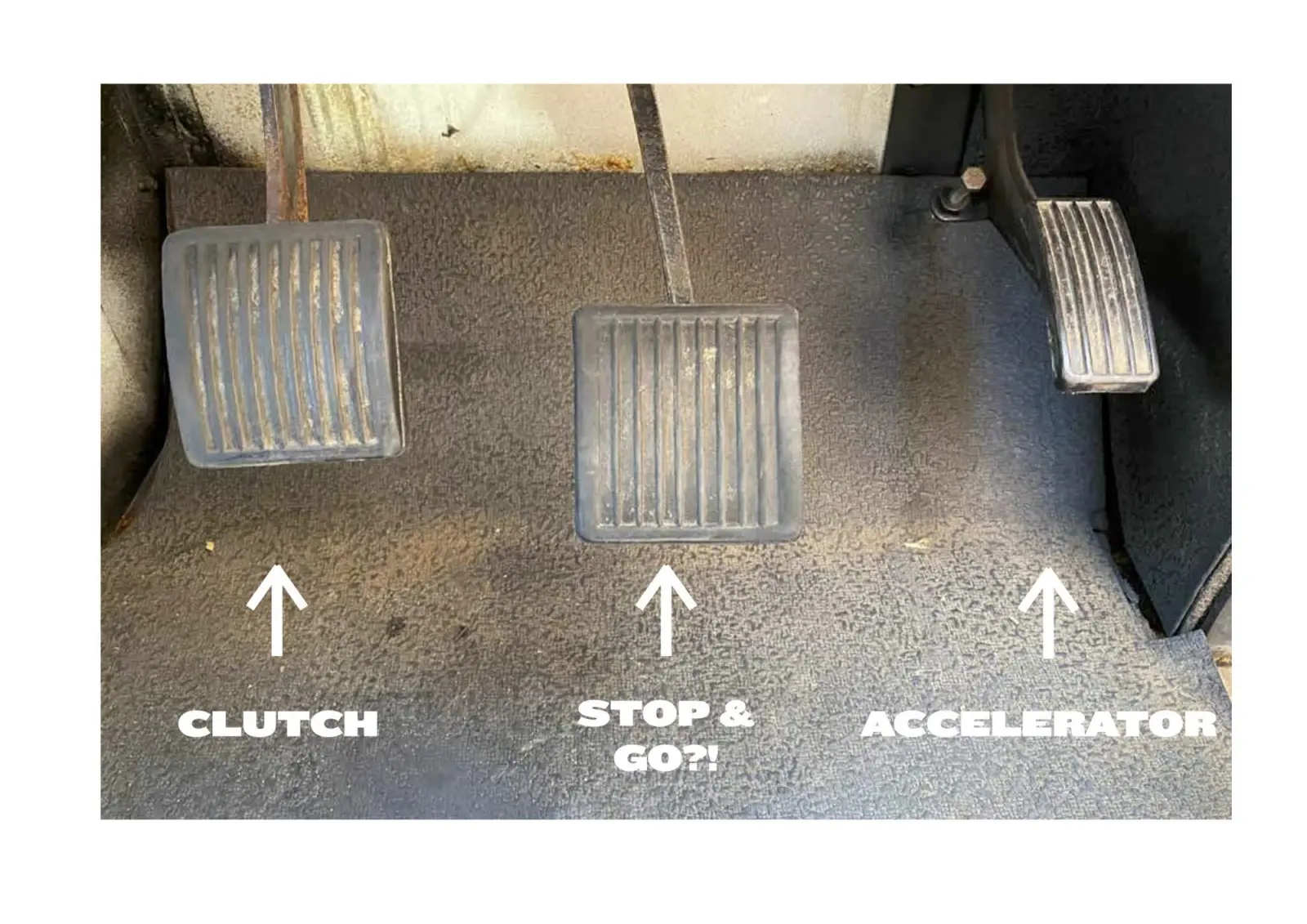
Brakes are only for slowing down or stopping?! In this instalment of Myth Busting we explain how they can also be used to aid forward progress when driving off-road.
Brakes
Whether drums, discs or a combination of both, brakes use friction to slow your 4×4. In the case of drum brakes, the brake shoes are pushed out against drums to slow the rotation of the wheels; in the case of disc brakes, the callipers fitted with brake pads are squeezed on to the discs to slow the rotation of the wheels; and some vehicles (such as most 4×4 utes) are fitted with more efficient discs up front and cheaper drums at the rear.
Regardless of the brake set-up on your vehicle, brakes can be used for more than just slowing and stopping your vehicle when you put pressure on the brake pedal. In fact, they can be used to aid forward progress… so effectively, in fact, that many modern vehicles automatically use braking pressure to aid forward progress.
Drive is sent to the wheels with least resistance (less grip). A light application of the brakes will send drive to the wheels with grip.
The theory
The reason brakes sometimes need to be applied to aid forward progress comes down to the way in which the differentials in your vehicle work. The front and rear diffs (for short) allow the outside wheels to turn faster than the inside wheels when your 4×4 is making a turn, as the outside wheels need to make a longer arc. See this Unsealed 4X4 story on diff locks for a full explanation.
When driving in a straight line, and when wheels at either side of an axle have equal grip, they receive equal drive from the engine. When cornering, the diff allows more drive to go to the outside wheel than the inside wheel. This allows the inside wheel to turn slower than the outside wheel, preventing it from trying to break traction.
In an off-road scenario where there is uneven terrain, it’s often the case that the wheel on one side of an axle has more grip than the wheel on the other side which, if it is totally in the air, will have no traction at all. Due to the diff being able to apportion more drive to one wheel than the other, it will always choose the path of least resistance, which in this case will be the wheel in the air, not the one planted on the ground with all the traction. The result? The wheel in the air will get all of the drive and spin uselessly, while the wheel on the ground will not spin at all, so the vehicle will not move.
The wheel in the air is automatically braked by the Jimny’s electronic traction control system sending drive to the wheels with grip.
The solution
The simplest way to stop the wheel in the air from spinning uselessly is to apply brake pressure to it. This will also apply brake pressure to the wheel on the ground, but apply just the right amount of brake pressure and the wheel in the air will stop spinning, causing the diff to send enough drive to the wheel with grip to get the vehicle moving again.
These days, modern vehicles have electronic traction control systems that do exactly this; a computer uses the ABS sensors to detect if the the wheel without grip is spinning and if this is the case it applies braking pressure to that wheel so that drive can be sent to the wheel with grip.
Electronic traction control in modern vehicles is a clever way of applying the brakes to direct drive to the wheels with grip.
What about LSDs and lockers?
It should be noted that the above theory applies mainly to vehicles with open diffs. Limited-slip diffs (LSDs) will go some way to preventing a wheel in the air from spinning uselessly, while vehicles with locking diffs will send equal drive to both wheels across an axle regardless of whether one is on the ground and the other is in the air.
While you won’t need to ever use this braking method if you have front, centre and rear lockers engaged, not all LSDs nor electronic traction control systems are created equal, so applying the brakes can still help if you find yourself stuck with wheels in the air.