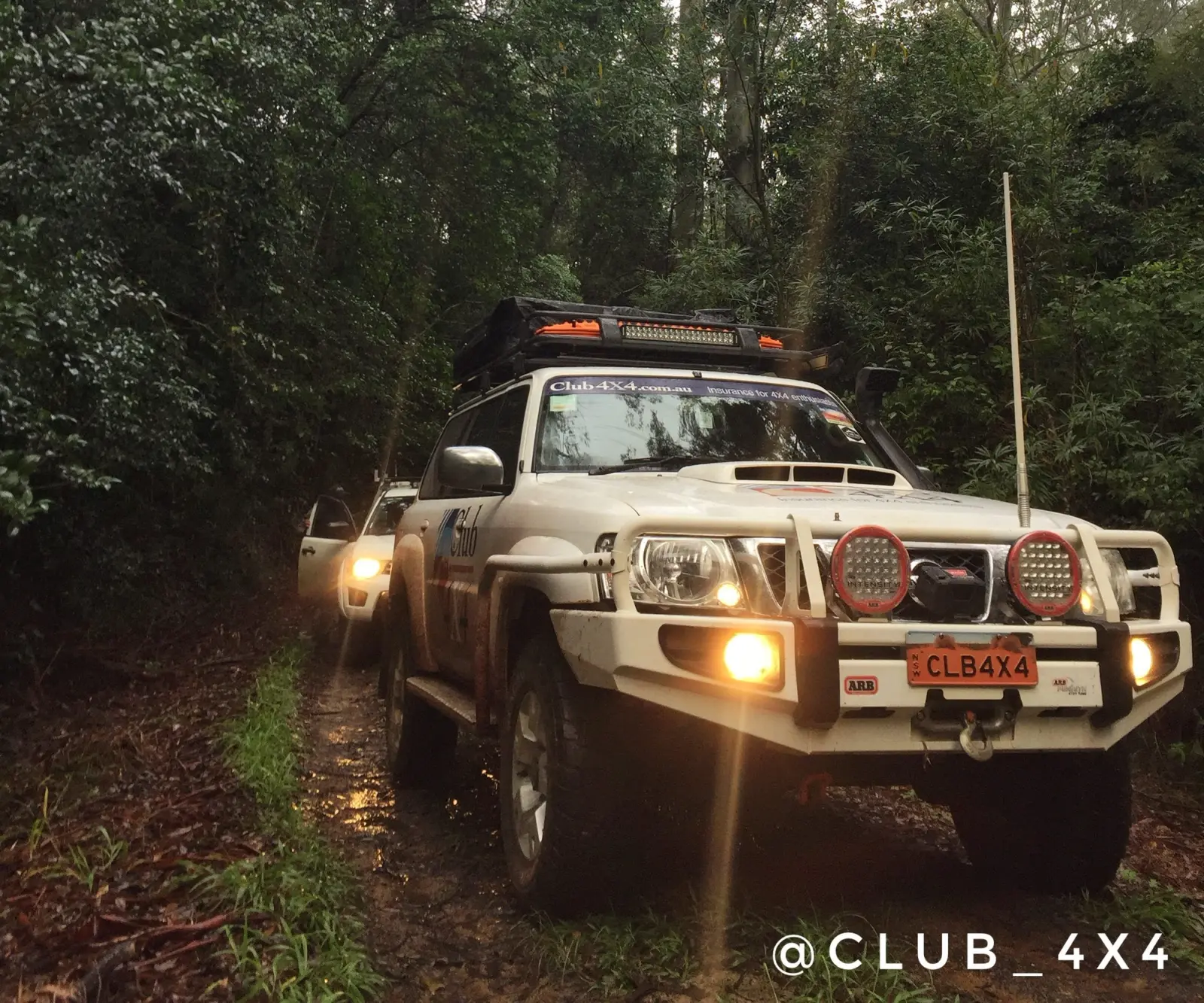
A month or so ago I noticed that one of the headlights on MobileHQGU had blown out. For as long as I can remember, I’ve always made it a point to drive with headlights on at all times as an added safety measure. Yes, the Patrol ends up looking like a Telstra service vehicle, but I feel the positive effect of being easily detectable to other members of traffic (not that you could miss a massive accessorised fourby wrapped to look like it’s done the lap!) outweighs that negative.
Younger models now come with Daytime Running Lights (DRL) and it’s noteworthy that some aftermarket bull bars have DRL’s as an option, but our battle-hardy beast makes do with halogen bulbs.
“I love the output of my factory headlights,” said no one ever. Seriously though, newer vehicles with factory HID or even LED lighting may cast a better beam, but the old halogens in vehicles of the GU’s vintage are paltry and barely sufficient for road driving let alone off-road and outback conditions. An upgrade was in order.
So it’s no secret that there are a multitude of reviews online that compare and rate the virtues of aftermarket driving lights. These reviews are available in written format, scientific comparisons, videos and everything in between. They usually uncover the merits of the latest HID/LED/Halogen units and go on to compare the ever-popular light bar versus traditional round lights.
I have no doubt that there is a place for upgraded aftermarket light units in our hobby. The issue is you can’t drive around with these lights on in normal driving conditions – it’s simply dangerous (and illegal!). Maybe it’s a function of the cost of these units, or the fact that it’s not as exciting, but it would seem to me like not much focus has been put into reviewing ways to improve the “low beam” output of factory light housings.
Recently when returning from the Brisbane National 4X4 show, we were unfortunately caught driving at night, in rain, on a two-lane temporary carriageway. With a steady stream of oncoming traffic (with their headlights on no less), it was incredibly difficult to make out the markings on the road at times. Risky and downright fatiguing stuff, but you back right off and do your best to navigate through it. The ability to use high beams would’ve resolved the issue readily, but obviously not an option.
What I wanted to explore was how I could improve the output from the GU’s factory light housings. So after a few hours of research the options available were; replacement halogen globes, retrofit LED units, complete HID conversions and for some vehicle models, complete all-in-one replacement light housings.
I didn’t feel the need to complicate such a simple and critical component with new wiring and the need for washers with the HID option. I also found that LED replacement bulbs had mixed reviews and questionable legality, so I decided to delve further into replacement Halogen bulbs. My thoughts went back to a testimonial we got from Jake at Narva, so a quick call to him resulted in a few options from their range.
Now I have to warn everyone here, many of the articles written on aftermarket lighting can be quite scientific and greatly detailed. This is not going to be one of those and the photography won’t be great either! What I aim to give is a “seat of the pants” view of the change that these bulbs made in day-to-day use.
We ended up going with the “platinum 130’s” for the main headlight housings and “long life 60’s” for the driving lights. An important point to note is that aftermarket bulbs which provide a higher output generally won’t have the same life as a factory rated unit. Knowing this, I still opted for the higher outputs and will report back on longevity.
Installation wasn’t the most difficult work I’ve done on a vehicle before. Some people online recommended removing light housings and the airbox for the GU, but I was able to get the bulbs in with no disassembly albeit a bruised knuckle here and there. The 130’s came with matching parker bulbs, which I didn’t get around to getting in – these are likely to involve some disassembly at a later stage. The driving lights in the ARB Bullbar were a little more involved, necessitating removal of the entire assembly to replace the bulb and a new spade connector on each side to replace the bullet type that were there to start with.
So how did they go? I have to say the difference is remarkable. The photos below tell the tale, but I saw a notable improvement in visibility all round with a marked improvement in range and spread. On a recent trip I left home before dawn in greasy and wet conditions where the extra visibility was definitely appreciated and confidence inspiring.
Night driving goes hand in hand with fatigue and ultimately the best thing to do is stop and have a rest, but I feel the extra visibility is definitely a safety measure which could reduce fatigue. So all up a great little upgrade that everyone should seriously consider. When combined with the interior festoon LED bulbs Jake kindly sent along with our package, this has got to be the quickest, easiest mod that delivers great bang for buck.
Let there be light!!
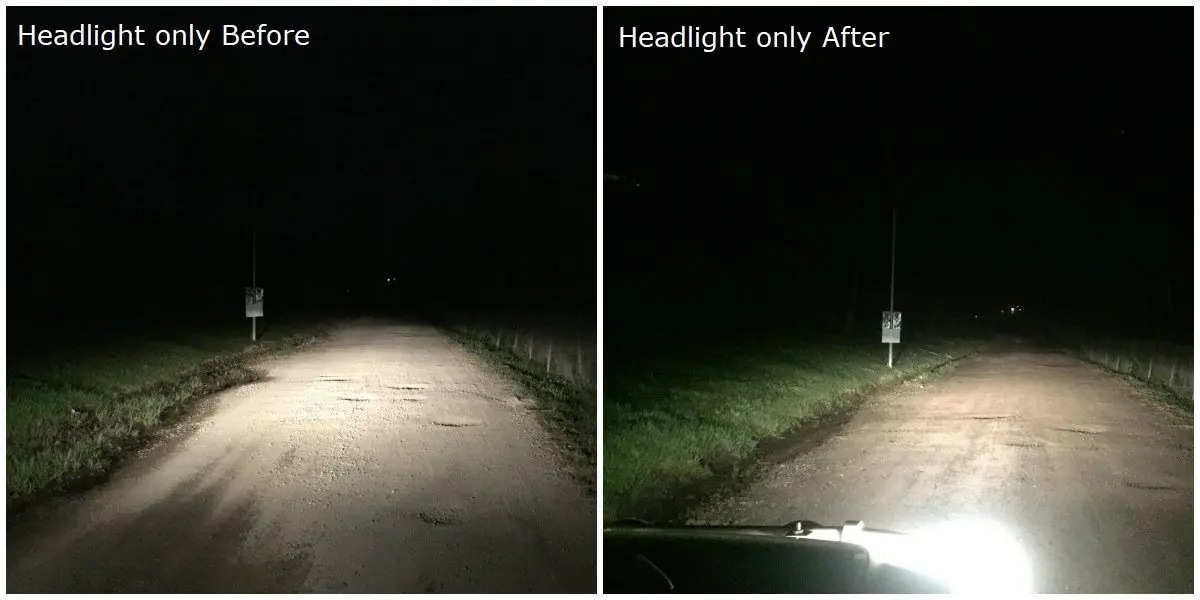
collage 1
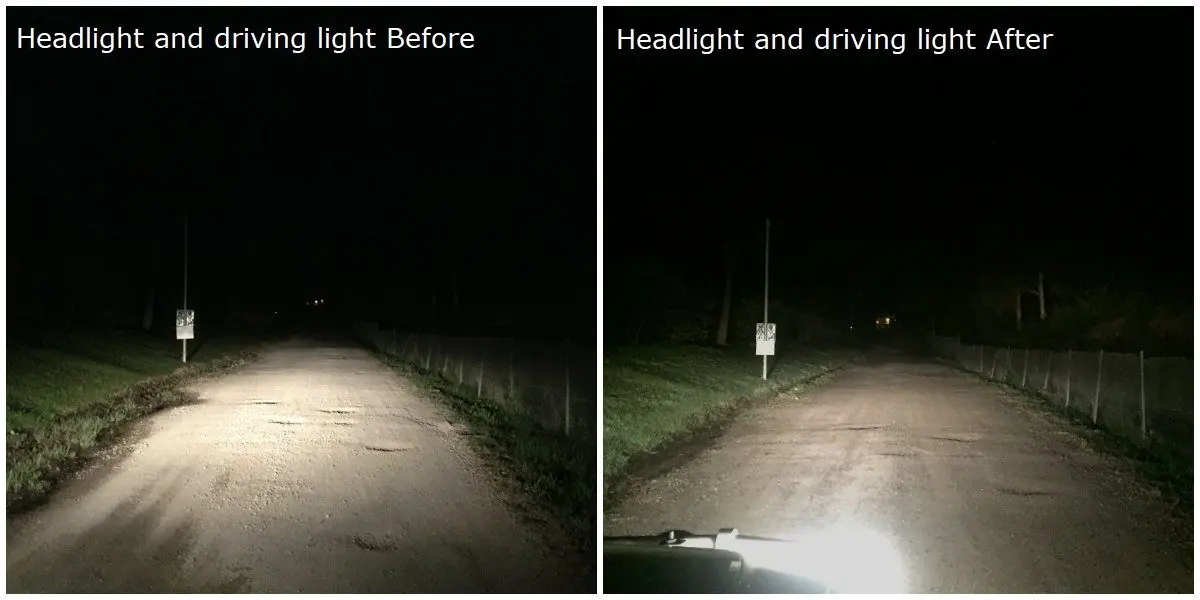
collage 2