
Insurance is about risk management, so following our review of GPS trackers a few issues ago, we thought we would start picking out some other readily available items that serve a safety purpose. Now some of you might be cringing, but the reality is many of these items will suit multiple purposes, while maximising your chances of getting to and from your destination unscathed.
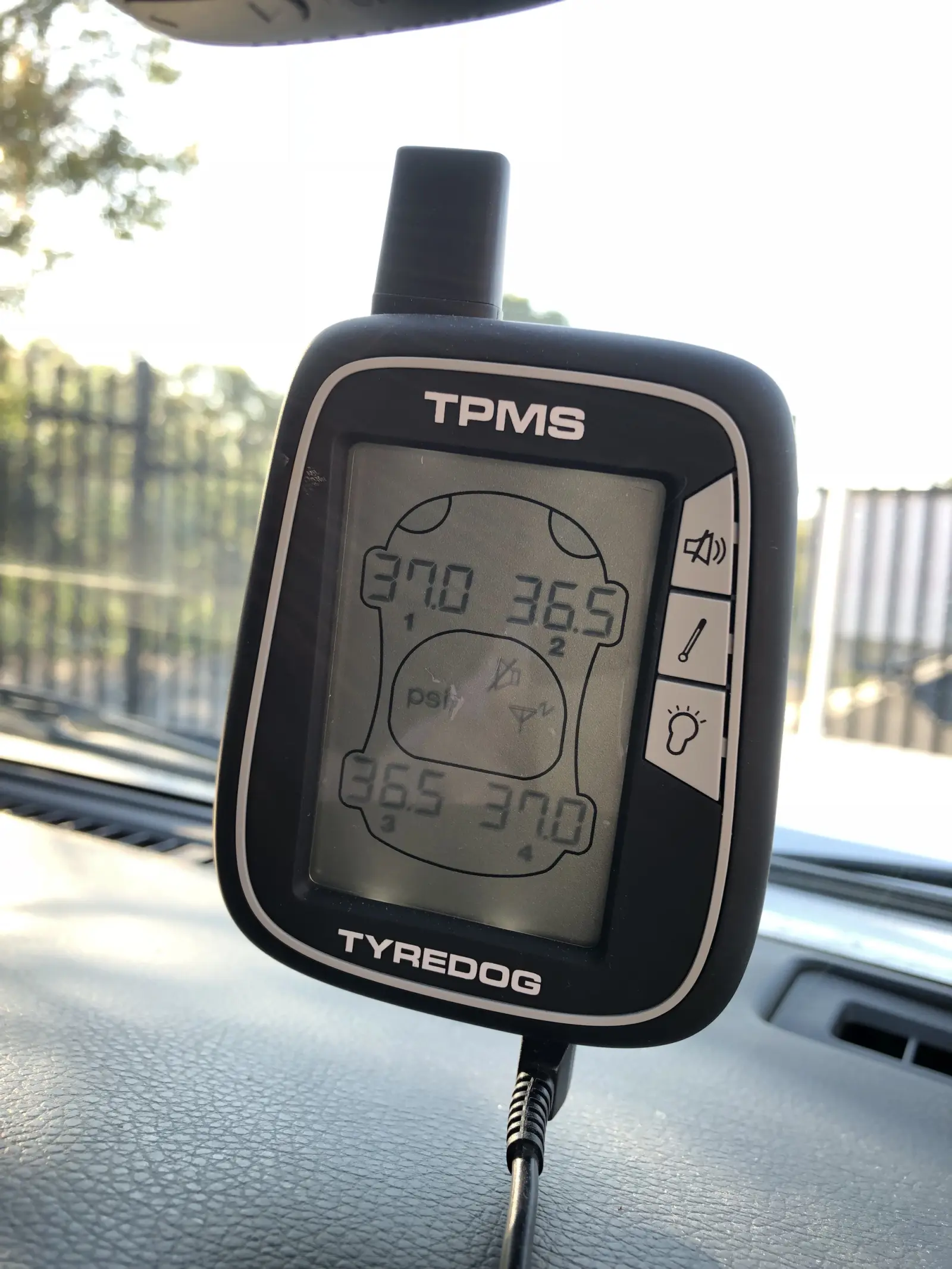
In this issue, we are going to look at Tyre Pressure Management Systems (TPMS). As the name plainly suggests – this is a system that helps you manage tyre pressures by giving you a view of the pressures at each corner of your rig (and sometimes even the spares!). The core of the system is a central monitor that is housed inside your vehicle, with sensors mounted on or in each wheel which connects and sends relevant data wirelessly for remote display inside. The information flow is constant and adjusts to the conditions.
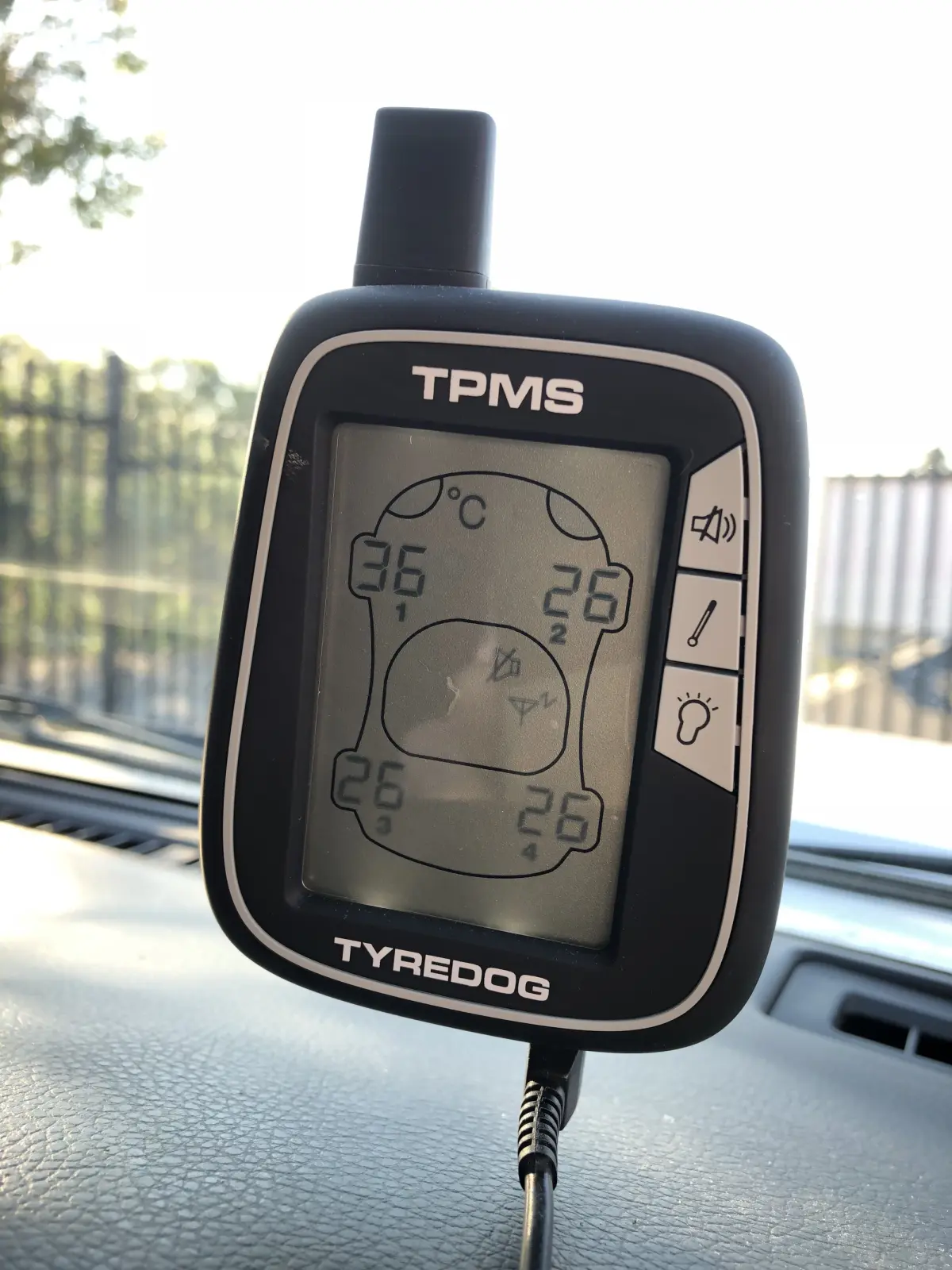
temperature readout
Temperature readout is a handy function
Interestingly, units like the one we have been testing from Tyre Dog can provide data on heat as well as pressure. Being a bit of a data geek, it’s been pretty interesting watching temps and pressures go up (neither is mutually exclusive) both in on and off-road conditions over the last month or so. For some reason, my right rear seems to get the most fluctuations along with the left front. So, even though the OCD in me made sure the pressures were exact when I first set the unit up – the next morning I was frustrated to see slight fluctuations of up to 1 PSI in the various corners. I put this down to tolerances rather than escaping air – the numbers haven’t changed since the initial fluctuation.
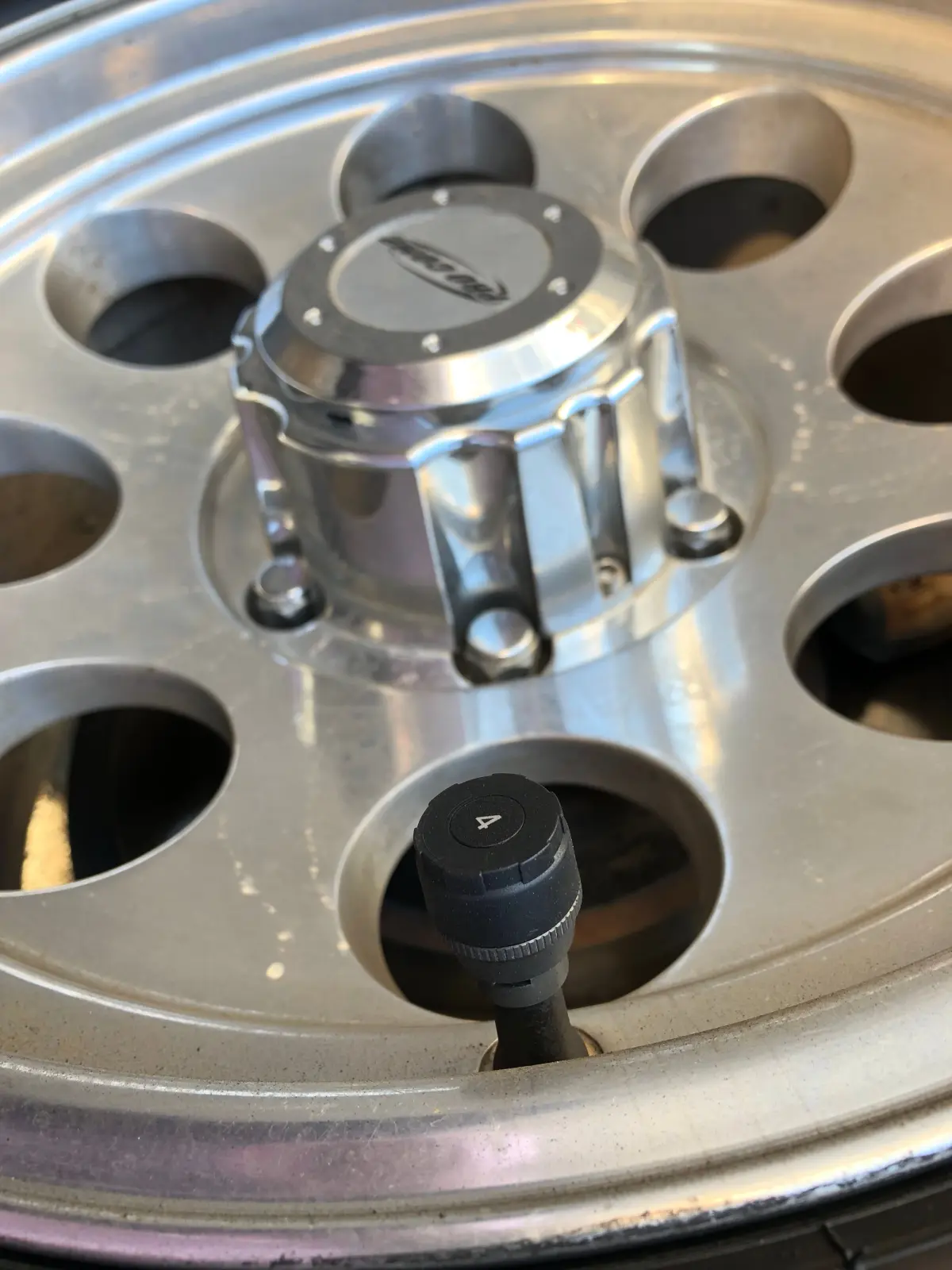
Valve stem mounted sensor
Valve stem mounted sensor
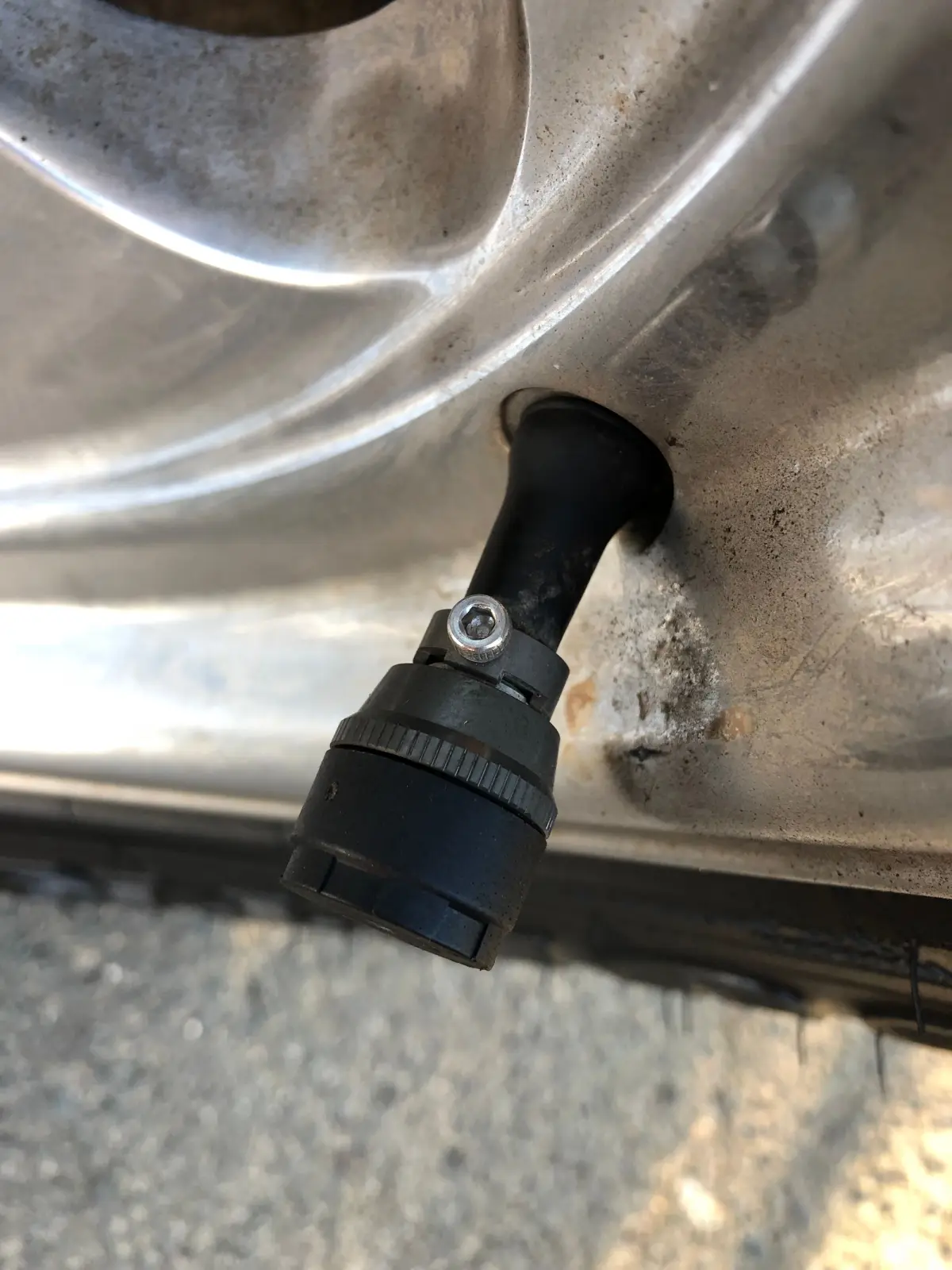
There are two type of TPMS, one is internally mounted, sitting in the cavity between your rim and tyre. It’s still battery powered, but this solution is potentially neater, with reduced risk of theft or tampering. Obviously the downside is that installation requires removal of your tyres by a qualified professional, a step that will also need to be mirrored to perform any maintenance down the track. The other type and the one we’ve been trialling, is a valve stem mounted unit. The basic premise is a screw-on sensor unit, which in this case comes with a safety collar that locks the items in with a small hex nut to prevent theft. A little fiddly to put on and in my case, I mounted all 4 with the battery’s in the wrong way – a combination of reading the instructions (HA!) and from memory, no real markings inside the sensor casing either. Nevertheless, once the batteries were in correctly, following an audible beep from the windscreen mounted display inside the GU, we were set.
You can easily pre-set the various thresholds you would like – the intent being to have an alarm that lets you know when something is going wrong fast – a great on-the-fly indicator of a serious issue. If your tyre is getting too hot, it may indicate an alignment issue which is causing the tyre to track incorrectly. Further, if your tyre pressures in one tyre are much lower than others you no longer need to do the dodgy visual inspection or dig the pressure gauge out – you simply pull up at the next servo and top up. If it keeps going down, you clearly have a leak.
IMG_0035
Locking cuff for security
So, in our opinion, it’s a great piece of safety monitoring equipment which may pick up a fast leak that could save your life on the freeway, or a slow leak that could save you a prematurely worn tyre and some folding stuff. Either way, for the price of a mid-range tyre you can have all this information at your fingertips – cheap insurance I reckon, pardon the pun…
Happy Touring