Win $30,000 of mods for your 4WD

Comp ends July 6th

Image

Expert Advice

When To Use Your 4WD Gears

Knowing when, and which, 4X4 setting to use is the difference between a great day on the tracks and an expensive call to the local recovery bloke.

Image
Pat Callinan
Sep 19 2025

Sep 19 2025

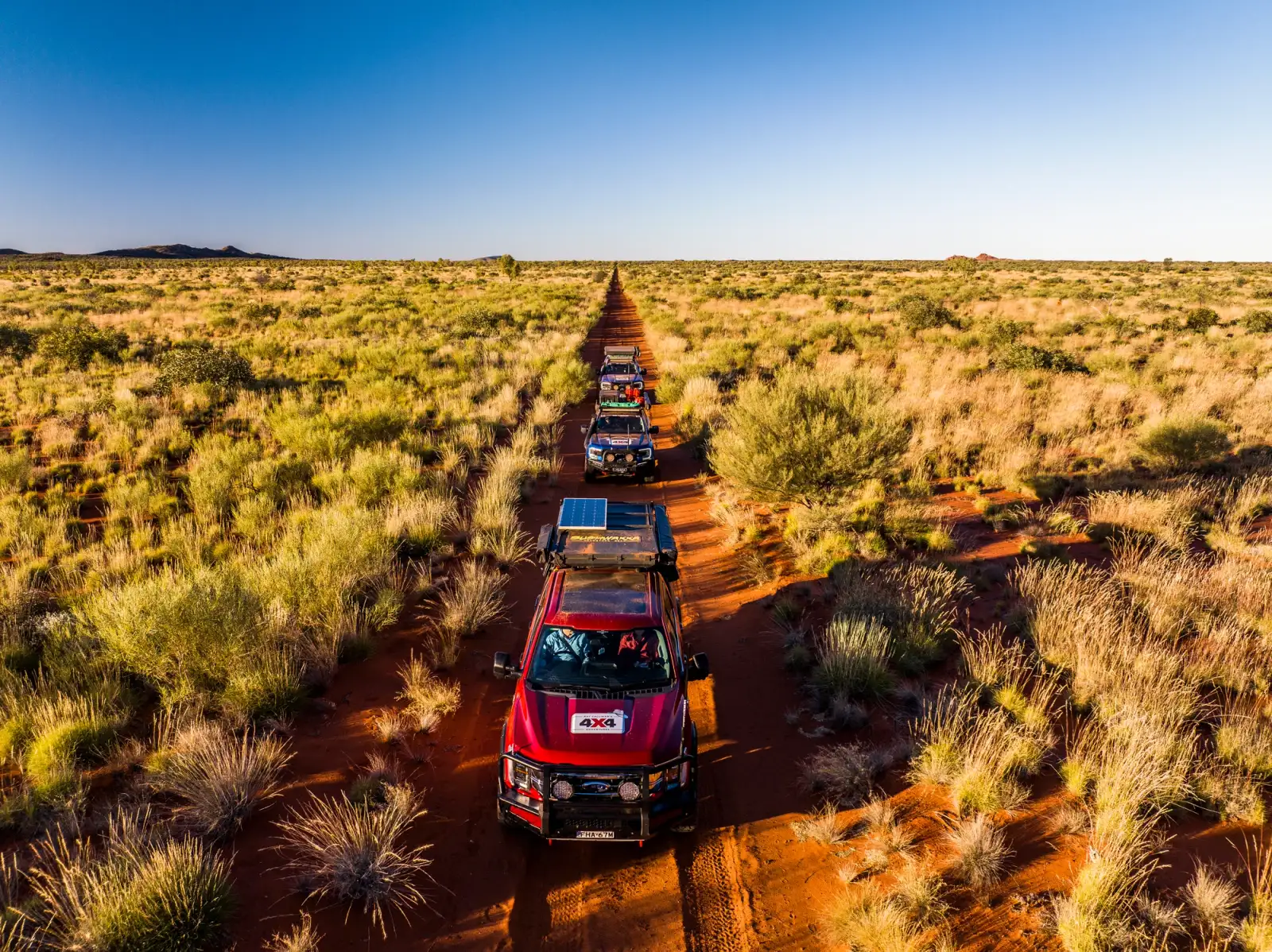
convoy of 4wds driving through the outback

Flicking into 4X4 for the first time can feel like engaging warp drive. Suddenly, your rig grabs the earth a little tighter, pulls a little harder, and starts to act like the terrain isn’t quite as intimidating as it looked ten seconds ago. The difference between a great day on the tracks and an expensive call to the local recovery bloke is knowing when, and which, 4X4 setting to use. So, let’s break it down.
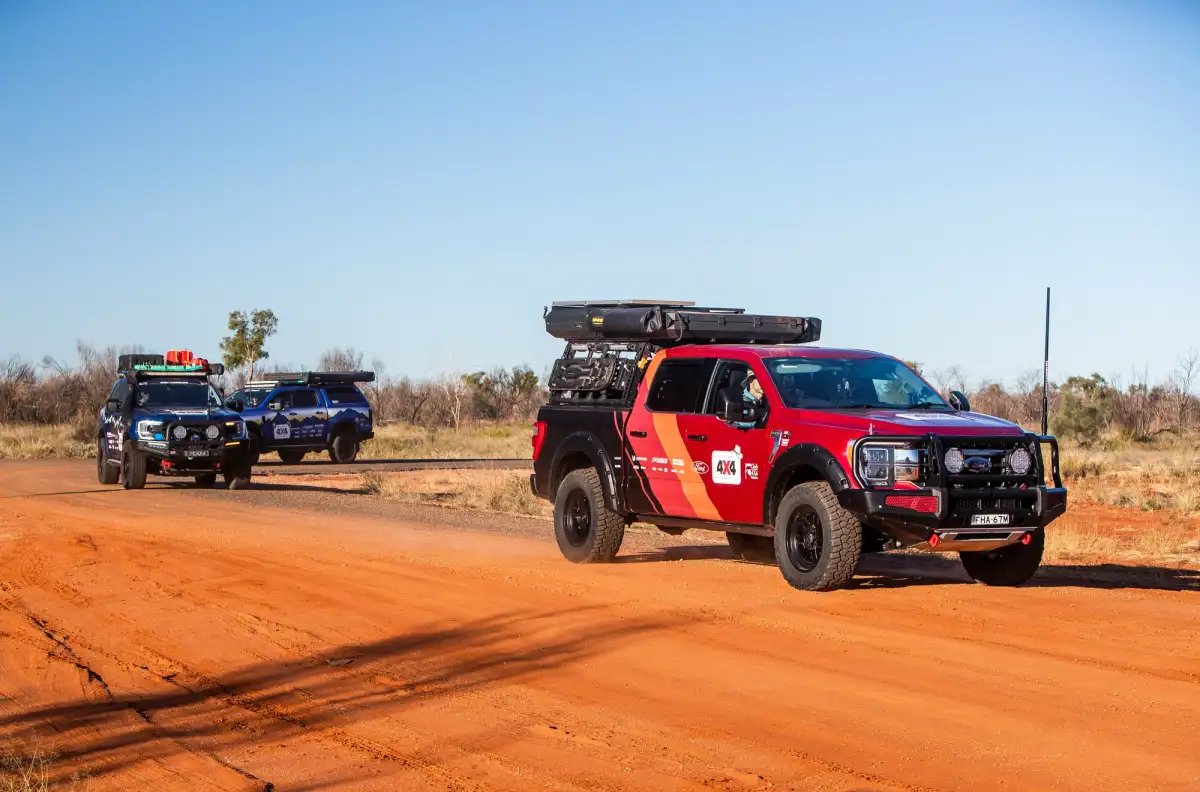
convoy of 4wds driving through desert

convoy of 4wds driving through desert

AWD vs 4WD: What’s the Deal?

All-Wheel Drive (AWD) systems are mostly found in crossovers and soft-roaders. They’re great for slippery bitumen or well-maintained dirt roads, with the computer deciding when to shuffle power front or rear. Proper 4WD, like what you’ll find in most 4X4s is built for more serious work. It uses a transfer case to split drive evenly between the front and rear, and gives you access to low-range gearing. That’s where the magic happens.

When to use different 4WD Settings

4A (4 Auto)

4A is a clever setting found in many modern dual-range 4X4s like the Next-Gen Ranger and Everest. It automatically distributes torque between front and rear axles as needed, meaning you can safely use it on sealed roads in the wet or when towing. It’s ideal for variable conditions. Think patchy gravel, rain-slick bitumen, or transitioning from bitumen to dirt without stopping. It’s not for hardcore off-roading, but it’s brilliant for everyday traction and safety.
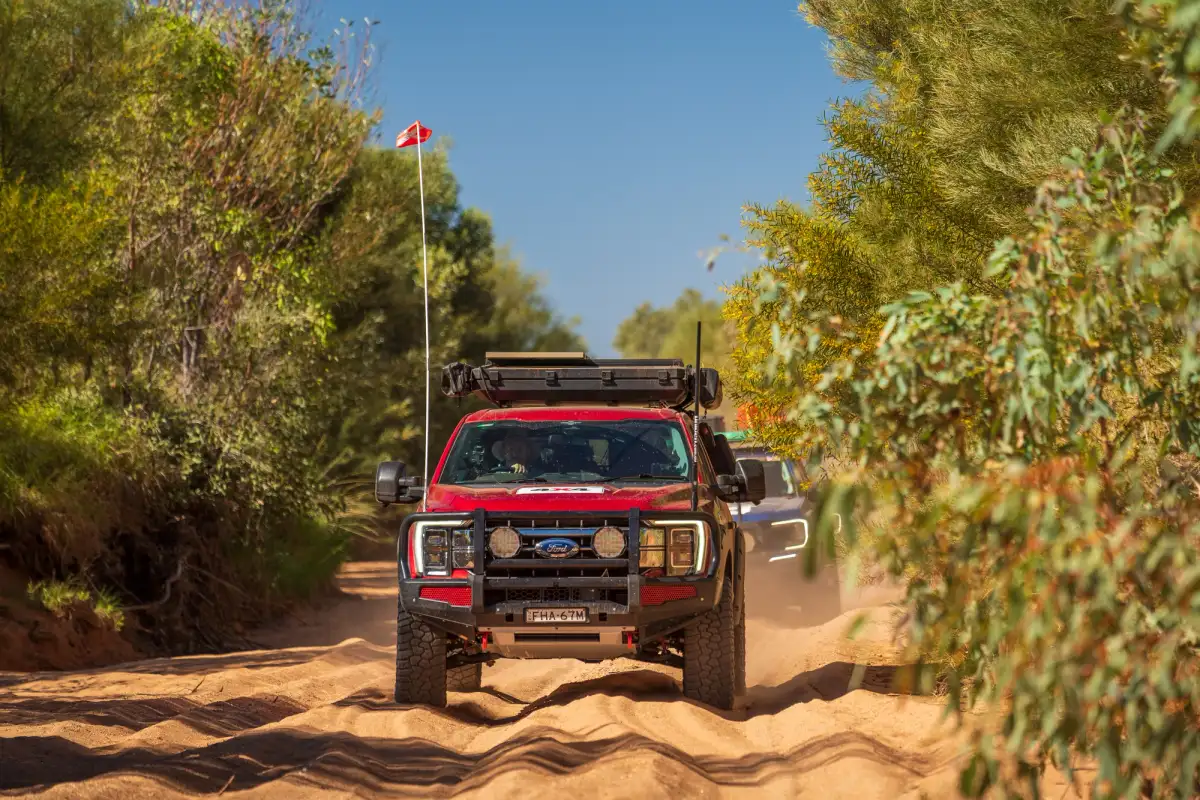
convoy of 4wds driving through sand

convoy of 4wds driving through sand

4H (Four High)

This is your go-to setting for gravel roads, firm sand, snow, and anything where you want better traction but don’t need extra torque. It’ll help with stability and reduce wheelspin, but you can still cruise at normal speeds. Just remember: don’t engage 4H on dry bitumen unless your vehicle has a centre diff. It can cause drivetrain bind and turn your transfer case into a billion shards of aluminium and steel.

4L (Four Low)

This is for the tricky stuff: steep hills, deep sand, rocky climbs and mud bogs. This is where 4L shines. It multiplies your torque, slows everything down, and gives you far more control at low speeds. Pair it with some steady throttle and good line choice, and you’ll be surprised where you can take your rig.

4LLc (or 4L with Locked Centre Diff)

Found on some full-time 4X4s like Pajeros or Prados, this mode locks the centre differential for even torque split across axles. It’s essentially the “proper” 4L mode when you need max traction, and you’d use it in the same sort of terrain as standard 4L.

Final Word

Think of your 4X4 settings as a toolbox. Use the right gear for the job, and your rig will reward you with capability, control, and confidence. Use the wrong one? Well, that’s how Instagram sees another “I got bogged at Inskip Point” video.

Get the gear in the car and the car into gear

And take it anywhere you can legally go in Australia
Get a Quote
Image
Pat Callinan
Pat Callinan is one of Australia's leading four wheel drive experts. Pat Callinan's 4X4 Adventures is sponsored by Club 4X4
Blog

Discover other stories

View all

Warm up with weekly articles aimed at adventure

Mitsubishi Pajero off-road on a muddy track

Reviews & Comparisons

Mitsubishi Pajero Review: The Legendary 4X4 That Still Delivers

It’s been a few years since the Pajero left the showroom floor, but out on the tracks, it hasn’t gone anywhere. You’ll still find them pushing through sand, climbing rocky lines, and towing heavy setups across the country. So what is it about this old-school 4WD that keeps it relevant in 2026? Dive in to see where it still delivers, and where it shows its age.

Read more  

It’s been a few years since the Pajero left the showroom floor, but out on the tracks, it hasn’t gone anywhere. You’ll still find them pushing through sand, climbing rocky lines, and towing heavy setups across the country. So what is it about this old-school 4WD that keeps it relevant in 2026? Dive in to see where it still delivers, and where it shows its age.

A man cleaning a 4X4 Ford Ranger at a car wash

Expert Advice

5 Money Saving 4X4 Mods

Most 4X4 mods cost more than they save, but not all of them. Some upgrades are genuinely worth the spend because they help prevent major damage, reduce clean-up costs, protect resale value, or stop small problems turning into expensive failures. If you want to mod smarter instead of just spending for the sake of it, these are five affordable 4X4 upgrades that actually make sense.

Read more  

Most 4X4 mods cost more than they save, but not all of them. Some upgrades are genuinely worth the spend because they help prevent major damage, reduce clean-up costs, protect resale value, or stop small problems turning into expensive failures. If you want to mod smarter instead of just spending for the sake of it, these are five affordable 4X4 upgrades that actually make sense.

lineup of different colours of the new 2026 Nissan Navara

Reviews & Comparisons

2026 Nissan Navara Review: What 4X4 Owners Need to Know

The 2026 Nissan Navara brings new underpinnings, local tuning, and serious real-world capability, but what does that actually mean for Aussie drivers? This review cuts through the noise, covering performance, towing, off-road ability, modification potential, and what ownership really looks like once you build it your way.

Read more  

The 2026 Nissan Navara brings new underpinnings, local tuning, and serious real-world capability, but what does that actually mean for Aussie drivers? This review cuts through the noise, covering performance, towing, off-road ability, modification potential, and what ownership really looks like once you build it your way.

View all