You’ve got the drawers, the dual battery setup and your inverter can run a coffee machine and weld a gate hinge if it must, but let me ask you this, if a fire broke out under your bonnet or behind your fridge… would that little red extinguisher you bolted down years ago still get the job done?
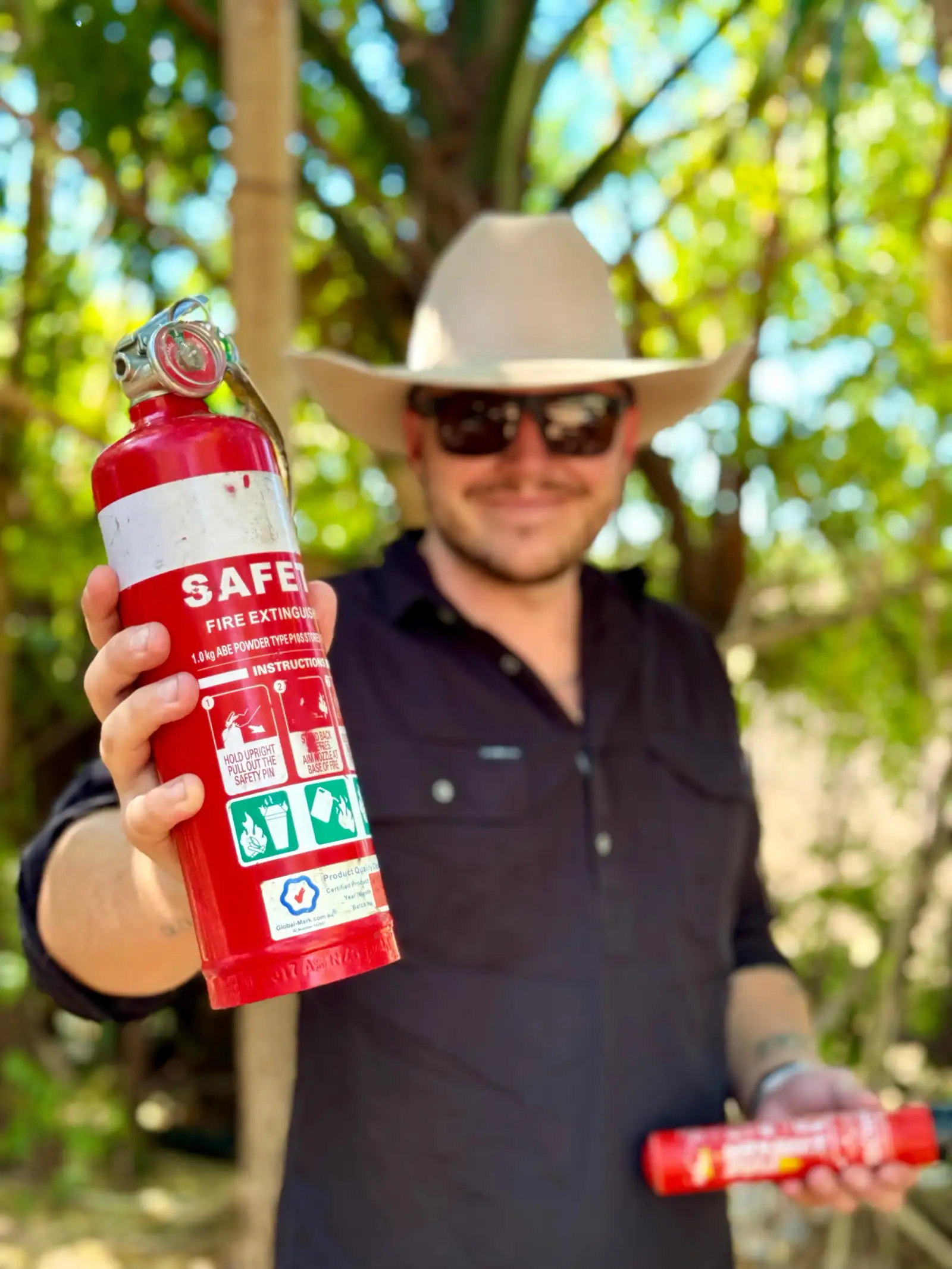
Most 4WDers opt to carry a dry powder unit. It’s the go-to: cheap, light, readily available at every parts store and BCF, and fair enough—it ticks most of the boxes — but I reckon there’s better options out there.
The Old Faithful: ABE Dry Powder
Dry powder extinguishers (labelled ABE) have been the standard for years, and for good reason. They’re capable of knocking down flames from flammable liquids (Class B), electrical fires (Class E), and ordinary combustibles like wood and upholstery (Class A). They’re non-conductive, don’t rely on pressure canisters, and they’re widely understood. So far, so good.
But they’re not perfect, and in many touring or off-road situations, they’re actually far from ideal.
For one, the powder is incredibly fine and gets everywhere. Use one inside your cabin or canopy and you’ll be cleaning corrosive dust out of your gear for months. It’s also a visibility killer — one quick discharge and you can’t see the fire anymore, let alone fight it. They’re also single-use, once you pull the pin and squeeze the trigger, it’s done, even if you only get a two-second puff.
More importantly, dry powder doesn’t work on lithium-ion fires. This is a problem, because whether they're in your dual battery system, your portable fridge, your power tools, or your-bikes on the back of your caravan, most modern setups now include lithium batteries.
The Problem with Lithium Fires
Lithium-ion batteries don’t behave like your average electrical fire. Once they go, they go hard. Overheating or internal failure can trigger thermal runaway, which basically means the battery becomes its own fire source. It doesn’t need external oxygen, and it won’t respond to your dry powder extinguisher the way another fire might. In fact, the powder often just coats the surface while the battery continues to burn from the inside out.
Now think about how many lithium cells you’ve got in your setup: fridge, power station, solar generator, camera gear, e-bike battery. You’re only one dodgy cell, one wiring fault, or a knock in the wrong spot away from facing a fire you can’t put out.
Most 4WDers haven’t caught up to this yet. We’ve loaded our rigs with lithium tech for all the right reasons: light weight, high capacity and fast charging, but we haven’t updated our safety gear to match.
Now don’t get me wrong, there’s certainly no fire extinguisher that exists (that I know of) that’s equipped to deal with thermal runaway, but there are fire extinguishers that are capable of suppressing the flames that result from lithium battery failure and, more importantly, stopping the fire from spreading to everything else in your rig, without coating your entire setup in corrosive powder.
Unlike conventional dry powder extinguishers, these newer alternatives don’t choke you with dust, obscure your vision mid-response, or leave behind a residue that wrecks electronics and clogs up everything from fridge motors to fuse panels. They're cleaner, more targeted, and far better suited to the types of fires modern 4WD setups are increasingly exposed to.
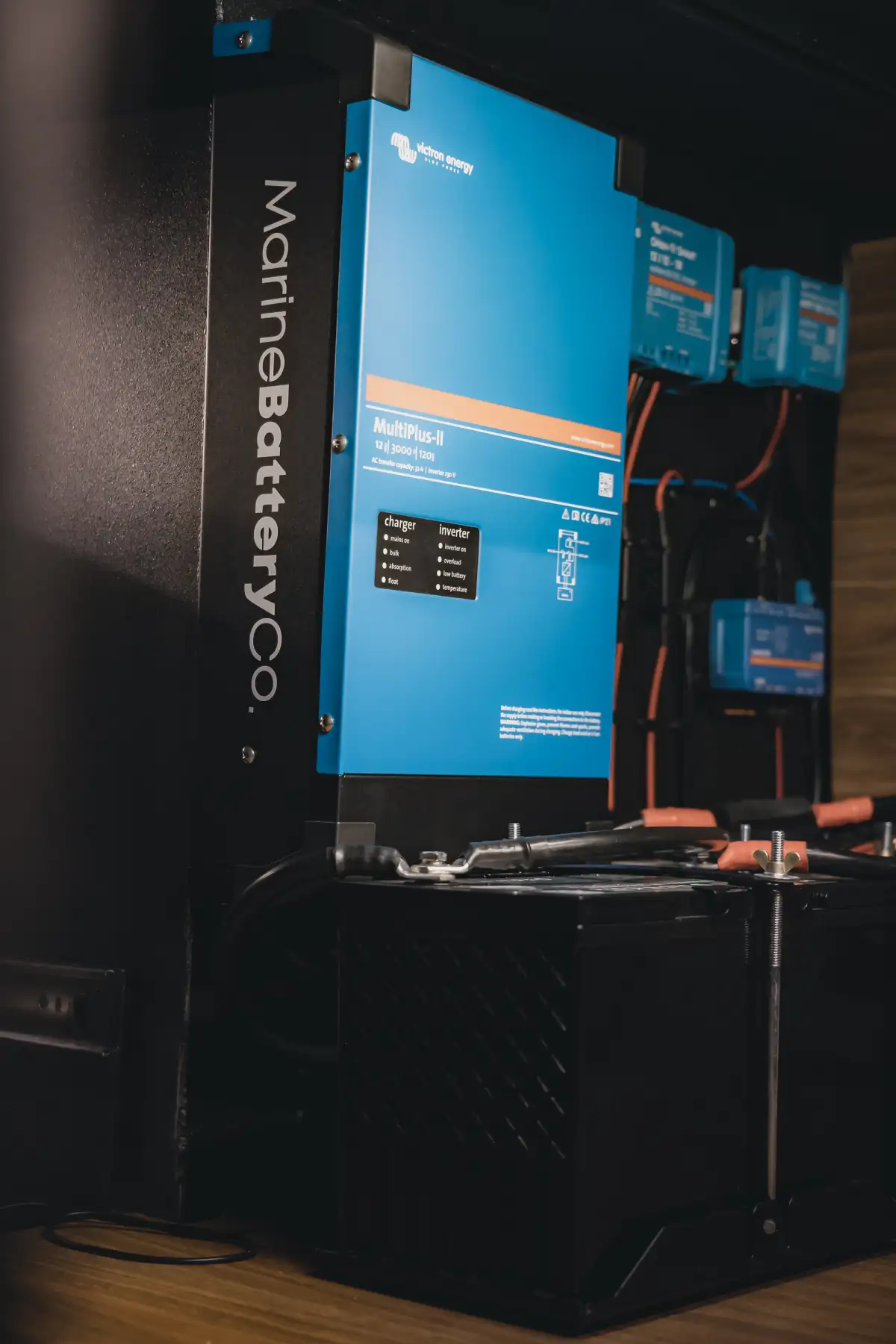
12V lithium battery system
What Else is Out There?
Two standout alternatives are the Firestryker and the Adventurer by Fire One, both a far cry from your standard ABE unit.
The Firestryker is a solid-state aerosol extinguisher about the size of a flare. When you pull the striker, it emits a potassium-based aerosol that disrupts the fire’s chemical chain reaction. There's no pressure canister to fail, no pin to pull, and no mess to clean up afterwards. It works across multiple fire classes, including electrical and lithium-ion fires that aren’t suffering from thermal runaway, and keeps discharging for up to 50 seconds—far longer than your average 1kg powder extinguisher.
Pros? It’s ultra-compact, maintenance-free, has a shelf life of over 10 years, is non-corrosive and can be mounted almost anywhere.
Cons? It’s a one-use item and doesn’t have the same “aim and spray” control as a trigger extinguisher. While it’s lithium-capable, it won’t stop thermal runaway, but then again, nothing handheld does.
The Adventurer by Fire One, on the other hand, is a more traditional-style handheld unit, but filled with a clean agent gas, not powder. It’s designed specifically for vehicle interiors, where damaging electronics or filling the air with dust can be a bad idea.
It’s pressurised and rated for A, B and E class fires, so it behaves like a regular extinguisher, but without the mess. That makes it ideal for fridges, DCDC chargers, power stations, or under-bonnet areas where visibility and cleanup matter.
Pros? Lightweight, safe on sensitive gear, and much cleaner than powder.
Cons? More expensive than your servo unit and has a shorter discharge time (around 12–14 seconds),but for what it protects, it’s well worth the space in your drawer or footwell.
There is, of course, still a place for the humble fire blanket. Especially for camp cooking setups, a fire blanket is fast, simple, and doesn’t fill the air with chemicals or powder. They’re compact, cheap, and easy to deploy, even by someone with no training.
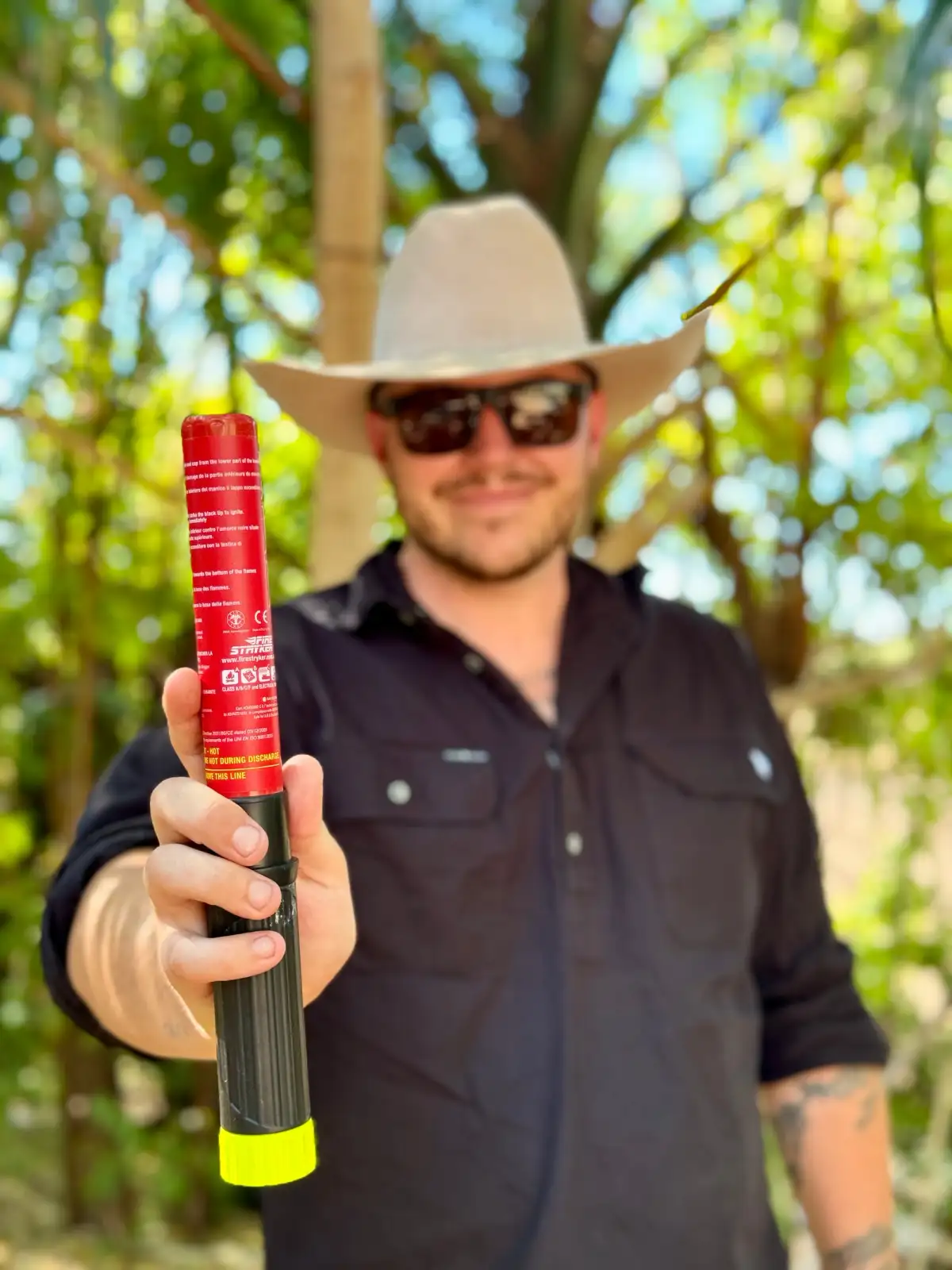
Fyrestick fire extinguisher
Final Word: New Tech? New Safety
As our setups evolve with more electronics, more heat under the bonnet and more lithium products, so should our safety gear. Fire suppression might not be the most exciting mod to talk about at the pub, but when things go bad, it’s one of the few that stands between a close call and a total loss.
So, check what you’re carrying, ask what it’s actually for, and make sure the next flames you see are in your campfire, not your engine bay.
Important Notes on Lithium Fires:
- No handheld extinguisher fully stops thermal runaway in a lithium battery once it starts.
- The best any extinguisher can do is contain the fire early, cool it, and prevent surrounding items from igniting.
- Lithium fire suppression generally means: early response + temperature reduction + containment.
Comprehensive Insurance
We'll Make Sure Your Adventures Can't be Easily Extinguished.