If you’ve been around the touring traps lately, chances are you’ve noticed a growing trend in Australia right now: vehicles with a fat chunk of their windscreen being taken up by a Starlink Mini unit. On the surface, it makes sense, clear sky view, out of the weather, easy access, right?
But here’s the rub. Mounting a Starlink Mini to your windscreen (or, on the dashboard on top of an airbag) isn’t just potentially dangerous it could also leave you staring down the barrel of a hefty fine. In this yarn I’ll let you know why and unpack the best way to mount a Starlink Mini on a vehicle.
Why So Many People Are Using Starlink
There’s no denying it. Starlink Mini has changed the game for remote travel across Australia.
For tourers who spend time at off-grid camps or crossing vast stretches of outback roads, reliable internet was once a pipe dream. Now it’s close to instant. That means weather checks, route planning, checking in with family, or even getting work done from the middle of nowhere.
The Mini unit in particular has become the go-to option for travellers because it’s:
- Smaller and easier to pack than the original Dishy
- Simple to power from a 12V touring setup
- Portable enough to move between vehicles or camps
For grey nomads, 4X4ers and long-haul tourers, it’s a genuinely useful bit of kit.
But how you mount it matters.
Windscreen Woes
In Australia it’s not illegal to mount things to your windscreen but the law is pretty clear on the fact that whatever you mount must not obstruct your field of vision. This includes, phone holders, dash cams, tablets and yes, Starlink units.
While the Starlink Mini is compact, it’s not exactly tiny (measuring about 298mm tall and 259mm wide, which is around the same size as an A4 piece of paper, with the Starlink Mini being a bit wider). Stick it on your windscreen and you’re effectively adding a slab of Elon Musk right where your eyes need to be, scanning for roos, ruts, and road trains.
Under the Australian Road Rules (ARR), Regulation 297 is the one that’ll get you. It states a driver must have a clear view of the road, the traffic, and any pedestrians. If police reckon your mounted unit is impeding that, you can cop a fine and possibly demerit points, depending on your state or territory.
Different states have slightly different interpretations, but the takeaway is the same: if it obstructs your view of the road, it’s a no-no.
Legal vs. Safe and Why You Need Both
It’s worth pointing out that even if you reckon you’ve mounted your Starlink Mini legally (say, down low on the dash or tucked in a corner of the windscreen), it doesn’t mean it’s safe in a potential accident. And vice versa, a “safe-feeling” spot may still land you in strife with Johnny Law.
Ultimately, it’s about common sense and risk management. The last thing you want is to be in a prang, only to discover your Starlink mount made the situation worse, or worse still, landed you or a passenger in hospital.
The Right Way To Mount It
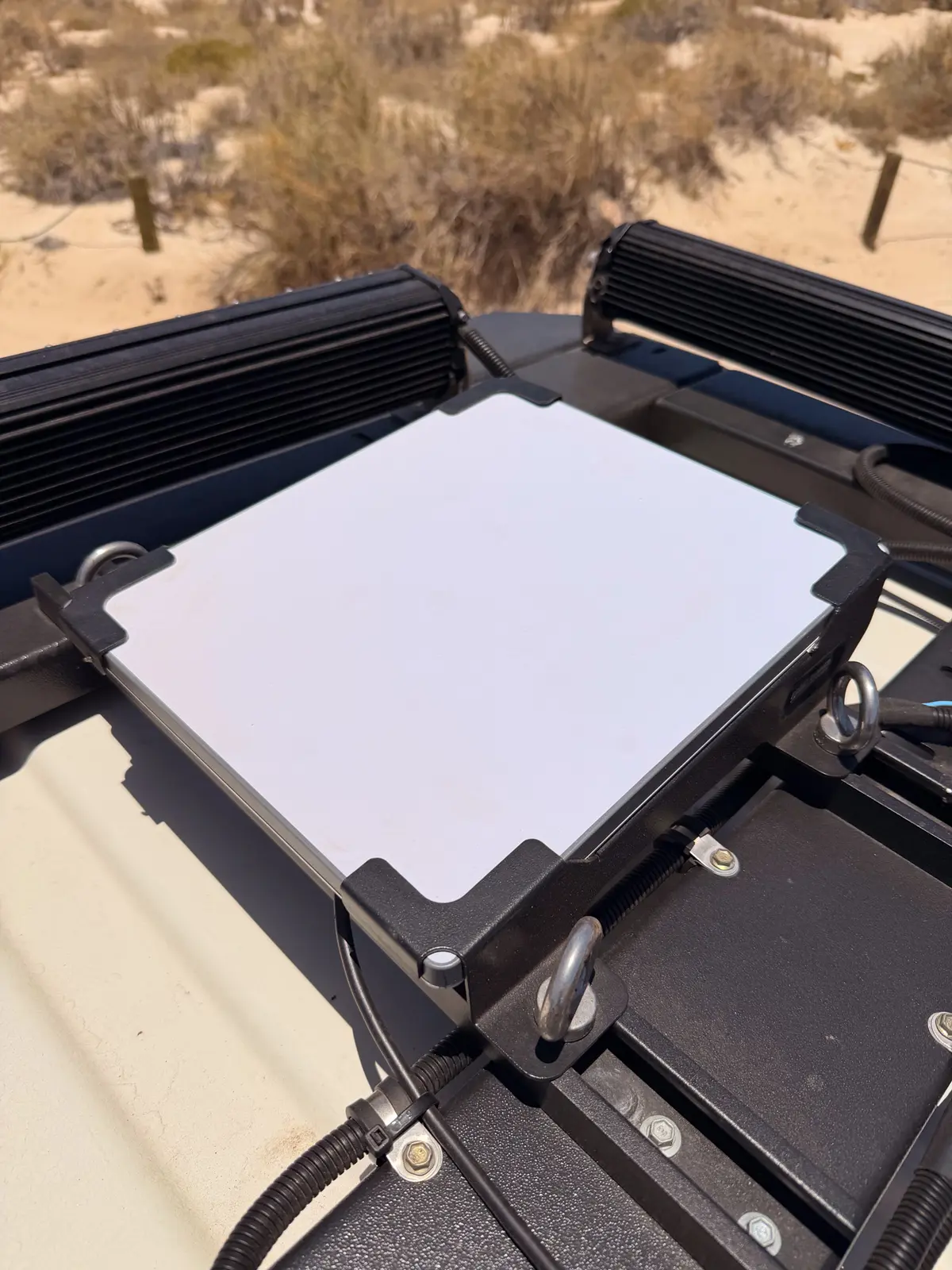
a starlink mounted to the roof of a vehicle
If you want to run your Starlink Mini while on the move, external mounting is hands down the best option.
Roof racks, platforms and canopy mounts are becoming more common, with a growing range of purpose-built brackets designed for touring vehicles. A roof-mounted unit gives you:
- An unobstructed view of the sky for better connectivity
- Zero impact on driver visibility
- No interference with airbags or cabin safety systems
It also keeps the unit out of the cabin, where it won’t distract you while driving or turn into a hazard on rough tracks.
Many tourers pair this with a simple 12V inverter or dedicated power solution as part of their touring setup, allowing the Starlink Mini to run without a full off-grid electrical system.
Yes, it takes more effort and a few extra dollars in brackets, cabling and weatherproofing. But that’s still cheaper than a fine, and far cheaper than a hospital visit.
What To Look For In a Good Mounting Setup
Starlink units are tougher than you’d think, I’ve been throwing them around the outback for years without issue. They’re also weather-sealed really well from the factory so you don't need one of those ‘weatherproof’ cases that's triple the price.
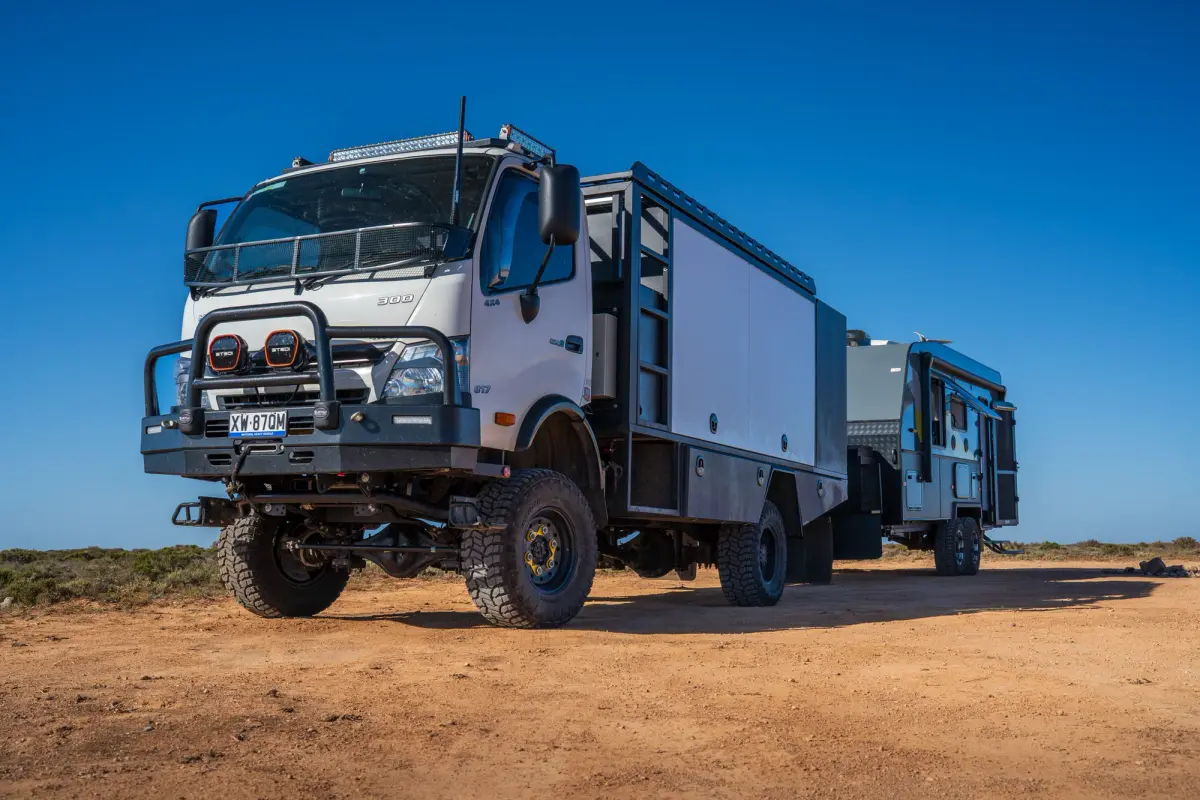
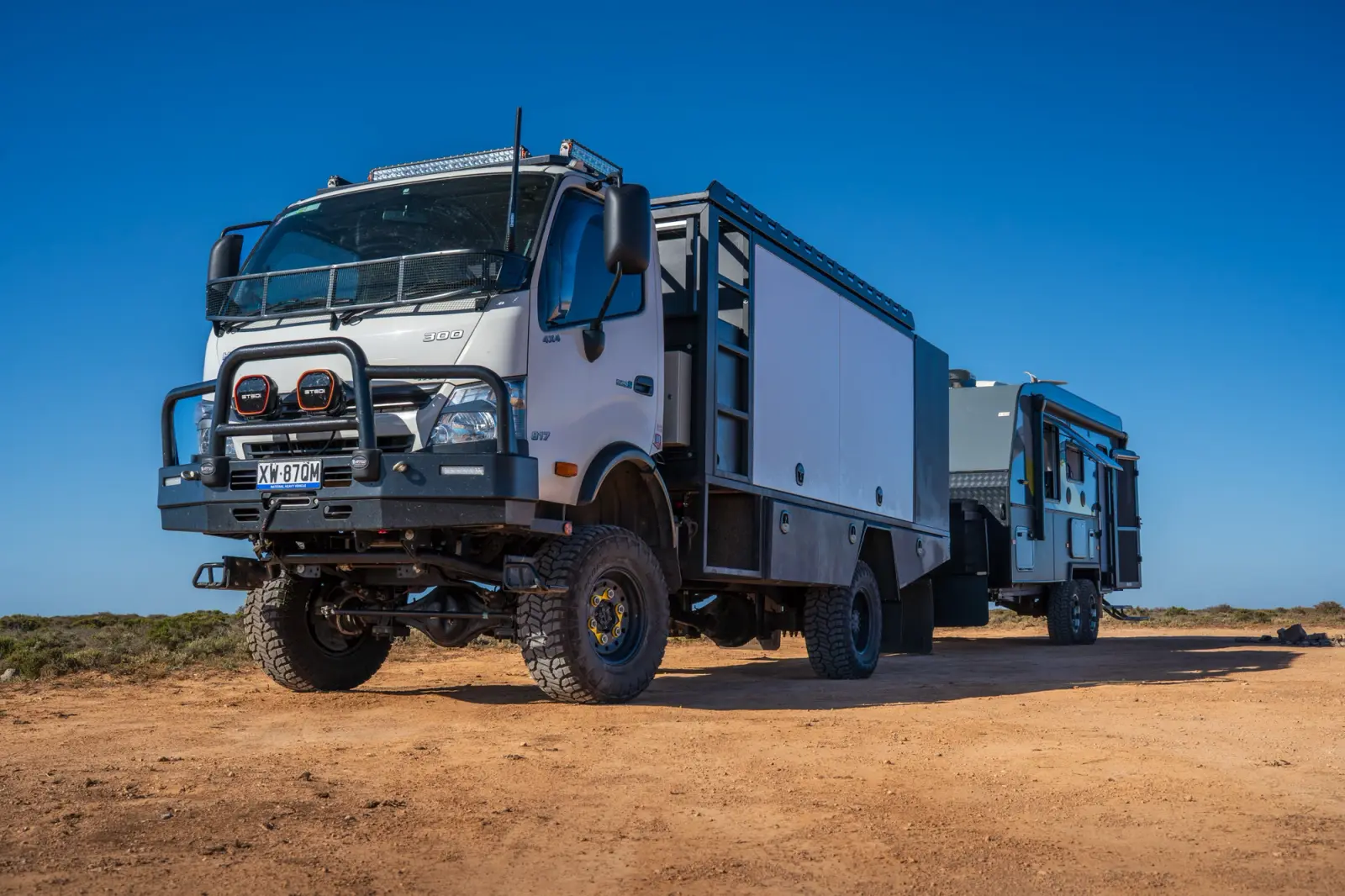
a 4x4 truck towing a caravan in the outback
My advice would be to look for a quick-release mount that lets you easily relocate the dish and ensure it’s one that is attached to the vehicle with appropriate hardware (nuts and bolts!). At camp, having the flexibility to shift the unit off the vehicle and take it a few metres away can help you dodge tree cover and get a clearer view of the sky, which means a stronger, more reliable signal.
The mounting hardware should be vibration-resistant, UV-stable, and designed for corrugated roads. Plenty of poorly designed brackets will fail after a few hundred kilometres of red dirt if they’re not built for harsh conditions, which could damage the Starlink device.
Also make sure your cables are secured properly, movement, rubbing, or sharp bends can damage plugs and affect performance over time. A clean, solid install not only keeps you connected but saves your gear in the long run.
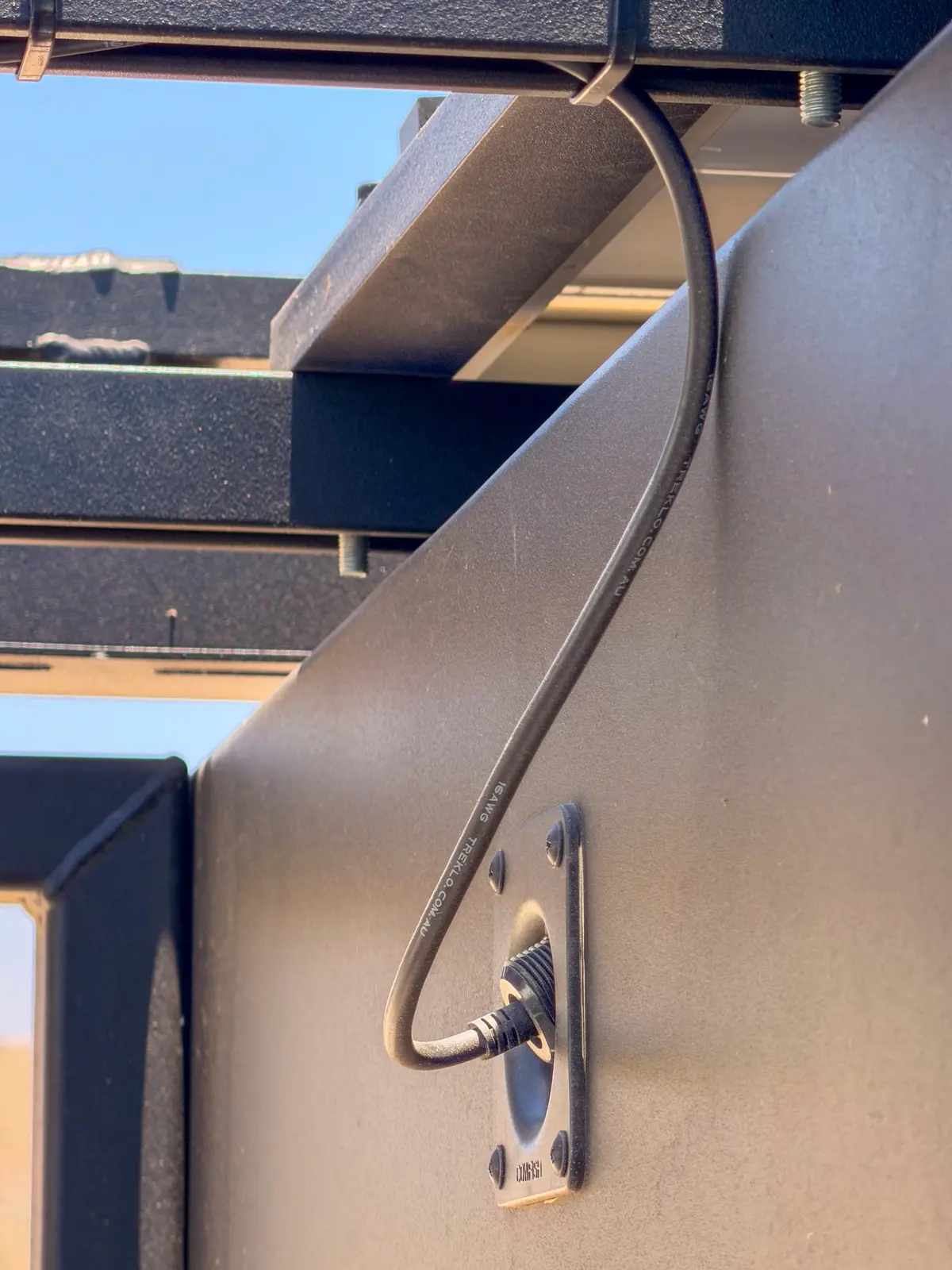
Starlink mount wiring on a vehicle
Convenience Shouldn’t Trump Safety
I get it. Sometimes the simplest and easiest solution feels like the best one. But when it comes to mounting devices like Starlink Mini in your vehicle, a little caution goes a long way.
Drivers should avoid the temptation to stick the unit on their windscreen or prop it up on the dash and mount the device securely in a location where it doesn’t obstruct vision.
Touring our brilliant nation is about freedom, adventure, and peace of mind, not cutting corners and hoping for the best. So, take the time to mount your gear properly, and you’ll get the most out of your Starlink setup without the unnecessary risk of being stopped by the rozzers.
Have Wi-Fi anywhere in Australia?
Cover it anywhere you can legally go in Australia