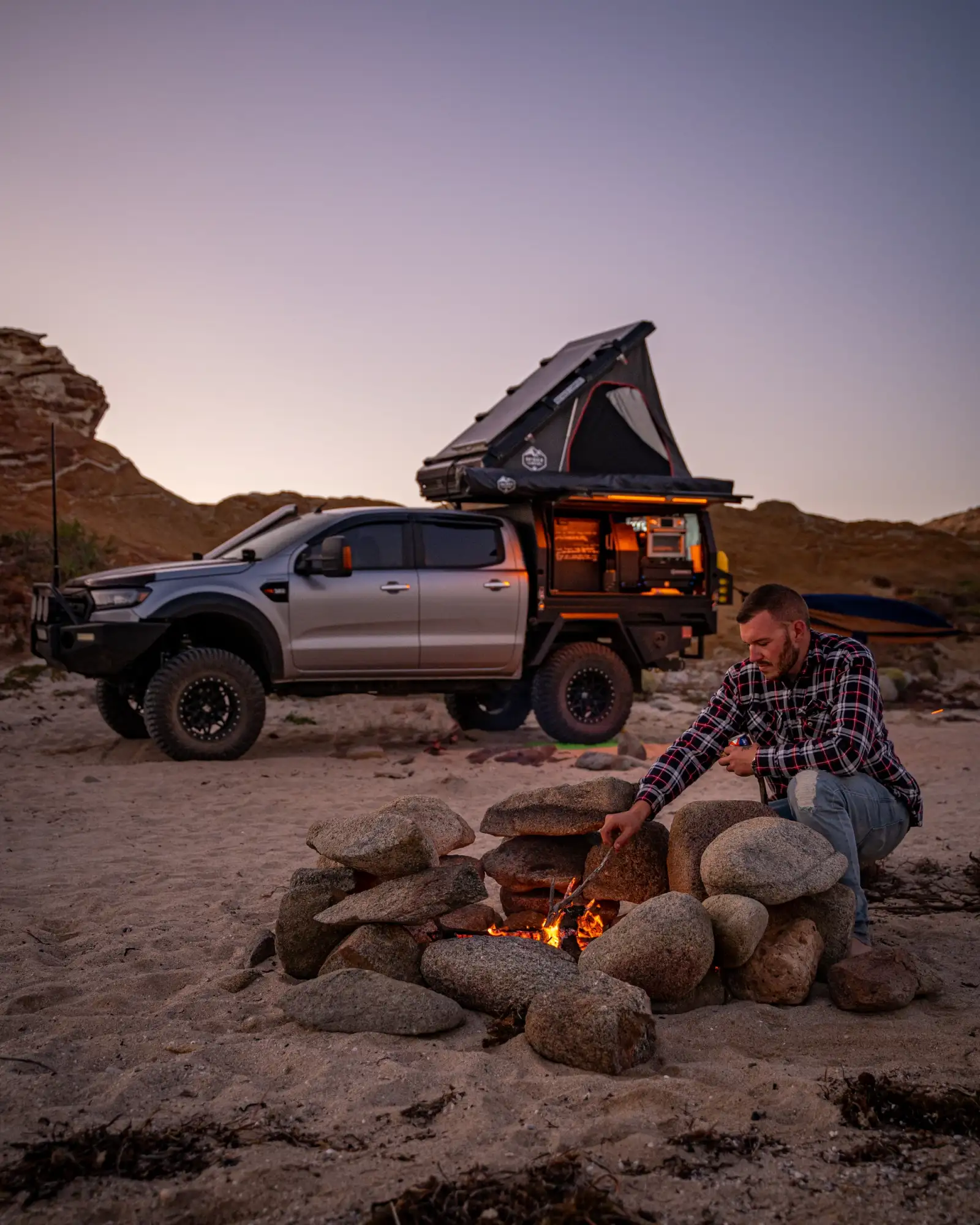
You can spend forever waiting for the stars to align, trying to wrangle your mates together despite the fact it’s harder than herding cats, comparing rosters, partners, kids, work commitments and weather forecasts until eventually you find one weekend in November 2029 when everyone is available.
Or you can just head out alone.
With Club 4X4, you're never truly alone off-road
with cover for anywhere you can legally go in Australia
I reckon everyone should do a solo 4WD trip at least once.
Not because you need to “find yourself” or any of that nonsense. I’ve spent enough time alone in the bush to know that wherever you go, there you are.
Bit disappointing, really.
I mean genuinely travelling alone. Pick somewhere you've always wanted to explore, load up the 4X4 and disappear for a couple of days, because there's something incredibly liberating about realising that absolutely nobody else's opinion matters. You can stop when you want, camp where you're legally allowed to camp, eat dinner at 4:30 in the afternoon if that's what makes you happy, or spend forty minutes investigating an insignificant line on a map simply because you've become curious about where it goes, that’s one of my mates favourite past-times and he’s the happiest bloke I know.
There's an incredible freedom to it, and after you've done it a few times, it can become strangely addictive. Your entire trip operates on a democracy of one, and conveniently, every motion passes unanimously.
But solo 4X4 travel also changes the equation slightly, because the person who normally jumps out to guide you through a difficult section, helps with a recovery, lends you the tool you forgot or drives into town when something breaks isn't sitting in the passenger seat. If you make a bad decision, there's nobody immediately behind you to help turn it into a funny story instead of a fairly serious problem.
That shouldn't frighten you away from doing it. It should simply change the way you prepare.
Being Alone is Actually Quite Addictive
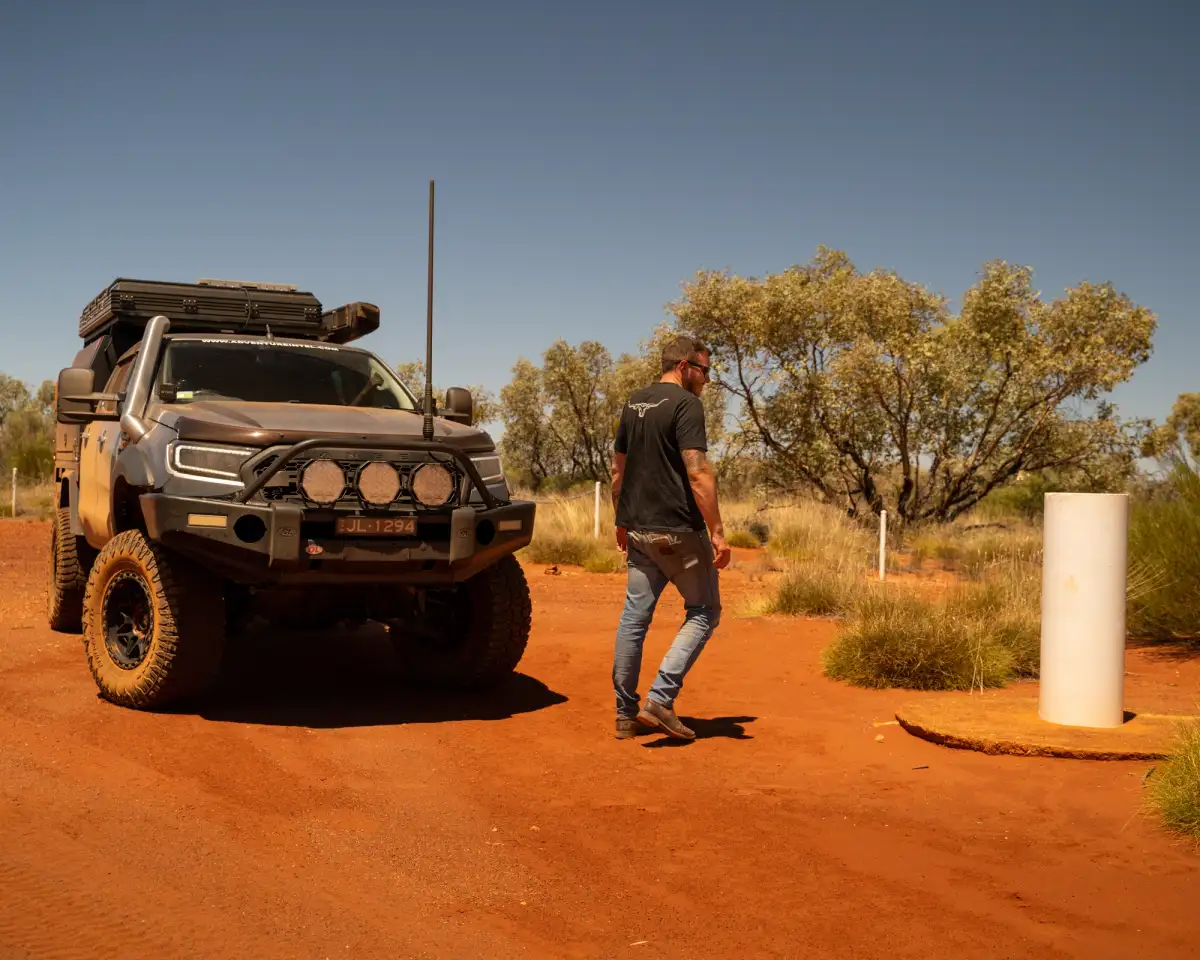
Josh Leonard in the Australian Outback with his 4X4 Ford Ranger
The first few hours of travelling alone can feel strange, particularly if you're accustomed to convoy trips. There's nobody talking on the UHF, nobody asking when you're stopping for lunch and nobody behind you whose headlights disappear for twenty minutes before they eventually radio through to announce they've been taking photos. I’m not ashamed to say I’ve shed more than a few tears in the first couple of hours of a solo-send.
Eventually, though, you settle into it.
You start travelling at your own pace rather than the convoy's. If something catches your attention, you stop. If you've had enough driving at three in the afternoon, you find camp. If the weather is perfect and you're enjoying a track, you keep going.
Even the campsite changes. You're not trying to accommodate six people, three awnings and Dave's inexplicably enormous gazebo. You need enough shelter to be comfortable, somewhere to cook, somewhere to sleep and a chair positioned wherever the view happens to be best.
There is also something quite remarkable about how much more you notice when nobody is around. The bush seems quieter because you're actually listening to it. Wildlife appears more frequently, or perhaps you simply notice it more. You spend longer looking at things because nobody is standing behind you asking whether you're finished looking at the bloody tree yet.
For me, that's the attraction, the silence of solitude I mean, though I do love a good tree.
Solo travel strips four-wheel-drive touring back to the reason many of us started doing it in the first place: exploring somewhere because we wanted to know what was there.
The Vehicle Becomes your Second Person
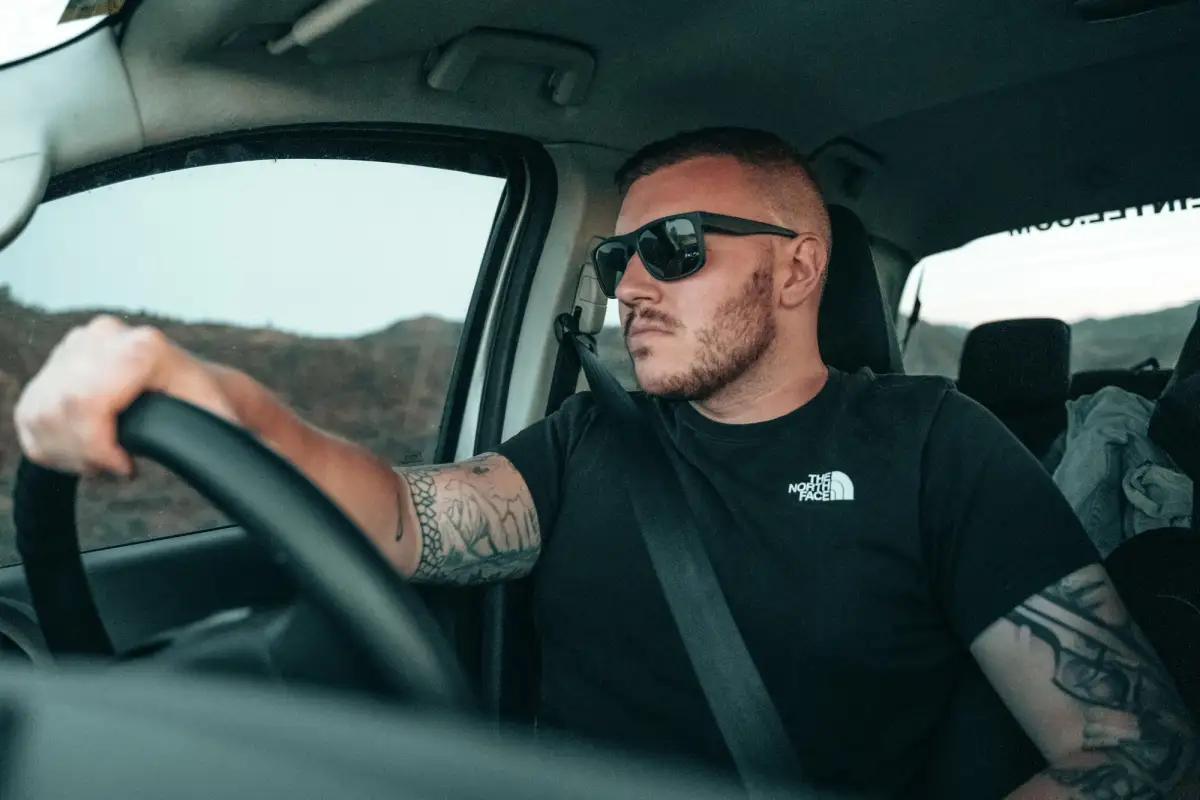
Josh Leonard in his 4X4 Ford Ranger
When I'm travelling with another vehicle, there are redundancies built into the trip. Another battery. Another first-aid kit. Another set of recovery gear. Another vehicle capable of getting somebody out if things go wrong.
When you’re solo, you are the redundancy. That means vehicle preparation matters more than modifications.
Before leaving, I want to know the basics are healthy: tyres, including the spare; fluids; battery; cooling system; belts and hoses where applicable; recovery points; and anything underneath the vehicle that's likely to have shaken itself loose.
I also carry tools and spares appropriate to the vehicle, but there's an important distinction here. Don't fill the back with 150kg of tools simply because you're travelling alone. Carry what can realistically solve problems.
A tyre repair kit and compressor are excellent examples. A puncture is one of the most likely issues you'll encounter remotely, and knowing how to plug a straightforward tread puncture can turn a significant problem into a ten-minute inconvenience.
More importantly, practise using your equipment before you need it. Your first attempt at operating the jack shouldn't be on the side of a track, in rain, with a flat tyre and rapidly diminishing enthusiasm.
Non-negotiable Number One: Somebody Knows Where I am
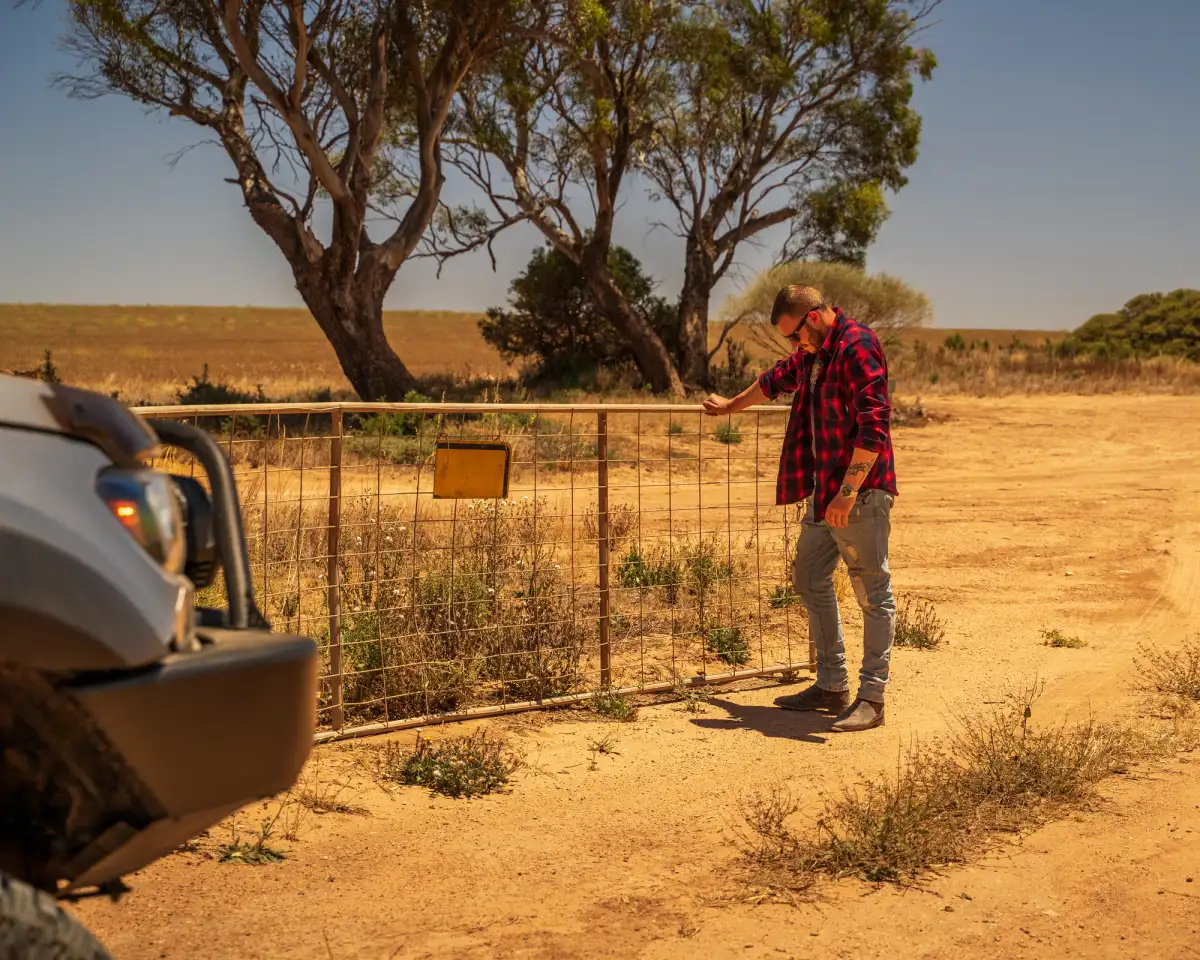
Josh Leonard in the Australian Outback, opening a gate with his 4X4 Ford Ranger
This one isn't complicated.
Before a solo remote trip, somebody reliable gets my route, intended campsites where known and an approximate time I'm expecting to return or make contact.
And then I actually stick reasonably closely to that plan.
You don't need to file a flight plan every time you leave bitumen, but if you decide halfway through the day to completely change your route and head 150 kilometres in another direction, update your contact while you still have communications.
Because if something does happen, “Josh went somewhere in the High Country on Tuesday” is an absolutely enormous search area.
Have an agreed overdue procedure too. If you say you'll check in Sunday afternoon, make sure the person at home understands what you'd like them to do if Sunday afternoon becomes Monday morning and nobody has heard from you.
That's the safety system working in the background while you get on with enjoying yourself.
Non-negotiable Number Two: Communication Beyond a Mobile Phone
I love mobile phones. They're maps, cameras, weather forecasts, entertainment and occasionally even telephones.
But they're not something I'd rely on as my only emergency communication when travelling properly remote.
Once you're outside reliable mobile coverage, carry an appropriate independent communication device. Depending on the trip, that might be a satellite communicator or satellite phone, and for serious remote travel I also like the security of a registered Personal Locator Beacon.
The important part is understanding the difference between them.
A satellite communicator can allow routine messaging and check-ins, while a PLB is essentially your something has gone seriously wrong and I require rescue option. It isn't there because solo travel is inherently dangerous; it's there because when something genuinely serious happens, you want a method of calling for help that doesn't depend on Telstra having thoughtfully installed a tower beside the bog hole that somehow also threw you into cardiac-arrest.
Keep emergency communication equipment accessible and, where appropriate, on your person rather than buried inside the vehicle.
A PLB sitting beautifully protected in the glovebox isn't enormously helpful if you're injured fifty metres away from it.
Drive at 80 Percent
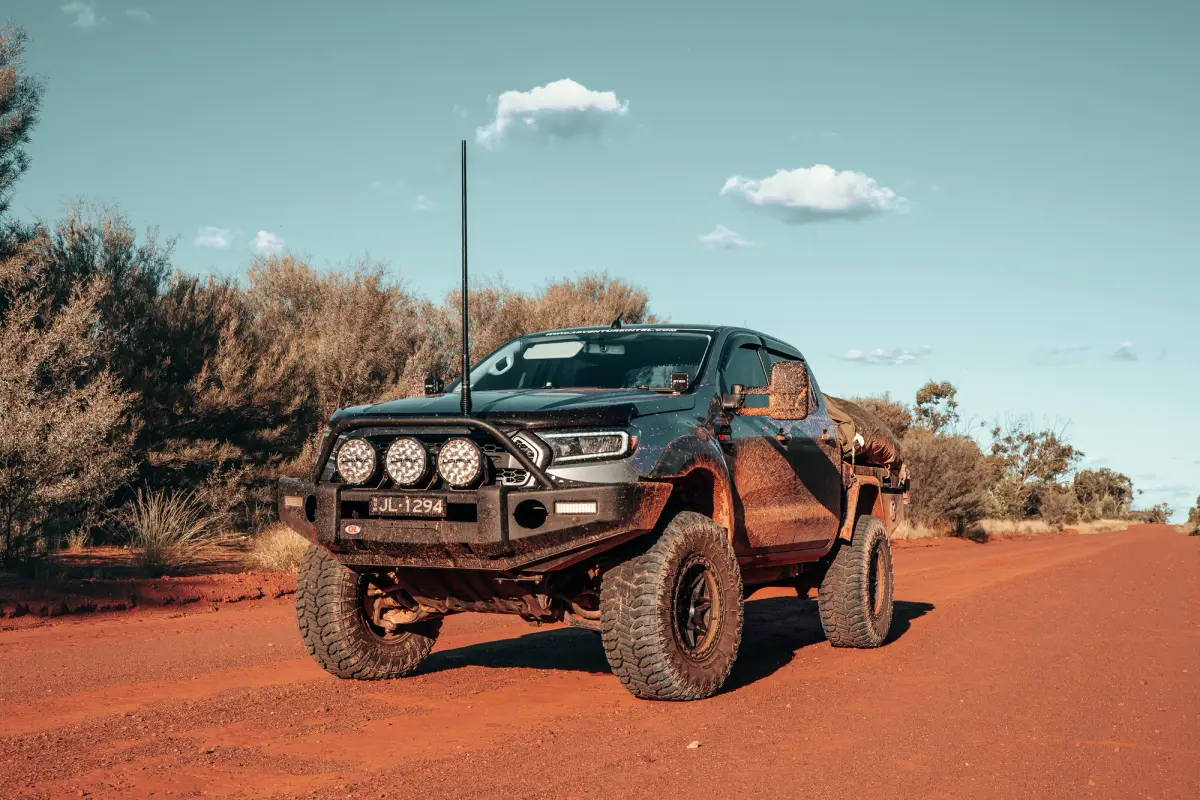
4X4 Ford Ranger in the Australian Outback
This is probably the biggest behavioural change I make when I'm travelling alone.
I leave some ego at home.
If I'd happily attempt something with three vehicles and experienced mates around me, that doesn't automatically mean I'll attempt it solo.
Water crossing looks marginal? Walk it first if it's safe to do so, or turn around.
Track is badly washed out? Get out and look.
Bog hole looks like it might swallow the bonnet?
I don't need to know what's at the bottom badly enough.
Solo travel isn't the time to prove what your vehicle can do. The objective is to explore, enjoy yourself and drive the same vehicle home afterwards, at least it is for me anyway.
Turning around isn't failing. Sometimes it's simply the most intelligent decision you've made all afternoon.
Recovery Changes When You're the Recovery Vehicle
You should absolutely carry proper recovery equipment solo, but think about what can actually work without another vehicle present.
A snatch strap is a fantastic recovery tool.
It is considerably less impressive when the nearest second vehicle is 74 kilometres away.
For solo touring, self-recovery becomes more important. A winch, where appropriate, recovery boards, a long-handled shovel, rated shackles or soft shackles, a tree-protection strap and knowledge of how to use everything safely can be invaluable.
And once again, tyre pressures are your friend. If you're starting to struggle in sand, stop early and make an adjustment rather than continuing until the chassis is resting comfortably on Australia.
The easiest solo recovery is the one you avoided needing, although I will admit a solo recovery is always fun.
Then Stop Thinking About Safety
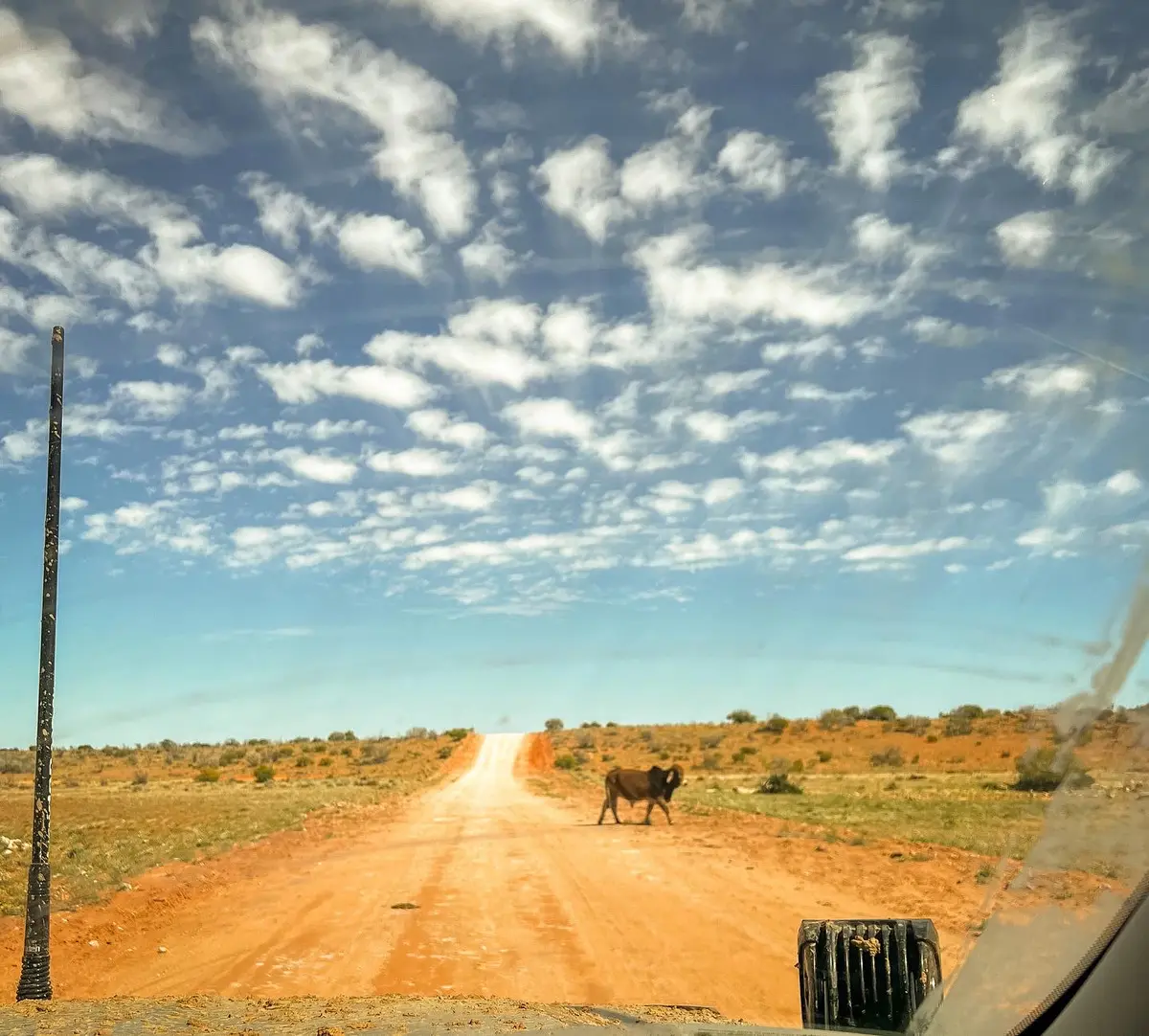
A cow in the Australian Outback on a dirt road
This might sound contradictory after everything I've just written, but it's important.
Once you've prepared properly, enjoy the bloody trip.
Don't spend three days imagining every conceivable disaster simply because you're alone.
You've checked the vehicle. Someone knows your route. You've got food, water, recovery equipment and independent communications. You've adjusted your driving to account for travelling without support.
Now go exploring.
Find a campsite before dark, put the chair somewhere ridiculous purely because you can, cook whatever you feel like eating and enjoy the increasingly rare experience of having absolutely nowhere else you're required to be.
You'll probably talk to yourself.
You'll definitely talk to the four-wheel drive.
By day two you may find yourself saying “we” when referring exclusively to yourself and an inanimate diesel vehicle, which is probably the point where I'd recommend returning to civilisation within fourteen-days, give or take.
But somewhere between leaving home and arriving back, you'll discover something genuinely valuable about solo 4X4 travel.
Confidence doesn't come from convincing yourself nothing will go wrong.
It comes from knowing you've thought about what happens if it does.
And once you've done that, there's an enormous country out there where the passenger seat is entirely optional.
With Club 4X4, you're never truly alone off-road
with cover for anywhere you can legally go in Australia