I've met some incredibly well-organised people during my travels. People who can tell you exactly how many kilometres they'll cover each day, where they'll stop for fuel, what they'll have for dinner on Thursday and, presumably, the precise time they'll need to visit the toilet.
I admire that sort of organisation. Mostly because I possess very little of it.
But there's something about meticulously planned itineraries that makes me nervous, particularly when they're accompanied by an equally precise allocation of supplies.
The adventure starts where the bitumen ends
See how Club 4X4 can help
Enough fuel to reach the next town. Enough water to last until Friday. Enough food for the five nights you've booked. Lovely. Provided absolutely nothing goes wrong.
And having spent a fair portion of my life travelling around Australia, I can assure you that things going wrong is one of the few aspects of remote touring you can consistently rely upon.
I reckon one of the most important things you can take into the bush is a decent margin for error. Unfortunately, you can't buy that in the camping aisle at the local BCF.
Fuel Range is a Theory
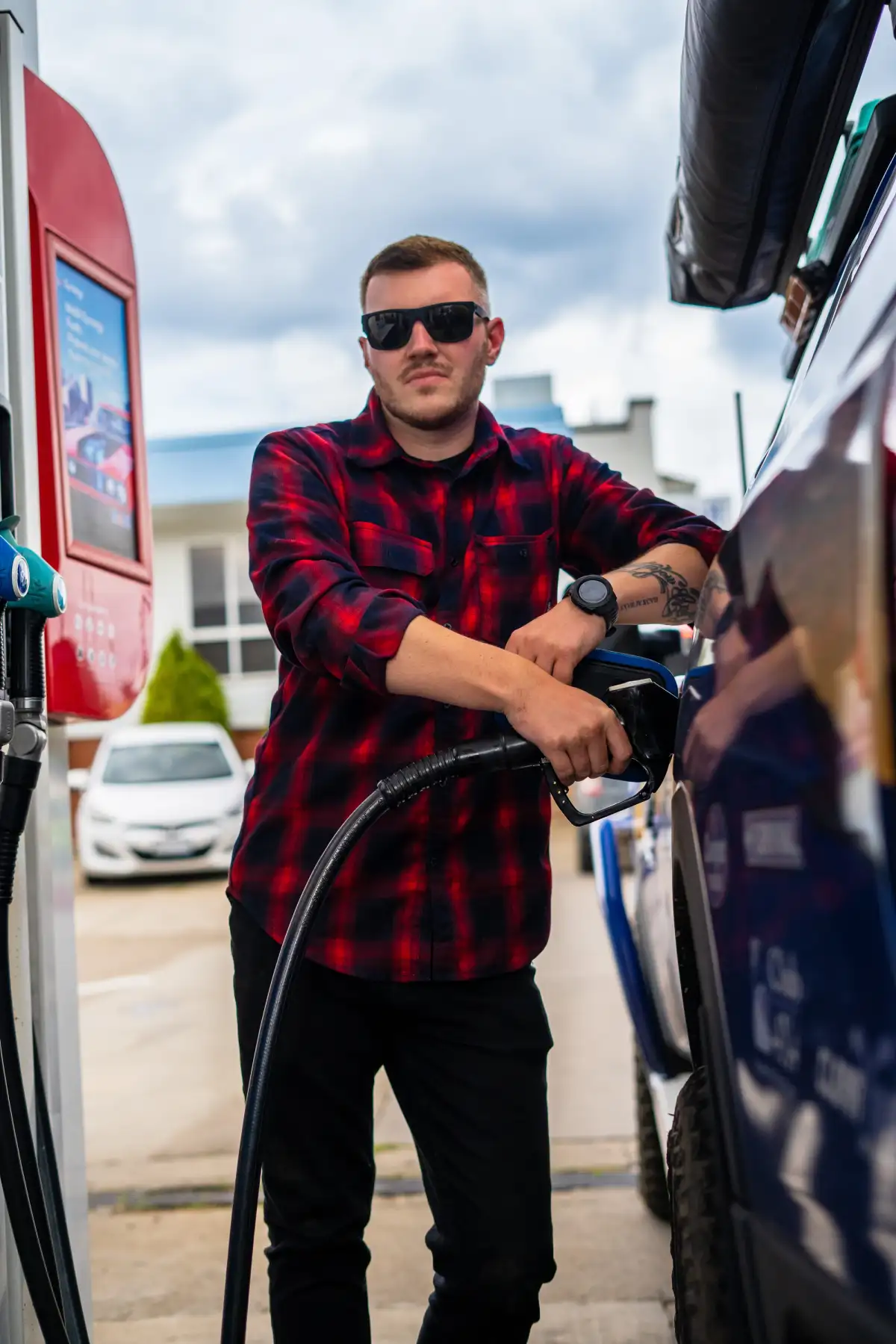
Josh Leonard at a fuel bowser, fuelling his 4X4
One of the most common questions people ask about a 4X4 is, "How far will it go on a tank?"
Well, that depends. Are we talking about cruising down the highway with a tailwind, or dragging a massive caravan through soft sand while the engine works harder than a politician explaining an expense claim?
Because those are two very different calculations.
Let's say your 4X4 normally consumes 15L/100km. You've got 600 kilometres to the next reliable fuel stop, so you calculate that you'll need 90 litres.
Perfect.
Except the corrugations, headwind, extra weight and soft sections push your consumption to 23L/100km. Now you need 138 litres, which is considerably less perfect.
That's an additional 48 litres you hadn't accounted for, and we haven't even considered a detour or arriving to discover the fuel bowser isn't working.
In my mind, fuel planning should always start with your realistic worst-case consumption, rather than the most flattering figure you've ever managed to achieve on a downhill stretch of highway.
And whatever reserve you decide to carry, treat it as a reserve. If you need every last litre just to reach your destination, you haven't actually got one.
The One You Can’t Negotiate With: Water
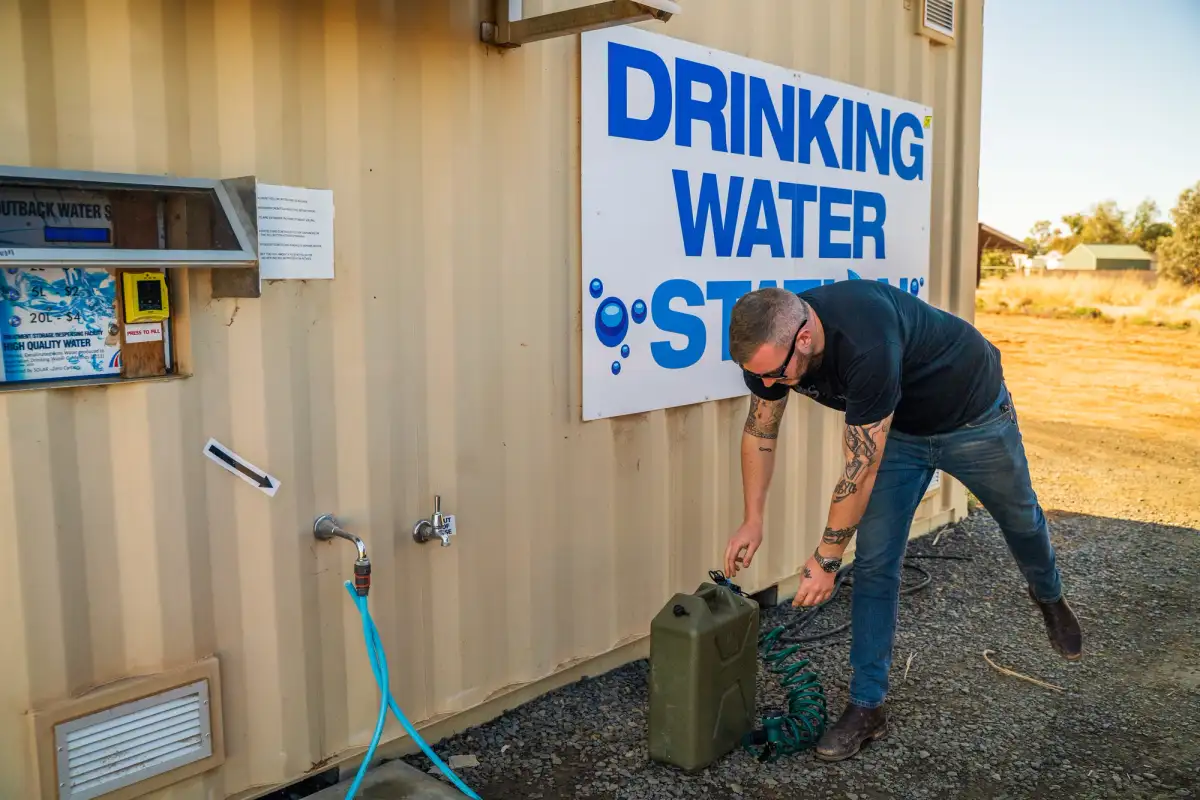
Josh Leonard filling up a jerry can at a water station
You can survive an unexpectedly long weekend without your favourite coffee.
You can't negotiate with dehydration quite so easily. NSW National Parks recommends carrying at least four litres of water per person per day for outback travel, plus an additional 20 litres for emergencies.
For two people on a five-day trip, that's a minimum of 60 litres before allowing for particularly hot conditions, strenuous activity or other additional needs.
But it’s not that simple: having 100 litres of water aboard doesn't mean much if it's all stored in one tank and that tank develops a leak. Your safest bet is distributing drinking water across separate containers, including a reserve that doesn't get touched during ordinary travel.
That way, one failed fitting or damaged tank doesn't suddenly leave you contemplating whether the muddy puddle beside your campsite is going to be a thirst quencher.
When Two Hours Becomes Two Days
I hear you, that does all sound a bit excessive, doesn’t it? But, consider what happened in outback Queensland in February 2024.
Three men travelling from the Mount Isa region towards Lake Nash became bogged on what should have been a two-hour drive. They ended up stranded for three days without food or water.
One eventually walked 24 kilometres searching for phone reception, and the trio were ultimately rescued by helicopter.
Think about that for a moment. A journey short enough that plenty of people wouldn't bother packing lunch turned into a three-day survival situation.
It's a confronting reminder that the length of your intended journey has little to do with how long you might need to look after yourself.
And while they survived, it's worth remembering that heading off on foot in remote country can make an already dangerous situation considerably worse. Unless your immediate location is unsafe, staying with your vehicle and using reliable emergency communications is generally the safer option.
Don’t Put All Your Eggs in One Fridge
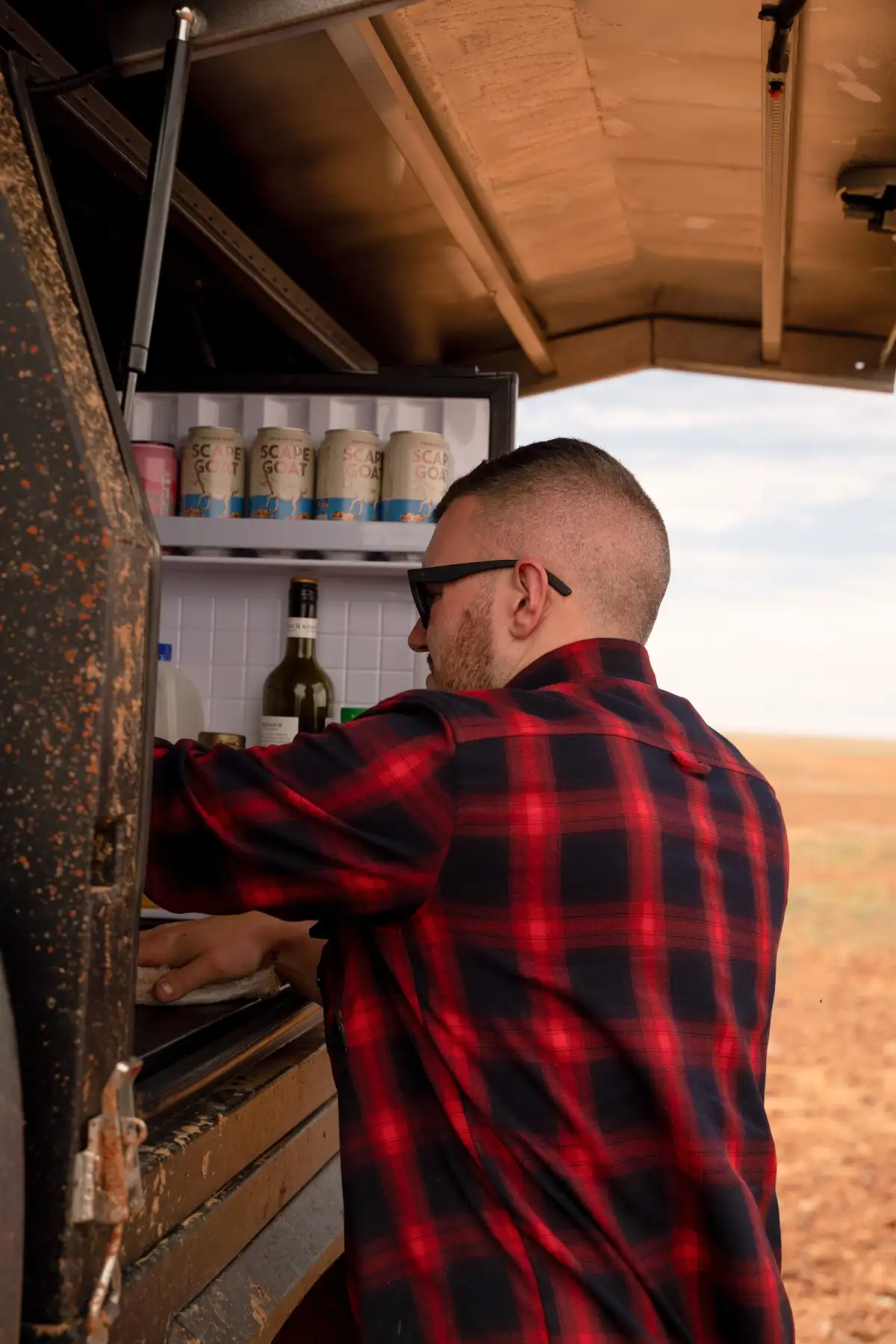
Josh Leonard reaching into a fridge in his 4X4's canopy
There’s no denying that I'm a fairly enthusiastic advocate for modern off-grid electrical systems. Solar panels, lithium batteries, inverters and the ability to make a decent coffee in the middle of nowhere are wonderful things.
But I've also seen how dependent we've become on equipment that requires electricity. If your fridge stops working, how much of your food is suddenly on borrowed time?
If your solar input disappears for three days, can you still operate your essential equipment?
And if your entire navigation system relies on one phone, what happens when that phone decides it's had enough?
I'm not suggesting everyone should start carrying seventeen redundant electrical systems and enough canned food to survive the collapse of civilisation, but a few shelf-stable meals, some independently stored drinking water, offline maps and an alternative means of communication can make an enormous difference.
The idea is to avoid having one relatively minor equipment failure create five considerably larger problems.
The Stuff you Can’t Buy From a Roadhouse
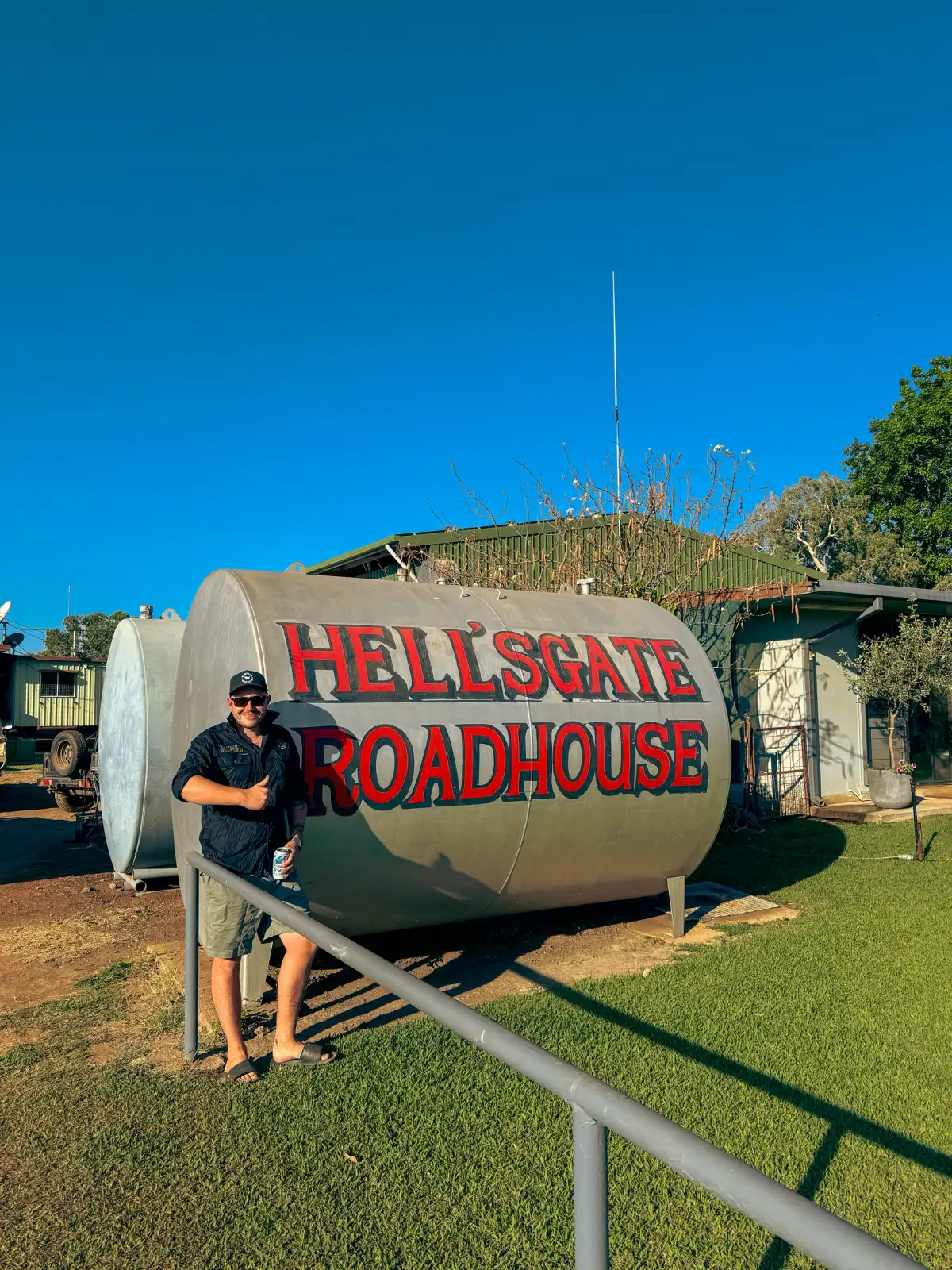
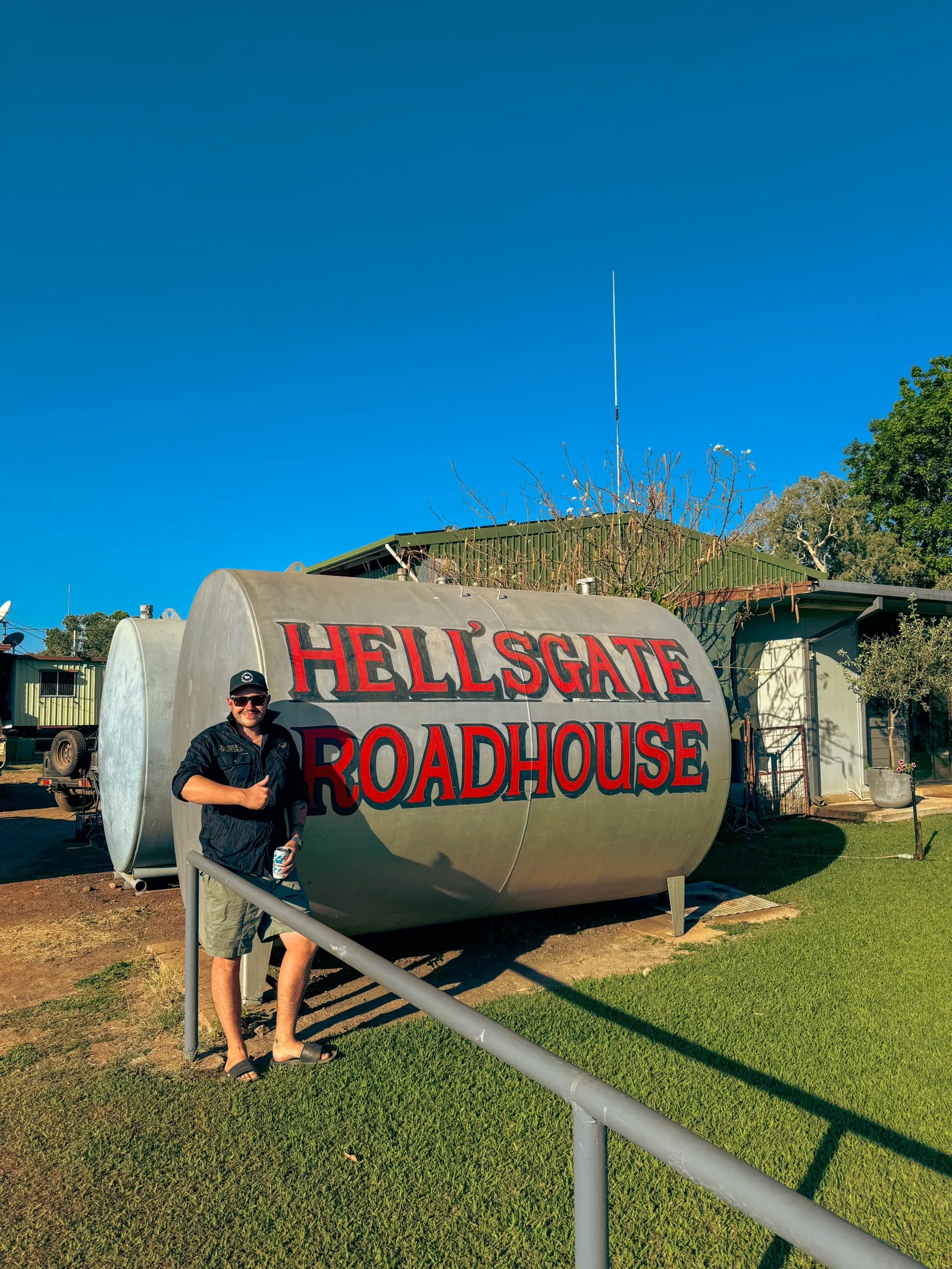
Josh Leonard standing in front of a Hell's Gate Roadhouse sign
There's another category of supplies that deserves a little more attention: the things you can't easily replace when you run out.
Essential medication is an obvious example. If you rely on prescription medication, don't pack precisely enough tablets to last until the day you're scheduled to return home. Allow for realistic delays, discuss appropriate reserves with your pharmacist or doctor, and consider storage requirements, particularly in extreme heat.
The same thinking applies to specialised medical equipment, batteries, critical vehicle spares and anything else that's difficult to source remotely.
And while we're discussing preparation, tell somebody where you're going, the route you intend to take and when they should expect to hear from you.
A satellite communicator is useful for routine contact beyond mobile coverage, while a registered personal locator beacon provides a dedicated means of raising the alarm in a life-threatening emergency.
Neither replaces sensible preparation, but both can be worth considerably more than another shiny accessory bolted to your 4X4. It's also a good idea to ensure you aren’t the only one that knows where critical equipment is or that you’re the only one that knows how to use it.
The Luxury of Being Able to Wait
Most people think of contingency supplies as things they'll need if something goes really wrong. But often, they're what allows you to avoid making a bad situation worse.
If you've got several days of food, adequate water, sufficient medication and reliable communications, a washed-out road might simply mean an unexpected couple of nights camping.
Without those reserves, the same road closure can create enormous pressure to push on, attempt a dangerous crossing or make decisions you otherwise wouldn't consider.
And that's what a margin for error buys you. Options.
I've spent years working out how to fit more equipment into a 4X4, and there's a certain irony in discovering that one of the most valuable things you can carry is a little bit of nothing.
Fuel you don't intend to burn. Water you hope you won't need. Food you might bring home unopened. And a few days on the calendar that haven't already been promised to somebody else.
When everything goes according to plan, you'll barely notice they're there. But when it doesn't, you'll be bloody glad you left yourself some room.
The adventure starts where the bitumen ends
See how Club 4X4 can help