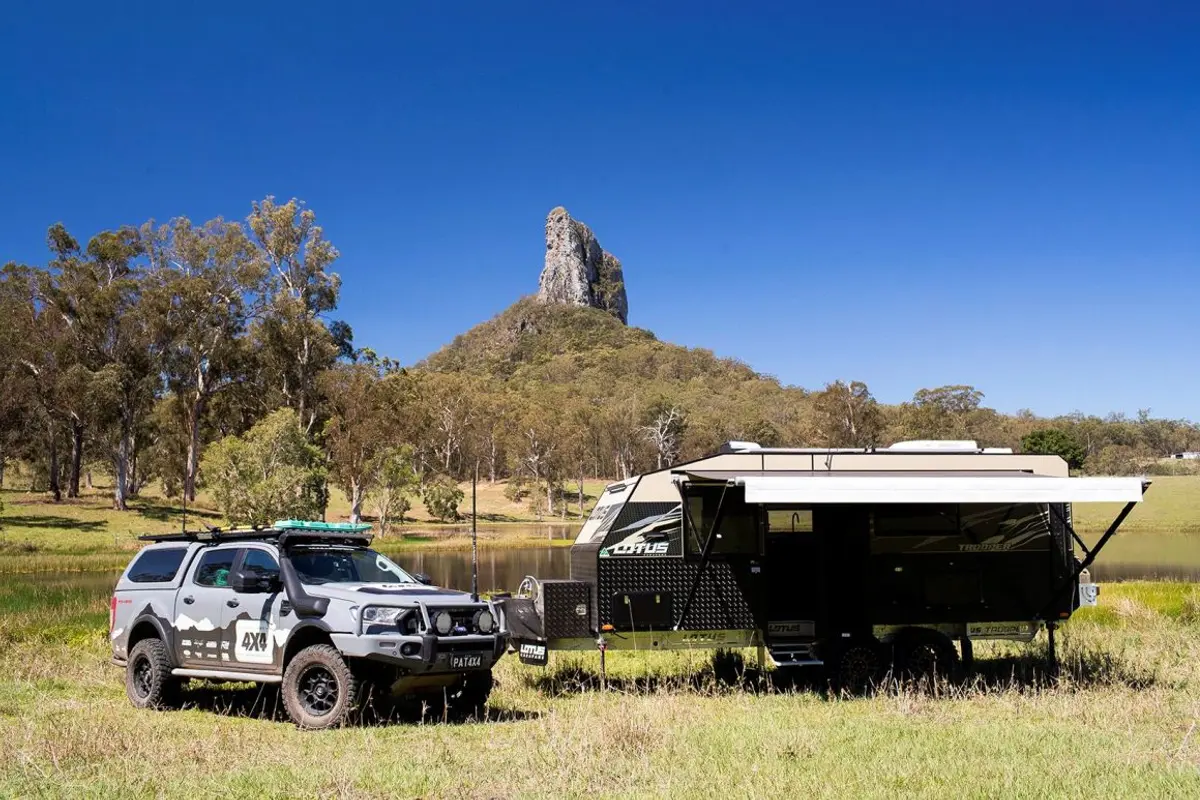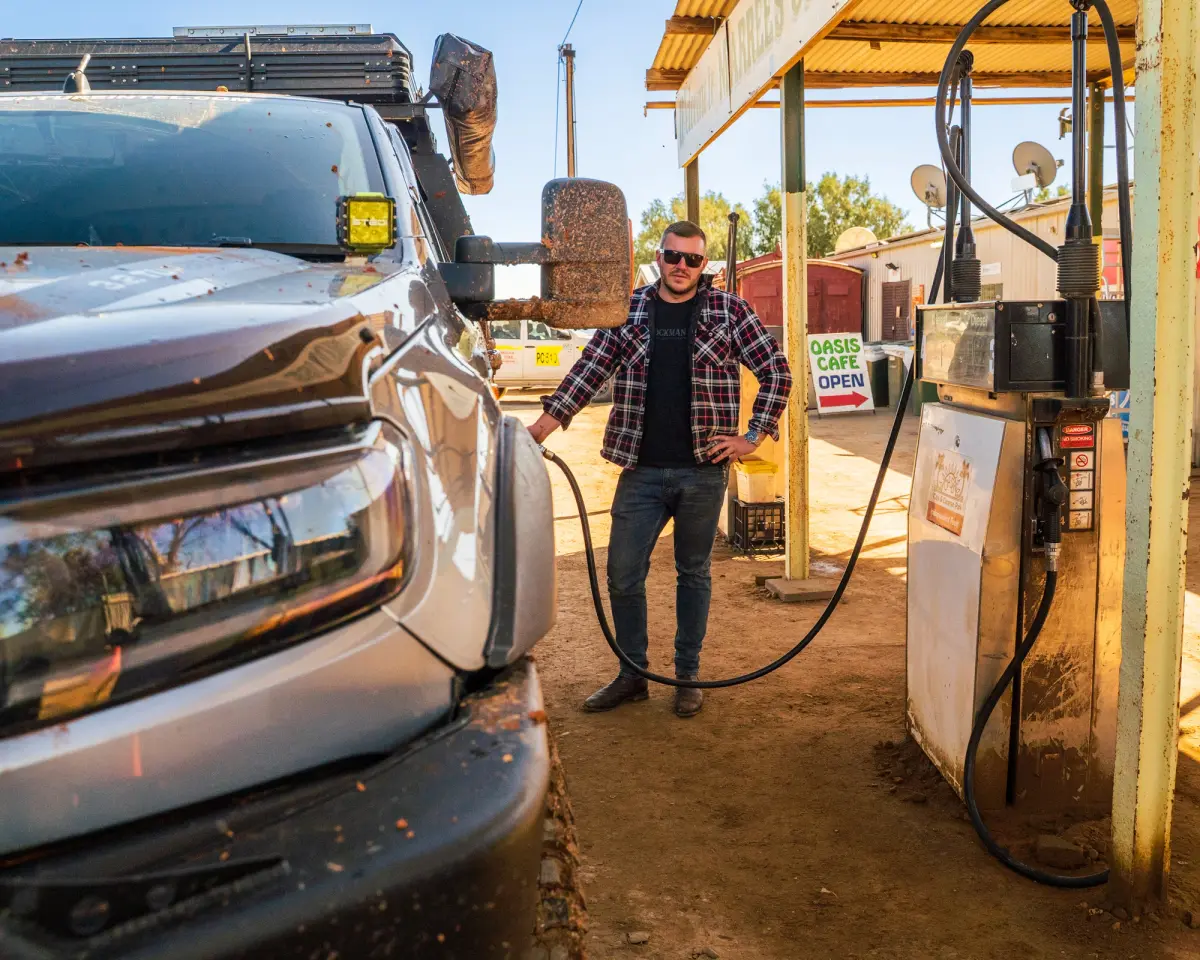
Point the bonnet north from Sydney, head for the Kimberley, turn around and come home and you’ve just racked up over 11,000 kilometres. That’s not a camping trip. That’s an odyssey of epic proportions.
When we drive those kinds of distances, comfort stops being a luxury and starts becoming a strategy. A cold fridge, decent lighting, charged camera gear, maybe even a hot shower at the end of the day — it all adds up to staying out longer and travelling better.
Every bit of that comfort runs on one thing: reliable 12-volt power.
If you’re towing a caravan or camper well beyond power lines and caravan parks, you need a system that works quietly and consistently in the background. To spec out a system that’s going to work, you need to find out what you need, not what you want, because the two are often very different things.
Start With Storage: How Much Is Enough?
The foundation of any off-grid system is your battery bank.
The lithium versus AGM debate will probably outlive us all, but here’s the practical view. AGM batteries are affordable and proven, but they’re heavy and don’t love being deeply discharged. Lithium costs more upfront, but it’s lighter, more efficient and gives you far more usable capacity for the same footprint.
For serious touring, weight matters. Space matters. Usable capacity matters even more.
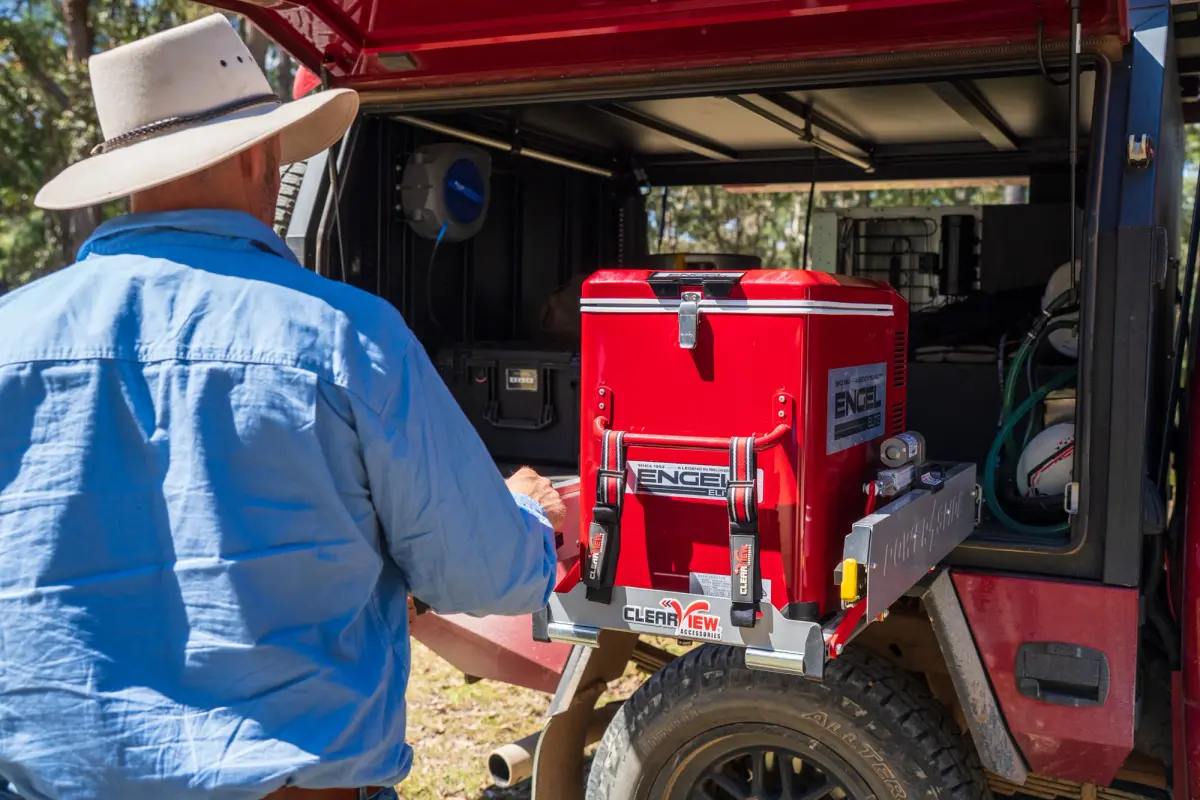
Pat Callinan pulling a fridge slide from his 4X4 Ford F-150
So the real question is: how much power will you use in a 24-hour period?
Fridge cycling in hot weather. Interior and camp lighting. Water pumps. Device charging. Maybe an inverter to run camera chargers or a coffee machine. Add it up honestly and you'll find most travellers underestimate their daily draw.
If your setup consumes 60 amp hours per day and you’ve only got 100 usable amp hours, you’re living dangerously. One overcast day or a day without a transport stage and you’re rationing power by the second night.
Charging: Multiple Paths Back to Full
Storing power is only half the equation. You also need dependable ways to put it back in.
A well-thought-out system will generally use three charging sources:
- Alternator charging via a quality DC-DC charger
- Solar
- 240V input when available
The alternator does the heavy lifting when you’re driving between camps. A DC-DC charger ensures your auxiliary batteries are charged correctly and efficiently, especially with modern smart alternators.
Solar takes over when you’re stationary. Roof-mounted panels are convenient, but portable panels with adjustable angles can dramatically improve output — particularly in winter or when camped in partial shade.
And 240V? That’s your reset button. If you pull into a powered site before heading remote, give the system a proper top-up.
The key is redundancy. If one source is limited, say a few cloudy days killing solar input, another can step up.
Monitoring: Knowledge Beats Guesswork
Here’s where many systems fall short.
A basic voltmeter might look reassuring, but voltage alone tells you very little about what’s actually happening inside your battery bank.
A proper battery monitor that displays amps in and out, state of charge and estimated runtime is worth its weight in gold. It allows you to make informed decisions rather than hopeful ones.
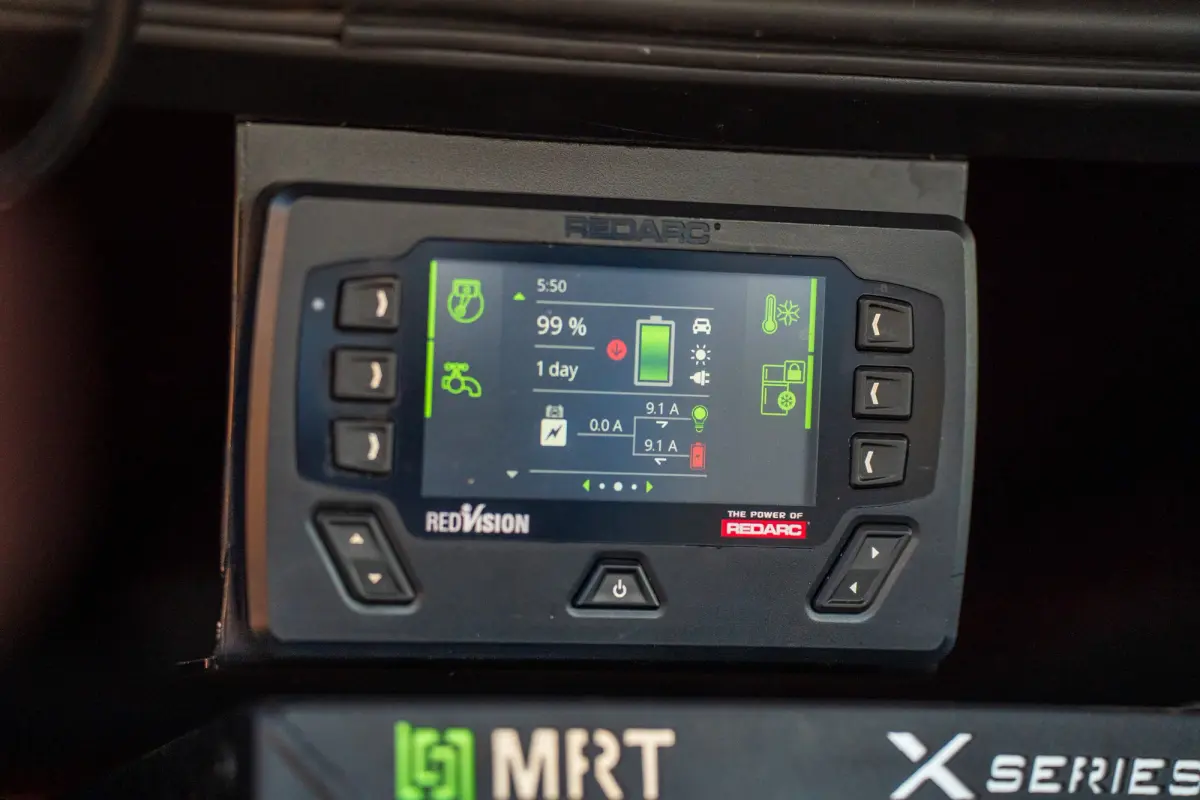
A battery monitoring system
Planning for worst-case scenarios is essential. Two or three dull days can quickly expose an undersized setup. If you know your daily consumption and your remaining capacity, you can adjust usage before things go pear-shaped.
Guessing is how people end up with warm beer and a very quiet fridge.
One System or Two? Vehicle and Trailer Strategy
When you’re towing, you’ve got another decision to make: do you build an independent power system in the caravan or camper, or integrate it with the vehicle?
An independent trailer system means you can unhitch and still enjoy full functionality for days. It’s neat and self-contained, but it adds cost and complexity.
A combined system can work just as well, provided it’s designed properly.
Quality cabling, correct fusing, robust connections and isolation switches are non-negotiable. You need to be able to separate vehicle and trailer systems when parked for extended periods to prevent unwanted drain in either direction.
Build Around Reality, Not Instagram
It’s easy to get carried away with big numbers and shiny gear. But off-grid power isn’t a competition, it’s a tool.
Before you spend a dollar, sit down and work out your actual needs. List every device. Estimate usage. Be honest about how you travel. Are you moving daily, or staying put for four or five days at a time?
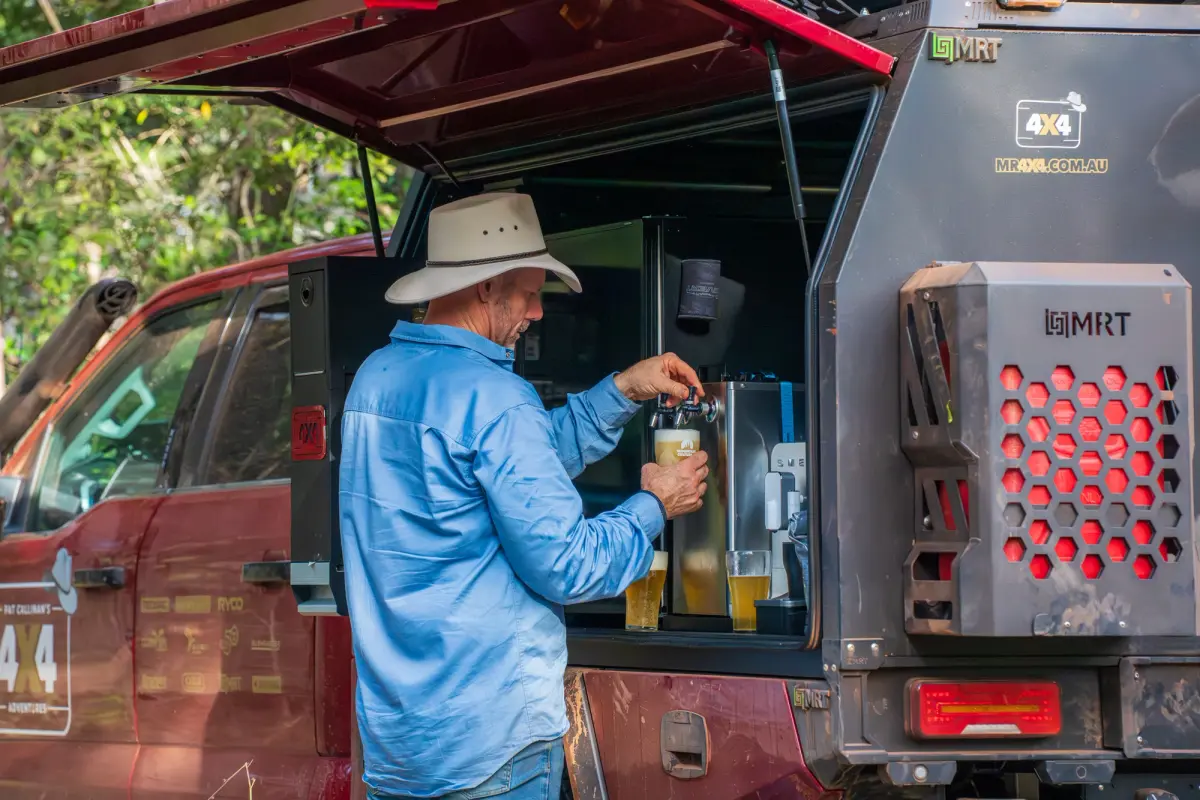
Pat Callinan and his 4X4 Ford F-150's beer tap
A well-balanced system might include a substantial lithium bank, alternator input, solar support and 240V capability, all tied together with proper monitoring.
It doesn’t have to be extravagant. It just has to be matched to your touring style.
The goal is simple: survive the cloudy days without stress.
There Is No Plan B
Out in remote Australia, there are no spare power points. No late-night hardware runs. No friendly neighbour to borrow a generator from.
You’ve got what you brought.
Design your system for the longest stay, the hottest weather and the dullest skies you’re likely to encounter. If it performs comfortably under those conditions, everything else feels easy.
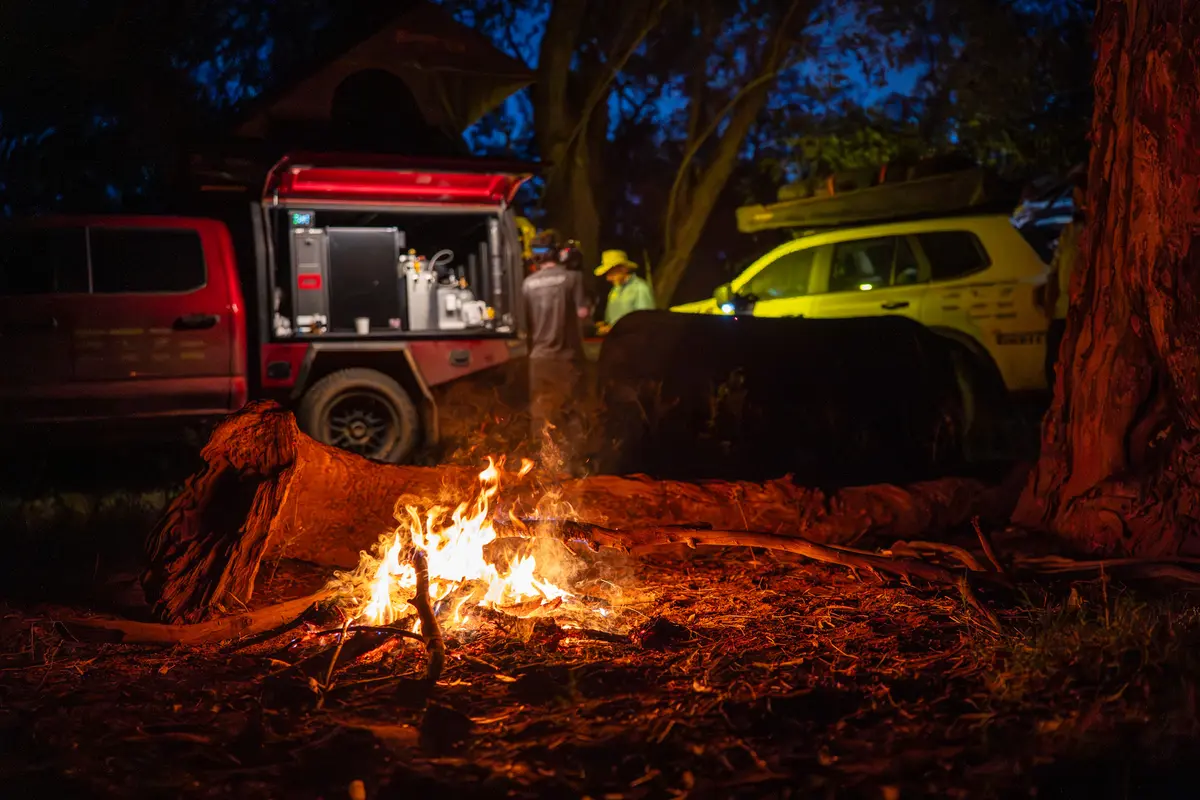
And when you’re camped under a big sky, fridge humming, lights glowing softly and everything working exactly as it should, you’ll know you got it right.
Keep the shiny side up.
Pat
Looking at a new caravan?
Cover anywhere you can legally take it in Australia