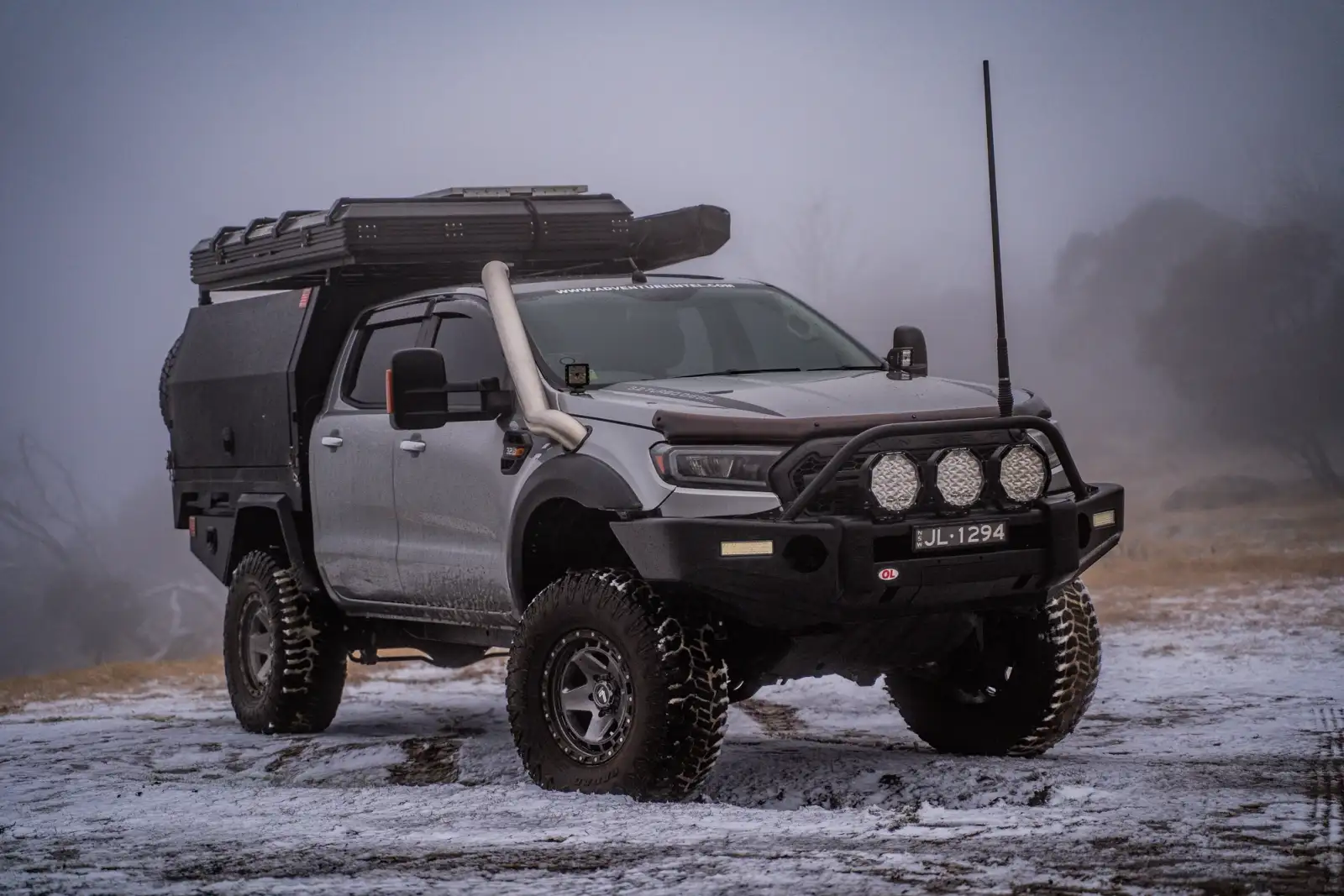
If you were to ask a bunch of red blooded wheelers surrounding a campfire whether autos or manuals are better, you would start a debate that’d outlast the firewood. It’s one of those age-old questions where both sides reckon they’ve got the facts and to be fair, they’re usually half right. I’ve driven both, currently own both, and broken both, and let me tell you, there’s no one-size-fits-all answer.
Some folks love the feel and control of a manual; rowing through gears, feeling every rev, and lowkey pretending they’re in the Dakar. Fair enough, it’s fun. Plenty of others would rather get up a steep hill without turning it into a three-act clutch drama. Truth is, both camps have a point.
When it comes to real-world 4WDing—think touring, technical terrain, and drives with the camper trailer swinging off the back—it’s not just about what’s cooler. It’s about what actually works. So, let’s break it down properly.
The Case for Automatics
Modern automatics aren’t the sluggish and clunky four speeds they used to be. Today’s automatic gearboxes are smart, fast, and built to handle some pretty serious punishment, with up to ten ratios, lock-up torque converters, and electronic brains that’re capable of all sorts of things.
In off-road and touring conditions, they’re incredibly capable. You’d be hard-pressed to genuinely deny they don’t hold their own on a hill. They crawl better than most drivers can manage in a manual, maintain traction on sketchy climbs, and take a lot of the pressure off in soft sand or technical terrain. Power delivery is smooth, consistent, and easy to control—especially important when you're inching through a tight line or towing uphill.
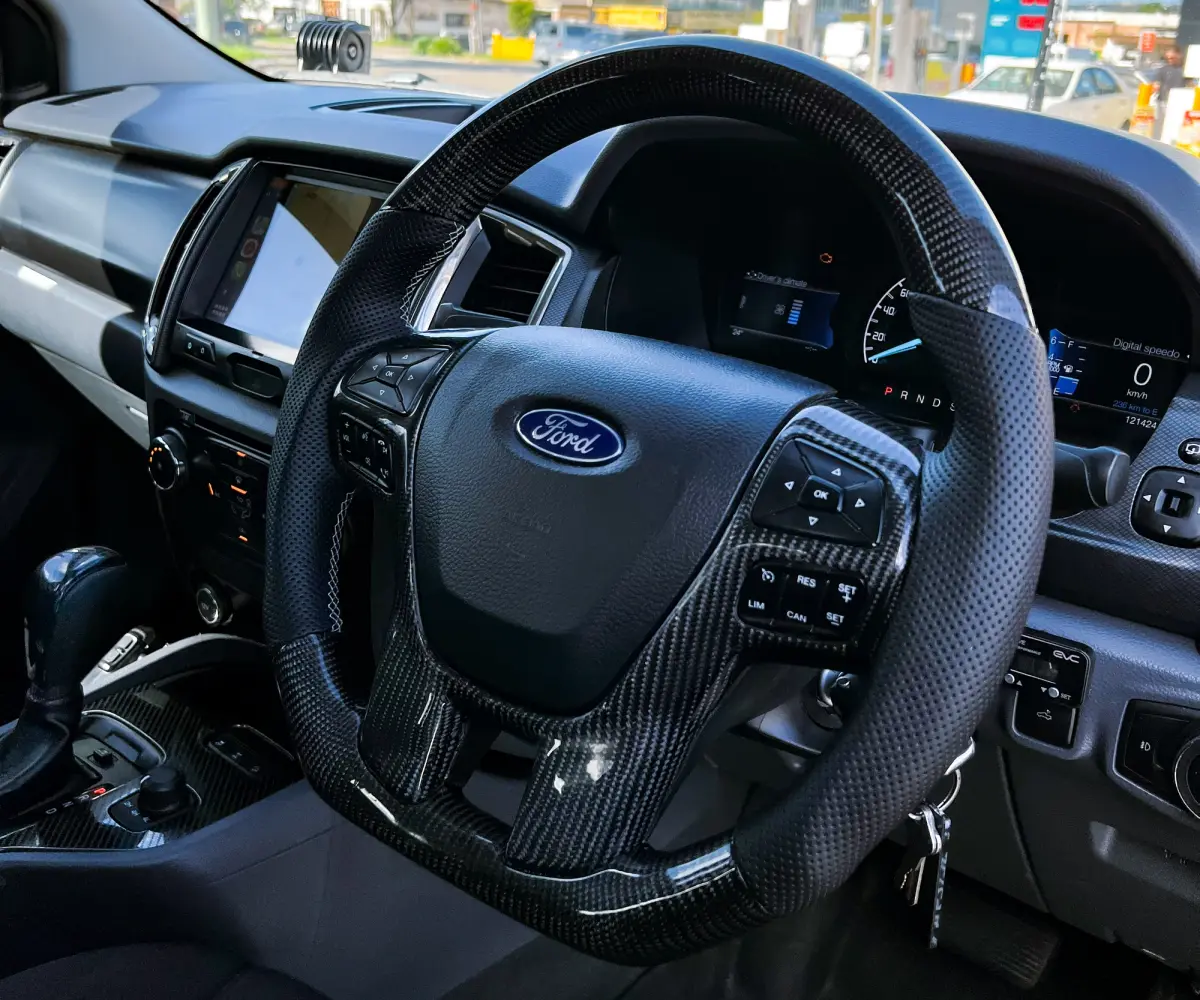
interior of a ford vehicle
There’s also less to think about when you’ve got decision fatigue or you’re tackling complex sections. No clutch to ride, no stalling mid-obstacle, and no tricky hill starts after stopping on an incline. Just pick your gear range, keep your right foot steady, and let the torque converter do its thing.
That said, autos aren’t invincible. They generate more heat than a manual transmission under load, especially when towing or slow-crawling for long periods. Without a good transmission cooler, it’s easy to overheat the box and when that happens, the repair bill’s going to hurt more than it would in a manual. If you’re touring with an auto, monitoring trans temps should be a priority.
The Case for Manuals
Manuals definitely still have their place, and for some drivers, nothing beats the control and engagement of shifting gears yourself. A well-driven manual is incredibly capable off-road, especially in low-range work where throttle finesse and engine braking matter.
When you’re coming down a steep descent, there’s no substitute for the mechanical engine braking you get from locking into a low gear. Manuals also tend to be more robust in the long run. Fewer electronics, fewer solenoids and no valve bodies or hydraulic circuits to fail in the middle of nowhere. If something does go wrong, a bush-mechanic fix is more likely, and they’re usually cheaper to rebuild.
Manuals, however, aren't perfect. In soft sand, manuals are far less forgiving, being easier to stall and get stuck. Hill starts with a heavy trailer can be a juggling act, and on technical climbs, feathering the clutch over rocks gets old pretty quick. Let’s not forget fatigue. After 600km on corrugations and working a clutch pedal, you’re going to step out more fatigued than the blokes in the convoy that’re driving autos.
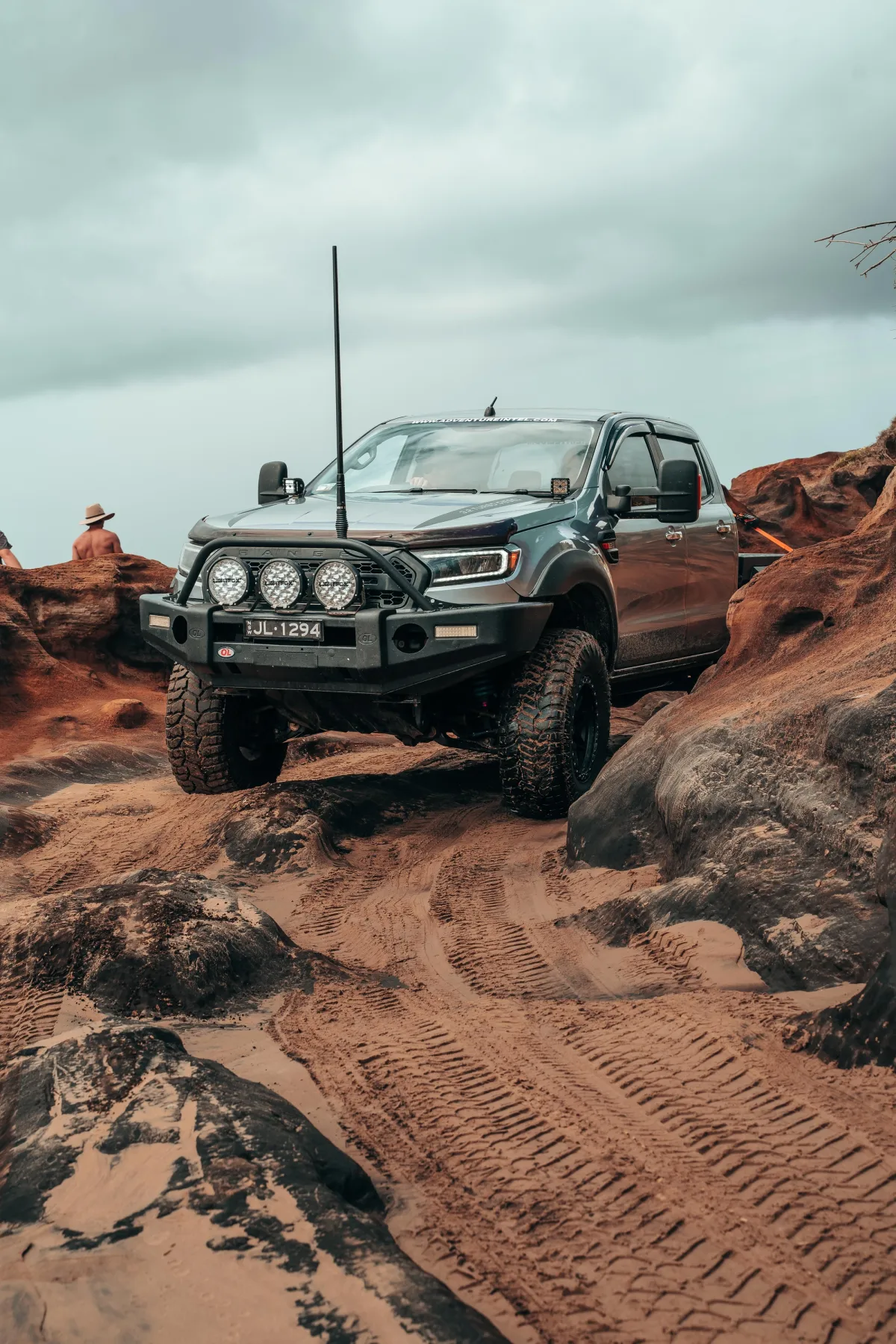
4wd driving through sand and rocks
So, What’s Better for a 4X4?
This’ll ruffle a few feathers, but here’s the honest answer: for the majority of people, most of the time, an automatic is the better all-rounder. It’s easier to drive, less stressful in technical terrain, and far better suited to 4X4’ing. When you're crawling up a steep rutted hill, trying to manage throttle, brake, and steering on the side of a cliff, not having to juggle a clutch pedal is a massive advantage.
Autos shine in sand, mud, rocks, and day-to-day driving. They let you focus on the track, not your left foot. They're better complimented by the traction control and torque management systems found in newer 4WDs.
But does that mean manuals are dead? Not even close.
If you love driving and want to feel mechanically connected to your 4X4 and you’ve got the skill to back it up, a manual still has plenty to offer. I would definitely suggest a manual to anyone looking to learn how to really wheel. In low-tech touring setups, where simplicity and bush-repairability matter, a manual makes sense. They’re lighter, sometimes cheaper, and feel more engaging behind the wheel.
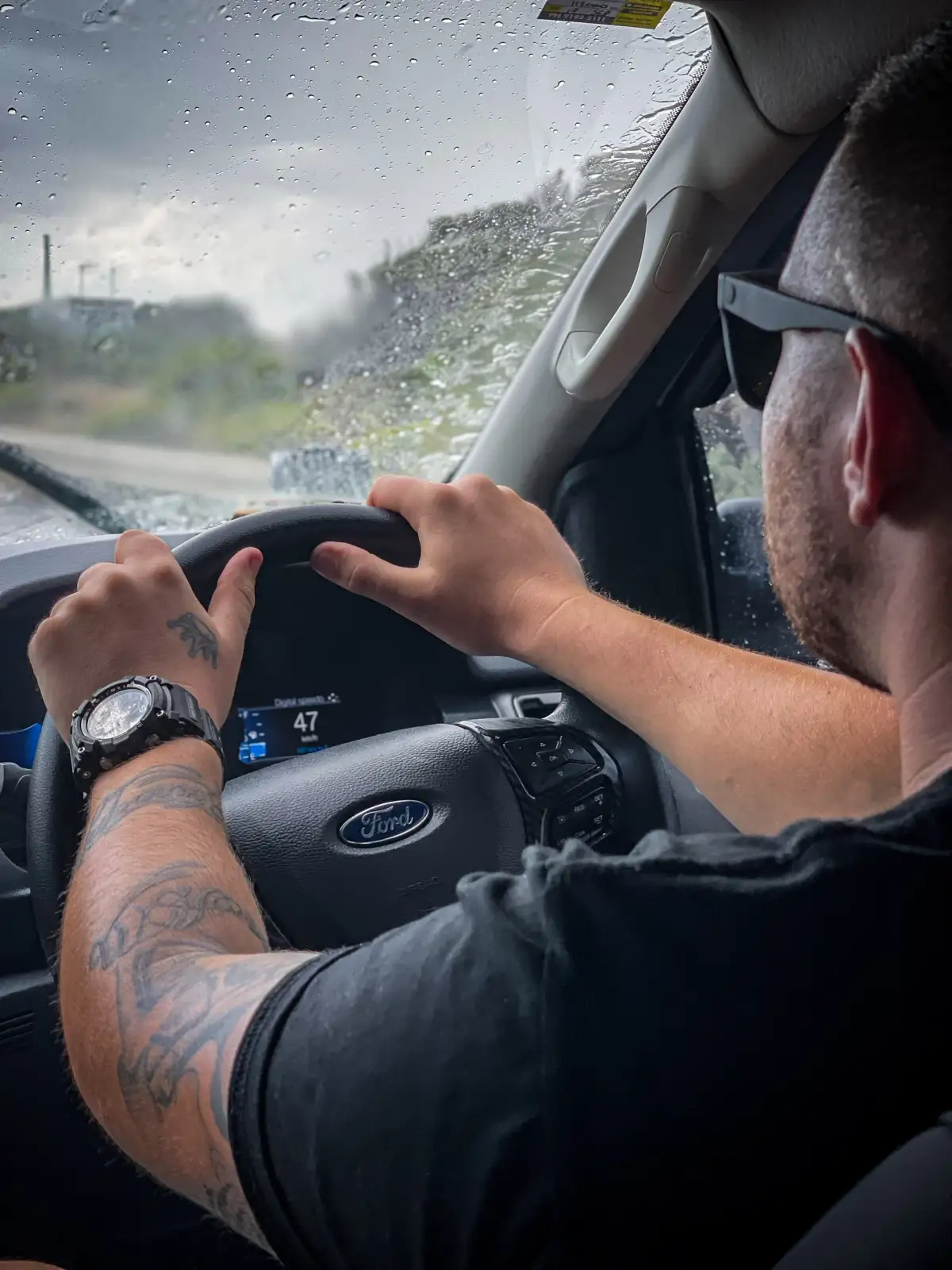
man driving vehicle in the rain
Here’s the real advice:
- If you’re new to 4X4ing, towing heavy loads, or just want the easiest, most forgiving option, go auto.
- If you’re after that old-school driving experience and enjoy being hands-on, a manual won’t disappoint, as long as you know your limits.
- If you're tackling tough tracks solo, deep sand, or unpredictable terrain an auto gives you the edge in control and consistency.
At the end of the day, both will get you to camp, but one might get you there with less sweat and fewer burnt out clutches. I love the feel of a manual, but if I had to pick just one box to tour in, it’d be a solid auto.
Manual? Automatic? Doesn't matter
Comprehensive insurance for 4X4s