Why a Bribie Island 4X4 Trip is the Easiest Weekend Escape
When the sun’s out, there aren’t many 4WDers who won’t look for an excuse to take their 4X4 out on the weekend. Ideally, that means a beach. But for many residents of Brisbane and its surrounds, getting up to K’gari or across to Moreton Island can feel like a bit of an effort. What many don’t realise is that you don’t even need to catch a ferry to enjoy an island escape.
Yarun/Bribie Island is one of three major sand islands in Queensland’s Moreton Bay and arguably the most accessible for 4WDers. Unlike neighbouring Stradbroke and Moreton, a bridge connects Bribie to the mainland, making a Bribie Island 4X4 weekend particularly easy to pull off.
With a fourbie, you can leave the bitumen behind and explore another side of the island. But what should you know before leaving the comfort of home? We’ll cover Bribie Island’s 4WD permits, tracks, camping spots, things to do and everything else that makes the island such an easy weekend escape.
The adventure starts where the bitumen ends
See how Club 4X4 can help
Getting to Bribie Island and Orienting Yourself
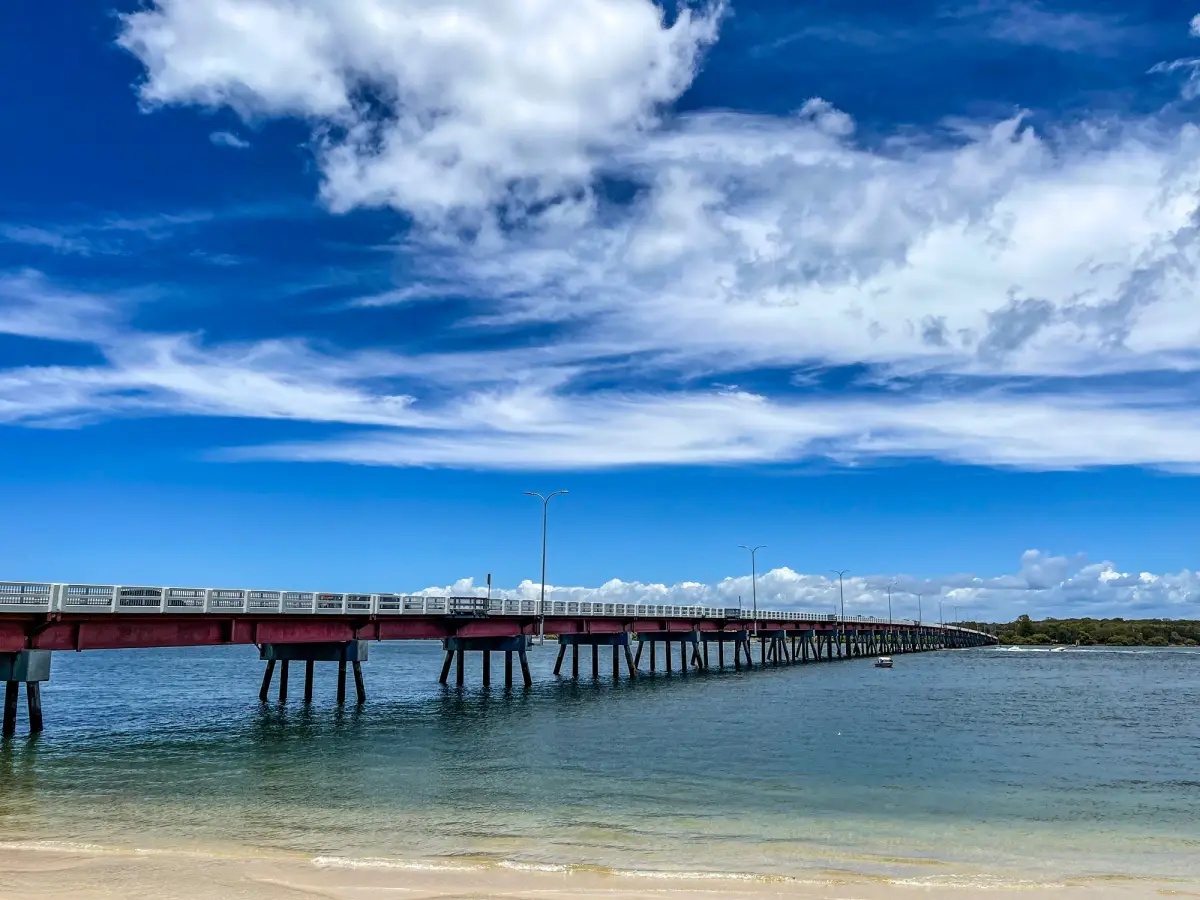
Bribie Island bridge across the Pumicestone Passage
Bribie’s in a pretty good spot, within easy reach of both Brisbane and the Sunshine Coast, keeping it accessible to much of south-east Queensland. To reach the road bridge, turn off the Bruce Highway (M1) at Caboolture and pass through Ningi, where you can make any final preparations before crossing via the Bribie Island Bridge.
Once on the island, you’ll notice a clear split. South Bribie is developed and accessible, with sealed roads, shops, cafes and everything else you’d expect from suburbia. Bongaree, Bellara and Banksia Beach occupy the calmer western side, while Woorim sits on the eastern surf side.
North Bribie is where things get wilder, with much of the Bribie Island Recreation Area requiring a high-clearance 4WD to explore. Downloading a Bribie Island 4WD map from Queensland Parks and Forests before setting off will help you understand the access tracks and where you can and can’t drive.
Ocean Beach is the main gateway to the sand, while the inland Northern Access Track begins at White Patch. Before heading into the recreation area, you’ll also need the appropriate vehicle access permit.
Bribie Island Beach Permits and Access Rules
If you’re planning on 4WDing on Bribie, a QPWS vehicle access permit is non-negotiable. You’ll need to organise your Bribie Island beach permit before entering the recreation area, which you can book online through the Queensland National Parks Booking Service. You can also book by calling 13 QGOV (13 74 68) or through selected over-the-counter booking offices.
As of October 2026:
- One week or less: $59.30
- More than one week, up to one year: $185.20
If you’re a local, or at least in Brissy or the Sunny Coast, that annual pass means you can hit the sand whenever that itch needs scratching.
When tackling the coastal route, check the tides and current park alerts before leaving home. Stick to authorised tracks, obey signed speed limits and keep off the dunes and vegetation.
Bribie Island 4WD conditions can also change, so tyre pressures, momentum and sand-driving etiquette matter. If you’re new to Bribie Island beach driving, our guide to sand driving techniques is worth a read before you drop your tyres. And once you’re home, our post-beach 4WD care guide covers how to get your vehicle ready to go again the next day.
Bribie Island 4WD Tracks and Beach Driving
There are plenty of Bribie Island 4WD tracks worth pointing your bonnet towards. The easiest way to get your bearings is to think of the island as having two main 4WD areas: Ocean Beach along the eastern side and the inland tracks running north from White Patch towards Poverty Creek and Gallagher Point.
Ocean Beach: the Main Run from Woorim to Gallagher Point
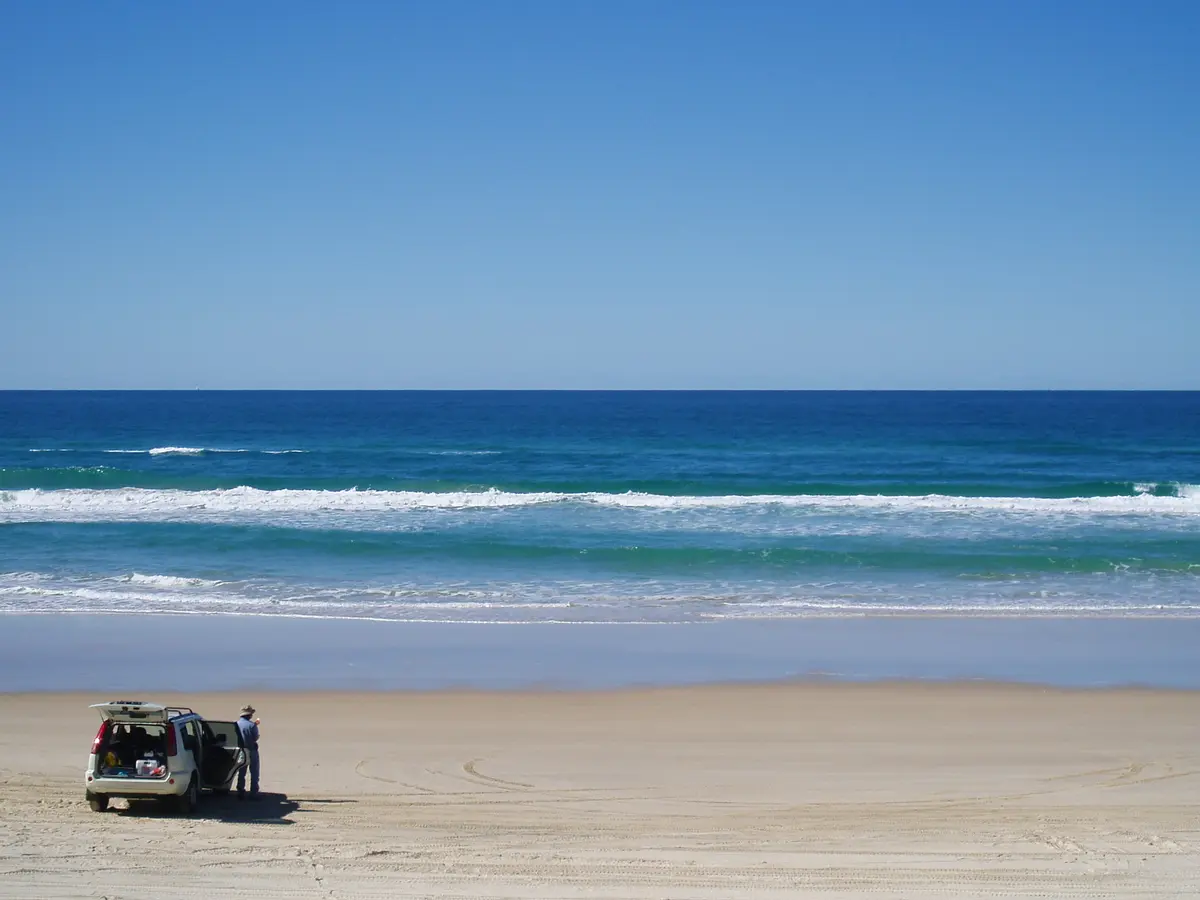
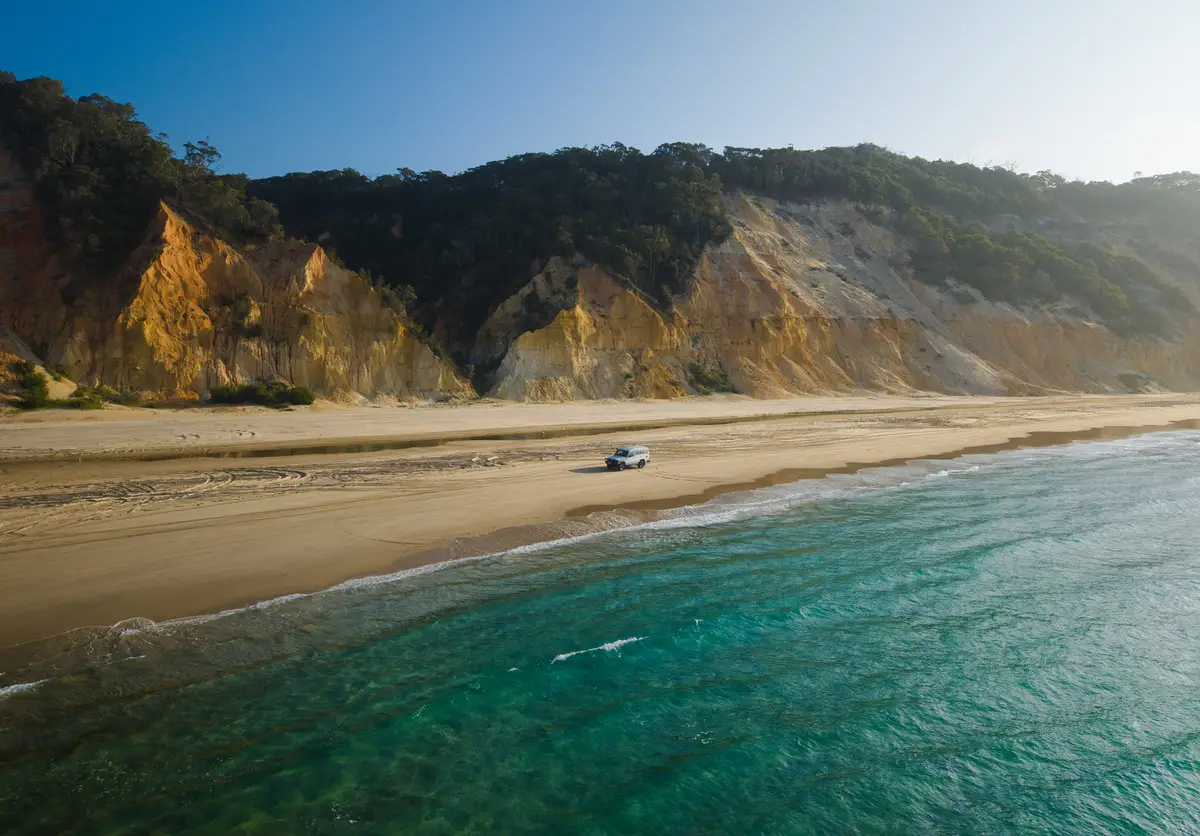
Ocean Beach Drive’s 23km run is one of the island’s highlights. Departing from the Eighth Avenue car park off North Street in Woorim, you'll be met with soft sand that can be deep in areas. Drop your 4WD’s tyre pressures before you roll on. Once through the access track and onto the beach, the Pacific Ocean sets the tone, running alongside you the whole way. You’ll find some consistency on the firm sand here, but depending on the tide’s mood on the day, you may have to adjust your driving. On the way, a number of freshwater creeks and lagoons are the perfect swimming holes and just about anywhere is worth dropping a line for a feed.
Poverty Creek Inland Track and Connecting Routes
The Poverty Creek Access Track takes you across a very different side of the island. The 5km one-way sandy track runs from White Patch to Poverty Creek, swapping the open beach for timber plantation and national park, where eastern grey kangaroos are regularly spotted.
Along the way, you can detour towards Gallagher Point or continue to Poverty Creek camping area. It makes for a great contrast to Ocean Beach and shows just how varied Bribie can be over a relatively small area.
Bribie Island Camping: Zones, Sites and What to Know
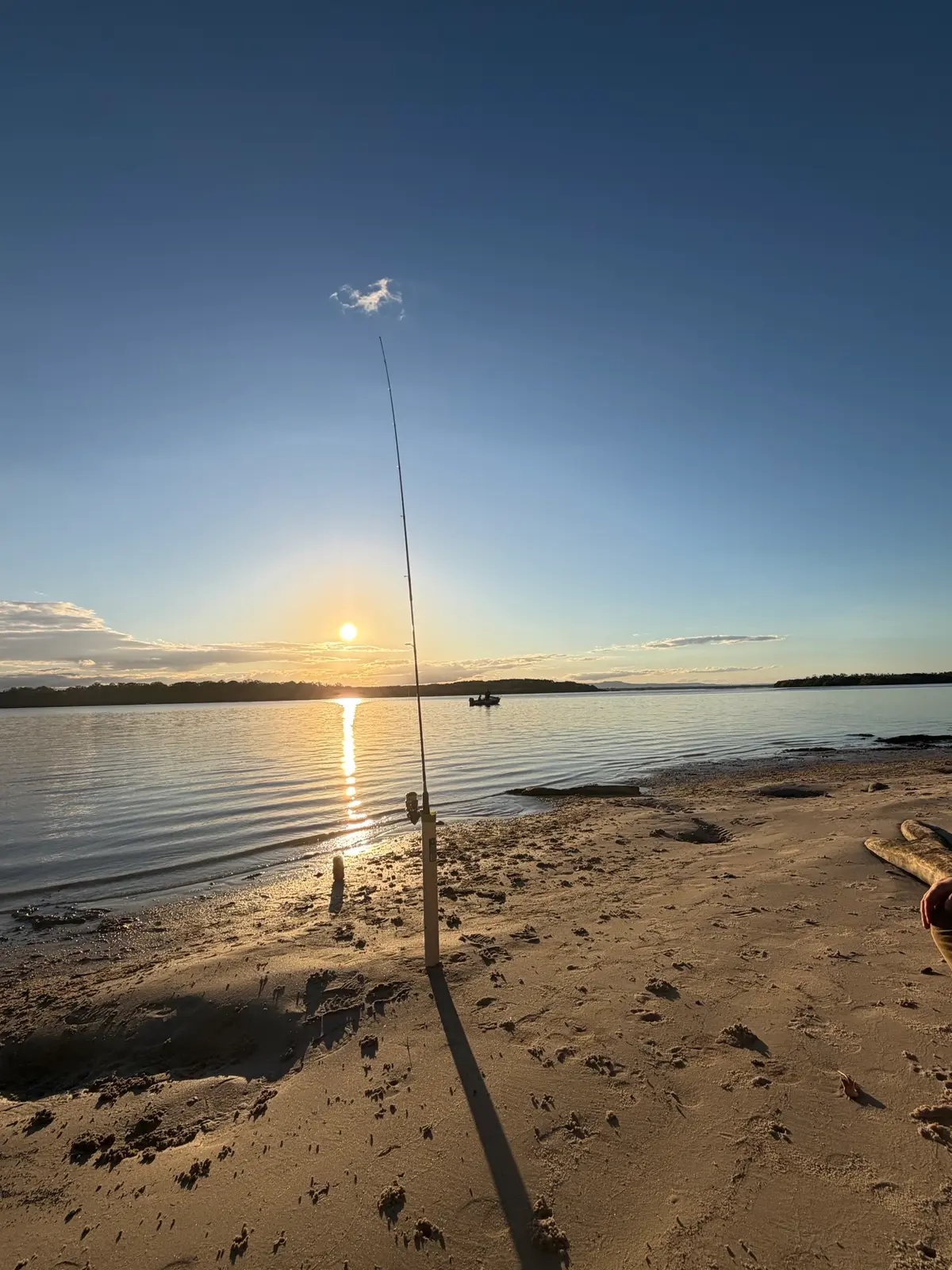
Fishing off the western shore of Bribie Island
You’ve found your way over the bridge and onto the island. You’ve got your 4WD permit and your tyre pressures are sitting pretty. That might do you for a day trip, but what about a weekend? Bribie Island camping is the way to see and do it all without rushing, with Ocean Beach and Poverty Creek being two of the main 4WD-accessible options.
Before you pack the car, you’ll need to book your camping permit through QPWS. Name search ‘Bribie’, select your camping area and site, then book for the correct number of campers. Importantly, your camping permit is separate from the vehicle access permit required to tackle the Bribie Island 4WD tracks. A tag showing your camping booking number must be displayed at your campsite.
Ocean Beach and Poverty Creek Camping Zones
Ocean Beach camping area is 16km north of the Woorim beach access, stretching behind the dunes along the eastern side. Sites cater for tents and camper trailers, while toilets, cold showers and non-potable water are available around parts of the camping area. Fires are permitted in provided fire rings when conditions allow, so don’t rule out winter trips.
Across the island, on the shores of Pumicestone Passage, Poverty Creek offers a shaded, grassy alternative. It’s suitable for tents, camper trailers and groups, with toilets, cold showers, non-potable water, picnic tables and fire rings among the facilities. Gallagher Point is another, more basic camping option nearby.
For families and first-timers wanting more facilities, Poverty Creek may have the edge. If waking up just behind the dunes sounds more like your weekend, point the fourbie towards Ocean Beach.
Booking, Fees and Site Etiquette
Staying on Bribie isn’t free, but we think the pricing is fairly reasonable. Staying at Ocean Beach, Gallagher Point or Poverty Creek camping area will cost you $7.75 per person, per night, or $31 per family, per night (as of October 2026). Children under five can stay at no additional cost.
Check the Queensland National Parks Booking Service when booking for availability, current costs and amenities at each site. You’ll need to select your camping area, dates and number of campers before locking in your permit.
As Bribie is accessible by bridge year-round, it can get busy whenever Mother Nature decides to put it on. Queensland school holidays and the warmer summer months are obvious peak periods, so we’d recommend booking well ahead rather than banking on a last-minute site.
Like any campsite, leave no trace. Take your rubbish with you, keep noise down and remember that generators aren’t permitted at Ocean Beach. Fires are allowed in designated fire rings at certain campsites, but conditions apply, so check current fire restrictions before lighting up.
During certain seasons, the island may have campsite or 4WD restrictions. From November to May, turtles nest in the dunes. That means adults heading up the beach to lay, and hatchlings scrambling for the water, can end up crossing 4WD routes. During these months, artificial lights should also be turned off after 7:30pm, as they can disorient hatchlings.
Western sites can also be affected by large tides. In 2026, this includes some sites at Poverty Creek and all Gallagher Point sites on nominated dates, so always check park alerts before departing.
For a comfortable Bribie overnight, pack:
- Plenty of drinking water
- Portable toilet if your site requires one
- Rubbish bags
- Recovery gear and tyre deflator/inflator
- Insect repellent and sunscreen
- Firewood if fires are permitted during your stay
- Torch or headlamp
Things to do on Bribie Island Beyond the Drive
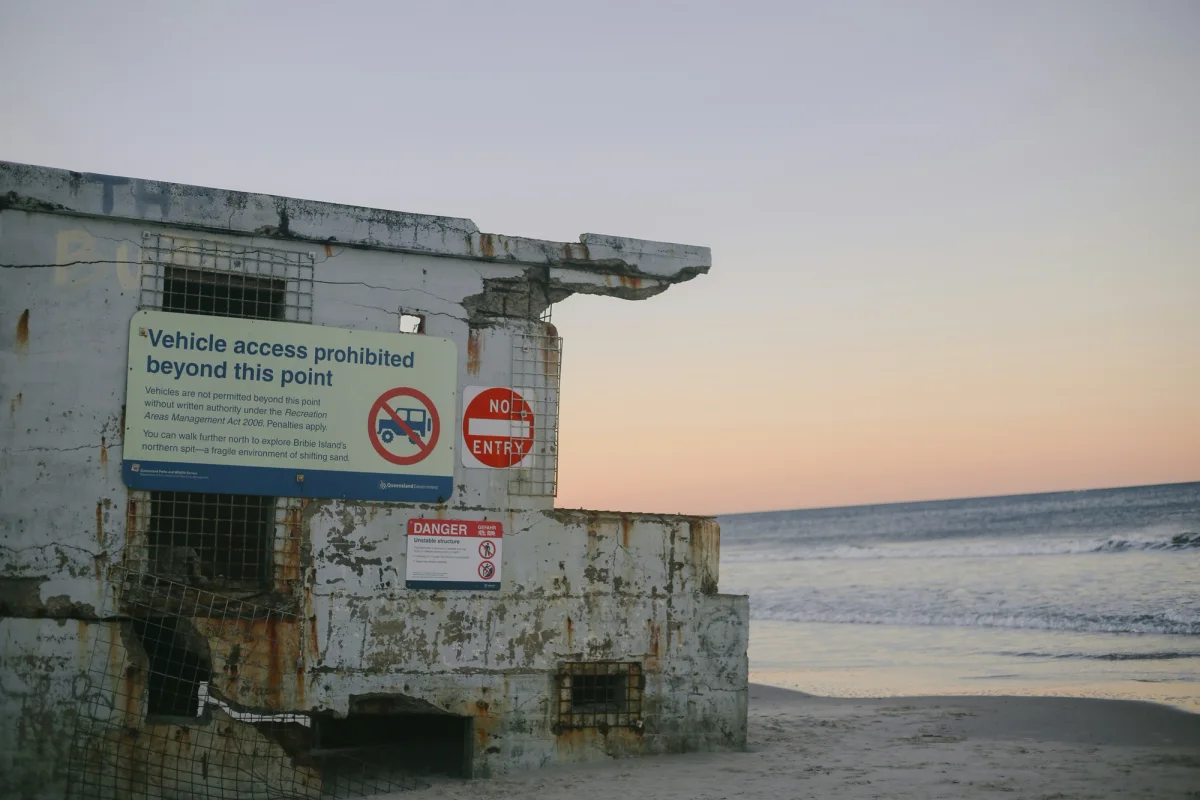
A WWII bunker ruin on Bribie Island, QLD
Once you’re over the bridge, you don’t even need to get straight to camp. Check-in is usually in the arvo anyway, so why not use the morning to explore the island? Whether that’s relaxing, adventuring or a mix of the two, there are plenty of things to do on Bribie Island.
The protected waters of Pumicestone Passage on the western shore provide a calm swimming environment, perfect for families, stand-up paddleboarding, kayaking and shoreline picnics. On the opposite side, Woorim Ocean Beach is ideal for surfers and swimmers. It’s also the island’s primary patrolled beach. If saltwater isn’t your thing, there are a number of freshwater lagoons. Norfolk Creek and Second Lagoon are great spots, especially after some rain. They can get busy though, so expect gazebos and awnings, and get there early if you’re planning on setting up for the day.
For the keen fisher, Bribie Island’s western shore is one of the best spots for bream, whiting and flathead, as well as sand and mud crabs in south-east Queensland. If you have a boat, even better. Just be aware that much of the surrounding water falls within yellow conservation park zones. That means no more than two fishing lines per person, with no more than two hooks on each line, as well as restrictions on the number and type of crab apparatus you can use. The eastern shore’s surf is great for high-energy species like tailor and swallowtail dart. Bongaree Jetty is another popular fishing spot, giving you access to deeper water without needing a boat.
For a break from the water, head to the northern end of Ocean Beach to view the ruins of Fort Bribie. Built during the Second World War, the fort’s weathered gun emplacements and searchlight buildings are still buried in the dunes. If the tides aren’t permitting 4WD travel, there’s also an inland day-use area with a 1.9km one-way walk leading towards the fort.
For the bird spotter or wildlife enthusiast, there are over 190 bird species on the island, while kangaroos and wallabies also call it home. In the water, dugongs, dolphins, whales and turtles are common sights depending on the season. So bring the binoculars and camera and you could even park up at camp. The animals might just come to you.
Vehicle Prep and Sand Driving Tips for Bribie
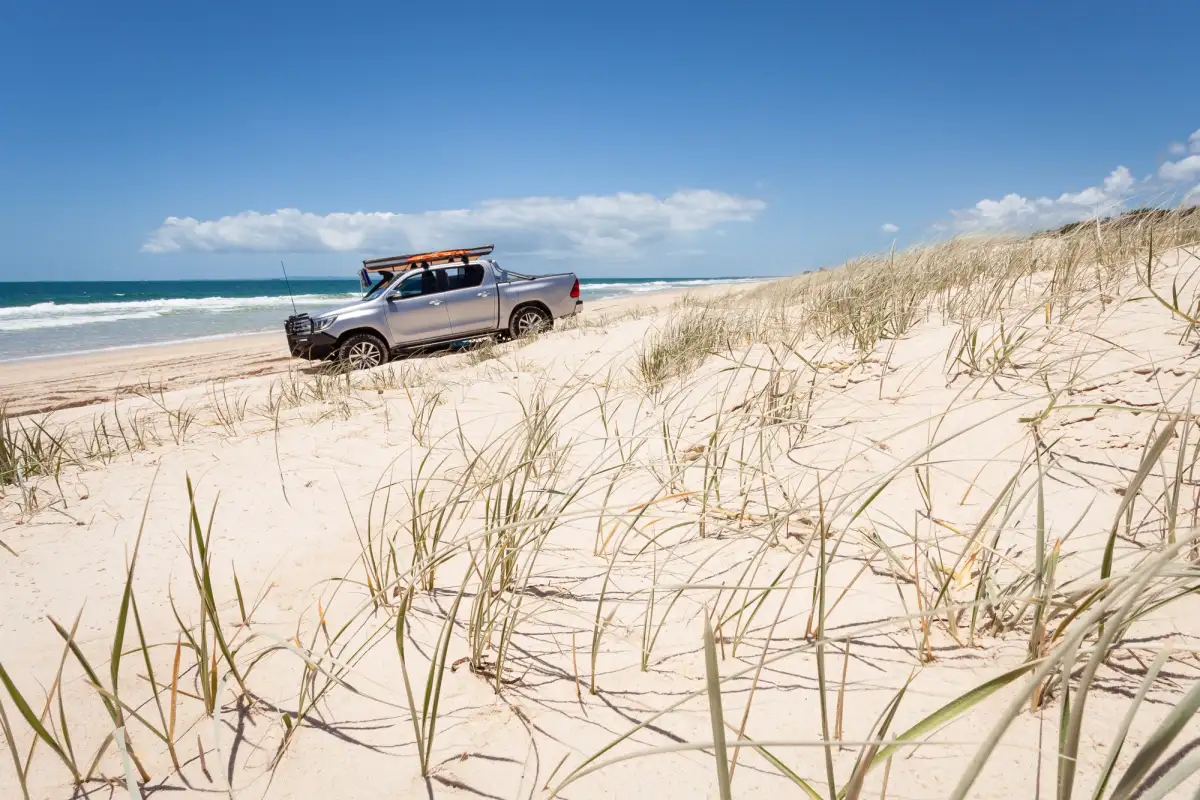
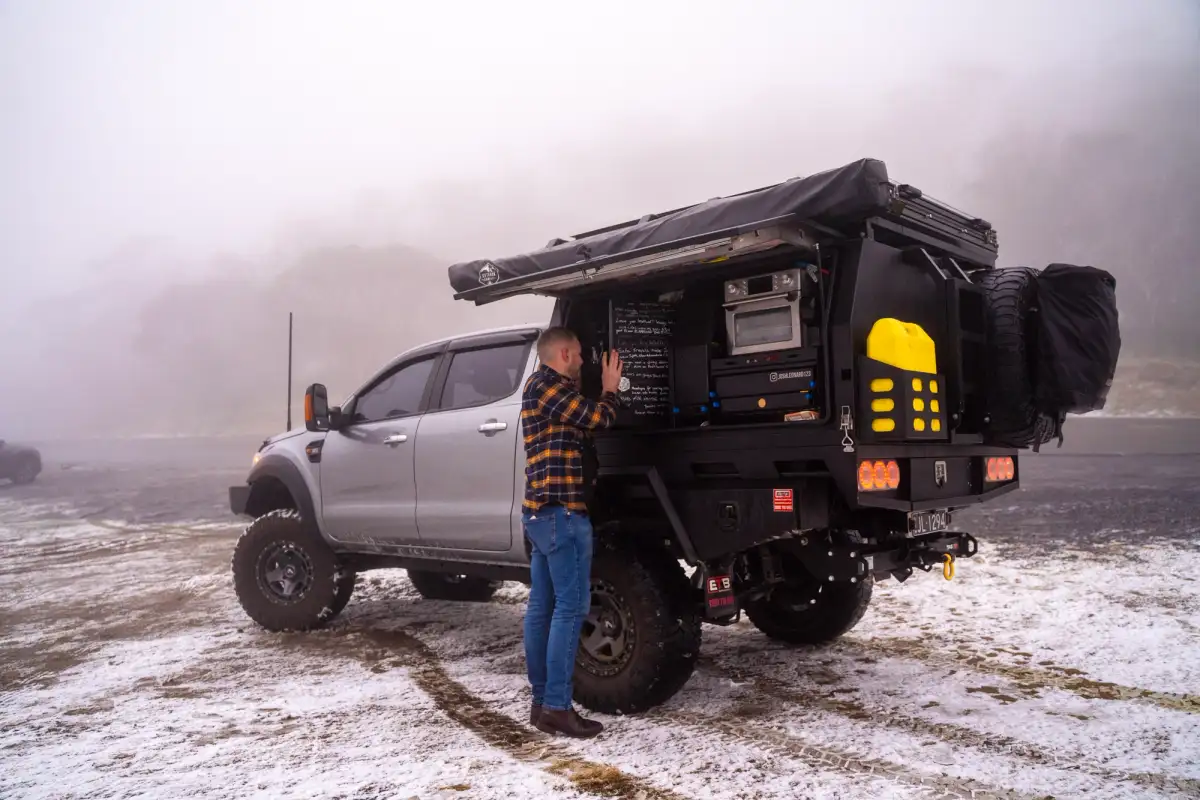
A 4X4 ute on a sandy beach
Bribie may be accessible by bridge, but once you leave the bitumen behind, proper sand driving preparation still matters. Soft sections can quickly bring an unprepared vehicle to a halt, so dropping tyre pressures before hitting the beach is always a good starting point. There’s no magic PSI for every 4WD, so adjust pressures to suit your vehicle, tyres, load and the conditions, then inflate before returning to the road.
Recovery boards, a shovel, rated recovery points and the rest of a basic recovery kit are also worth carrying. Hopefully they’ll stay packed away, but Bribie’s sands can catch out anyone, newcomers and experienced 4WDers alike. If you do get caught out, here’s how to unbog a 4X4.
Most importantly, check the tides before tackling the Bribie Island 4WD tracks mentioned above. Give yourself plenty of time around low tide, maintain steady momentum through softer sections and avoid driving through salt water wherever possible. Once you’re back on the blacktop, give the fourbie a thorough freshwater rinse, particularly underneath. Our full post-beach 4WD care guide walks through the whole wash-down process.
New to sand driving? We recently had Pat Callinan share his wisdom on our campfire blog, putting together this fantastic guide to 4WD beach driving, permits and access rules, covering tyre pressures, recovery gear, tides, beach etiquette and what to know before pointing your bonnet towards the sand.
Send it with Confidence: Cover your Bribie Adventure
Bribie Island is the sort of place your 4WD was built for. Soft sand, beach runs, inland tracks and a campsite waiting at the end of it all. With the right preparation, all that’s left is to get out there and enjoy it.
But even a well-prepared 4X4 can get stuck. Whether you’ve dug yourself into some particularly soft sand or found trouble on a more remote stretch of track, having specialist 4WD insurance means you can explore with a little more confidence.
Club 4X4 Comprehensive 4X4 Insurance is built with off-road adventures in mind, including off-road recovery cover as standard. So, while carrying your own recovery gear and travelling prepared should always come first, there’s additional support there when things don’t quite go to plan.
Bribie is too close and too good not to explore. Pack the 4X4, check the tides and send it. Wherever you’re headed, you’re covered.
The adventure starts where the bitumen ends
See how Club 4X4 can help