The item we are covering today is so obvious we can’t believe that we haven’t covered one yet; it’s the humble first aid kit.
We all have one somewhere, but it’s not the first thing on our mind when we are thinking about heading away and realistically most of us don’t keep them up to date, let alone practice using them. Given that the nature of off roading takes us away from civilisation (and medical help), they are actually pretty important if something goes wrong and an essential item that you should carry any time you leave the bitumen behind.
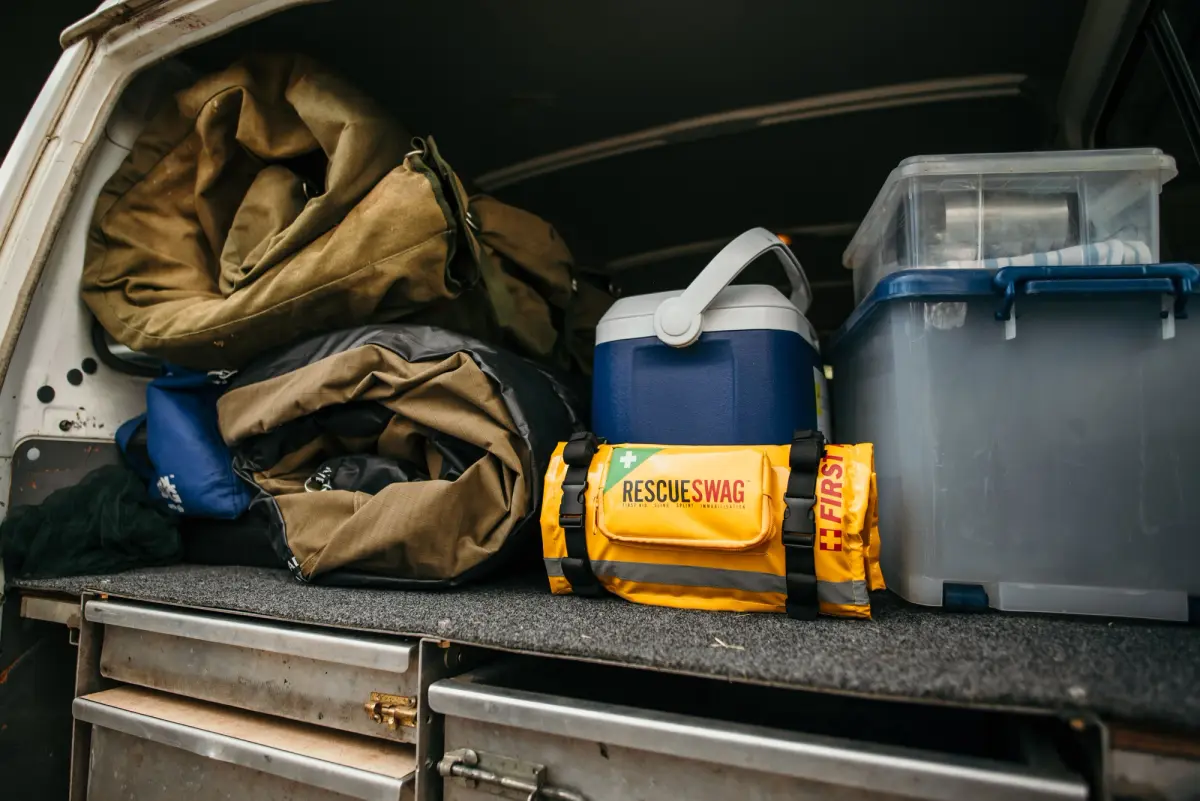
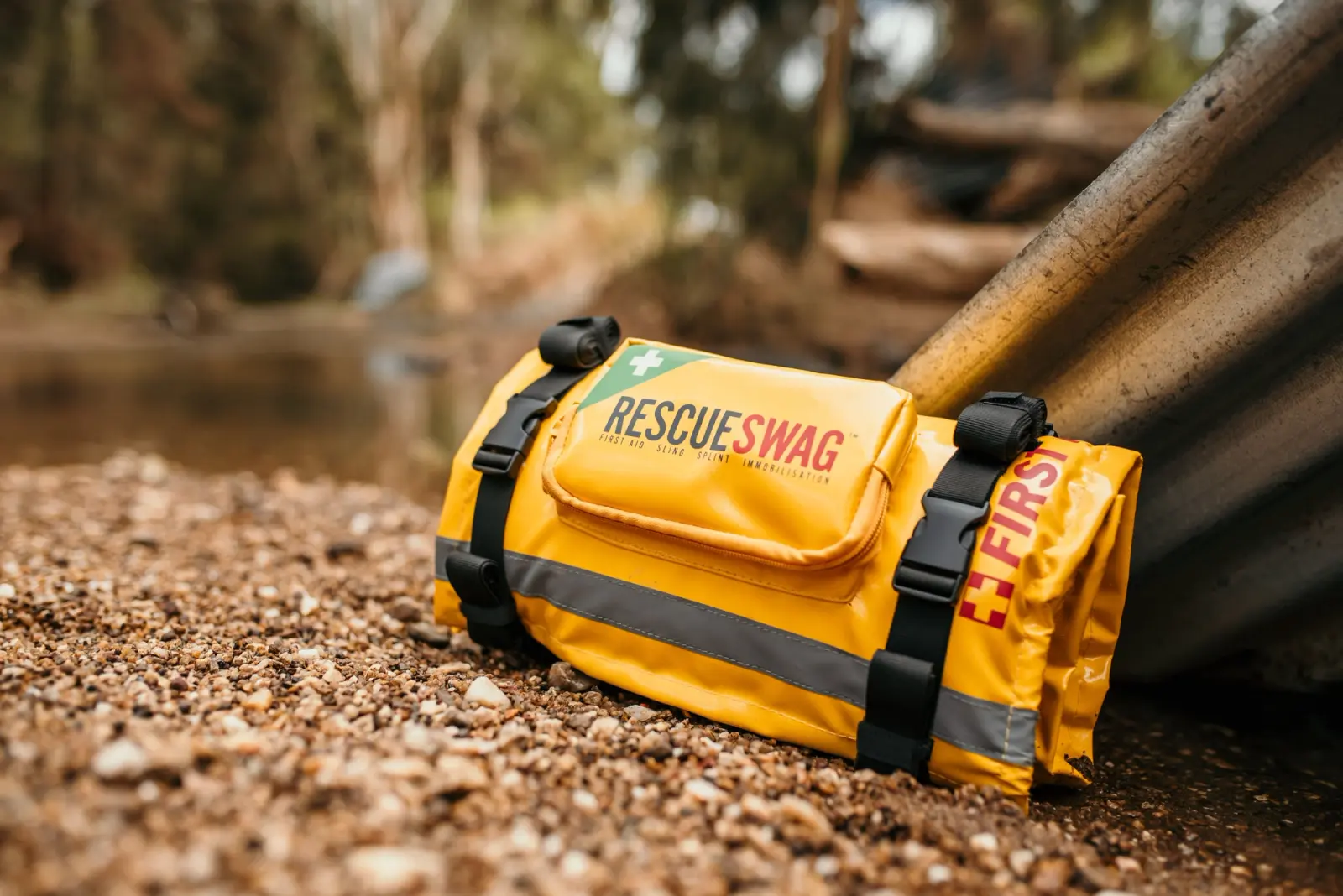
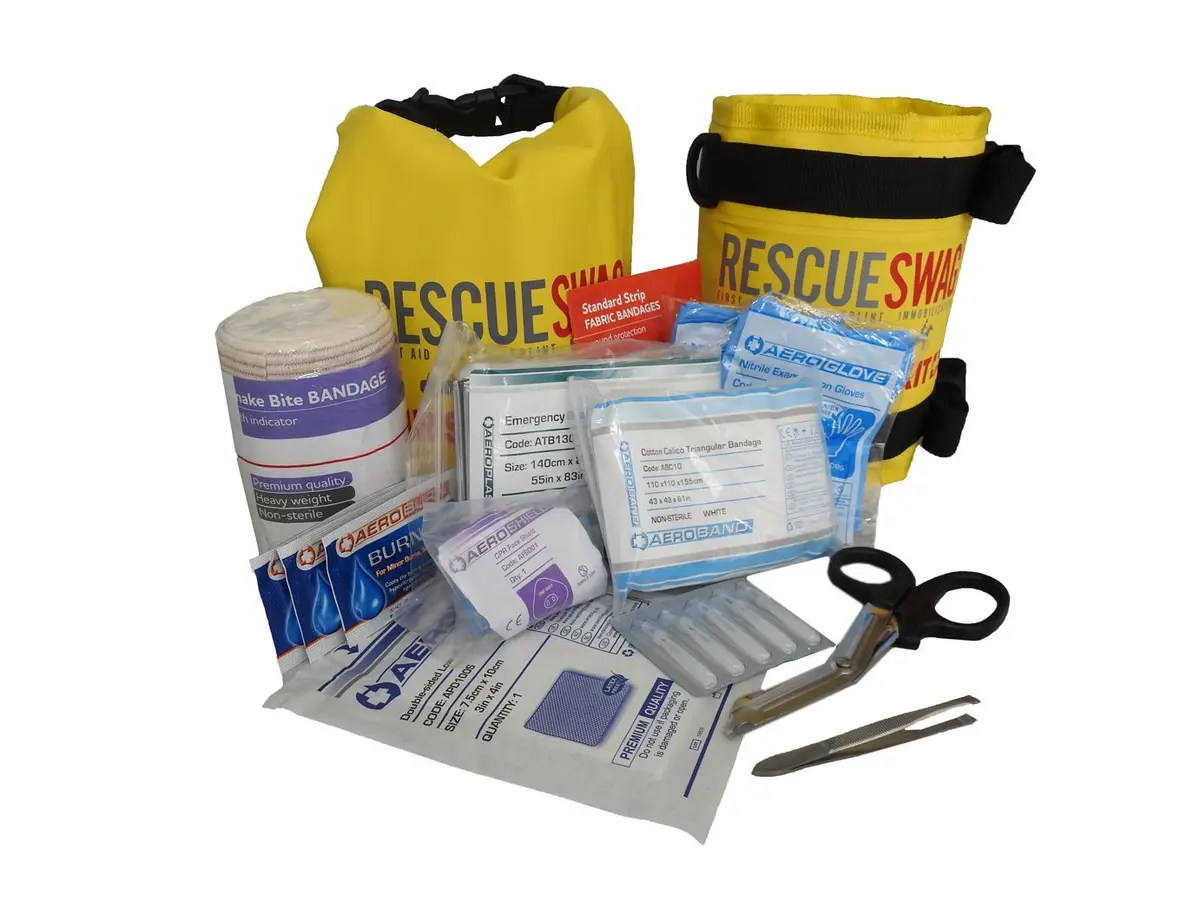
We’ve recently been sent a couple of First Aid Kits by a company called Rescue Swag. They are a great innovation in the fact that the packaging of the first aid kit is much more durable than standard kits (which makes it more useful in the outdoors), but more importantly, the packaging doubles as a Splint which is very handy if you need to immobilise a limb.
Additionally, Rescue Swag has a downloadable First Aid app which helps you use the product and provides First Aid advice, even when you are out of mobile coverage.
The Rescue Swag comes in a number of sizes – the Explorer, and the Adventurer. There is also a larger workplace size Rescue Swag but we haven’t covered it as part of this review.
The Explorer
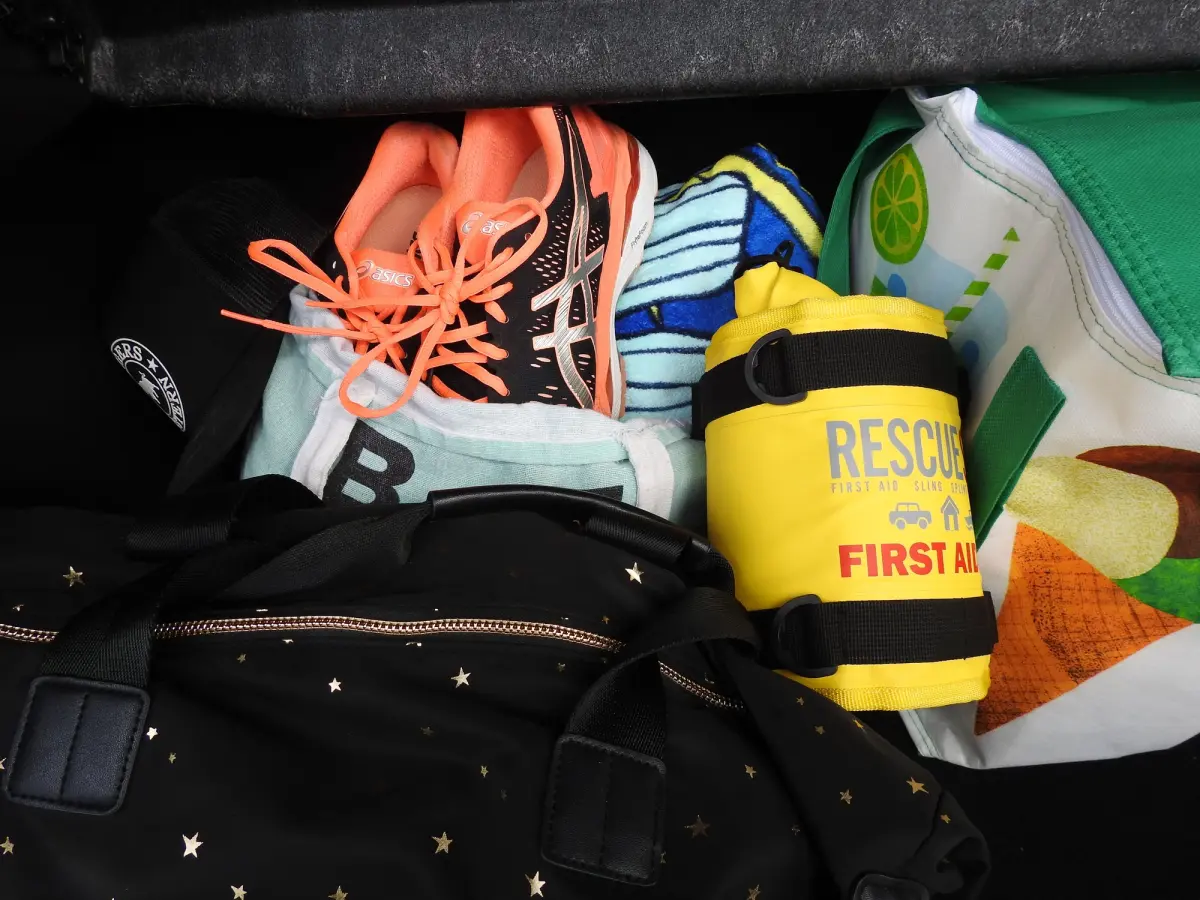
The smaller version is called the Explorer and comes in a 2L dry bag which is handy if you want to keep a few precious items (like your phone and wallet) dry on your adventure. It still has a snake bite bandage, CPR face shield, band aids, forceps, shears, dressings, a thermal blanket and a triangular bandage so can deal with most injuries you’d find outdoors. The Explorer is less than half the size of the Adventurer, and would squeeze into most glove boxes making it an ideal everyday kit to have. It’s priced at about $55.00, which offers pretty good value, and also makes it a great present for loved ones.
The Adventurer
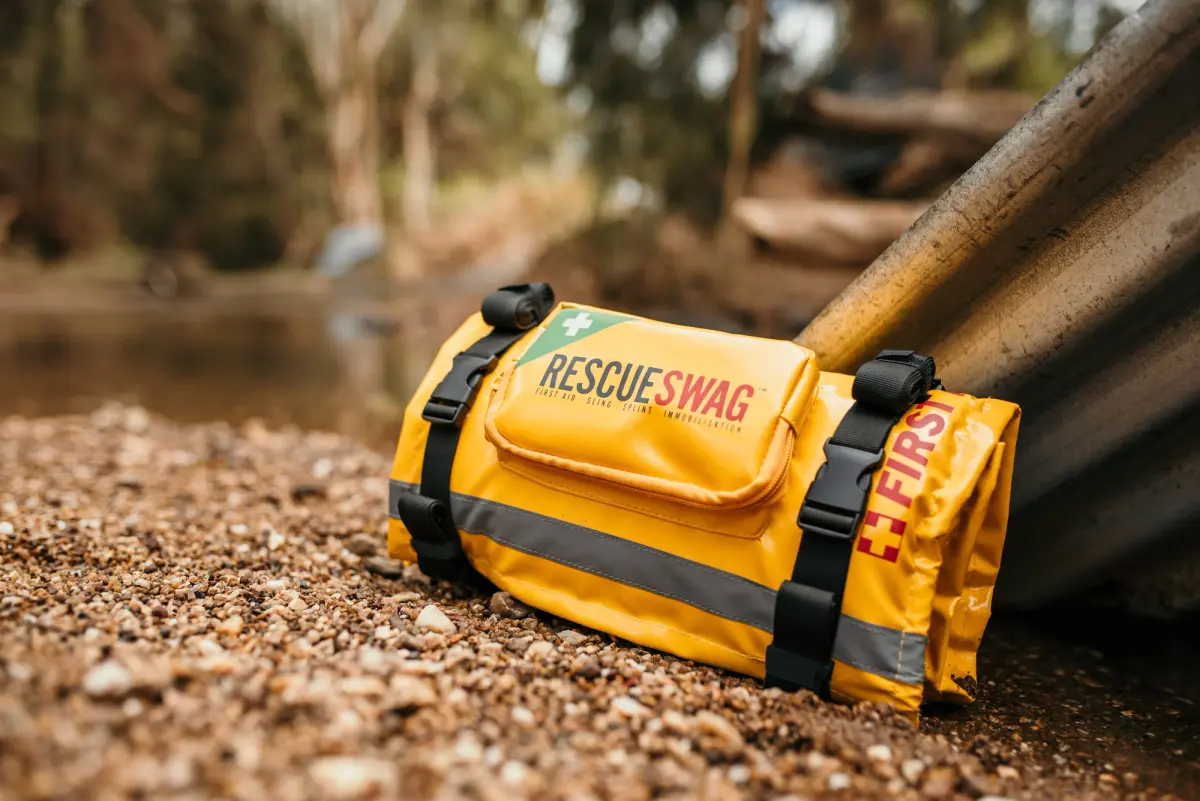
The larger size is the Adventurer which contains more equipment, as well as a larger sling which would better suit the immobilisation of a limb. Of particular interest is the fact that it contains eye pads and eye wash, Iodine swabs, and additional wound dressings. It is definitely the more comprehensive kit, but being over 30cm long, by approx. 22cm wide and nearly 15cm tall, it is a lot bigger than the Explorer, which means it is probably better suited to being carried in a vehicle. It retails from about $79.00, which is not bad given the additional bits you get.
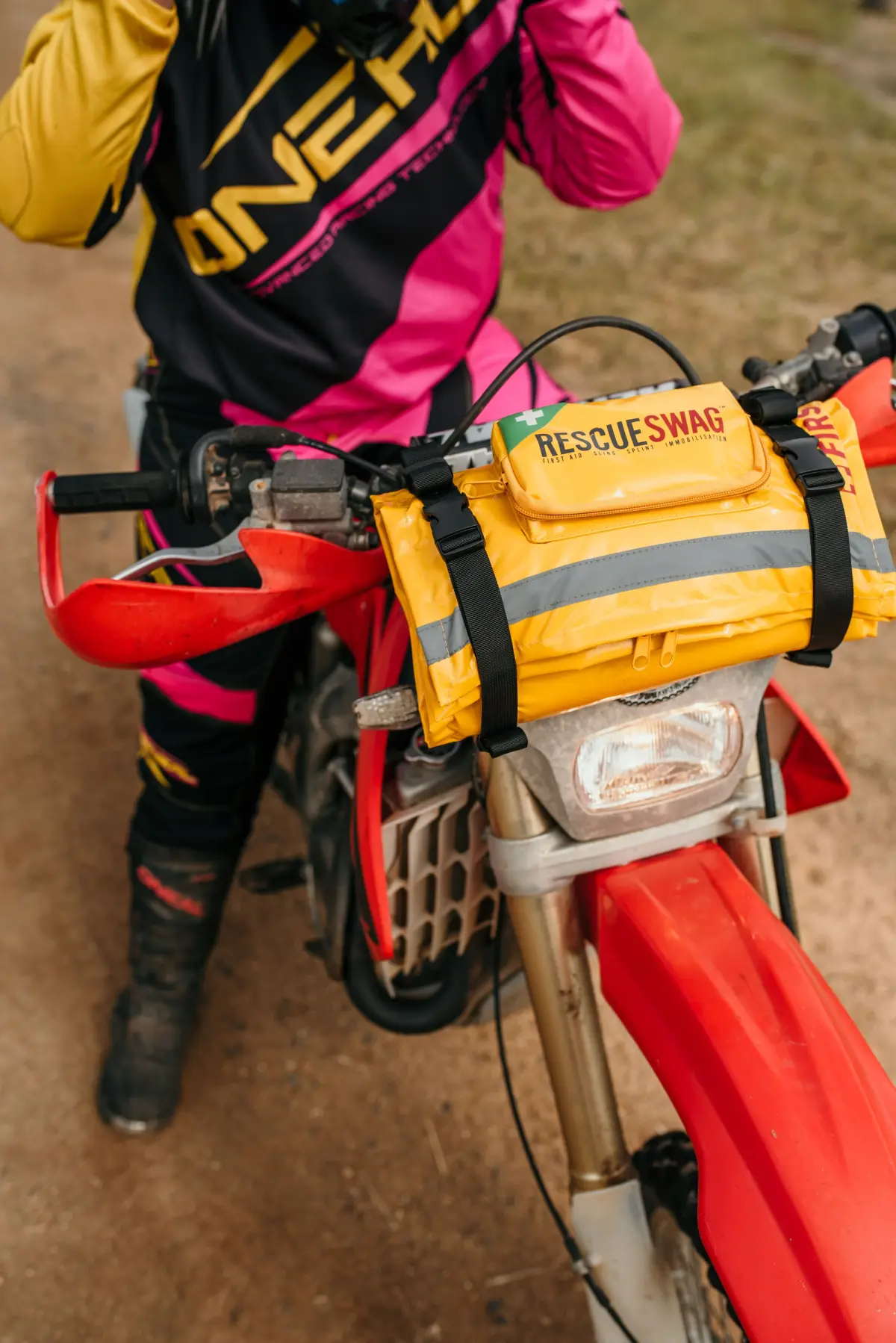
Both of these kits are rugged and have clips which allow them to be easily attached to almost anything. The Adventurer fits nicely on the front of a motorbike!
Where to buy
A Range of retailers now stock Rescue Swag, although you can also buy them online from www.rescueswag.com.au They currently have some great special offers available.
Keeping your First Aid Kit up to date
Regardless of what first aid kit you have or buy, make sure that items are kept up to date – there is nothing worse than going to use the kit to find that someone borrowed the shears and never returned them, or took that bandage you need…
Key things to remember
- Make sure you know where help is in relation to where you plan to be, and how to either get to them, or guide them to you.
- Make sure you know where the nearest location with phone coverage is in case you need to call for help, or otherwise consider taking a satphone.
- Understand the time it is going to take to get help based on the above so you can make an appropriate decision on whether to wait for help, send for help, or transport the patient yourself.
- Make sure you check your kit regularly to make sure it is functional
- If you are going to be very remote, consider taking a Personal Locator Beacon (PLB). See our article on them here.
- Also consider whether to take a defibrillator with you if you are well outside being able to get medical assistance because this could mean the difference between life and death in the instance of a heart attack.
- Download an app to your phone with First Aid tips and hints to help you deal with an emergency. St Johns and also The Red Cross have good free apps, as does Rescue Swag. The best part about these is that they work without mobile reception.