There are a few things that are consistent in almost all 4X4 situations. You’ll always need a good set of tyres. You should always have a way of getting yourself out of strife.
And whether you’re circumnavigating Australia, seeing the sights of the most remote areas of the country, or taking on some local tracks after work on a Friday night, 4X4ing is almost always better with mates.
But how do you work as a team to get through the toughest of tracks? Well, there are a few golden rules that, when used properly, could mean the difference between driving a line and having a cook-up at camp or spending an evening trackside with a busted 4X4. Here’s what you need to know.
Rule 1: Have Clear Comms.
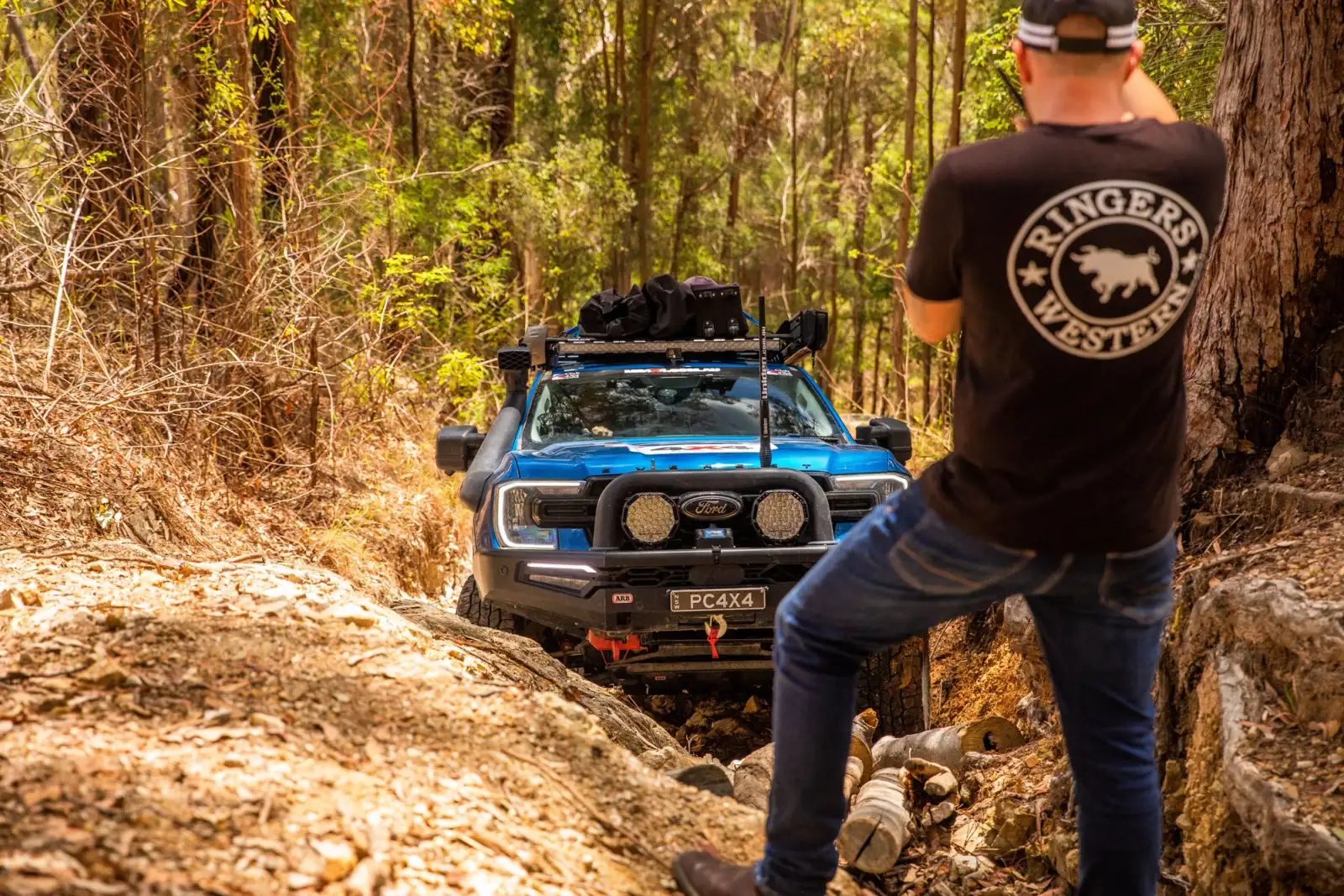
Before we get carried away talking hand signals and etiquette, let’s kick things off with a solid foundation: good, clear, and concise communications. Good spotting is all about good communication. Essentially, the person on the outside is driving the 4X4, and the person behind the wheel is an extension of what they’re thinking. Both driver and spotter need a good quality UHF. It’s worthwhile to grab a couple of decent 5W units to stash in your glovebox; the spotter will always need one, and depending on who you’re going bush with, the driver may need one as well.
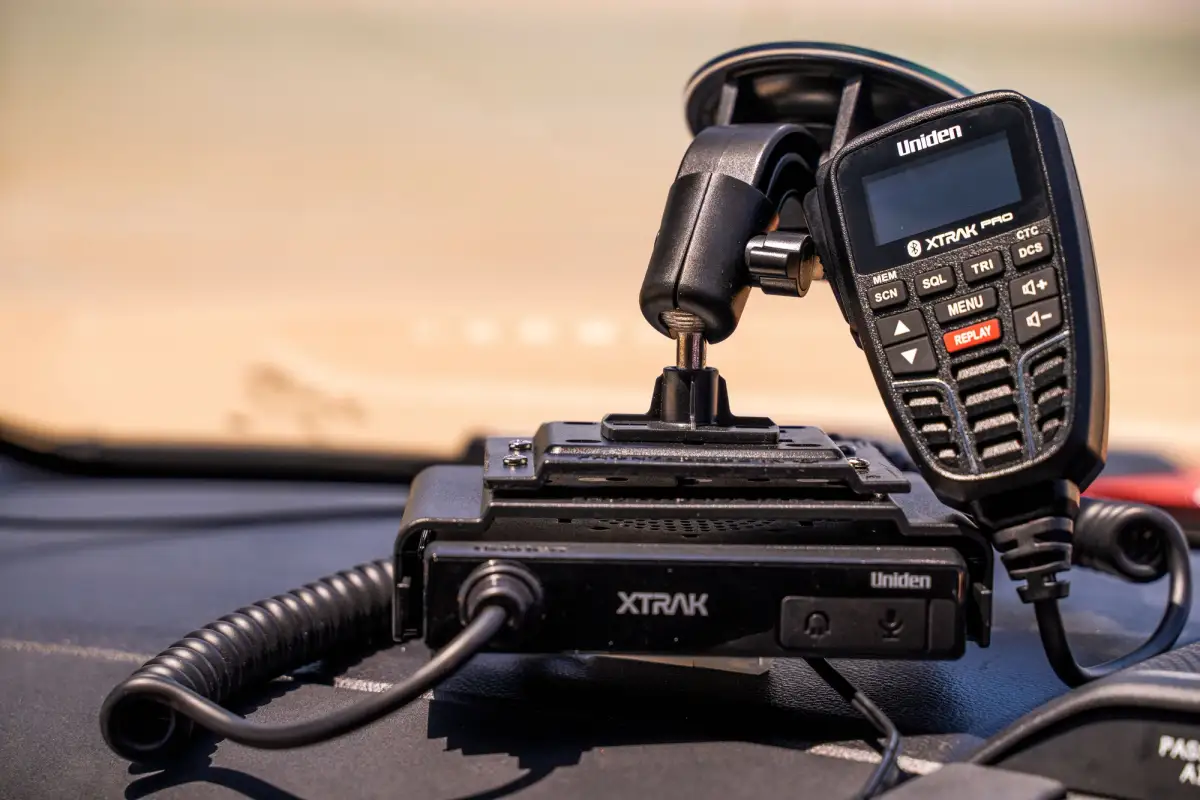
Talk a little slower, a little clearer, and a little more purposefully when you key that mic button up.
Rule 2: One Person Talks at a Time.
4X4ers are naturally a helpful bunch, so when someone is up against the ropes trying to get their pride and joy through a particularly tricky section of track, it’s common for every man and his dog to throw in their two cents. Unfortunately, it often has the exact opposite effect. When the tension is high and the pressure is on, multiple people shouting out can confuse and overwhelm the driver. There should be one person spotting, preferably in the driver’s line of sight, with a UHF in hand. Anyone else who wants to help can talk to the spotter. The one exception to this rule is if there’s something dangerous or the driver needs to stop. Anyone can shout that and should shout it loud.
Rule 3: Pre-run the Track.
You’d like to think you trust your mate, and they trust you, right? But there are limitations to it. It’s important, if you’re lining up to take on any track that has the potential to cause damage, that the spotter and the driver have a quick sticky beak together and come up with a bit of a game plan. Agree on the line, where they should be squeezing the loud pedal, and where they should be taking things a little more slowly. If you key up the mic and tell them to bounce up a ledge and it ends up causing damage, it’ll hurt both of you a little less if that was the plan from the start. If the plan needs to change, hit pause for a second, key up the UHF, and let them know it’s not working. Better they park up and have a second look than you punch in their doors.
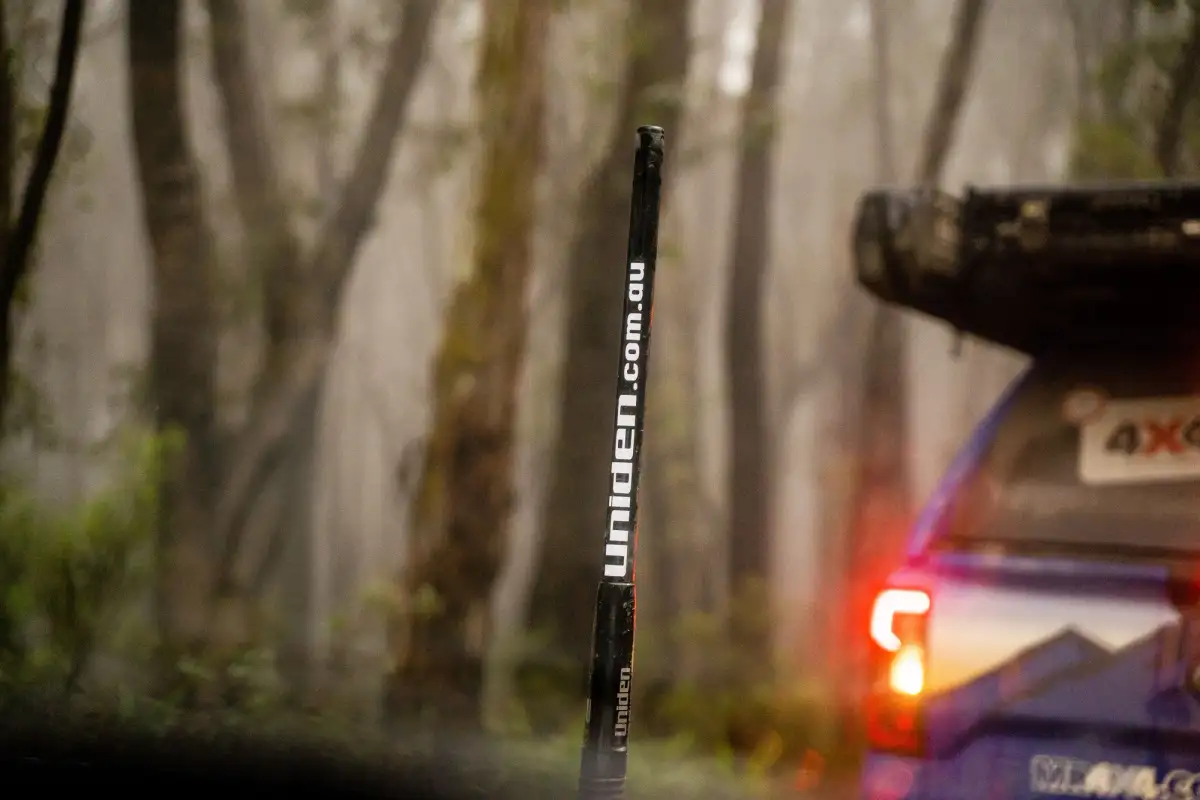
A portable UHF like this one is a handy unit to stash on a mate’s dash if they’re lacking in the comms department.
Rule 4: Don’t Do the Macarena.
We’ve all seen those blokes. Their mate or better half is behind the wheel trying to navigate a tricky section of the track, relying on the spotter to be their eyes and ears, and the spotter looks like they’re doing their best rendition of the Macarena, with arms flailing in every direction and tiny hand signals the driver will never see. There isn’t that much you need to tell the driver: stop, left, right, back, forward. Don’t make weird pinching symbols or flail your arms. With one arm, point which way you want their wheels to be facing, and with the other arm gesture forwards or backwards. If you want them to do it quickly, make big gestures. Just a little? Then little ones. If you need to relay any info that can’t be done with a pointing arm, use your UHF.
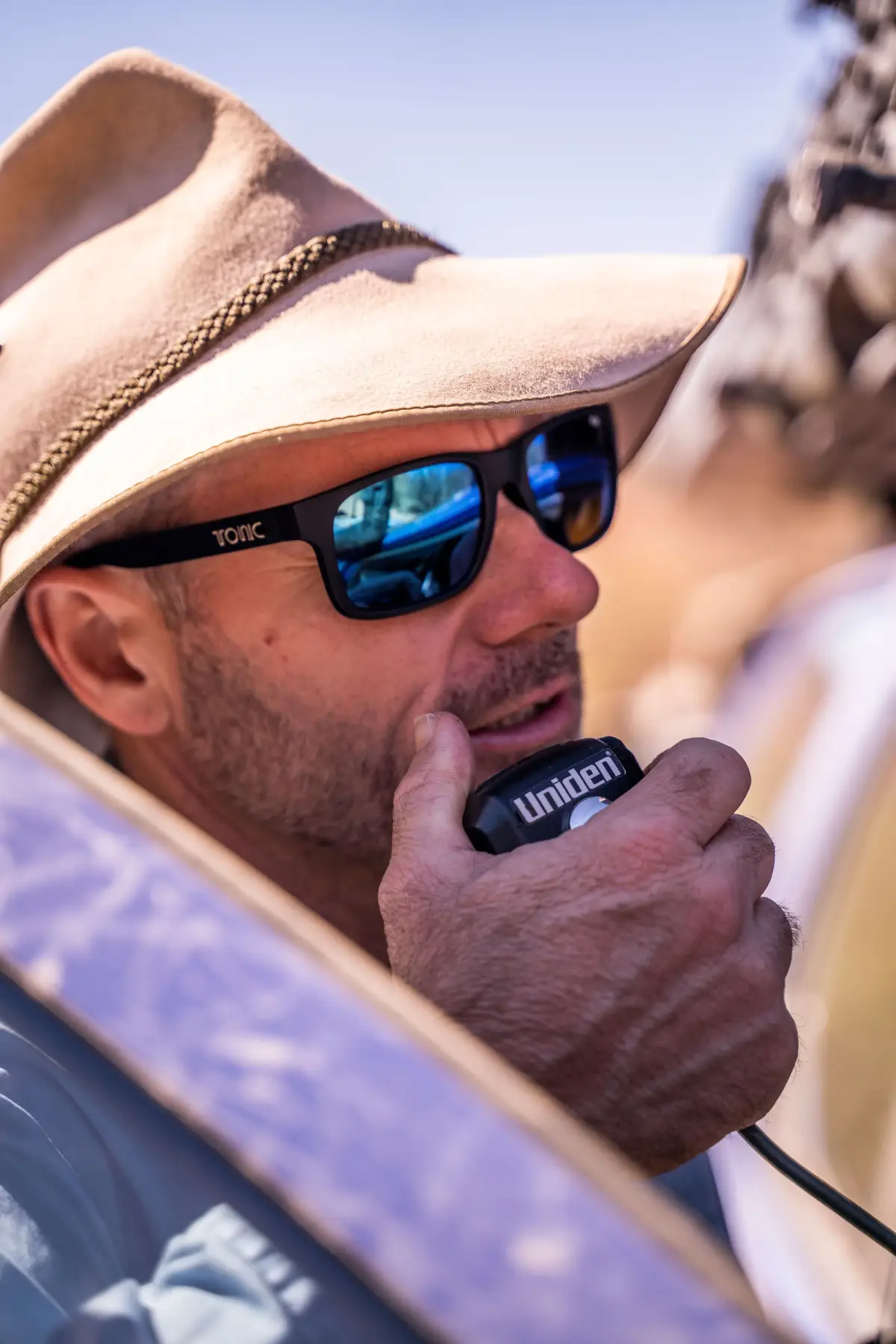
Spotting a mate is a game of trust, make sure you trust your spotter, and make sure your spotter is trustworthy.
Rule 5: Be Trustworthy.
I’ve left this one for last because it should be the one that really sinks in the most. Short of a house, a person’s 4X4 is typically the most expensive thing they own. It’s their pride and joy - something they’ve poured probably hundreds of hours into, turning it into their dream rig. Give it, and them, the respect they deserve. Before you put it into a precarious position, have a think about if it’s what they want. If you’re not sure of the answer, then stop and ask. As a driver, you need to trust your spotter 100%.
Heading off the beaten track?
When a chance for adventure pops up, it’s nice to know you’re covered.