Uluru and Kara Tjuta, NT
Uluru has been the sacred and spiritual ground of the land’s Indigenous custodians for thousands of years, and an icon of the Aussie Outback landscape for the last century.
This hulking sandstone monolith’s reddish-orange hue has been the backdrop for some of Australia’s most spectacular sunsets and sunrises. As the light shifts, the rock seems to transform, with fiery reds deepening into rich oranges and purples.
It’s one of Australia’s premier outback destinations and often tops the bucket lists of travellers exploring the centre by 4WD.
Nearby, Kata Tjuta (also known as The Olgas) rises from the same red desert landscape of Uluru-Kata Tjuta National Park. Spanning more than 20 kilometres, Kata Tjuta is made up of 36 giant domes, some reaching over 500 metres high.
Both central-Australian marvels owe their colouring to the oxidation of iron-bearing minerals in the sandstone. Without it, the rock would be a plain grey, which is far less memorable against the desert sky.
Nearby 4WD Tracks
- Mereenie Loop Road – A classic red-dirt outback route connecting Uluru to Kings Canyon.
- Ernest Giles Road – Remote desert track running west toward the Great Central Road.
Camping
- Ayers Rock Campground – Full-service campground near the national park.
- Curtin Springs Station Campground – Classic outback station stay along the Lasseter Highway.
Devils Marbles Conservation Reserve (Karlu Karlu), NT
In Australia’s Red Centre, you’ll find the Devil’s Marbles (Karlu Karlu), giant ochre boulders perched precariously on top of each other, as if one gust of dry desert wind might send them tumbling.
The English name comes from a quote attributed to early settlers, who supposedly remarked: “This is the Devil’s country — he’s even emptied his bag of marbles around the place.”
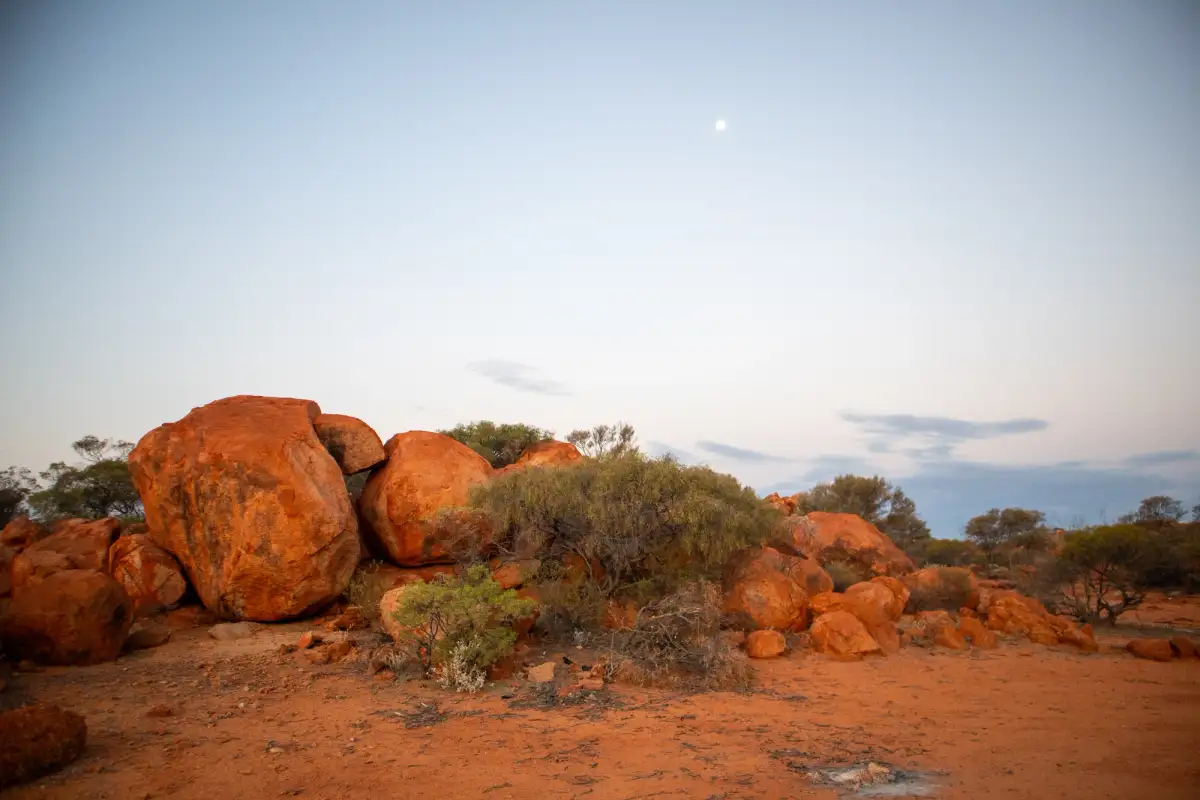
Devil's Marbles (Karlu Karlu), NT
Just off the Stuart Highway, these rust-red spheres make an easy and rewarding stop on any Red Centre road trip. At sunrise and sunset the rocks glow deep red, creating incredible photo opportunities, and several short walking tracks wind through the formations for a closer look.
Nearby 4WD Tracks
- Old Stuart Highway – Quiet gravel sections that parallel the main highway.
- Davenport Range National Park Tracks – Remote outback tracks through rugged ranges and historic cattle country.
Camping
- Devils Marbles Campground – Basic but scenic camping among the boulders.
- Wycliffe Well Holiday Park – A quirky outback stop famous for its UFO sightings.
Kings Canyon, NT
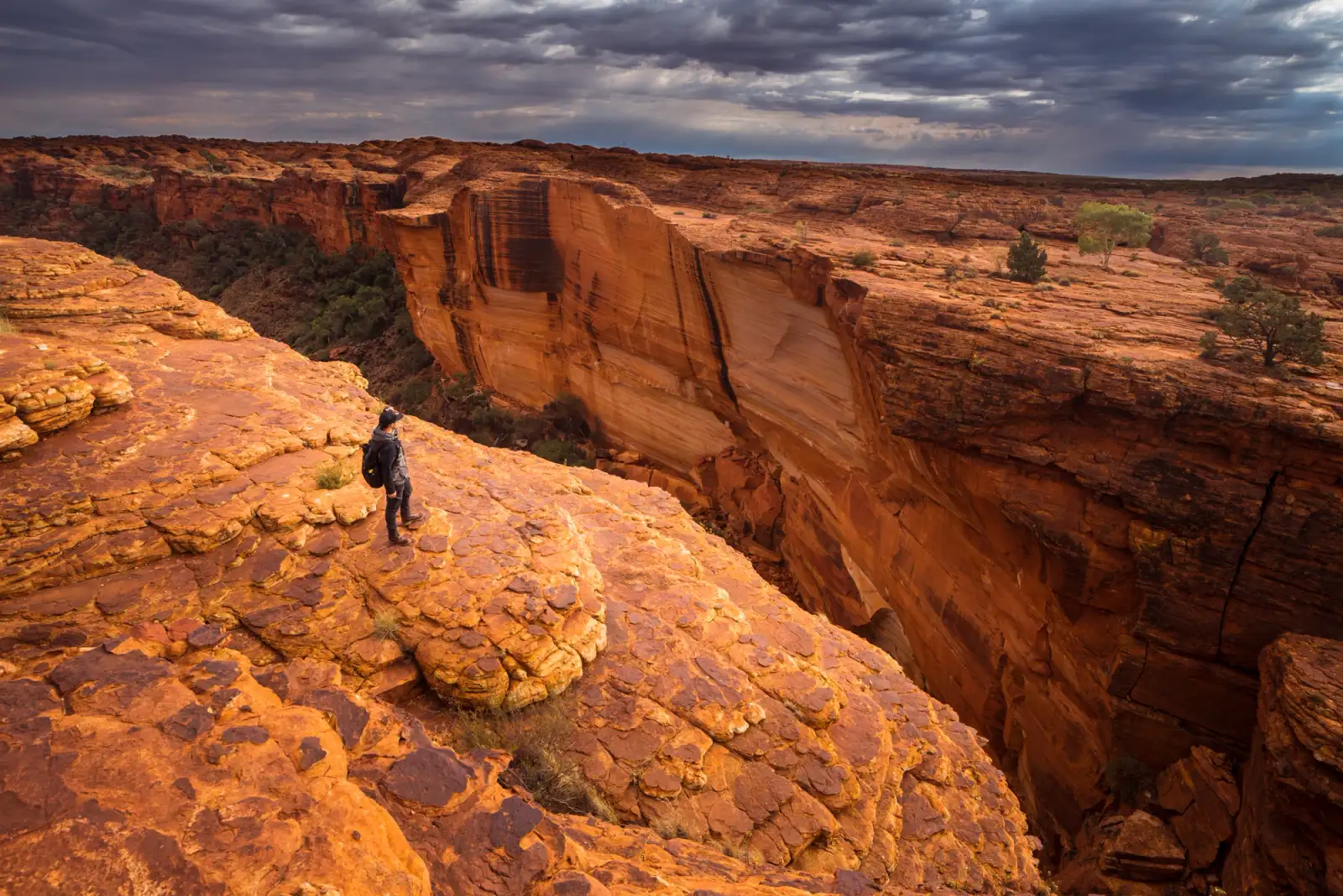
Rising dramatically from the desert plains of Watarrka National Park, Kings Canyon is one of the most impressive natural landmarks in Central Australia.
Towering sandstone cliffs climb more than 100 metres above the canyon floor, revealing layers of ancient rock that range from deep rust-red to burnt orange. These colours are the result of iron-rich sandstone that has been weathered and exposed over millions of years, creating the rugged escarpments and domes that define the canyon today.
The most famous way to experience the canyon is the Rim Walk, a challenging but rewarding loop that climbs to the top of the escarpment and follows the canyon edge. Along the way you’ll pass several standout landmarks, including the weathered sandstone domes of the Lost City, the lush waterhole and cycads of the Garden of Eden, and the dramatic stairway known as Heartbreak Hill.
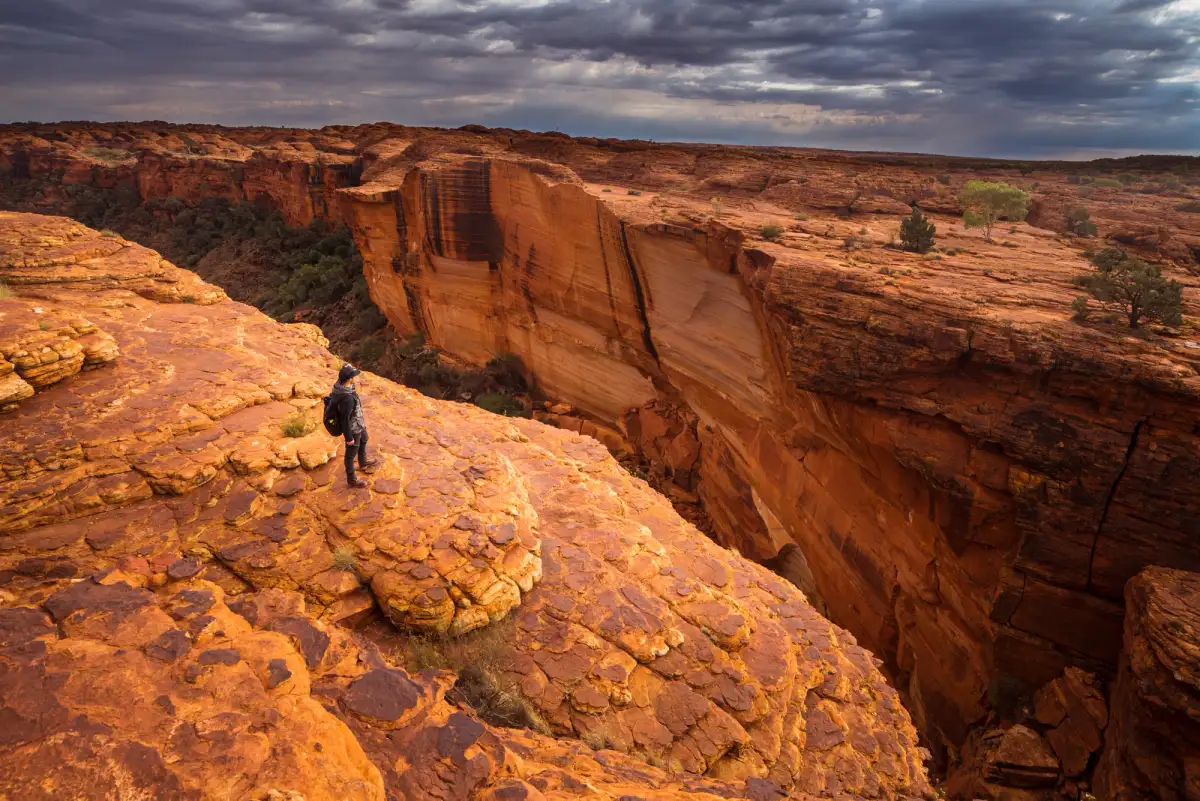
Kings Canyon, NT
Located roughly halfway between Uluru and Alice Springs, Kings Canyon is a must-stop destination for travellers exploring the Red Centre by 4WD.
Nearby 4WD Tracks
- Mereenie Loop Road – A classic red dirt route linking Kings Canyon with Uluru and the West MacDonnell Ranges.
- Ernest Giles Road – A remote desert track heading west toward the Great Central Road.
Camping
- Kings Canyon Campground – Well-equipped campground at Kings Canyon Resort.
- Kings Creek Station – Popular outback station stay with bush camping and great burgers.
Barossa Valley, SA
In the Barossa Valley, the most famous shade of red isn’t found in the landscape, but in the glass.
One of Australia’s most celebrated wine regions, the Barossa is synonymous with bold Shiraz, producing some of the country’s richest and most recognisable red wines. Generations of winemakers have cultivated vineyards across the valley’s rolling hills, creating a patchwork of cellar doors, historic wineries and country towns.
Of course, the landscape still plays its part. Much of the valley’s success comes down to its iron-rich soils, which carry a deep red tint and help produce the intense, full-bodied wines the region is famous for.
For travellers, the Barossa is a place where scenic country drives lead from vineyard to vineyard, with plenty of good food, historic pubs and tasting rooms along the way.
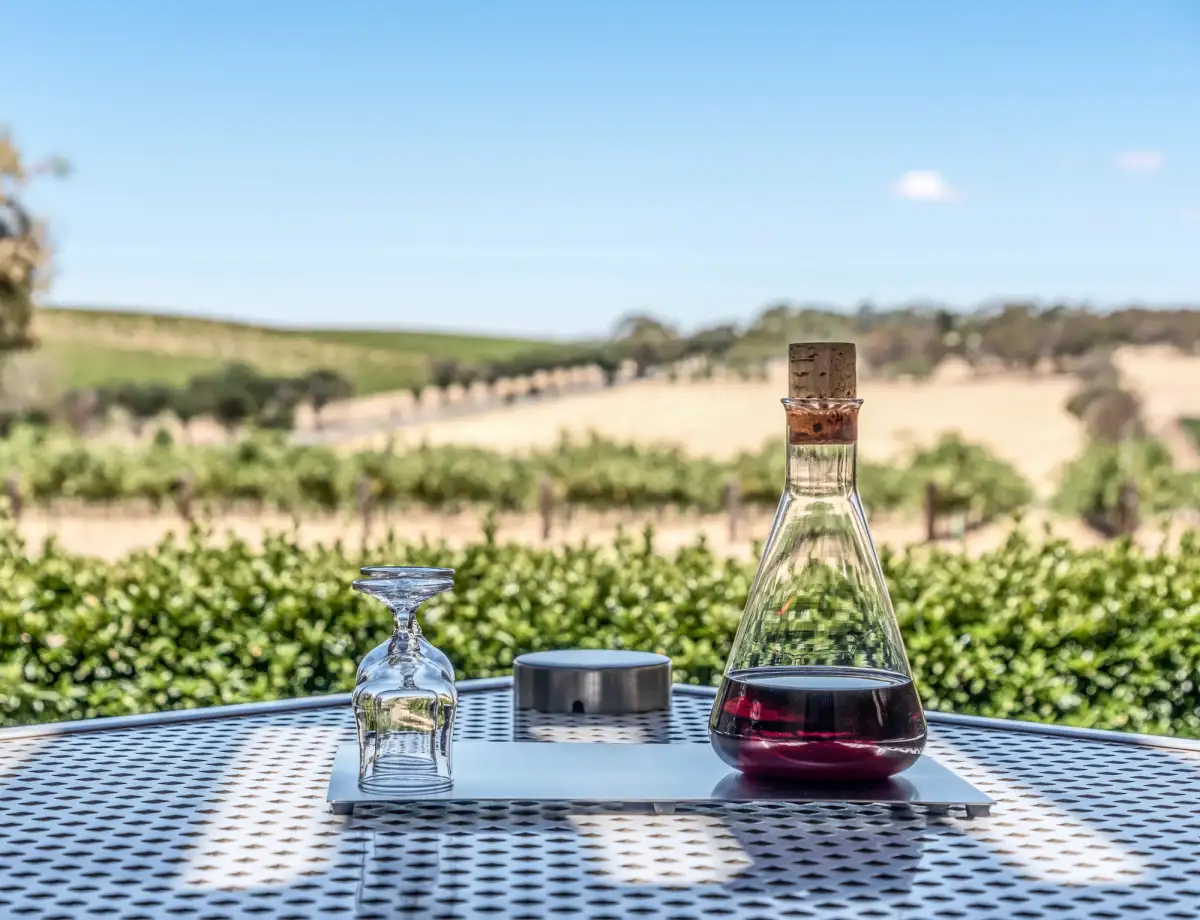
A bottle of tawny port, on a table in front of a vineyard in the Barossa Valley, Australia
Nearby 4WD Tracks
- Kaiserstuhl Conservation Park Tracks – Bush tracks climbing into the Barossa Ranges.
- Springton Scenic Drive – Winding gravel roads through vineyards and farmland.
Camping
- Rocky Paddock Campground– Popular forest camping close to Adelaide.
- Sandy Creek Conservation Park Campground – Quiet bush camping on the edge of the valley.
Gantheaume Point Red Rocks, WA
Just a short drive from Broome, Gantheaume Point is famous for its dramatic red sandstone cliffs rising above the turquoise waters of the Indian Ocean.
The striking colour comes from iron-rich rock that has oxidised over millions of years, producing the vivid red tones that contrast beautifully with the surrounding sea.
At very low tide, visitors can even spot 120-million-year-old dinosaur footprints preserved in the reef platform below the cliffs, a reminder that this dramatic coastline has been around far longer than the nearby pearling town.
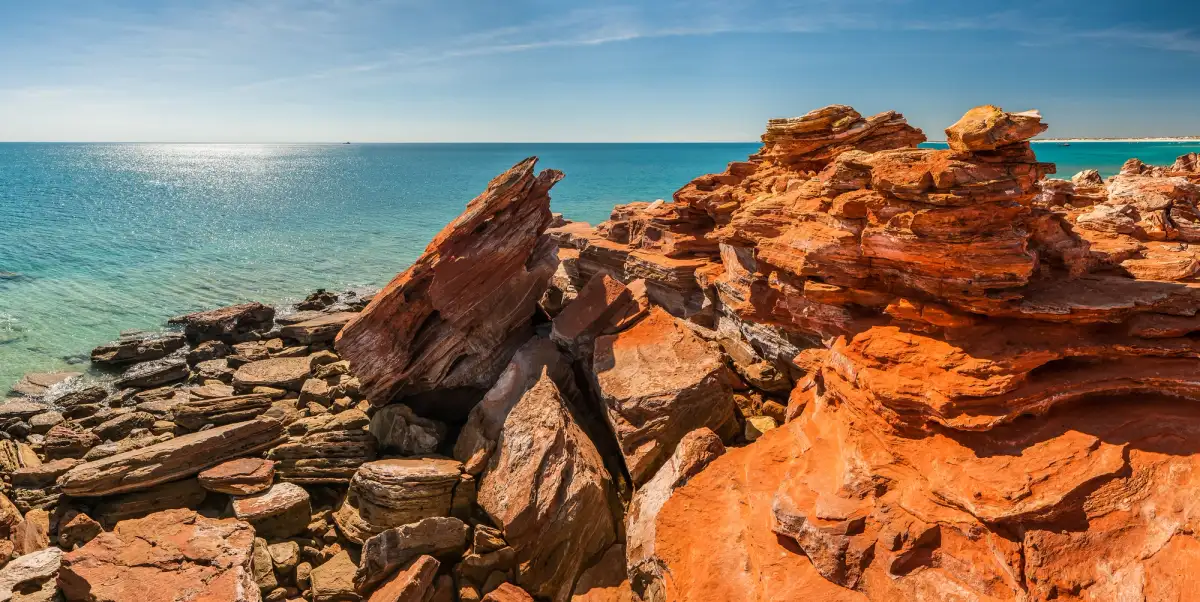
Gantheaume Point, Broome, Kimberley, Western Australia
Nearby 4WD Tracks
- Cable Beach 4WD Access – A famous beach drive where vehicles can cruise along the sand at low tide.
- James Price Point Track – A remote coastal track north of Broome.
Camping
- Cable Beach Caravan Park– A comfortable base in town.
- Quandong Point Campground– Remote coastal camping further up the peninsula.
Escape the city!
Cover anywhere you can legally go in Australia
Part of our complete guide to Australia’s most colourful 4WD destinations.