
It’s a tale as old as… well, the last 20 years: the slow but steady march of computers into our four-wheel drives. These days, 4X4s are smarter than ever. We have traction control that thinks for us, hill descent that handles the braking, radar cruise, lane assist, terrain modes, stability control, and more ECUs than you can poke a frozen roo tail at.
But there is a growing risk that’s catching more and more tourers out when they’re travelling. It’s not a mechanical fault. It’s not a busted diff. It is something much smaller.
A sensor.
In today’s tech-heavy 4WDs, something as simple as a brake light switch or a dirty wheel speed sensor can shut down your entire system. And when you are hundreds of kilometres from the nearest workshop, that’s more than frustrating. It is potentially dangerous.
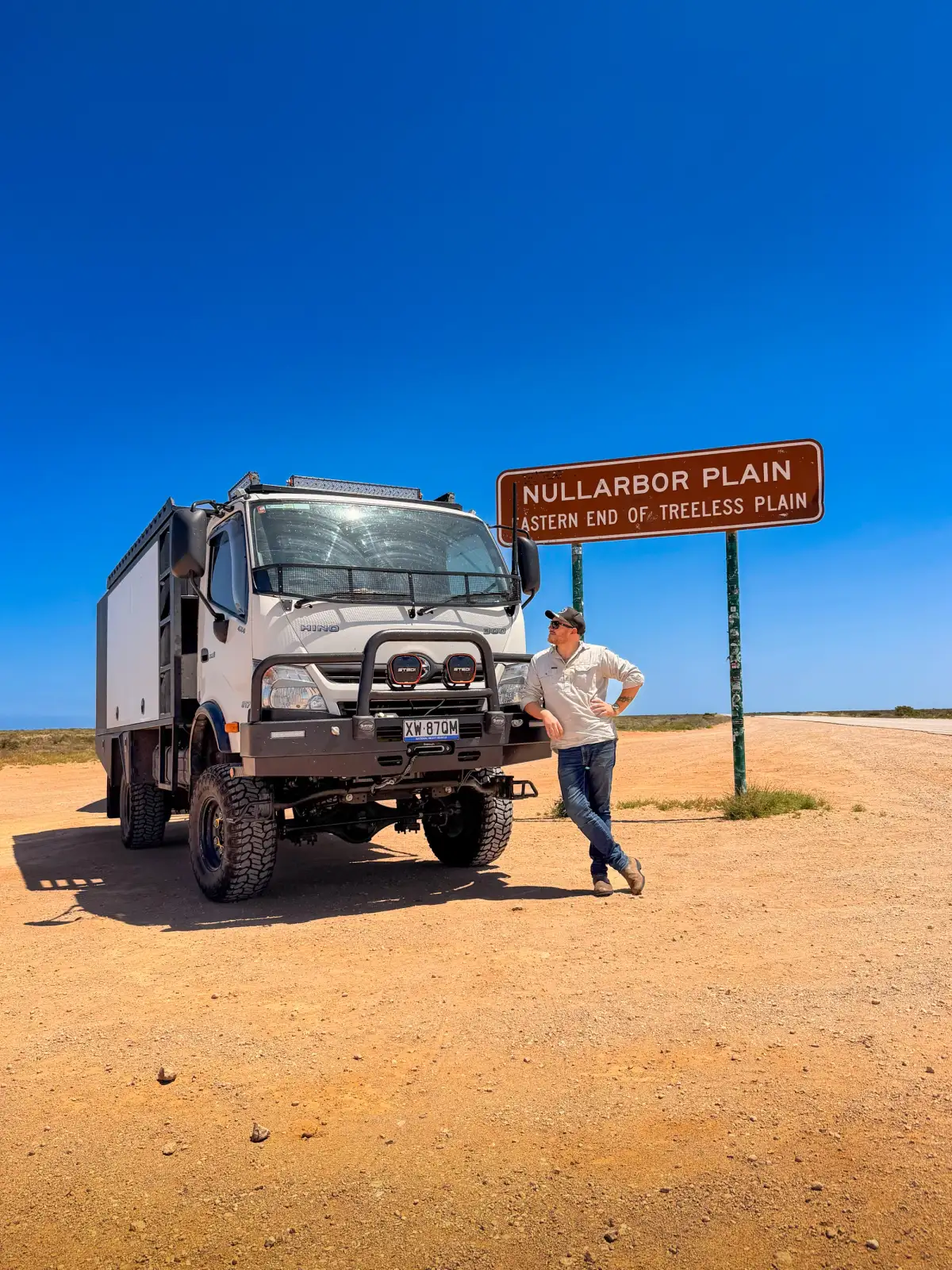
A 4X4 truck and its driver posed next to a road sign
How We Got Here: Why Our 4X4s Have So Many Sensors
Before we get into the concerns, it is worth acknowledging what modern motoring technology actually brings to the table. No doubt, today’s traction and stability systems are absolutely brilliant. Many of us remember when engaging a 4X4 was a physical job that involved hopping out of the vehicle, turning manual hubs and pulling levers. Now you can do it with the press of a button at quite some pace, and in some vehicles, the computer does it for you automatically.
Traction control systems can brake individual wheels to stop wheelspin, helping you get up slippery slopes or through loose sand with less driver skill required. Hill descent control can maintain a steady speed down steep slopes. Electronic brake distribution and stability control keep things safer at highway speeds. It is not just about comfort, it really can be about capability and safety, too.
But there is a key distinction here. These systems are excellent when they are working. The problems arise when the computer says no.
Simplicity Versus Sophistication
Ask any old-school tourer and they'll tell you the same thing. Back in the day, if something went wrong, you pulled out your toolkit, popped the bonnet, and started working through fuel, spark, and air. Worst case, you had to clean out a carby or smack a starter motor with a spanner. I remember one time when I was wheeling a 1989 Suzuki Sierra and it cut out as I was going up an incline. I was able to fix it by jamming my sock over the carby and cranking the motor which cleared the carb of any dirt that was blocking it.
But with modern 4WDs, those days are gone. A failed sensor, a fried fuse, or a corrupted signal on the CAN bus can shut your vehicle down. And unless you have a laptop with manufacturer-specific software or a decent OBD2 scan tool, there is not much you can do.
The truth is, a lot of this tech is great, but when it fails, it fails hard.
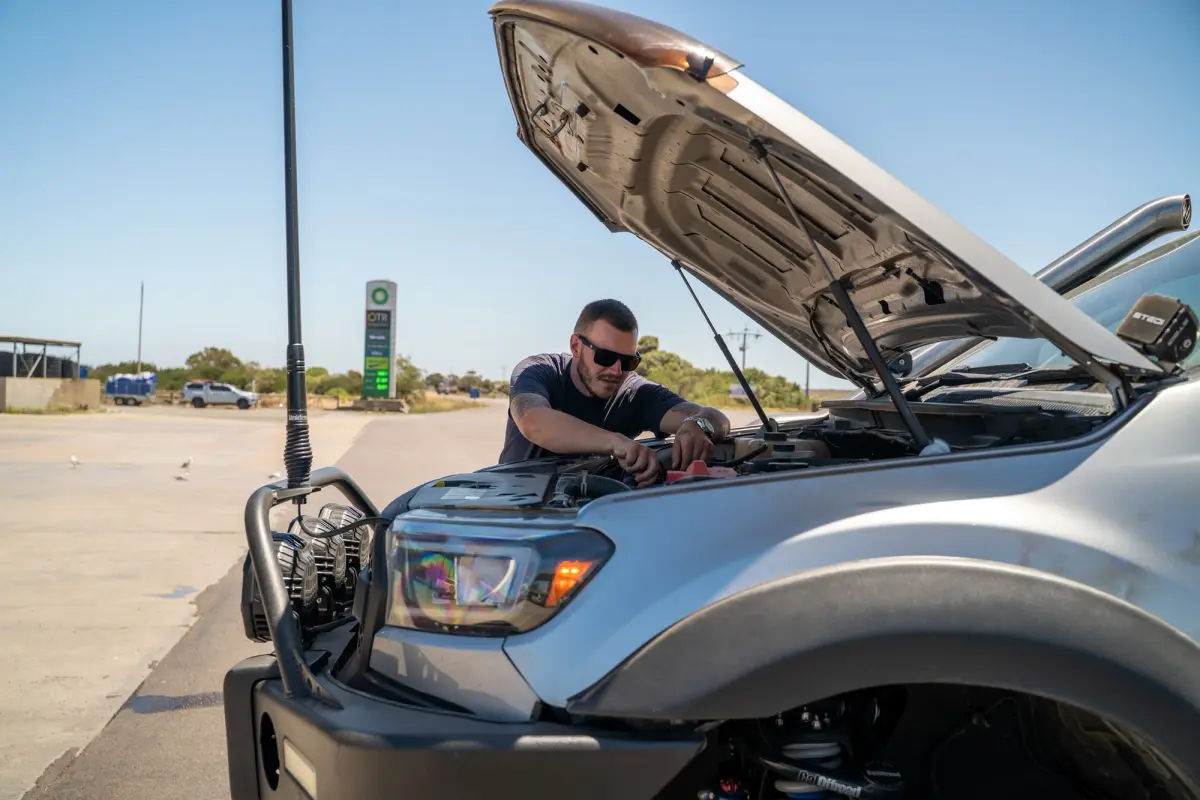
A man inspecting the engine bay of a Ford Ranger 4X4
Knowledge is Power
The chance of a bung sensor here or there doesn’t mean you should give up on modern vehicles. Most people are not going to trade in their 300 Series or Ranger for a carb-fed GQ Patrol, and nor should they. Modern vehicles bring plenty of perks, including better fuel economy, better emissions, and creature comforts that make long days on the road far more enjoyable.
The key is understanding your rig and preparing for the realities of touring in a tech-heavy setup.
Here’s a few ways to reduce your risk of getting caught out on your travels:
Carry an OBD2 scanner
Sometimes vehicles throw a code because they panic for a second and then realise everything is actually okay. This could be caused by temporary incorrect voltage or a momentary glitch in a sensor reading, something as simple as a dirty connection, a spike in temperature, or even electromagnetic interference.
In many of these cases, the ECU will store the code, even though the issue resolved itself almost instantly. It doesn’t always clear the fault until you use a scan tool to reset it, which is why so many owners find themselves dealing with a perfectly running car that’s stuck in limp mode or flashing warning lights across the dash.
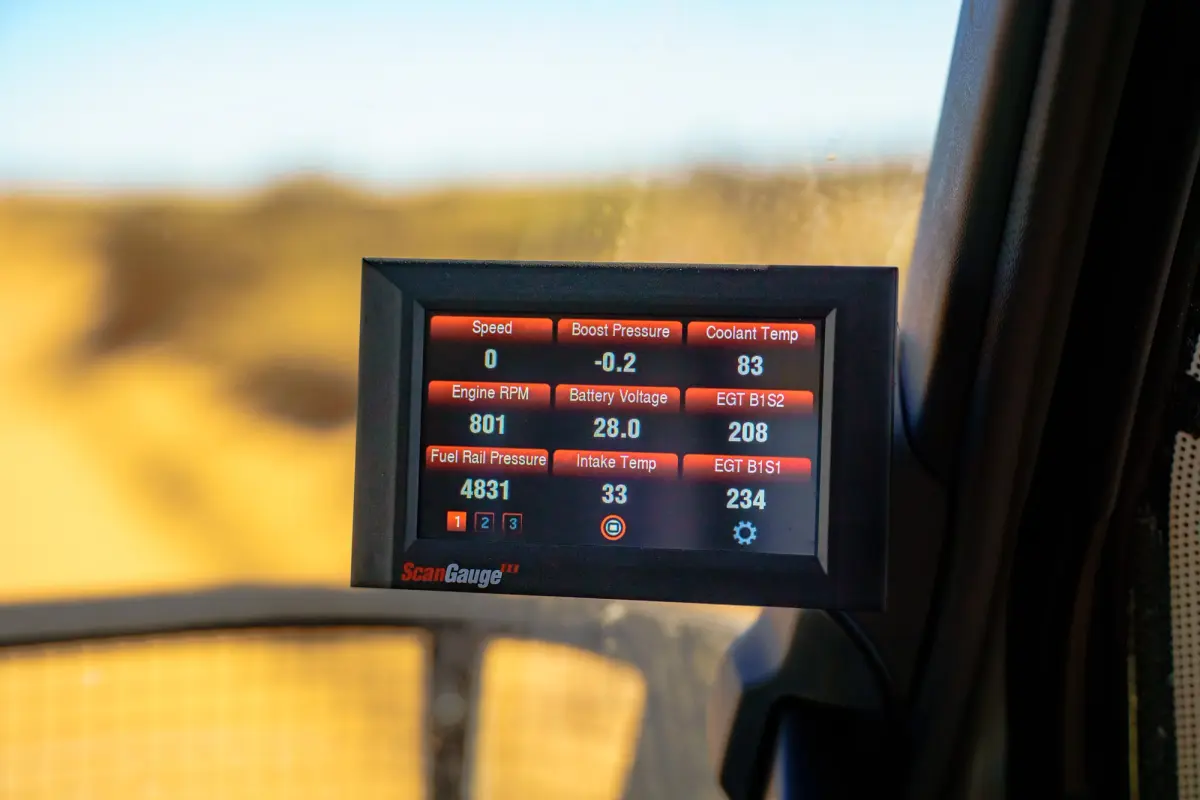
A gauge monitor in a 4X4
This is exactly why carrying an OBD2 scanner is essential. Just make sure it’s one that lets you clear those temporary “panic” codes on the spot, and in a lot of cases, get going again without waiting for a tow or dealer reset.
Know your weak points
Every modern 4WD has its quirks and common failure points. Whether it is a DPF that clogs up on short trips or an EGR valve that throws codes when it gets dirty, learn what to watch for. Forums, Facebook groups, and your local mechanic can help you build a list of what to look out for.
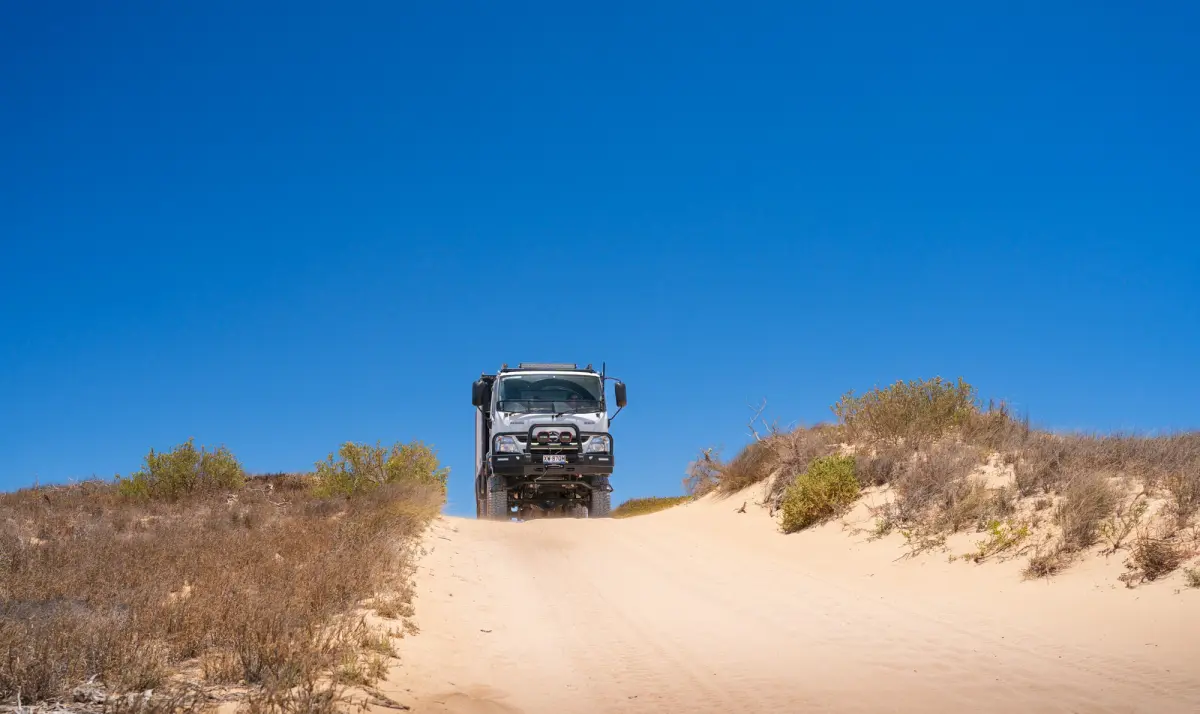
A 4X4 truck driving over a sand dune hill
Pack smart spares
Brake light switches, MAF sensors, relays, and fuses are all small, inexpensive, and often the first thing to fail in a high-tech environment. Having a few on board can save your bacon.
Learn to limp
Some vehicles have a limp mode that allows low-speed travel when faults are detected. Know what your vehicle will and will not do when things go wrong. This is not just useful, it can be the difference between getting home or utilising your Club 4X4 Recovery Cover.
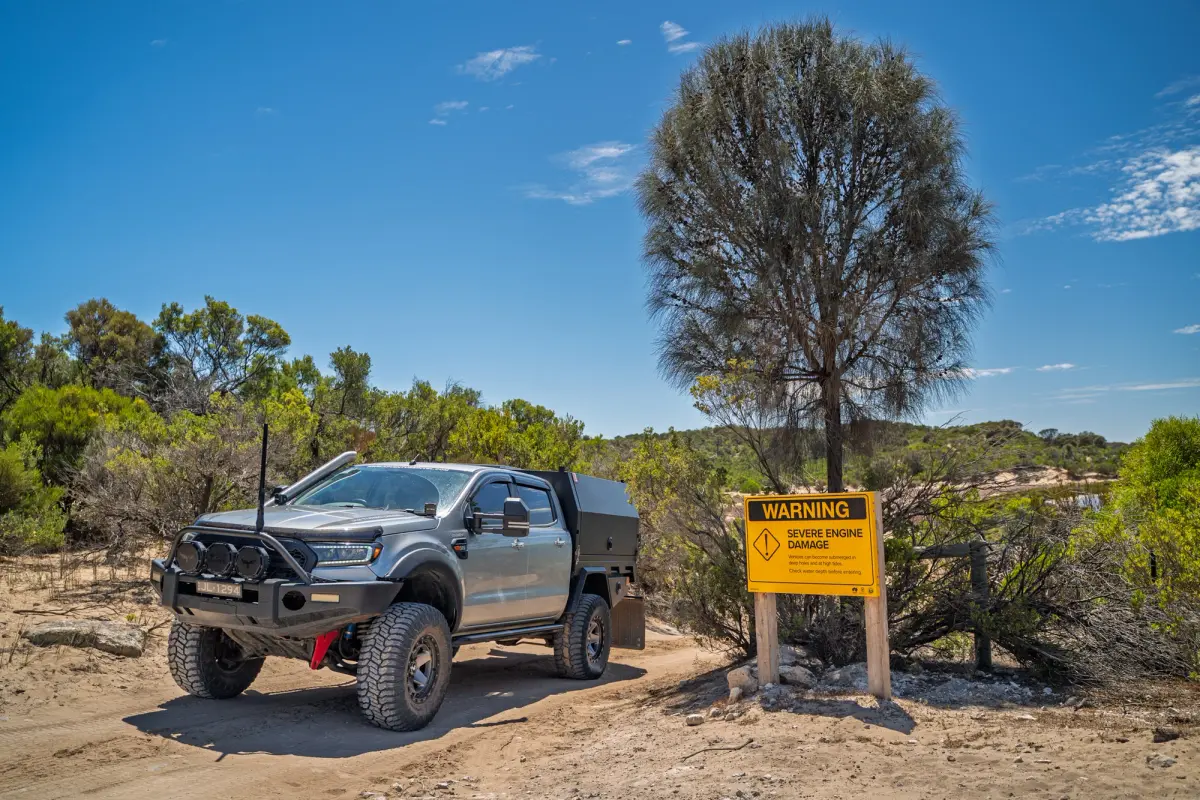
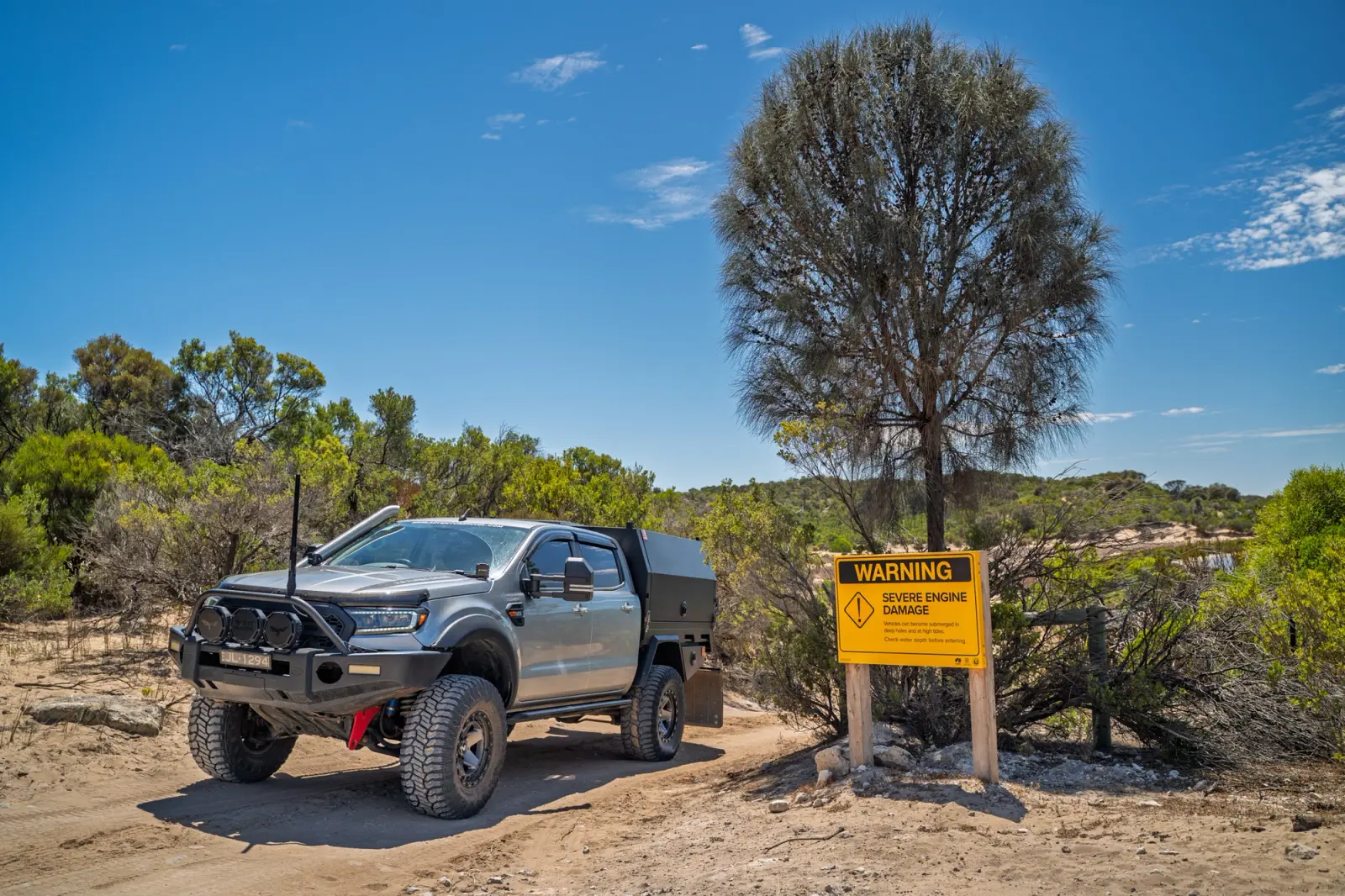
a 4X4 Ford Ranger next to a road sign reading "Warning: Severe Engine Damage"
Has The Tech Made Us Too Comfortable?
There’s a bigger conversation here that goes beyond just fault codes and scan tools. As 4X4s become more sophisticated, are we losing the self-reliance and bush smarts that have always been part of outback travel?
Once upon a time, heading off the grid meant knowing how to fix a flat with a plug kit, start a flooded engine, or bypass a dodgy solenoid. Today, it often means pulling out your phone to connect to your satellite modem and Googling fault codes.
We are not just relying on computers in our vehicles, we are relying on them in our problem-solving too.
There is nothing wrong with embracing technology. But if you head into remote country relying on your 4WD’s electronics to do the thinking for you, you are setting yourself up for a hard lesson.

A Ford Ranger 4X4 driving up a sand dune
Is your 4X4 chock-a-block with tech?
Cover it all with Club 4X4 Insurance