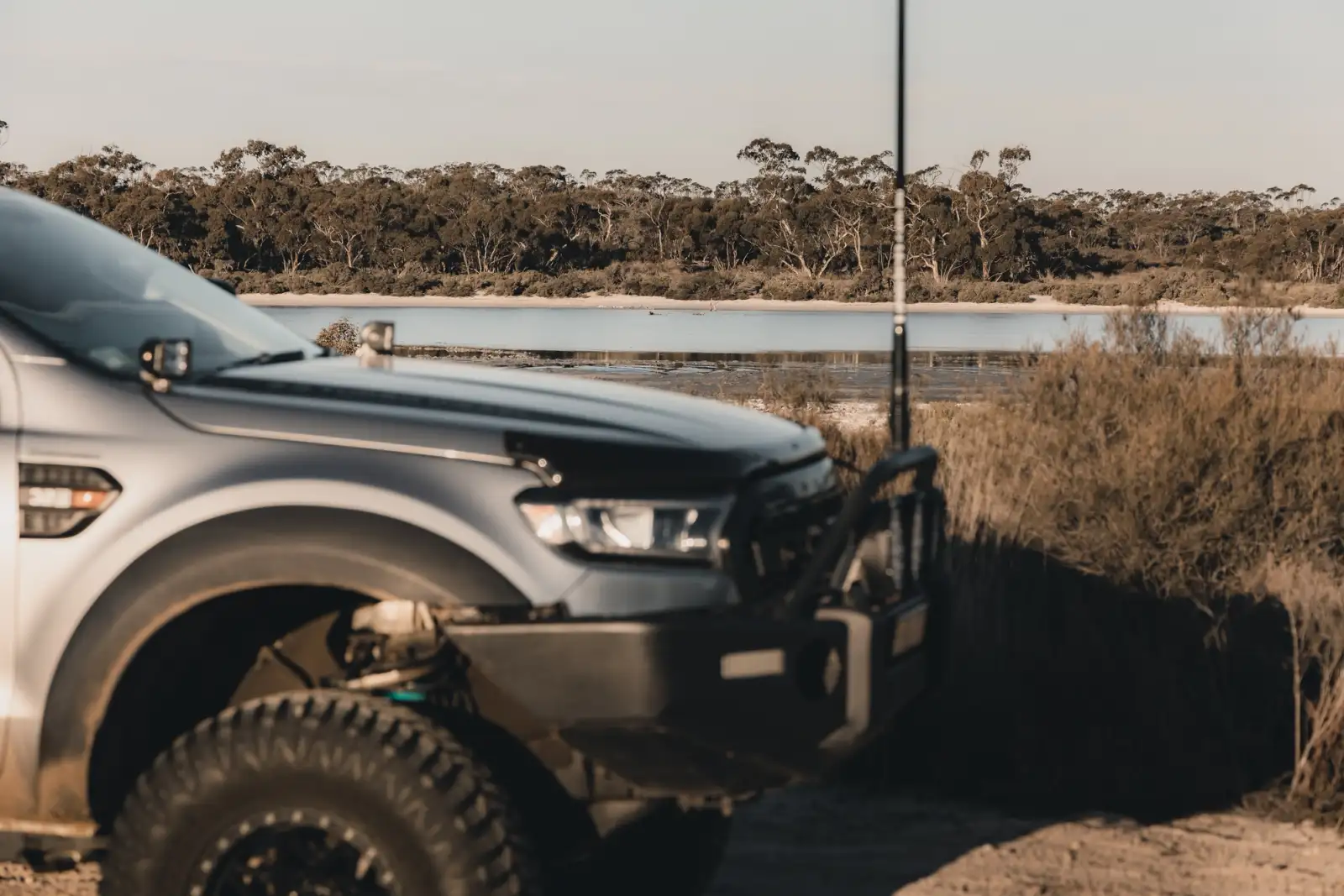
Have you ever ordered a Big Mac from Miccy D’s and been disappointed?
Not by the taste, the service, or because the teenager behind the counter has assembled it with the structural integrity of a condemned Queenslander. I mean disappointed by its size.
Hear me out, because I’ve been thinking about this, and some of the best things on this planet are little.
One of my mate’s newborns is roughly the size of a grain of rice compared to me, and if someone hurt him I reckon steam would physically come out of my ears. Now, obviously, a fair chunk of that is because I love the little bloke, but I’m convinced some of it is simply because he’s so bloody tiny.
The same thing happens when an old Beryl at the supermarket asks me to get something off the top shelf. I’m not annoyed by the inconvenience. Quite the opposite. For about eight seconds I feel like the most useful man in Australia, purely because Beryl is vertically challenged and somebody inexplicably decided the Corn Flakes belonged 2.1 metres above floor-level.
The theme continues with cars. The Volkswagen Up! is smaller than most vegetables and remains one of the most entertaining cars I’ve driven. Same goes for the Fiat 500 Abarth and Mini Cooper S, while one of my favourite motorbikes is a Sachs MadAss, a motorcycle so small and ridiculous I decided it was better suited to being parked in my living room than the garage.
Laid out like that, there’s a fairly compelling argument that good things really do come in small packages.
Big or small
We cover anywhere you can legally go in Australia
Which brings me, through perhaps the least conventional piece of tourism journalism ever attempted, to Little Desert National Park.
Because just up the road is Big Desert. And if we’re applying the same logic as Big Macs, newborns, elderly women and tiny European hatchbacks, calling one Big and the other Little tells us absolutely nothing about which one is actually better.
So, let’s settle it.
Accessibility: Little Desert Wins
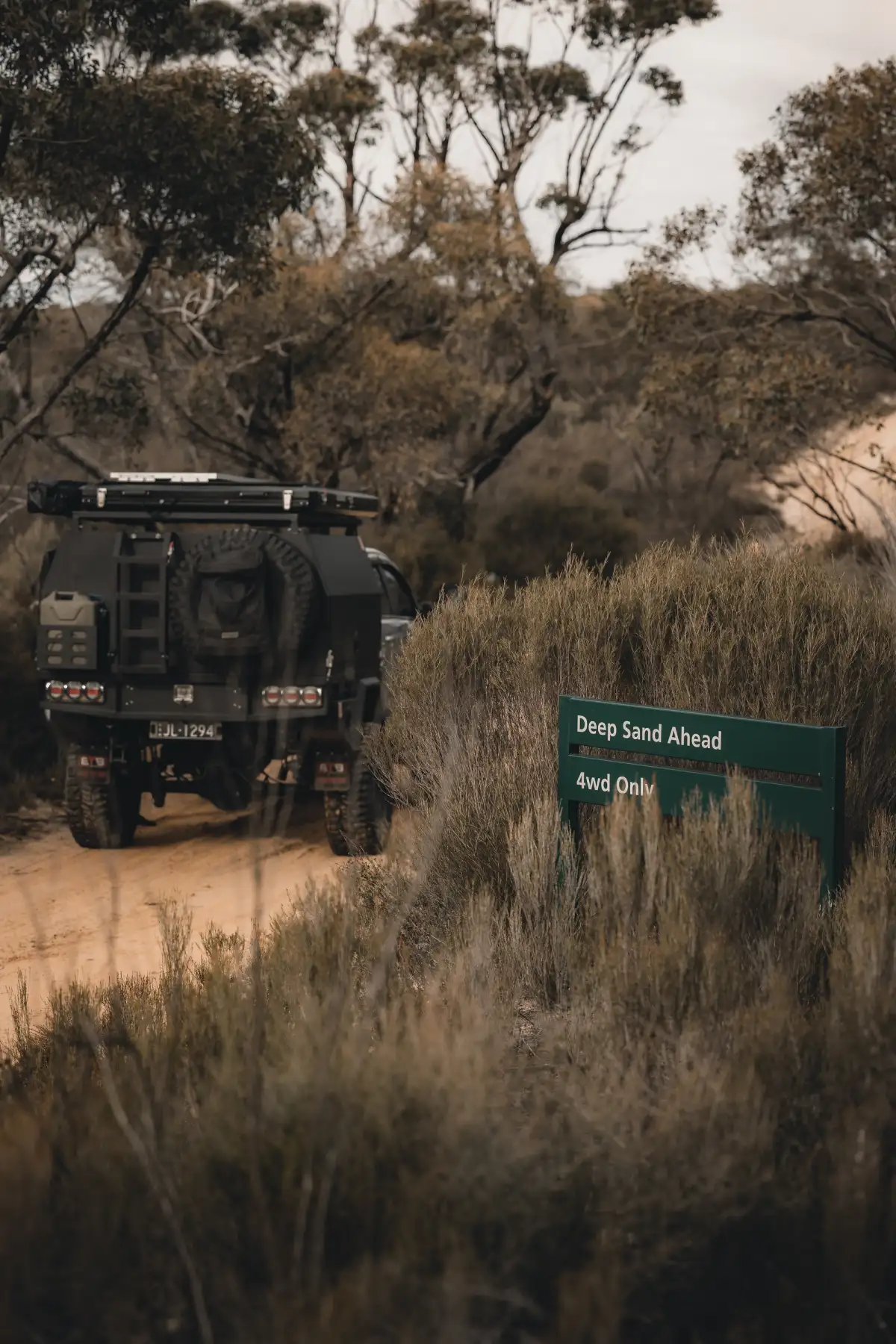
A 4X4 Ford Ranger in Australia with a sign warning of deep sand
The first thing Little Desert has going for it is how easy it is to experience.
Sitting around 330 kilometres west of Melbourne, the park stretches from the Wimmera River near Dimboola towards the South Australian border. The eastern end in particular is remarkably accessible, with Horseshoe Bend just seven kilometres south of Dimboola and reachable by a maintained unsealed road suitable for two-wheel drives, caravans and camper trailers.
That makes Little Desert a brilliant stepping stone for people who are interested in remote touring but aren't yet interested in explaining to their partner why the nearest supermarket is now three hours away.
You can set up camp beside the Wimmera River, leave the caravan behind and head exploring in the four-wheel drive. Horseshoe Bend and Ackle Bend give you riverfront camping, while the park becomes progressively more remote as you head west.
Big Desert asks for a little more commitment. It feels more isolated and, depending on where you're exploring, there’s less margin for arriving poorly prepped. Personally, I like that, but if this is your first taste of Victoria’s Mallee country, Little Desert is the easier place to start.
Four-wheel Driving: now it gets Interesting
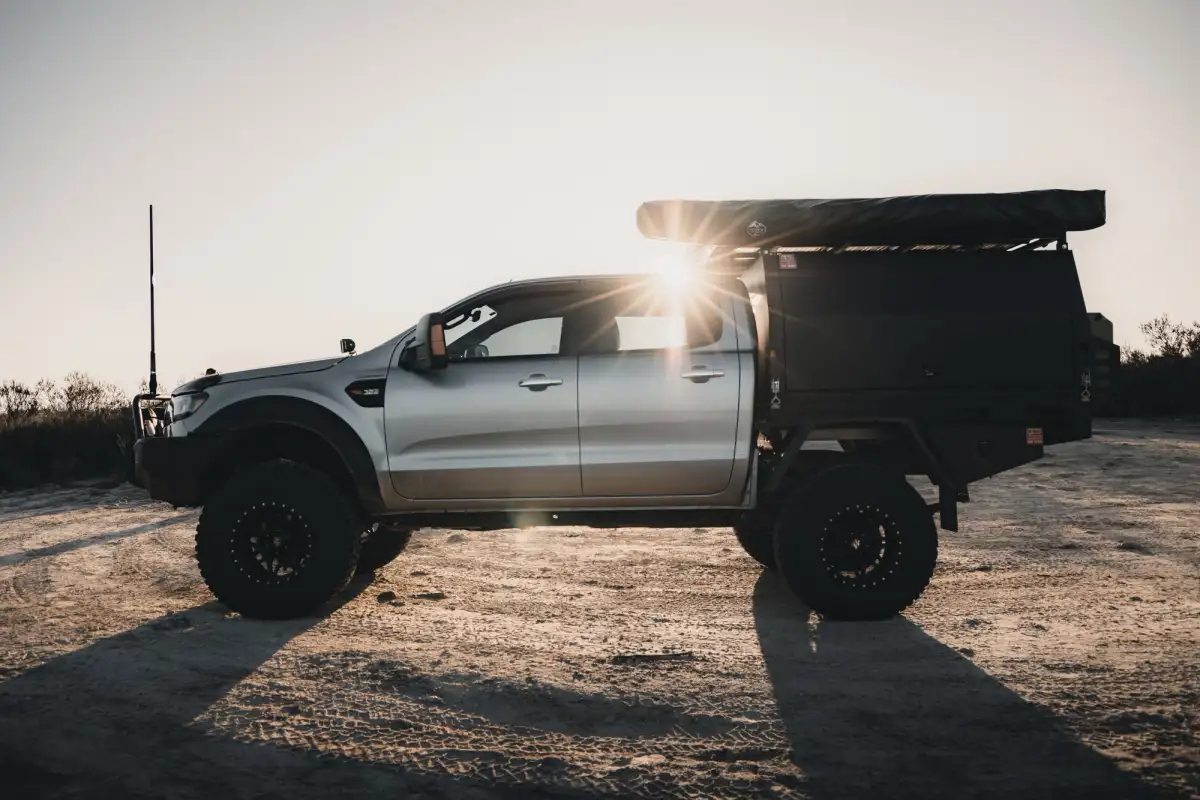
A modified 4X4 Ford Ranger in Australia
Don't confuse accessible with boring.
Little Desert contains plenty of sandy 4X4 tracks, and the further west you travel, the more serious things become. Parks Victoria specifically recommends the western section towards the South Australian border for more experienced drivers, and notes that tracks can be sandy, become boggy and be subject to seasonal closures.
Sand is one of those surfaces that quickly exposes bad habits because brute force generally makes things worse. If you're starting to struggle, don't immediately bury the accelerator and begin drilling for groundwater. Stop while the vehicle is still sitting on the sand.
Tyre pressure is your greatest tool here. There isn't a magical number because a 3.5-tonne wagon on light-truck tyres and a heavily loaded touring ute aren't the same animal, but reducing pressure increases the length of the tyre's footprint and helps the vehicle float across soft sand rather than dig through it.
Make changes gradually, see how the vehicle responds and remember that reduced tyre pressure also means reduced speed. Sharp steering inputs and high speeds on aired-down tyres are an excellent way to turn a pleasant weekend into an opportunity to learn how tyre beads work.
Once pressures are right, use smooth throttle and maintain sensible momentum. I generally find the biggest mistake people make in sand is waiting until they're already bogged before doing anything differently. If the vehicle suddenly needs twice the throttle to maintain the same speed, that's information. The sand has changed. Listen to the vehicle before it sends you a second, considerably more expensive message.
At minimum, I'd carry a proper compressor, accurate tyre gauge, long-handled shovel and recovery boards, along with normal recovery equipment. I'd also know where my rated recovery points are before getting stuck. Lying underneath a bogged four-wheel drive in sand while Googling “is tie-down point same as recovery point?” is leaving the research phase a little late.
For sustained sand driving, though, I still give Big Desert the win. The experience feels more remote and sand plays a bigger role in the trip rather than simply being one part of it.
Camping: Little Desert by a Nose
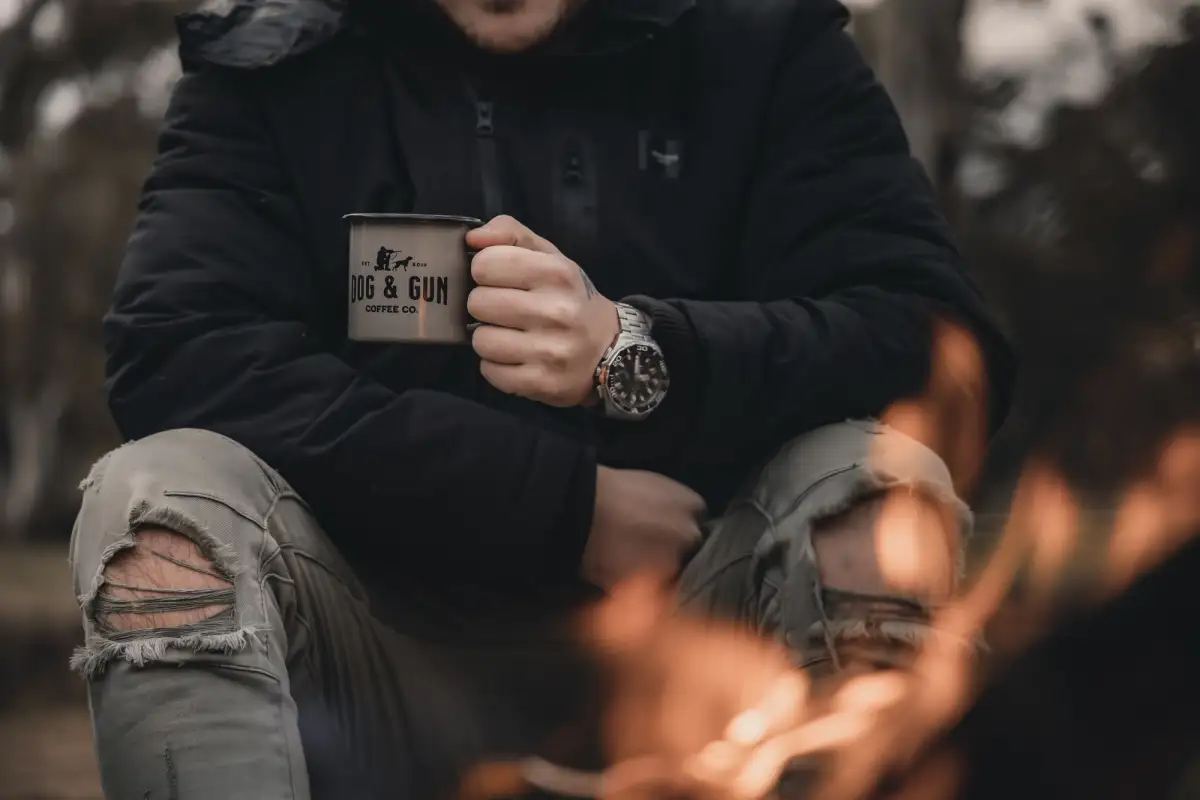
A man by a campfire, nursing a mug of coffee
Little Desert offers a better range of camping experiences.
Horseshoe Bend is a ripper introduction, sitting among River Red Gums on the Wimmera River with toilets, fireplaces and picnic tables. You can fish, paddle, wander around the river or simply sit at camp doing absolutely nothing, an activity I increasingly believe should be recognised as a competitive sport. There's no drinking water supplied, so bring your own rather than assuming “river nearby” constitutes a hydration plan.
There are more remote options as you push further into the park, including dispersed camping opportunities in appropriate areas of the western block. That's where Little Desert begins to feel much bigger than its name suggests.
Big Desert still wins if what you want is that genuine sense of isolation. But Little Desert gives you choices. You can introduce the family to bush camping without immediately testing the strength of your marriage, or you can push west, become more self-sufficient and make the trip as remote as your experience allows.
Experience and Uniqueness: Depends what you're there for
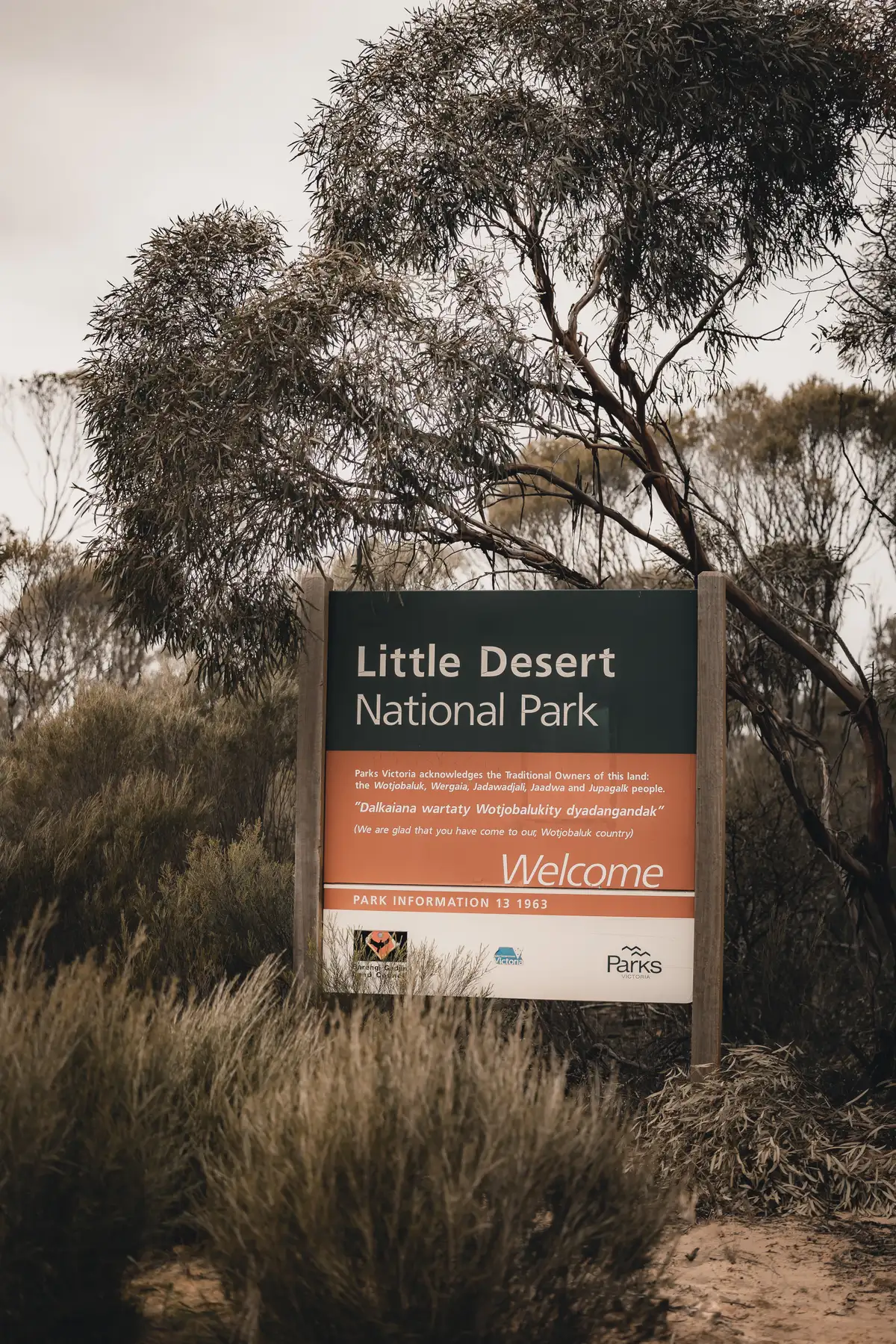
A sign for Little Desert National Park
Here's where comparing the two purely as 4X4 destinations becomes unfair to Little Desert.
The place is extraordinarily diverse. Different soil types support noticeably different vegetation communities, and late winter through to early summer is generally regarded as the best period to visit, particularly when the wildflowers are going.
There’s excellent birdlife, short walks and, when accessible, longer walking opportunities through the park. Around Horseshoe Bend you've also got the Wimmera River, which completely changes the character of the place.
Big Desert feels harsher and more remote. Little Desert feels more varied.
If I were taking a group of four-wheel drivers who wanted to spend the entire weekend learning sand technique, I'd choose Big Desert. If I were taking my missus, a couple of mates, some kids or anyone who doesn't consider discussing tyre construction around a campfire to be stimulating conversation, Little Desert is probably the better trip.
There's simply more variety in the experience.
One Important Thing Before you go
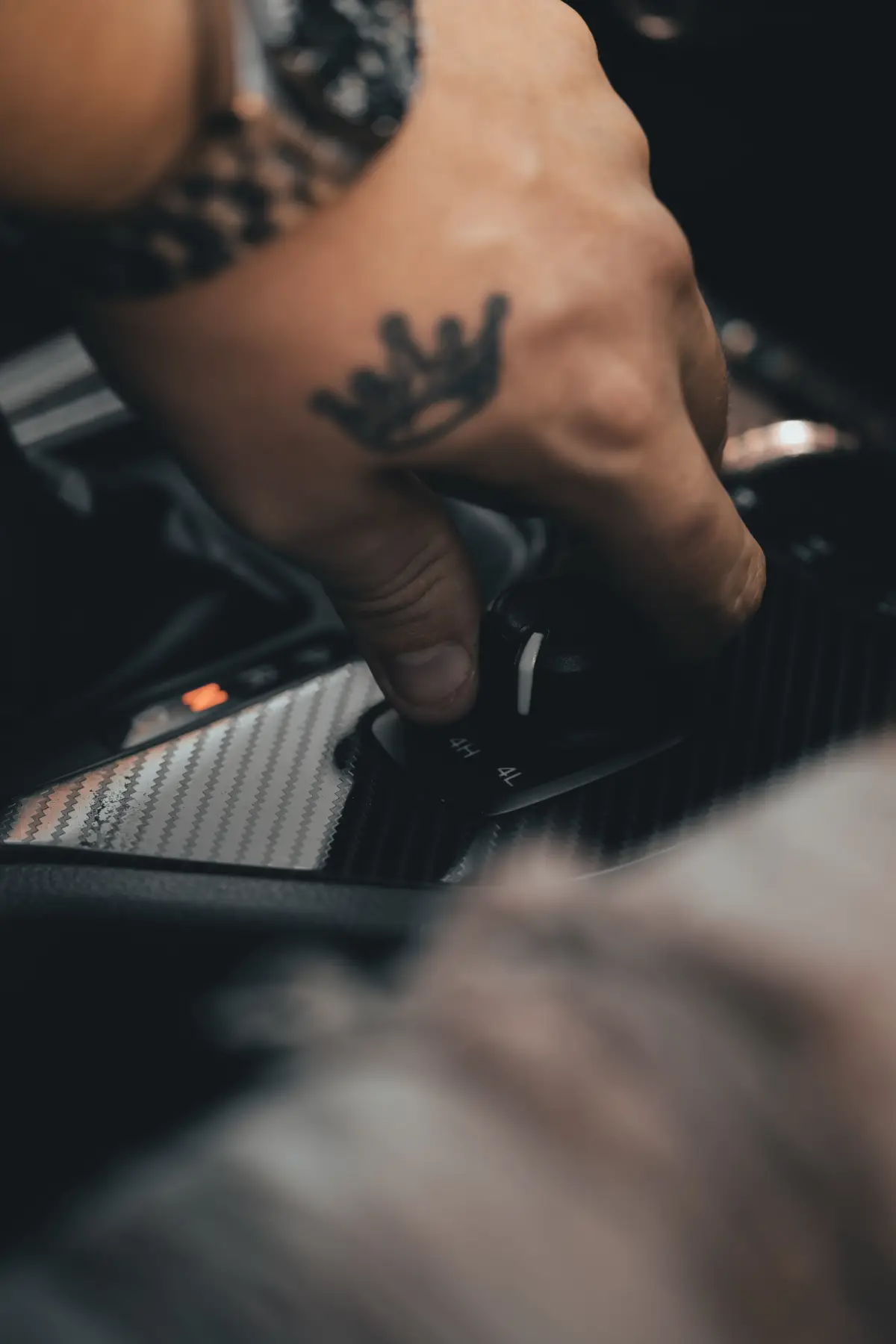
A tattooed hand of a man on a 4X4's gear stick
Conditions in this country can change enormously, and at the time of writing that's particularly important.
A major bushfire in January 2025 affected around 70 per cent of Little Desert National Park. Reopening has been staged, and while places including Horseshoe Bend, Ackle Bend and the Western Block have reopened, significant parts of the Eastern and Central Blocks remain closed while recovery work continues.
So don't blindly follow an old GPX file or assume that because I drove a track in a YouTube video three years ago, you can drive it today. Check Parks Victoria's current conditions immediately before leaving.
That advice applies after rain too. Tracks can become boggy when wet, and seasonal closures exist for a reason.
So, is Little Desert Better than Big Desert?
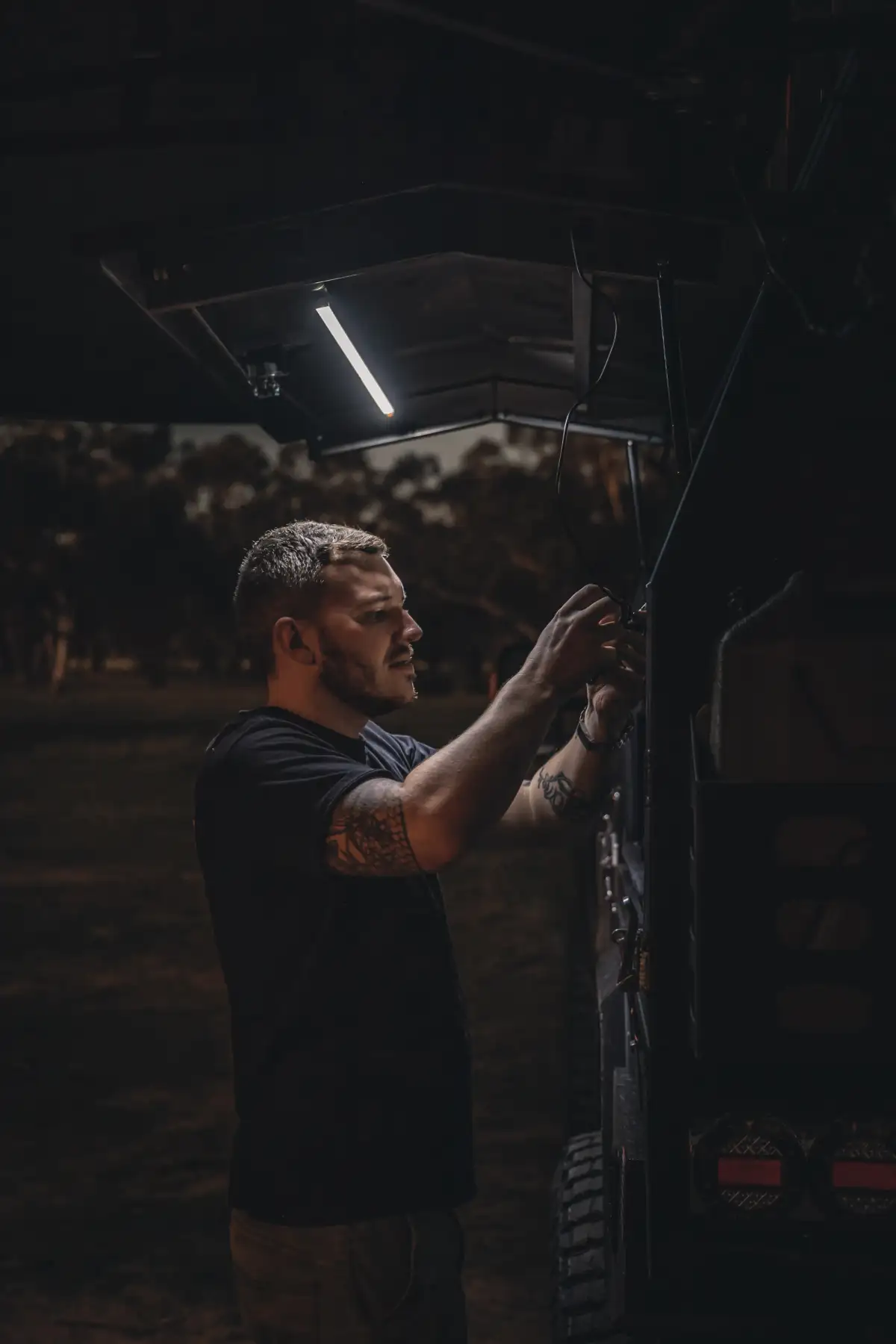
Josh Leonard under the light of his 4X4 Ford Ranger's canopy
For the majority of people, I reckon it will be.
If you're new to 4WD'ing, Little Desert is the one I'd recommend first. You can ease into the experience, learn how your vehicle behaves in sand and base yourself somewhere relatively accessible while still having proper 4X4 country nearby.
For families and mixed groups, Little Desert wins again. The river, camping, walking, wildlife and changing landscapes mean the trip doesn't fall apart if somebody announces they've had enough of sitting in a 4WD (if such a thing has ever been declared).
But for experienced tourers specifically chasing sand, isolation and a greater feeling of remoteness, Big Desert gets my vote. It's more specialised, which is both its weakness and exactly what makes it brilliant.
The best answer, naturally, is to visit both.
Because Little Desert isn't really a smaller Big Desert at all. It's easier to access, more varied and arguably better suited to more people, while still having enough proper sandy 4WD’ing in its western reaches to catch out anyone who mistakes confidence for tyre pressure.
So perhaps the Big Mac theory holds up after all.
Bigger doesn't necessarily mean better.
Sometimes it just means you ordered more of one particular thing.
Big or small
We cover anywhere you can legally go in Australia