Why Light 4x4 Trucks Are Having a Moment in Australia
An increasing number of 4WDers in Australia are having to manage the weight of their vehicles as utes are being asked to do more than ever. Once you add a tray, a canopy, water, fuel, tools, drawers, spares and all the other mods, you’re looking at a fourbie that is now operating at or beyond its limits, long before it leaves the bitumen.
A light truck 4X4 solves this problem. With almost 14,000 units sold in 2025 (Trucksales data), they’re becoming the go-to for many tourers and off-roaders. It’s designed to carry this weight and without any compromises. Their platforms bring inherent stability, wider tracks, heavier components and higher load ratings, so instead of being stressed, they’re settled.
Choosing the best light truck in Australia for 4WDers comes down to a few key factors:
· Planned setup
· Passenger count
· Whether or not you’re towing
· Budget
To help you decide, we’ve looked at some of the most popular light trucks in Australia. We’ll go through the different models, their specs, what they excel at and what it’s like owning them. By the end, you should:
1. Know whether a light truck is for you, and;
2. Which one suits your lifestyle
Light Truck VS Ute: What the Numbers Actually Mean
For the Aussie who needs a set of capable off-road wheels that can handle some weight and tow a couple tonnes, a ute is generally the winning candidate. They’re also highly modifiable, have massive tray space for all the gear and are manageable in urban environments.
Light trucks, on the other hand, are built for the open road.The trade-off? More towing capacity, payload and fit-out flexibility. For tradies, you can keep the tray body and stack it with gear. Tourers have a massive area to work with, capable of being fitted with a camper habitat or a canopy with a rooftop tent and all the mods you could dream of. They can even ditch the tent and throw a caravan or camper behind it. For families, some light trucks will seat seven, so forget the ute’s 5-seat limit. The light truck comes up trumps in all categories bar manoeuvrability, which depending on how and where you drive, may not matter.
Your average single-cab ute is maybe 1,000-1,200kg, whereas a light truck is built to carry 3,000-4,000kg and has an extra 2-3 metres of load length. While the extra weight is nice, it means they can be weighed down, and it’s felt when in motion. Slow climbs to speed (speed’s a generous word) and a harsher ride on and off-road can be a factor if comfort is front of mind.
Being taller and wider than utes also means they will inherently be more limited in terms of access. You wouldn’t want one in the Victorian High Country, but on beaches, deserts and wider tracks, they feel at home.
Thinking of a light truck for your next 4X4?
Get comprehensive insurance that's just as capable.
GVM, Payload, and Why a Truck Licence Changes Everything
A higher GVM equals a higher payload capacity. This means more passengers, cargo, fuel and modifications can safely and legally be carried. A standard car licence will cap out at a 4,500kg GVM limit, and many light trucks will sneak in under that by having a GVM of 4,495kg, therefore being able to be driven by standard car licence holders.
Most 4X4 light trucks in Australia have a GVM between 4,495kg and 7,500kg and the ones on the lower end are usually able to be upgraded. Once over that 4,500kg threshold, a truck licence is required to operate these vehicles. Depending on the light truck you drive, you could need anything from a light rigid (LR) to a heavy rigid (HR) licence. These also allow you to tow heavier trailers.
With a truck licence, you open the door to a whole other world of builds. Think complete motorhome habitats. The GVM also directly affects the payload, so fill those water tanks, auxiliary fuel tanks and drawers, because you’d be hard pressed to test that limit with a weekend getaway. The stress of managing weight in a traditional 4WD becomes an afterthought.
A typical ute with a bullbar and winch (50kg), a second battery (15-40kg), a tow bar (10kg), an auxiliary fuel tank (140kg), tools (10kg), a recovery kit (10kg) a full fridge (50kg) and a family of passengers could already be pushing half of the available payload. Add the towball weight of a trailer (around 200kgs) and you’re left with very little.
Read our guide to vehicle and towing weights here.
Body Options and Fit-Out Flexibility
Light trucks come with a few body options thanks to their use across various industries.
These generally come as either single or dual cab and each has their own use, both commercially and privately. The most common among 4WDers in Australia is the tray body as it allows for the most customisation. The others are more suited for commercial use but can be used to great effect for off-roading.
Tray Body
Tray bodies are a direct upgrade to your run-of-the-mill utes. Thanks to their simple design and lighter body they’re able to carry a lot more equipment. These bodies are also easily modifiable with canopies, toolboxes and drawers.
Service Body
Service bodies are designed for tradespeople and service technicians, coming equipped with huge secure toolboxes and space for materials. Unless planning to buy second hand and modify, a tray body will be a better option.
Tipper
The tipper truck does exactly what it sounds like it would. Tip. Again, not ideal for off-roaders and more suited to landscapers and supply businesses.
Van
The van body can be a popular choice with 4X4 models like the Mercedes Sprinter being seen more off-road. They can be fitted with rooftop tents, pop-tops or have sleeping quarters in their body like a campervan. They do lack the extra room, and the body adds extra weight, limiting how the GVM can be maximised.
Top 4x4 Cab Chassis Trucks to Consider in Australia
There's a wide range of light trucks on the Australian market, and choosing the best one will depend on your needs and budget.
Isuzu N Series
The Isuzu N Series of light trucks are extremely popular in Australia and with 84 configurable options across the series, it would be impossible to go in depth on them all.
The N Series offers the following body types:
· Cab-Chassis
· Crew
· Traypack
· Tradepack
· Vanpack
· Servicepack
· Tipper
Within these, there are eight different sub-series, varying in GVM, GCM, torque and power. Only two of these have 4X4 options, the NPS and NQS, both of which are available in single and crew cab variants.
For full off-road use, the Isuzu light trucks need a suspension and wheel conversion, but once completed, they become highly capable.
Hino 300 Series
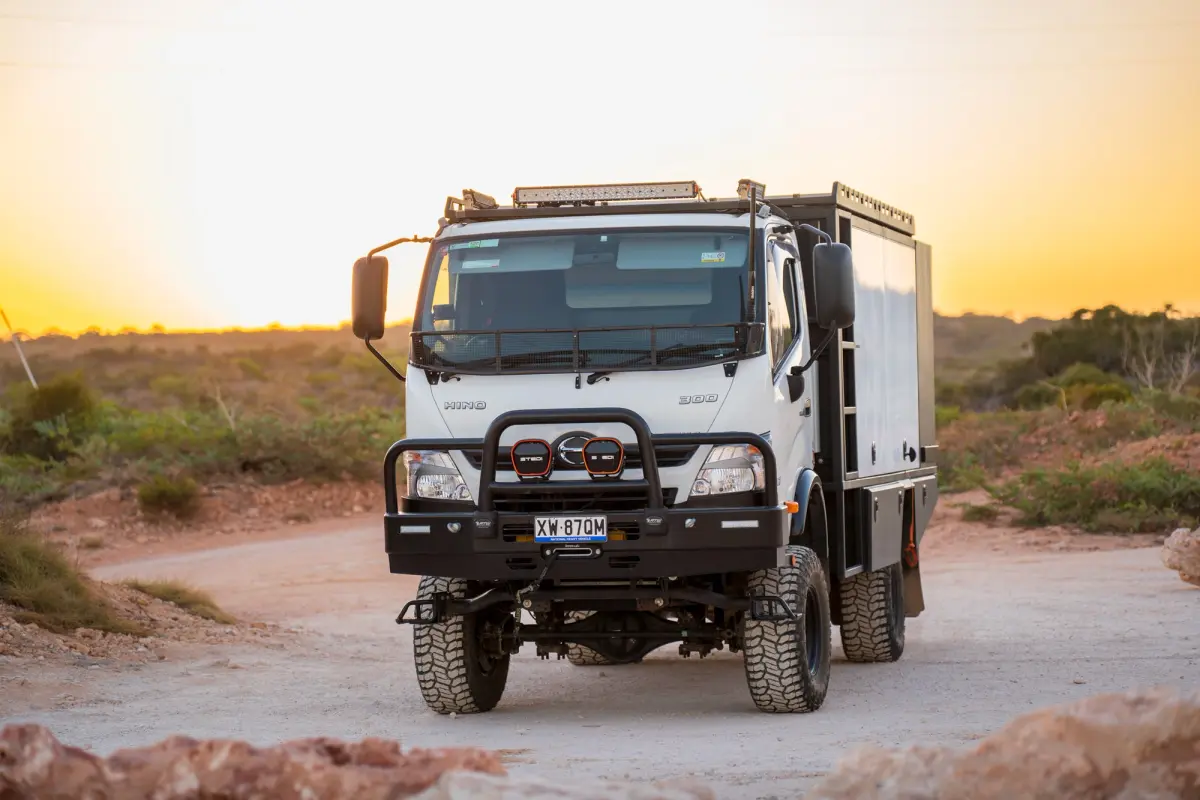
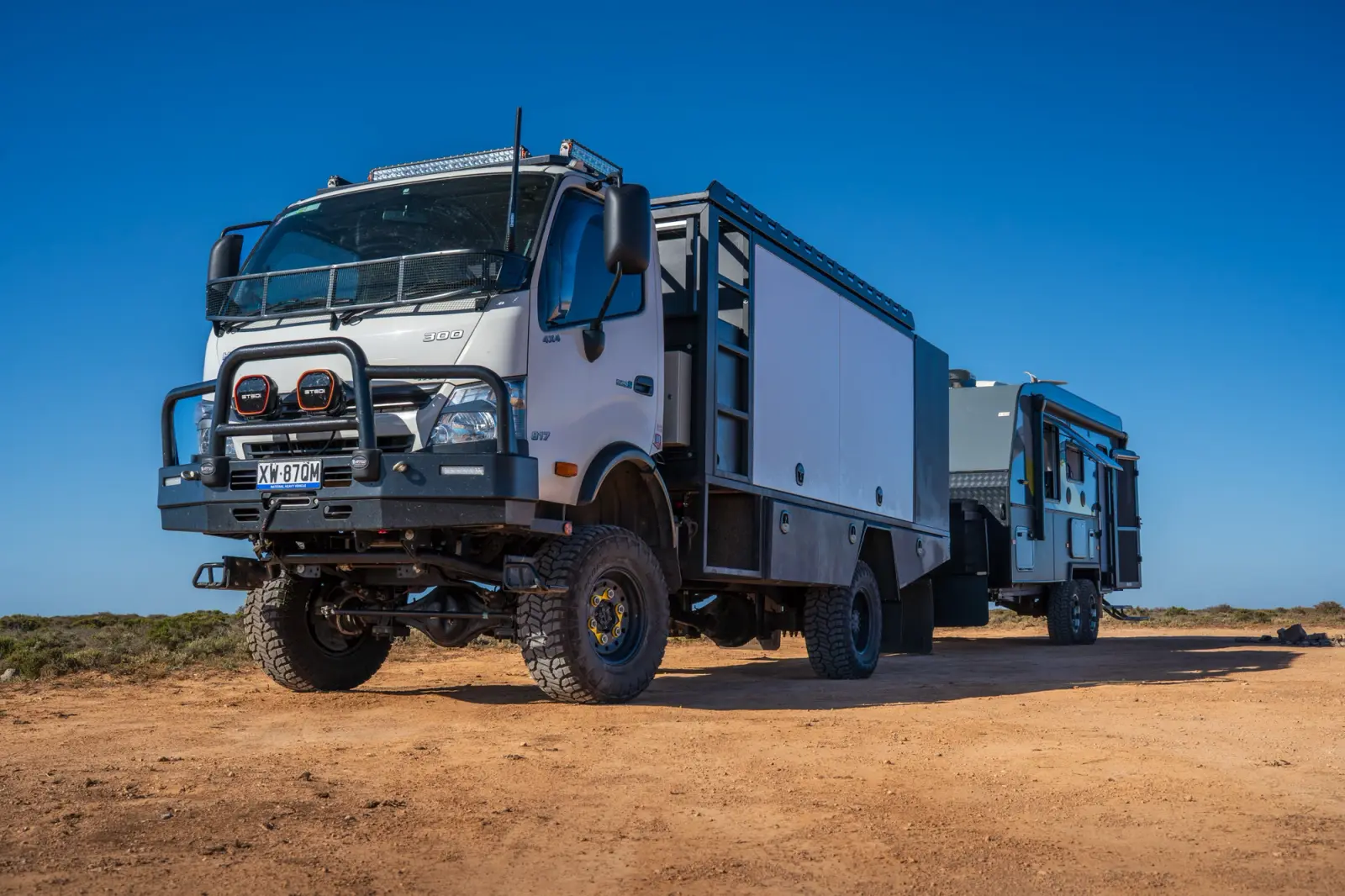
Hino 300 Series 4X4 light truck
This Japanese truck is a little bigger than the Isuzu trucks but also needs a suspension and wheel conversion to really thrive off-road. These trucks do come with electronic stability control and traction control but being slightly newer than some other light trucks on the market, the aftermarket options are still developing.
The series’ GVM ranges from 4,500kg to 8,500kg and with massive clearance and approach angle—being a cabover—means tackling obstacles like river crossings with steep entries is no problem. They come in both single and dual cab too, so you have some flexibility on how your space is allocated.
Fuso Canter
The Fuso Canter is on the smaller side for the light truck category, but has a 6,500kg GVM and 10,000kg GCM. Because of this, an LR licence would normally be required, but Fuso offers to re-rate the vehicles to be able to drive on standard passenger car licences.
They come in either single or crew cab, seating up to seven, as well as off-road tyres, lockable front hubs and a rear limited slip diff. The tyres, however, are a little small, so should be changed to better handle off-road environments and companies in Australia will modify the rear dual tyres.
The Canter is a well-established 4X4 light truck in Australia and is heavily supported for modifications with body options like complete motorhomes available. In terms of nimbleness, it’s as good as it’s getting in this 4X4 category and tops the category as the most budget-friendly option.
Iveco Daily
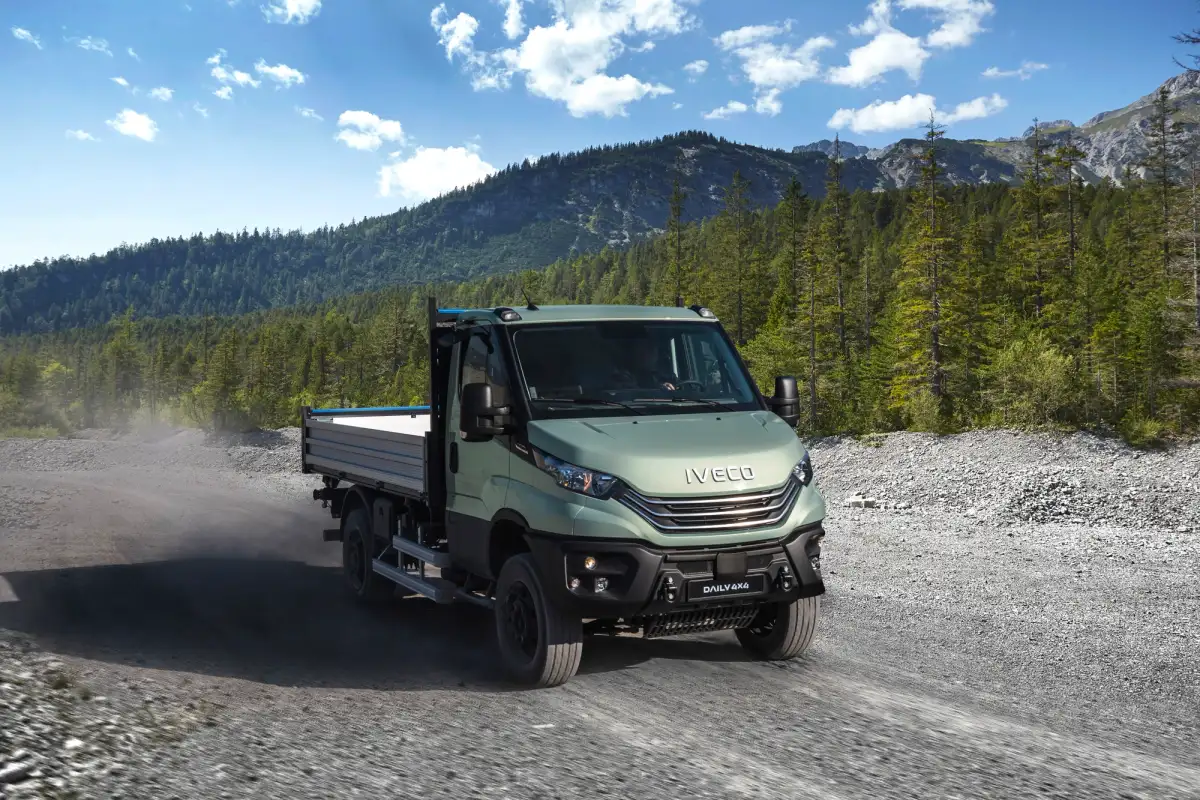
IVECO Daily 4X4 in green in a forest
Image courtesy of IVECO
The Iveco Daily is probably the light truck best geared for the off-road lifestyle. Standard 37s, full-time 4WD, a lockable centre diff, front and rear cross-axle lockers, twin transfer cases and setback cab.. They have a history of not having the same reliability as their Japanese counterparts but are more than capable for all types of tourers and off-road wheelers.
The Daily also has single and dual cab variants, and can be driven on a standard car licence, sitting at a 4,495kg GVM. This can be upgraded to 5,500kg or 7,000kg, though. Driving the Daily takes some getting used to with its height, but once comfortable with it, it’s a real advantage in off-road scenarios. Tyre placement becomes easier and the seat itself has suspension, so your guts aren’t rocking around as much.
Modifications, Compliance, and What to Think About Before You Build
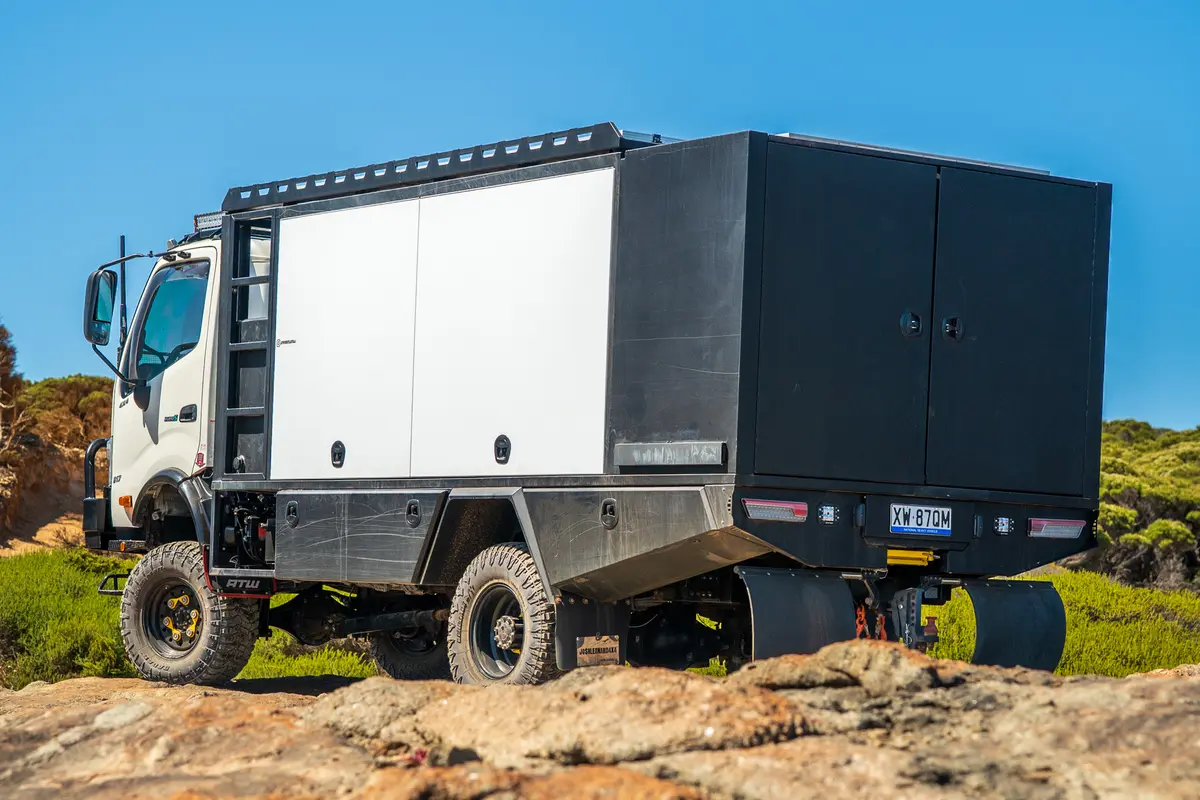
Hino 300 Series 4X4 light truck with canopy
This is the fun part, but it’s not without its laws and regulations. Turning a cab-chassis into a tourer, workhorse or full-blown overlander is is all possible, but being compliant is key. You can’t simply bolt on a tray, canopy or camper body and head off. Weight distribution, mounting points and overall vehicle mass need to stay within manufacturer limits, particularly the GCM and axle loads.
With many heavier builds, modifications may require inspection or certification by a qualified automotive engineer. This varies by state and territory, so ensure you’re aware of your local guidelines. Checking this early in the build process will help avoid any costly rework late down the track.
In Australia, light trucks and utes are over-represented in serious road incidents (Australasian New Car Assessment Program (ANCAP)). When upgrading, it would also be worth digging into the spec sheet to see what’s included in the safety department. Things like lane-keeping assist and autonomous emergency braking (AEB) can be more than nice-to-haves in these trucks and making sure they aren’t affected by modifications is important.
Finally, think about how your modifications fit into the bigger ownership picture. Accessories and custom builds can add significant value, but many standard insurance policies don’t automatically cover them. Specialist insurers tend to take a more tailored approach, accounting for declared modifications and agreed values. It’s not the most exciting part of the build, but getting it right can save a lot of pain if things go sideways.
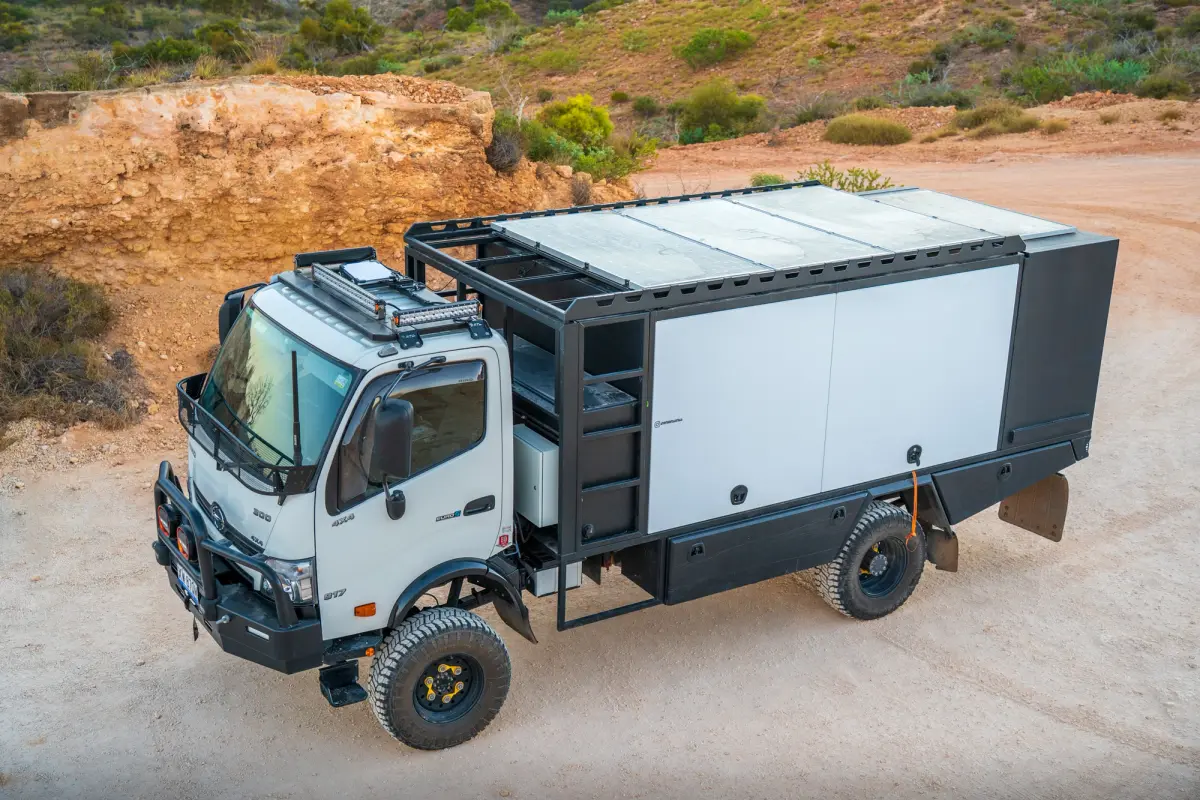
bird's eye view of Hino 300 series 4X4 light truck, showing Starlink
Gear Worth Specifying from the Factory vs Aftermarket
Many of these 4X4 light trucks have off-road options from factory. When choosing yours, there’s a few you should check for and tick off to get ahead on your build.
Factory options:
· Rear differential locks (and front, if available)
· High-low transfer case
· Traction control
· Off-road tyres
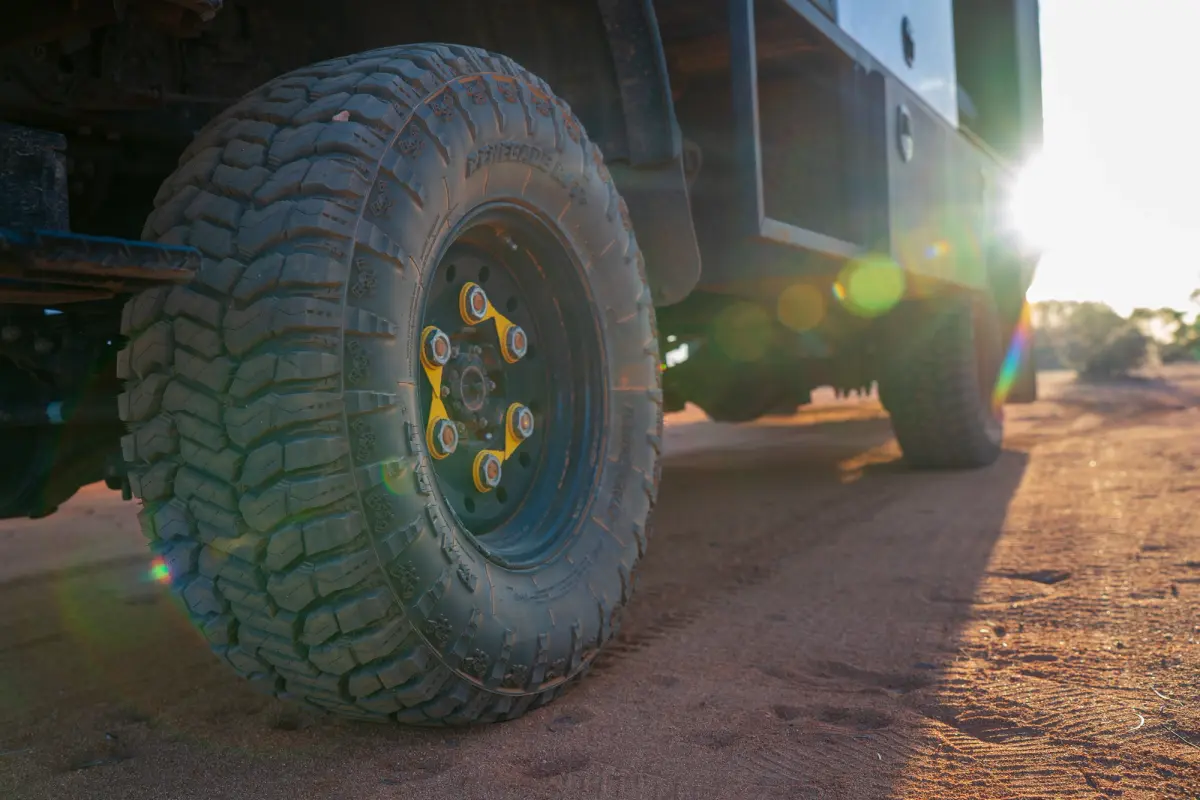
off-road tryes on a Hino 300 Series 4X4 light truck
· Autonomous emergency braking
· Lane-keeping assist and adaptive cruise control
· Upgraded alternator or dual-battery prep (where offered)
· Tow package with rated hitch and wiring loom
· Heavy-duty suspension or GVM upgrade (OEM approved)
These features are designed to work seamlessly with the vehicle’s electronics, safety systems, and compliance standards. Retrofitting them later can be expensive, or in some cases, not possible to do properly.
· Bullbar and side steps
· Winches and recovery points
· Driving lights and light bars
· Snorkels
· Roof racks and load platforms
· Drawer systems and fridge slides
· Trays, canopies, or camper modules
Not to say these can’t come factory fitted, but this is the gear that usually comes after and is more personalised. The key is ensuring everything is installed correctly, stays within weight limits and complies with local regulations.
Running a 4x4 Light Truck in Australia: Real-World Ownership Costs
Owning a 4x4 light truck is less about upfront spend and more about understanding the ongoing commitments. Three areas shape the day-to-day reality: registration, servicing, and fuel use.
Registration depends on how your vehicle is classified. If your build pushes Gross Vehicle Mass (GVM) beyond 4,500 kg, it may fall into a light rigid category, which can change licensing requirements and annual rego structures. Even below that threshold, modifications can affect how the vehicle is recorded, so it’s worth confirming details once your build is complete.
Servicing is another key consideration. Light trucks often run shorter service intervals than passenger vehicles, especially when working hard—towing, carrying loads, or touring remotely. Access to parts, service locations, and downtime all factor into how practical your setup is over time.
Fuel use varies widely depending on weight, aerodynamics, and how you drive. A bare cab chassis will behave very differently to one carrying a full canopy or camper body, particularly on long highway runs or soft terrain.
Ready to Go Further?
Cab chassis 4X4s aren’t just a variation of a ute, but a step up for buyers who genuinely need more. More payload, more flexibility in how the vehicle is set up, and more capability when the road disappears. Whether it’s a tradie building a purpose-fit service body or a tourer creating a self-sufficient camper, the platform is designed to adapt to the job. The trade-off is that it demands a bit more thought. Around compliance, safety, and setup. But for the right use case, it’s one of the most capable and versatile options on the road.
Thinking of a light truck for your next 4X4?
Get comprehensive insurance that's just as capable.