You know it, you love it, and chances are you know someone who owns one. The Isuzu MU-X has become one of Australia’s favourite ute-based SUVs, and for good reason. Known for its reliability, versatility and rugged practicality, the MU-X has carved out a reputation as the go-to choice for families, adventurers and anyone who needs a vehicle that can handle the school run just as easily as the Simpson Desert.
The thing with reputations is they can only go so far. At Club 4X4, we believe that a vehicle’s real character comes out when the bitumen ends. That's why we left the suburbs behind and took the MU-X off the beaten track to see how it stacks up where it really matters. From towing capacity to off-road handling, comfort to reliability, we put the MU-X through its paces so you can decide whether it is the right companion for your next adventure.
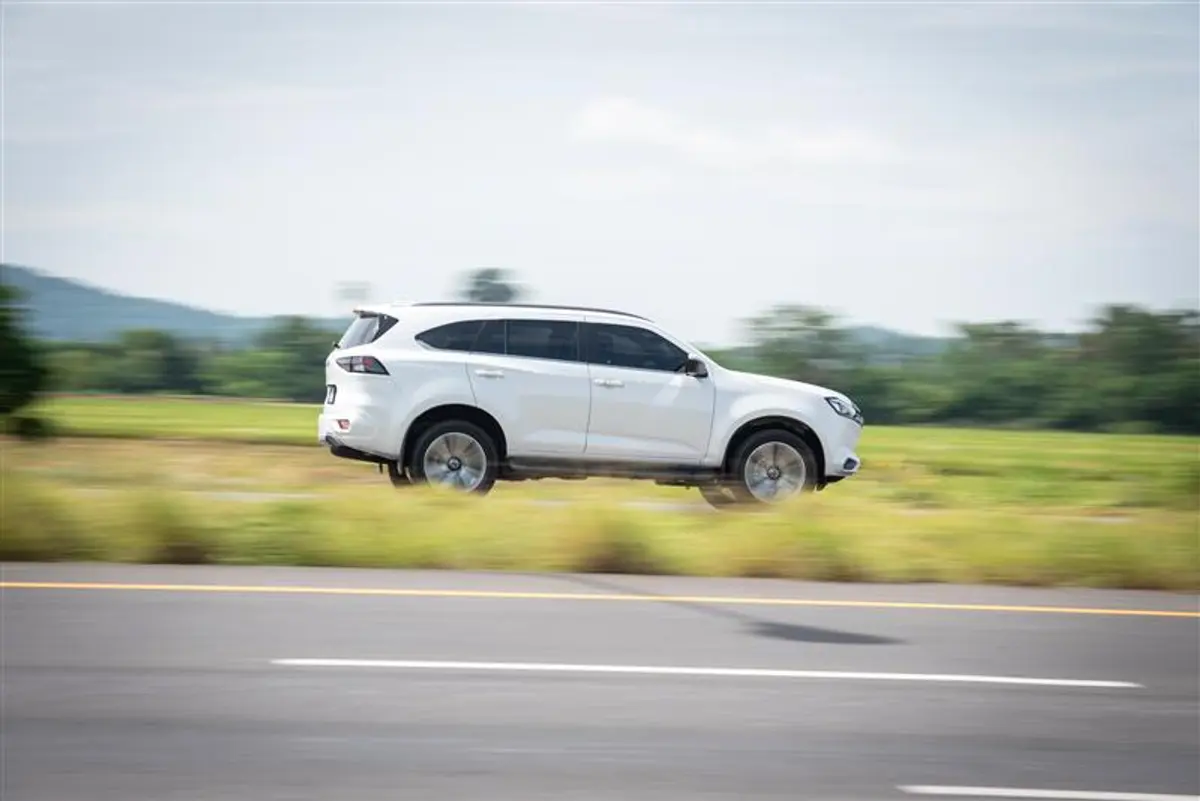
SUV driving on highway with motion blur
Overview of the Isuzu MU-X
Before the MU-X arrived in Australia in 2013, Isuzu had already been producing an MU model in overseas markets. Originally standing for “Mysterious Utility,” the badge was later updated to “Multi-UtilityeXtreme,” which feels far more fitting for what the vehicle has become today. If there are any mysteries to uncover, however, we will do so in this review.
Every MU-X variant is powered by Isuzu’s well-regarded turbo-diesel engines. The 3.0-litre four-cylinder remains the backbone of the range, delivering 140 kW of power and 450 Nm of torque. In 2024, Isuzu added a 1.9-litre turbo-diesel option to the LS-M and LS-U trims, offering a slightly more fuel-efficient choice without sacrificing too much pulling power. Buyers can also choose between 4x2 and 4x4 drivetrains, depending on their lifestyle and how often they plan to venture off the blacktop. At Club 4X4 though, we will be honest, we do not really pay much attention to the 4x2s. It is in our DNA to care about what happens when all four wheels are driving, not just two.
Inside, the MU-X offers seating for up to seven, making it a strong contender for families who need space as well as strength. On the outside, its rugged underpinnings mean it is equally at home towing a caravan, tackling corrugated dirt roads or loading up for the daily commute. This combination of practicality and adventure-ready capability is exactly why the MU-X has become a mainstay on Australian roads and tracks alike.
Performance and Key Features
Engine Options
Isuzu has long had a reputation for building engines that are simple, tough and dependable, and the MU-X carries that heritage proudly. The headline act is still the 3.0-litre four-cylinder turbo-diesel. With 140 kW of power and 450 Nm of torque, it is not going to win any drag races, but that is not what Isuzu set out to do. What it does exceptionally well is deliver consistent pulling power across the rev range, which is exactly what you want when towing, climbing or crawling over rocky ground.
In 2024, Isuzu introduced a smaller 1.9-litre turbo-diesel to the LS-M and LS-U models. Producing 110 kW and 350 Nm, it is aimed more at efficiency than brute strength. Around town and on highway trips, the smaller engine holds its own, making the MU-X a little easier on fuel without feeling underdone. Load up a big caravan though, and you will quickly be reminded why the 3.0-litre remains the workhorse of choice for serious adventurers.
Both engines are paired with a six-speed automatic transmission, which is smooth and predictable. You will not find complicated hybrid systems or over-engineered gearboxes here, just straightforward reliability that Isuzu owners have come to expect. For those who like things simple, the MU-X keeps it old school, and in a good way.
Towing Capacity
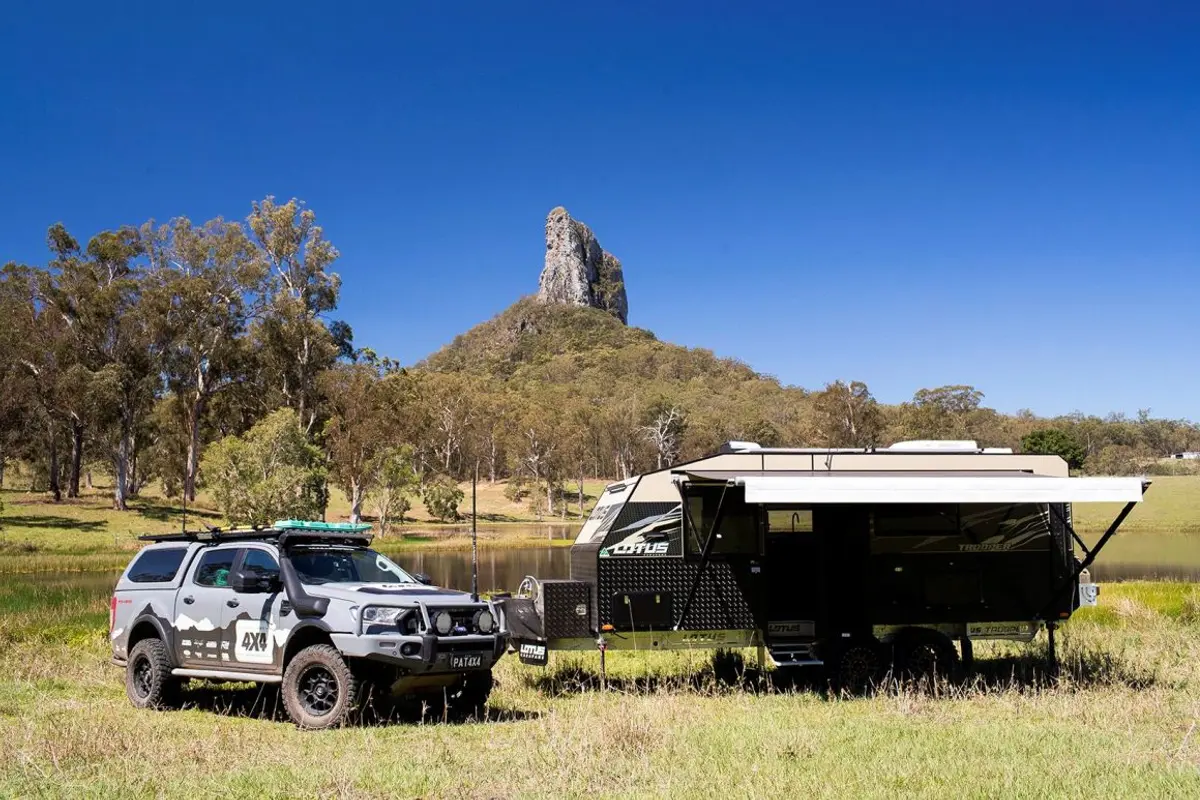
One of the biggest drawcards of the Isuzu MU-X is its ability to tow. On paper, the 3.0-litre engine offers a maximum braked towing capacity of 3.5 tonnes, which puts it right up there with the best in its class. That means it can legally handle a full-size caravan, a hefty camper trailer or a loaded boat with confidence. In the real world, it feels solid and steady when hitched up, which is exactly what you want when hauling serious weight on long country stretches.
Where the MU-X shines is in stability and control. The suspension is tuned for carrying loads, so even with a caravan behind you, the vehicle feels planted on the road. Pair that with trailer sway control and a solid ladder-frame chassis, and you get a rig that inspires confidence whether you are towing down the highway or easing into a tight bush campsite.
The smaller 1.9-litre engine, available in some models, still offers 3.0 tonnes of towing capacity. That is more than enough for lighter camper trailers, small boats or compact vans, but if you are planning to tackle the big lap with a full-size caravan, the 3.0-litre remains the better choice.
At Club 4X4, we know that many adventures begin with something hitched up to the back, so towing ability is not just a number on a spec sheet. It is about real-world confidence, and the MU-X delivers it in spades.
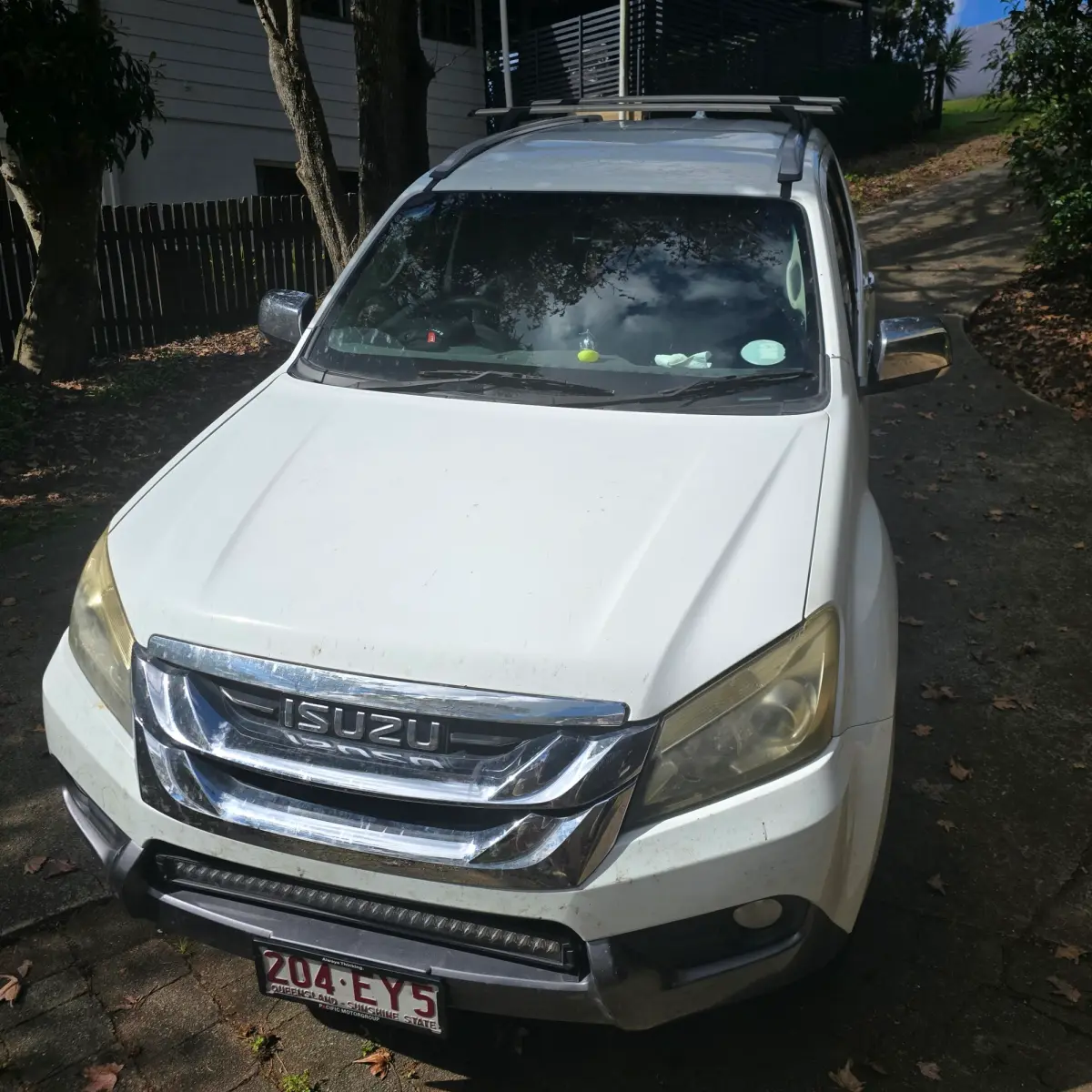
4x4 suv in driveway
Off-road Capabilities
If there is one area where the MU-X feels most at home, it is off the bitumen. Built on the same tough ladder-frame chassis as the D-MAX ute, the MU-X brings genuine four-wheel drive credentials to the SUV market. Ground clearance sits at around 235 mm, which is enough to get you over ruts, rocks and washouts without too much drama. Combine that with approach and departure angles of 29 and 26 degrees, and you have a vehicle that can hold its own on rough tracks.
The 4x4 variants come with a part-time system that lets you switch from rear-wheel drive to high-range four-wheel drive on the move, which is handy when road conditions change suddenly. Low-range gearing is there when you need maximum control over steep climbs or descents, and hill descent control adds an extra layer of reassurance for tricky downhill sections.
Suspension tuning has improved over the years, making the MU-X more comfortable across corrugations and uneven tracks than earlier models. It is still a rugged vehicle at heart though, and you will feel its firmness compared to softer SUVs that are more road-biased. For many adventurers, that firmness is a fair trade for the confidence it delivers in the rough stuff.
We will be honest at Club 4X4, we are not here to test how well the MU-X handles shopping centre carparks. What matters to us is how it behaves when you are miles from anywhere with a loaded camper or heading into a rutted trail after a week of rain. In those situations, the MU-X feels like it belongs.
Interior and Comfort
Step inside the MU-X and it is clear that Isuzu has worked to balance practicality with comfort. This is a seven-seat SUV, so space is a big part of its appeal. The front and second rows offer plenty of room for adults, with wide seats that remain supportive on long drives. The third row is more suited to kids, but it folds flat into the floor when not in use, creating a large and usable cargo area for gear, camping supplies or recovery equipment.
The cabin design leans more toward durability than luxury, but that is not a criticism. Materials feel hard-wearing and easy to clean, which is a blessing when you are returning from the beach, a muddy track or a weekend away with the kids. Higher trims add leather-appointed seats, extra soft-touch surfaces and a few more creature comforts, but even the entry-level LS-M feels well built.
Technology has stepped up too, with a 9-inch infotainment system (10.25-inch in the LS-T) that supports Apple CarPlay and Android Auto. USB points are scattered throughout the cabin, and there are multiple storage spots for drinks, devices and odds and ends. Families will appreciate the air-conditioning vents in all three rows, while adventurers will welcome the fact that the controls are simple and functional, even if you are wearing gloves or have dust on your hands.
On the road, the MU-X is quieter than you might expect from a ladder-frame SUV. Engine noise is muted at cruising speeds, and while you will still notice some body roll through corners, ride quality has improved significantly from earlier generations. It is not trying to be a luxury wagon, but it manages to be comfortable, practical and dependable — which is often exactly what you want when you are travelling long distances in Australia.
Throttle Controller
One of the most common upgrades MU-X owners consider is a throttle controller. The factory tune on the Isuzu can feel a little conservative, with noticeable lag when you first put your foot down. For everyday driving this is no big deal, but when you are towing, overtaking or crawling over technical terrain, that hesitation can get frustrating.
A throttle controller does not add power, but what it does is sharpen throttle response. The result is a vehicle that feels more eager to get moving and more predictable when you need fine control. Many MU-X owners swear by it, especially those who tow regularly or spend time off-road where precise throttle inputs make a difference.
Is it essential? Not really. The MU-X performs well enough without it, and plenty of drivers are happy to leave it stock. But for those who like their rig to feel a little more responsive, it can be one of the simplest and most cost-effective modifications you can make.
At Club 4X4, we see plenty of owners adding throttle controllers as part of their build. Our take is simple: if it makes your driving experience better and you are covered for your modifications, then it is worth considering.
Reliability
Reliability is one of the main reasons the Isuzu MU-X has built such a loyal following in Australia. Isuzu has deep roots in diesel engine design, and their focus has always been on durability rather than chasing headline performance figures. That approach pays off in a vehicle that feels built to last.
The 3.0-litre turbo-diesel has proven itself time and again in both the MU-X and the D-MAX ute. Owners routinely report high mileage with minimal fuss, provided servicing is kept up to date. The drivetrain is simple, the electronics are not over-complicated, and parts are widely available across the country, which is reassuring if you are travelling through regional or remote areas.
The newer 1.9-litre engine is still relatively fresh to the market, but given Isuzu’s track record, there is every reason to expect it will prove just as dependable for those who value efficiency over outright grunt.
Of course, reliability is not just about the mechanicals. The MU-X’s interior holds up well to family use and off-road punishment alike, with materials that are easy to clean and resistant to wear. It might not feel as plush as some competitors, but that simplicity is exactly what makes it easier to live with over the long term.
At Club 4X4, we hear from plenty of MU-X owners who rely on their vehicles for everything from the weekday commute to multi-week adventures. The consistent theme is peace of mind. When you are hundreds of kilometres from the nearest town, you want to trust that your 4X4 will get you home. The MU-X delivers that trust in spades.
Comparing Models and Trims
The MU-X line-up covers a broad range of buyers, from families looking for a reliable daily driver to enthusiasts planning remote adventures. The range kicks off with the LS-M, steps up through the LS-U, and tops out with the LS-T.
LS-M
The entry-level LS-M is the most affordable way into an MU-X, but it is far from basic. You still get the choice of 4x2 or 4x4, the same 3.0-litre turbo-diesel engine (or the new 1.9-litre option), and a full suite of safety features including autonomous emergency braking, lane departure warning and adaptive cruise control. On the inside, the focus is on durability. Hard-wearing cloth seats, vinyl flooring in some variants and easy-clean materials make it ideal for owners who are not worried about a bit of dust or sand finding its way inside.
LS-U
The LS-U is where the MU-X starts to add more comfort. Think larger alloy wheels, upgraded infotainment with a bigger screen, climate control and more storage touches inside. The LS-U also opens up the option of the 1.9-litre engine for those chasing better fuel economy. For many families, this model strikes the best balance between price, features and capability.
LS-T
At the top of the range sits the LS-T. This is the premium choice, with leather-accented seats, a power tailgate, 20-inch alloys and the larger 10.25-inch infotainment screen. If you want all the bells and whistles while still keeping genuine off-road ability, the LS-T ticks the box. For those asking, what is the top-of-the-range Isuzu MU-X? — this is it.
Which model is best?
That depends on who you are. Families will likely gravitate toward the LS-U for its mix of comfort and practicality. Adventurers who are not afraid of mud and dust will find the LS-M’s simplicity appealing, while still enjoying the same mechanical strength as the higher trims. Enthusiasts who want comfort as well as capability will be happiest with the LS-T.
At Club 4X4, we do not mind which model you choose, as long as you take it out and use it for what it was built for. Whether it is hauling a camper, exploring fire trails or touring the outback, the MU-X delivers capability across the board.
Negatives and Considerations
No 4X4 is perfect, and the MU-X has a few quirks worth mentioning before you sign on the dotted line.
Ride Comfort
On sealed roads, the MU-X can feel a little firm compared to softer, more car-like SUVs. Some call it “agricultural,” but we would just call it honest. It is a truck-based SUV and it rides like one. The upside is that when the going gets rough, that firmness turns into confidence.
Interior and Tech
Isuzu has clearly prioritised toughness over luxury. The cabin is practical and well laid out, but if you are expecting premium finishes and cutting-edge infotainment, you may be left wanting. Lower trims have smaller media screens, and even the larger units are not as polished as some rivals. Still, we would rather have dust-proof buttons than piano black plastic any day.
Electronics and Transmission
Some owners report niggles with infotainment freezing or Bluetooth dropping out, and there have been occasional complaints about the transmission feeling jerky under load. While these issues are not widespread, they are something to be mindful of if you tow heavy or spend a lot of time in traffic.
Tyre Wear
A hot topic in recent years has been premature tyre wear, linked to what some suspect is a suspension geometry issue. For most owners it is not a deal-breaker, but it is worth keeping an eye on alignment and tyre condition if you are clocking up serious kilometres.
Missing Niceties
Even in higher trims, the MU-X skips some convenience features you might expect, like one-touch window controls or more premium interior details. It is not bare bones, but it is clear Isuzu put its money into durability rather than flash.
At Club 4X4, we look at these quirks for what they are: trade-offs. If you want a plush, city-focused SUV, there are plenty of options out there. If you want something that can haul a caravan through the Flinders Ranges and still get you to work on Monday, the MU-X’s rough edges start to look like strengths.
Practical FAQs About the Isuzu MU-X
What tyre pressure should I run in an Isuzu MU-X?
For everyday driving, the recommended tyre pressures are around 33 PSI front and 36 PSI rear, depending on the load. Off-road, pressures will vary depending on terrain. For sand, many drivers drop to around 18–20 PSI, while rocky tracks may only need a small reduction. The key is to air down enough to increase grip without risking tyre damage. Always reinflate before returning to sealed roads.
What size caravan can an Isuzu MU-X tow?
With a braked towing capacity of up to 3.5 tonnes (3.0 tonnes for the 1.9-litre engine), the MU-X can comfortably tow most full-size caravans, camper trailers and boats. In practice, weight distribution and payload also matter, so many owners find that a caravan in the 2.5–3.0 tonne range is the sweet spot for balance, stability and long-distance comfort.
Where is the Isuzu MU-X made?
The MU-X is built in Isuzu’s plant in Samut Prakan, Thailand, alongside the D-MAX ute. This is the same facility that supplies vehicles to the Australian market, ensuring consistency and availability of parts.
Is the Isuzu MU-X reliable?
Yes, reliability is one of the MU-X’s strongest selling points. Owners consistently praise its durability, simple engineering and ability to handle high mileage with minimal issues. As long as servicing is kept up to date, the MU-X is built to take on years of family trips and off-road adventures with confidence.
At Club 4X4, we like to say that reliability is not just about whether the car starts in the driveway, but whether it keeps going when you are hundreds of kilometres from the nearest town. The MU-X has earned its reputation by doing exactly that.
Final Thoughts
The Isuzu MU-X has earned its place as one of Australia’s most trusted adventure SUVs. It might not be the flashiest or the most powerful in its class, but what it delivers is consistency, strength and peace of mind. From its dependable 3.0-litre engine to its practical seven-seat interior and proven off-road capability, the MU-X feels purpose-built for Australian conditions. Add in its serious towing credentials, and you have a vehicle equally suited to family holidays, long-haul touring or weekends spent exploring rough tracks.
For families, the MU-X offers comfort, safety and space. For adventurers, it delivers rugged reliability. For enthusiasts, it is a blank canvas ready for accessories and modifications. Whichever camp you fall into, the MU-X stands out as a 4X4 that can do it all without fuss.
Planning your next off-road adventure?
Anywhere you can legally go in Australia, we'll be in tow.