For most travellers, a stretch of gravel is a bit of a detour. For those of us who love exploring Australia, it’s often the start of the real adventure.
From the rugged stretches of the Oodnadatta Track to the infamous corrugations of Cape York and the outback detours that wind through the West MacDonnell Ranges, some of Australia’s best landscapes don’t come with a smooth asphalt surface. They come with dust, washouts, loose stones, and conditions that can change in minutes.
After more than six years and hundreds of thousands of kilometres on the road, we’ve learned that mastering gravel isn’t difficult - but it does require intention. A little knowledge goes a long way toward preventing damage, avoiding breakdowns, and ensuring your epic road trip remains memorable for all the right reasons.
So whether you’re hitching up the van for a quick weekend away or tackling one of Australia’s iconic remote routes, here’s how to stay safe, stay comfortable, and stay covered when the bitumen ends.
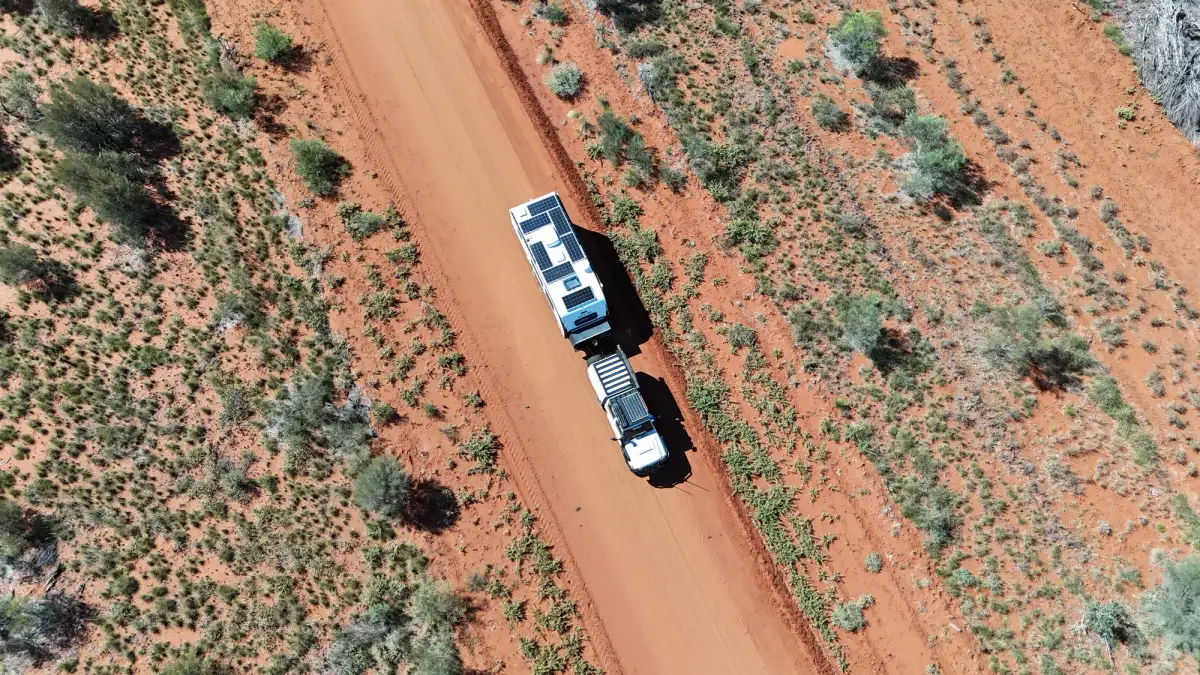
aerial shot of 4x4 towing caravan through red dusty road
Tyre Pressure: Your First Line of Defence
Dropping tyre pressures is one of the simplest, most effective things you can do before hitting gravel.
Softer tyres:
- absorb corrugations
- reduce harsh impacts to your suspension
- give you better control and comfort
- minimise the chance of punctures
On routes like the Oodnadatta Track or the Mereenie Loop - famous for their corrugations - we’ve seen the difference tyre pressure makes firsthand. The travellers who drop pressures glide across the top; the ones who don’t… usually end up tightening screws and checking cupboards for the rest of the day.
As a guide, many travellers drop 20-30% from their highway pressures for gravel. But the right pressure depends on your setup, load, speed, tyres, and how rough the track is. The best thing you can do is plan ahead:
- Carry a reliable compressor
- Carry a quality pressure gauge
- Know your vehicle’s safe operating range
- Reinflate when you return to bitumen
Gravel roads don’t require perfect science - just awareness and adjustment. Your tyres are your handshake with the road; give them what they need and they’ll take care of you.
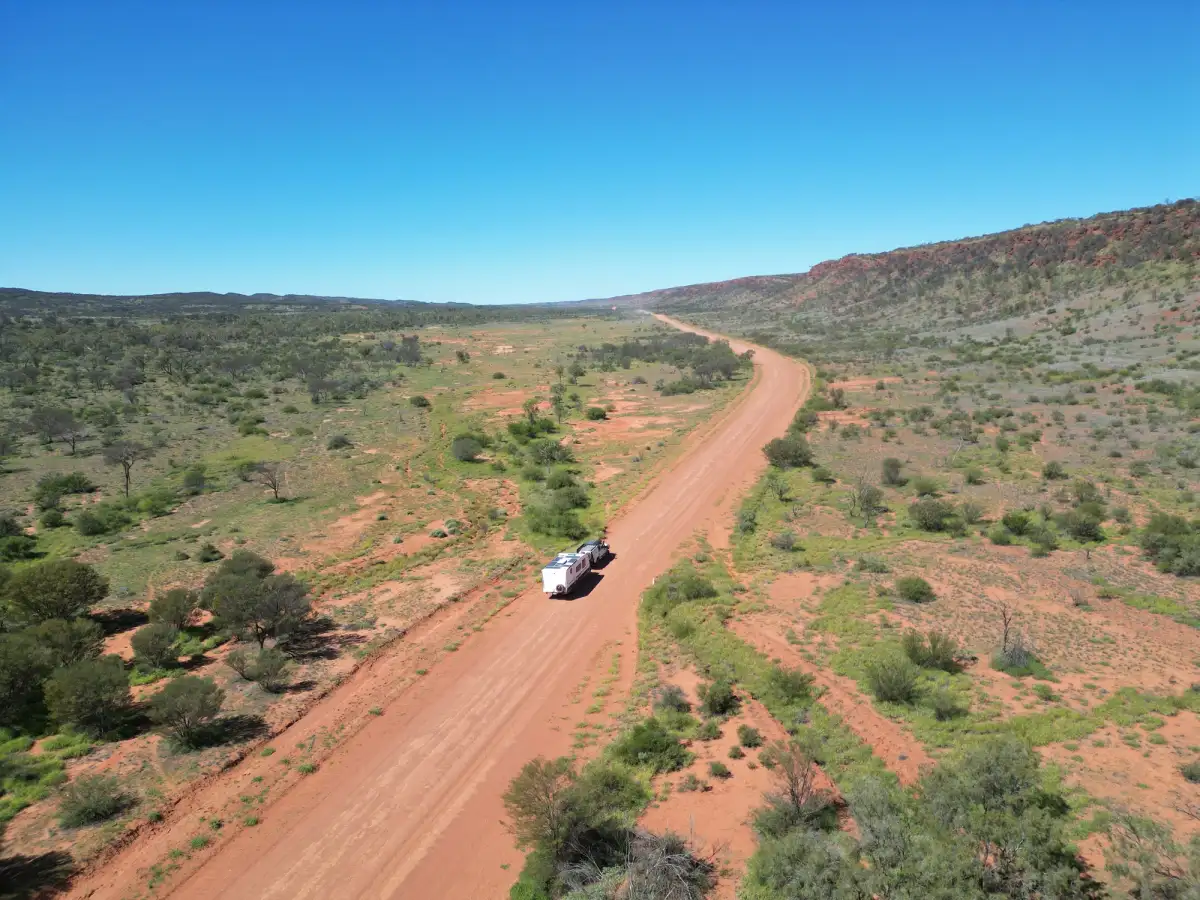
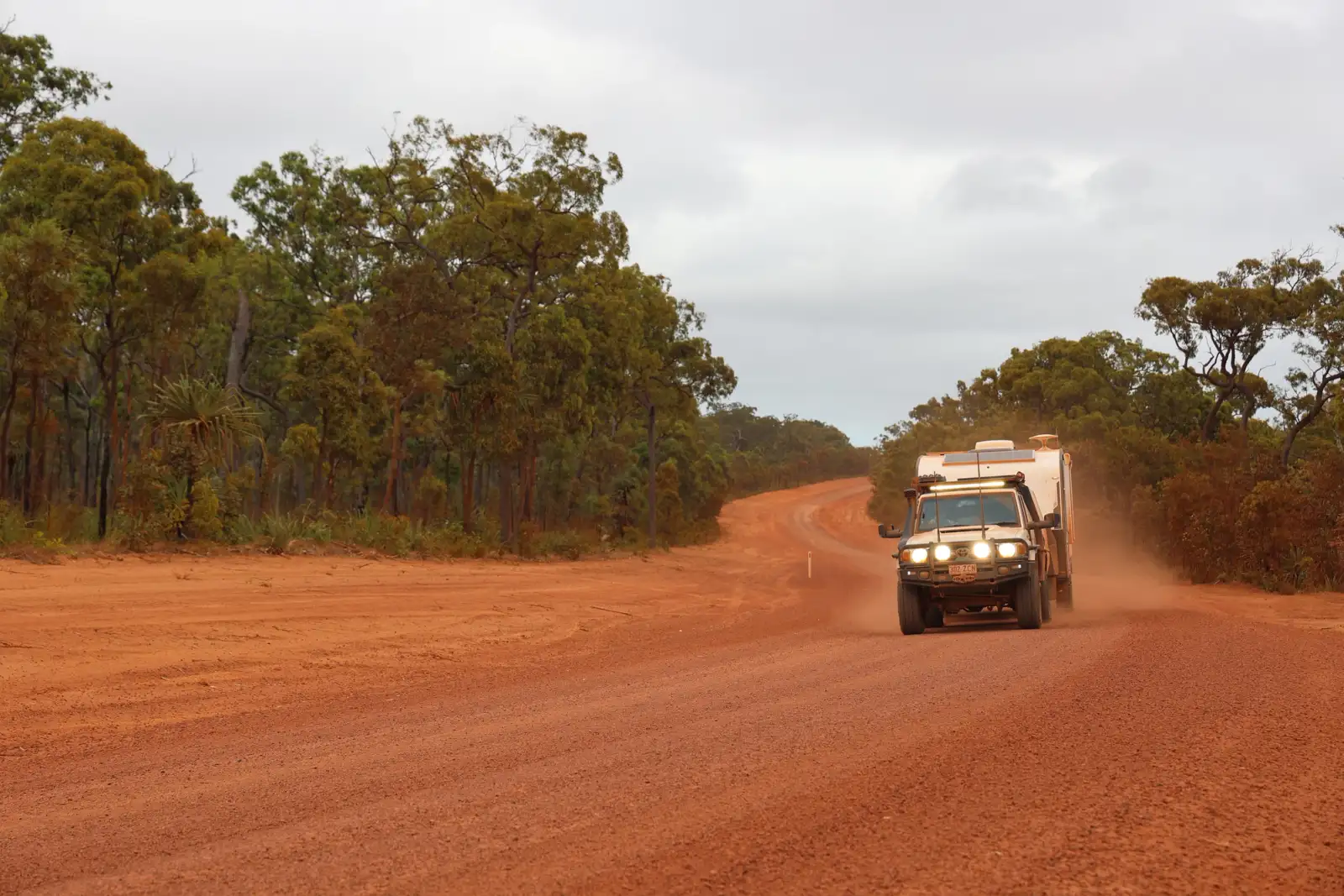
4x4 and caravan driving through arid area
Speed: It’s Not About Slowing Down - It’s About Finding the Sweet Spot
“Drive slower” is good advice, but incomplete.
On gravel, the right speed is the one that keeps your tyres connected to the ground and your vehicle stable. Too slow and you’ll feel every corrugation. Too fast and you risk losing traction, skipping across the surface, or hitting unexpected washouts before you’ve got time to react.
Every setup has a sweet spot - often between 60-80 km/h on graded gravel - where the car feels planted, the vibrations settle, and you remain in full control.
Here’s what we’ve learned across countless gravel kilometres:
- Let the road dictate the speed, not a timetable
- Read the surface ahead for loose stones, bulldust, or corrugations
- Slow down before corners
- Reduce speed when towing to protect both vehicle and van
- Don’t try to “outrun” corrugations
Graded roads change daily. After rain, they can be silky smooth. After a dry spell, they can feel like a jackhammer. Your job is simply to stay alert and adjust as conditions shift.
Spacing & Visibility: Dust Isn’t Just Annoying - It’s a Safety Hazard
If you’ve ever driven Cape York during the dry season, you’ll know dust can be thick enough to swallow a caravan whole.
Visibility is one of the biggest safety factors on gravel roads, and yet it’s often overlooked. Maintaining good spacing isn’t just polite -it’s critical.
Why more space matters:
- dust reduces visibility
- dust hides potholes and washouts
- dust can conceal oncoming vehicles
- dust increases the chance of rock flicks and windscreen damage
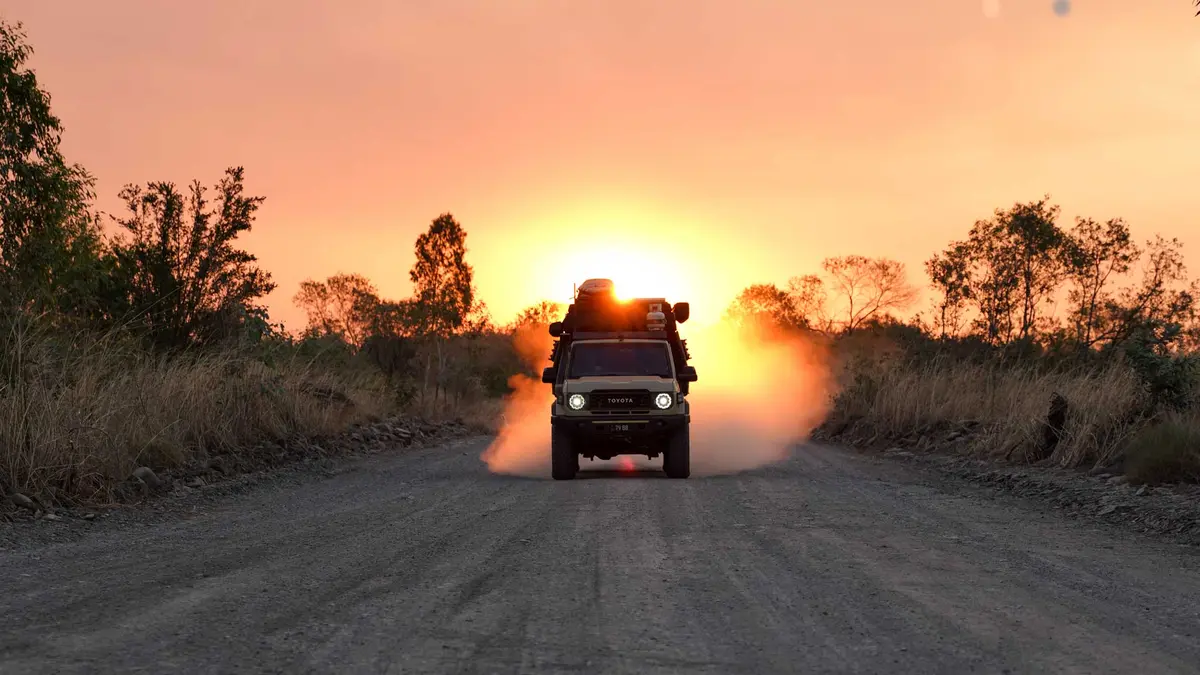
On long stretches of outback road, we often drop well back until we’re completely out of the dust cloud. Even 300-500 metres isn’t unusual when conditions are poor.
And here’s a simple habit that makes a massive difference: always drive with your headlights on when you’re on gravel or off-road tracks - especially in dusty conditions.
It helps you see, but more importantly, it helps others see you. Road trains, oncoming vehicles, and even convoy members behind you can pick up your headlights through the haze long before they see your vehicle.
On narrow or winding tracks, headlights dramatically reduce the risk of head-on incidents.
If someone catches up behind you, slow down and indicate left to let them pass safely. And if you’re in a convoy, use UHF radios to call out hazards or oncoming traffic so the group can react together.
Out here, clear vision is everything. Give yourself the space - and the visibility - to see, breathe, and react.
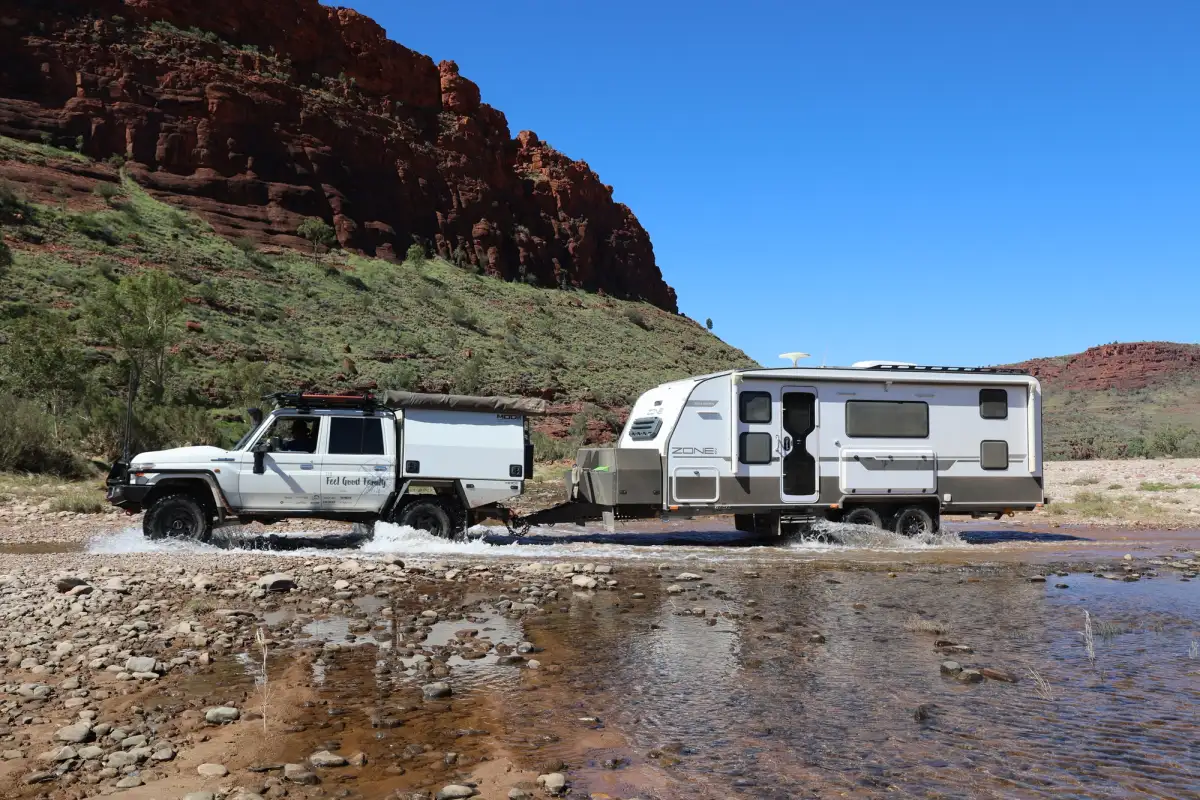
4x4 towing caravan through a water crossing in the outback
Coverage: Because Remote Roads Don’t Forgive Guesswork
You can do everything right - drop pressures, drive to conditions, maintain space - and still encounter the unexpected.
We’ve seen:
- shattered windows from flying stones
- punctures 100 km from the nearest service
- tow vehicles overheating on long dusty climbs
- electronic failures caused by corrugation vibrations
- trailers with broken brackets, bolts, or plumbing
Remote roads are stunning, but they’re also unpredictable.
Before heading off the bitumen, take a moment to ensure your insurance actually covers where you’re going and what you’re towing. It’s not something most travellers think about until they’re on the side of the track wishing they had.
What to double-check:
- Are remote and dirt roads covered?
- Is off-road recovery included?
- Are accessories, upgrades, and touring mods insured properly?
- Is your caravan/camper protected from stone damage?
- Does your policy reflect the true value of your setup?
When you’re hundreds of kilometres from help, the right cover turns a disaster into an inconvenience - not the end of your trip.
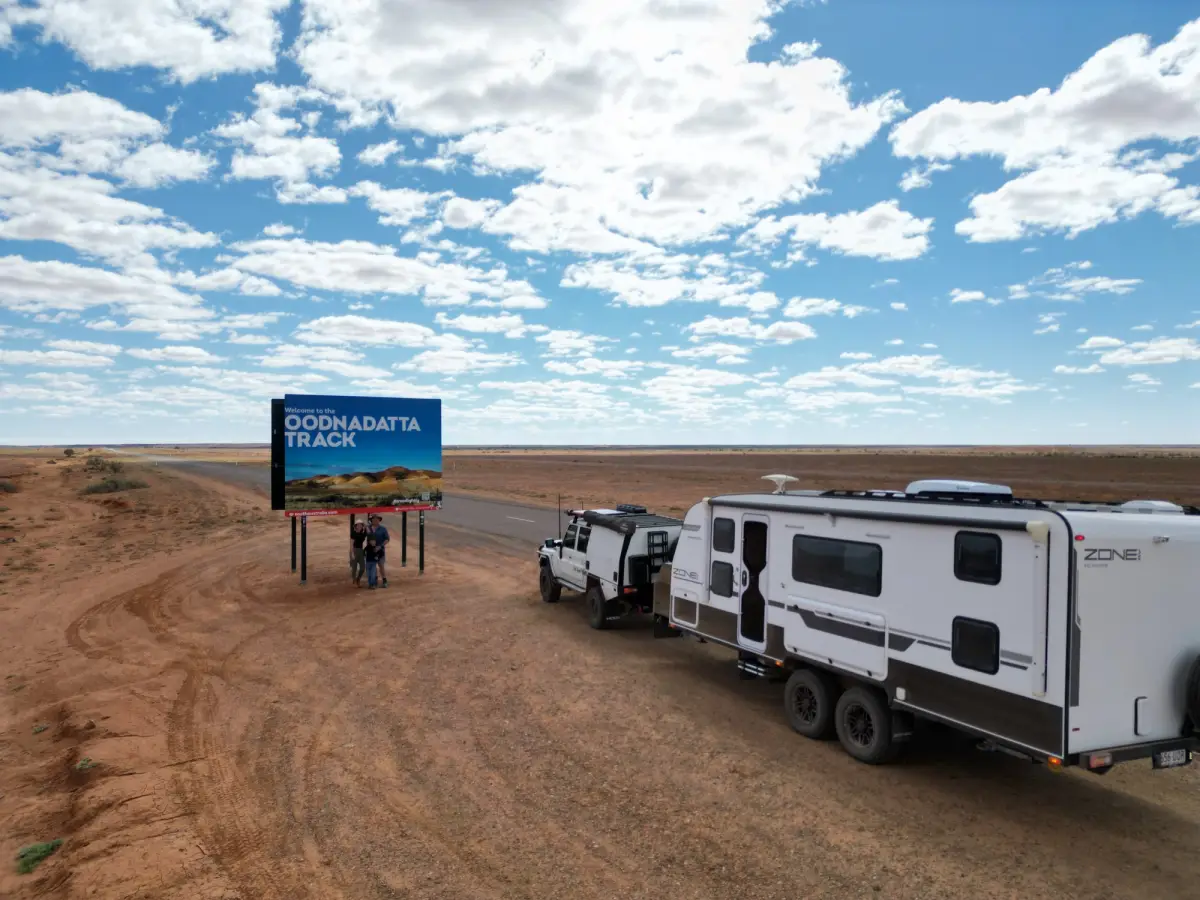
4x4 and caravan posed with road sign in desert
Explore With Confidence
Gravel roads are part of Australia’s heart. They take you to red desert sunsets you never forget, rainforest creeks that appear out of nowhere, and campsites so quiet you can hear your own heartbeat.
A safe gravel journey comes down to four simple things:
- Drop your tyre pressures
- Find your safe speed
- Give yourself space & keep the headlights on
- Make sure you’re properly covered
Do those well and you’ll experience the best of Australia - safely, confidently, and with stories you’ll tell for years.
Whether you’re heading across Cape York, exploring the red centre, or simply taking the scenic back road to your next campsite… stay safe out there, and enjoy the adventure.
Comprehensive insurance
For 4WDers, by 4WDers