Before you pull out of the driveway for the first time - or even the hundredth - there is one area of knowledge that will have more impact on your safety, your legality, and your insurance coverage than almost anything else. Not your recovery gear. Not your comms setup. Weight. Understanding the key limits that apply to your specific vehicle and caravan setup, and actually managing them on the road, is what separates a setup you can drive with confidence from one you're simply assuming is within limits.
We learned this the hard way.
Pack the ute (responsibly)
and get a quote for insurance that covers you anywhere you can legally go in Australia
THE MOMENT THAT CHANGED HOW WE THINK ABOUT WEIGHT
The van felt balanced. The truck felt solid. On the road, everything felt fine.
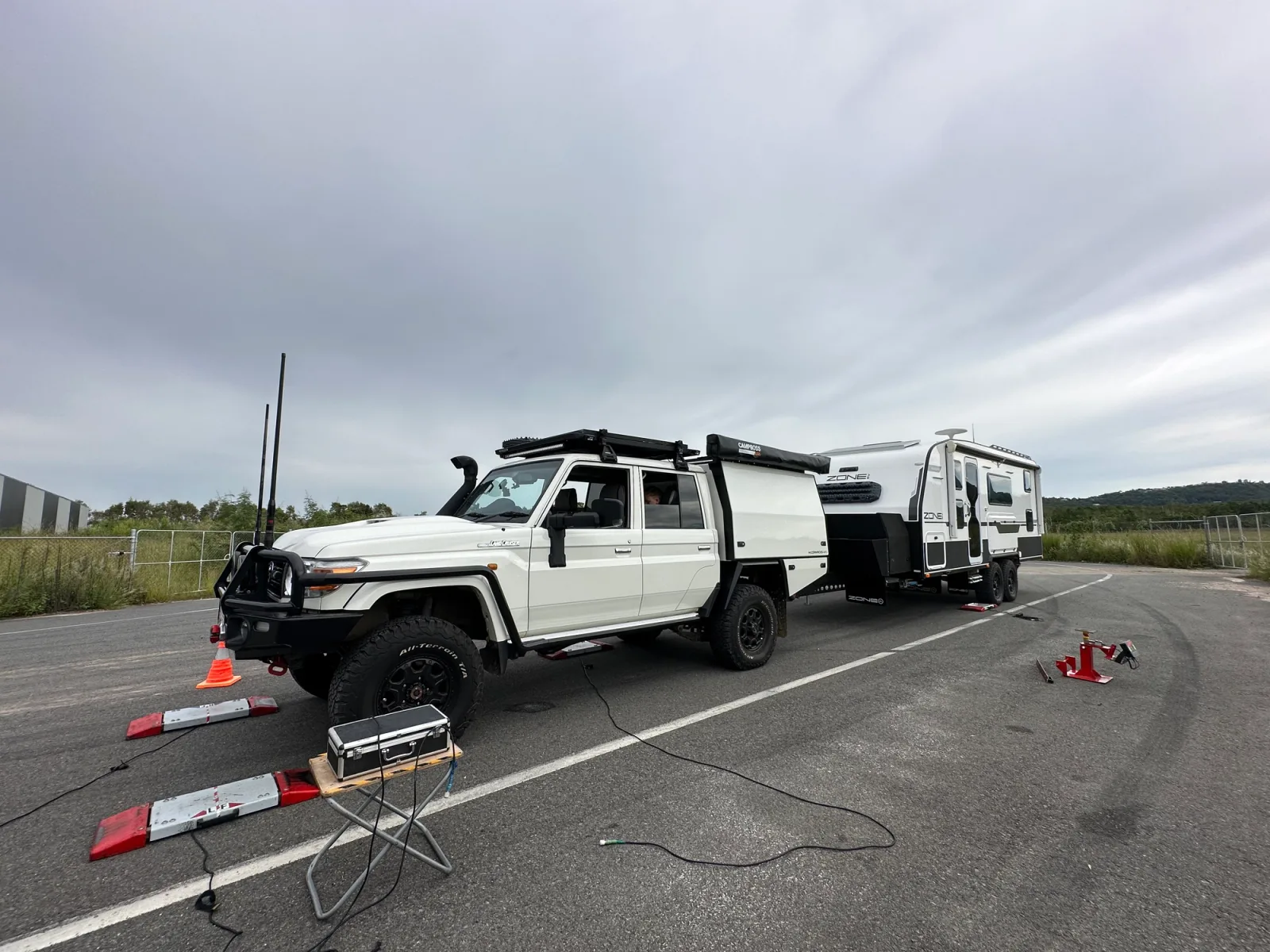
Then we had our LandCruiser 79 Series and our Zone RV professionally weighed together for the first time - packed as we actually travel, water in the tanks, fridge stocked, all of our gear on board, full fuel tank and the three of us in the vehicle. The result wasn't what we expected.
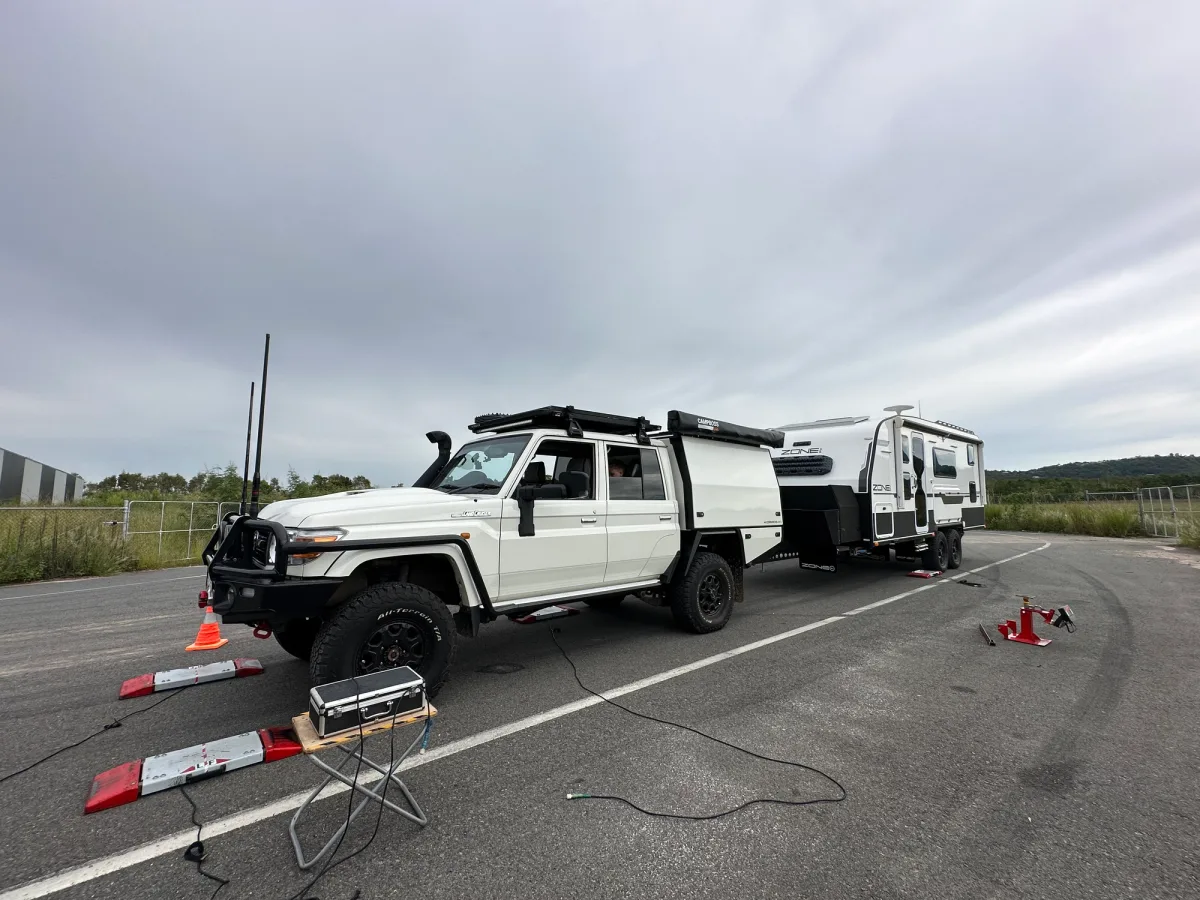
The rear axle of the 79 was grossly overweight. Not slightly over. Grossly over. And we had been driving it that way for some time.
That's the thing about an overloaded setup: it doesn't announce itself. The rig doesn't pull over and tell you something's wrong. It just handles a little differently than it should, behaves a little less predictably than it should - until one day the conditions are right for that to matter.
Getting weighed changed that. It gave us the real numbers, and the real numbers told us exactly what needed to change.
THE SIX LIMITS EVERY TOURING SETUP OPERATES WITHIN
When you're towing a caravan with a 4WD, there are six weight limits in play - three for your vehicle, three for your van.
For the vehicle: GVM (Gross Vehicle Mass) is the maximum your loaded tow vehicle is allowed to weigh, including fuel, passengers, accessories and tow ball weight. GCM (Gross Combination Mass) is the maximum combined weight of vehicle and van together - and this one catches people out, because you can be within your GVM and within your van's limits and still exceed GCM. Braked Towing Capacity is the maximum weight you're legally permitted to tow when the trailer has its own brakes fitted.
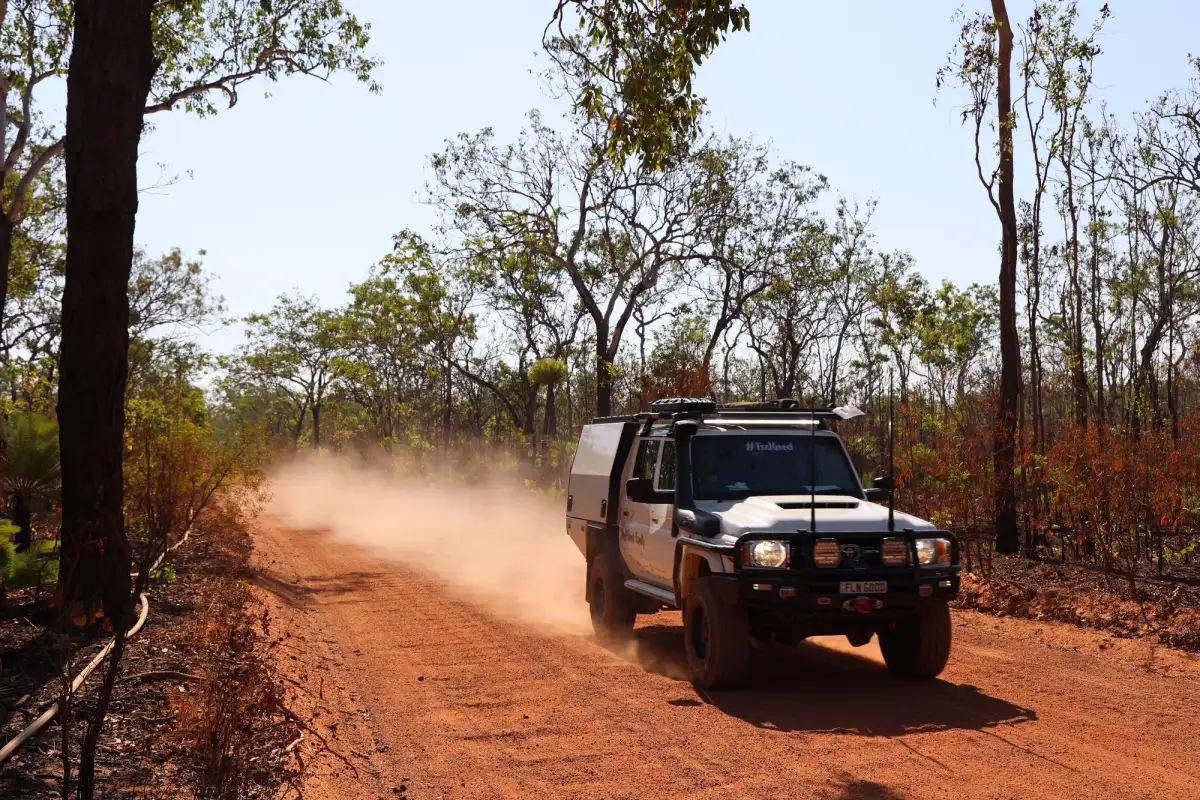
For the van: ATM (Aggregate Trailer Mass) is the total weight of the fully loaded van when unconnected - wheels, tow ball and all. GTM (Gross Trailer Mass) is the weight carried on the van's wheels and axles when connected - it doesn't include tow ball mass, which sits separately. TBM (Tow Ball Mass) is the downward force the van places on the hitch. Too little and the van can sway. Too much and it eats into your vehicle's rear axle capacity and affects steering - and it counts toward your GVM.
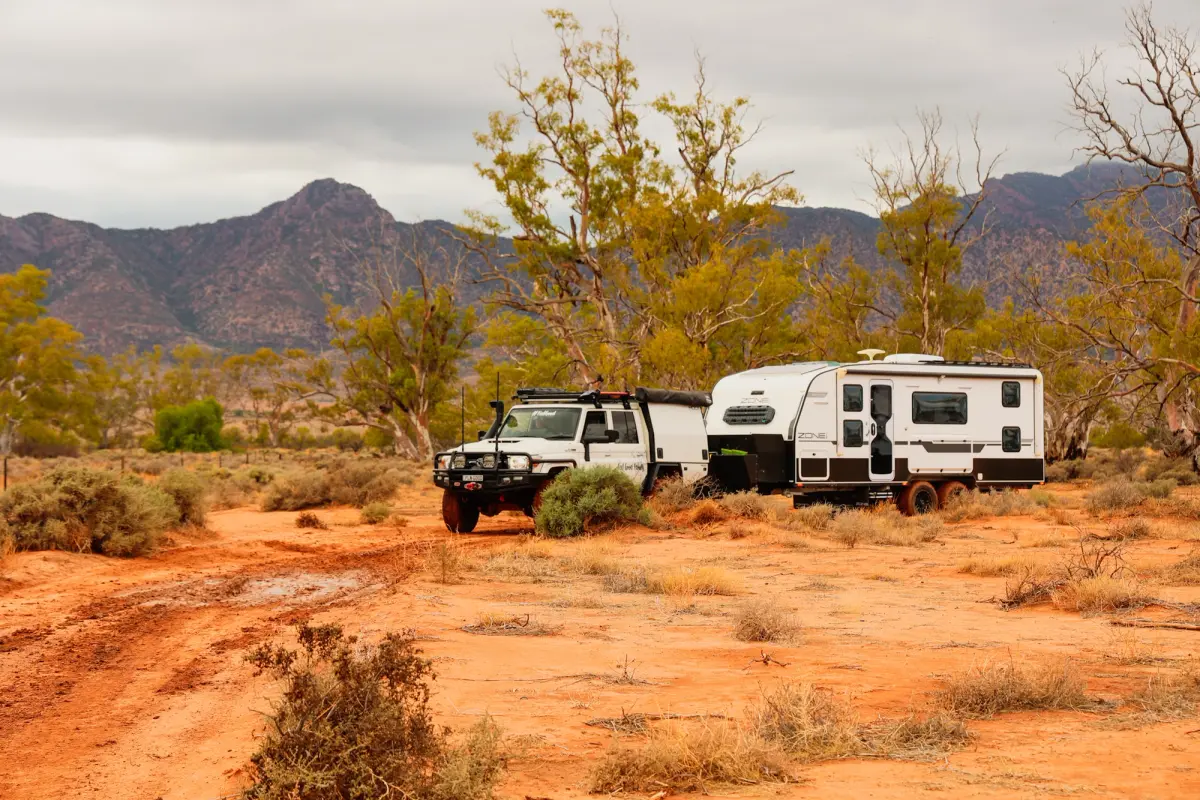
TARE is the starting point - the dry weight of the van as it left the factory. The gap between TARE and your van's maximum allowable weight is your payload. Managing that payload carefully is where most setups quietly go wrong.
Want to know more about the numbers that matter?
Read Pat Callinan's guide to 4X4 and towing weights
WHAT MOST PEOPLE DON'T REALISE UNTIL IT'S TOO LATE
Weight rarely fails in one big obvious moment. It creeps in. An extra jerry can. A second battery. More food, more tools, more of the things that make camp feel like home. Individually, nothing feels significant. Together, the margins disappear. A setup that was compliant at the start of a trip can become non-compliant months later. The rig is the same. The weight isn't.
The other thing that surprises most people: it's not just how much you're carrying - it's where it sits. You can be within your total limits and still have a setup that tows poorly because the weight distribution is off. Heavy items need to sit low and close to the axle. Too much weight at the rear of the van reduces tow ball mass and can cause sway. Too much forward increases TBM and pushes into your vehicle's rear axle capacity. Even a full water tank in the wrong position changes how the entire combination handles, and you'll often feel it before you see it in the numbers.
The most common false confidence we hear: "We're under 3.5 tonne, so we're fine." Being under your ATM doesn't mean you're under your GVM. Being within both doesn't mean you're within GCM. Being within all three doesn't mean your axle distribution is right. Everything works together, and the only way to know where you actually stand is to measure it.
THE ONLY WAY TO ACTUALLY KNOW
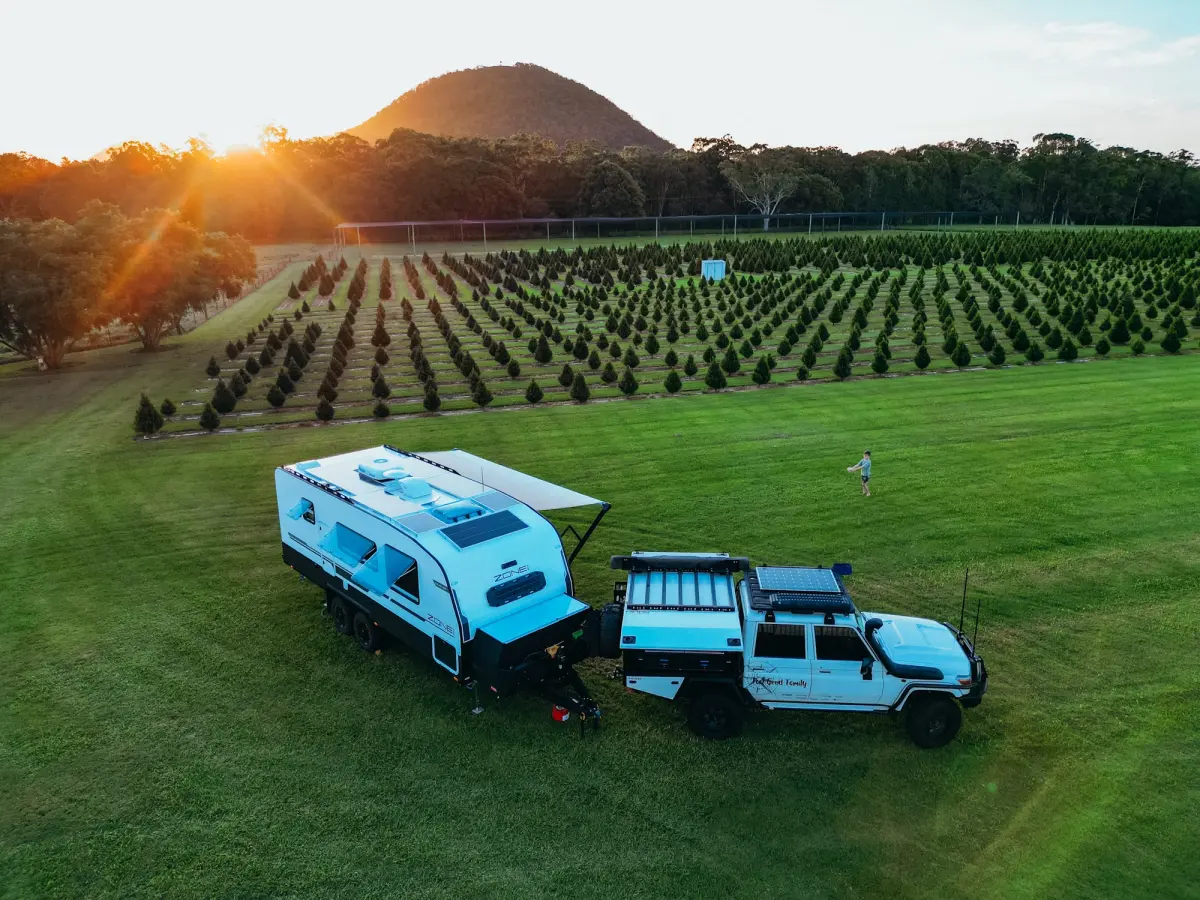
At some point, guessing has to stop.
The only way to truly understand your setup is to have it professionally weighed when it's packed exactly as you travel - food in the fridge, water in the tanks, all your gear and people on board. Not a lightly loaded rig. Your real setup, as it actually sits on the road.
A professional mobile weighing service will give you individual axle weights on both your vehicle and your caravan, your actual tow ball mass, and a clear, complete picture of where you sit against every one of the six limits. Until you have those real measurements, you're working with assumptions, and assumptions are what get people into trouble.
If something's out, they'll walk you through what needs to change and why. That's the information you need to actually fix it, not just guess at it. Professional weighing services operate across the country - a quick Google search or your state's caravan industry body website is a good starting point.
In some cases getting a GVM upgrade or a re-engineered rear axle can be a very expensive cost. But the cost of that work is minor compared to the cost of neglect. You don't get to say you didn't know. The responsibility sits with the driver, regardless.
Know your numbers. And if the numbers aren't right, fix them before you leave.
One more thing worth knowing: if your setup is found to be non-compliant at the time of an incident, your insurer can void your cover entirely, not reduce it, void it.
Pack the ute (responsibly)
and get a quote for insurance that covers you anywhere you can legally go in Australia