There’s a moment every traveller knows well.
Camp is packed down. The engine’s warming up. You’re excited for the next stretch of road, whether that’s a few hours of highway or a remote dirt track disappearing into the horizon.
It’s also the moment where small mistakes happen.
After more than six years of full-time travel around Australia, we’ve learned that most roadside issues don’t come from the big stuff. They come from the tiny, easily missed details. A stabiliser left down. A loose connection. A fire pit that wasn’t fully extinguished.
That’s why, before we leave any campsite we always do the same three quick checks. They take less than a minute, require no special tools, and they’ve saved us more than once.
It doesn’t matter what type of rig you are towing, these checks are worth building into your departure routine every single time.
1. The Walk-Around Check
Your first and most important habit
Before the vehicle even goes into gear we do a full walk-around of the setup.
Not a rushed glance. A proper loop.
This is where you catch the small things before they turn into expensive or dangerous problems down the road.
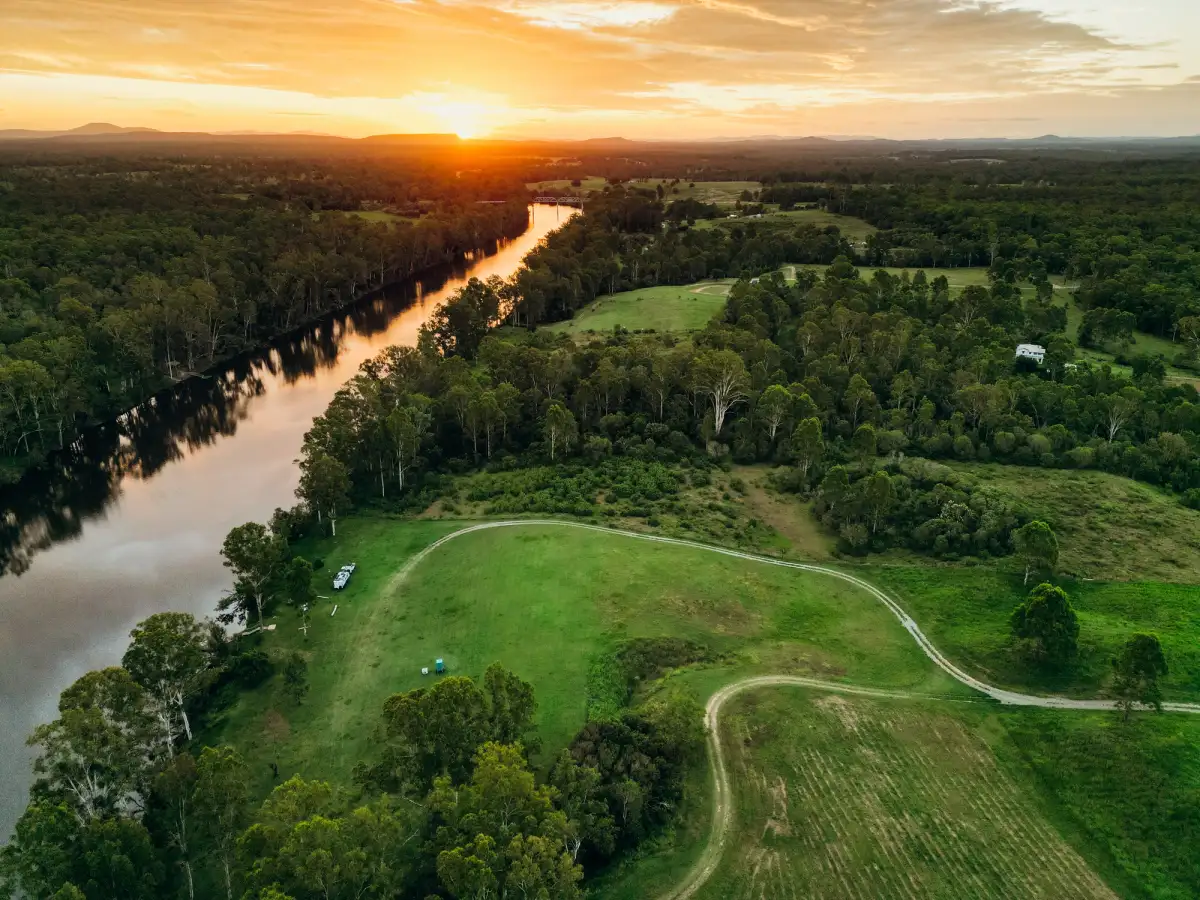
aerial view of campsite by a river
Our walk-around checklist looks like this:
- Stabilisers fully wound up
It sounds obvious, but stabilisers left down or not locked in place properly, are one of the most common and damaging mistakes we see. They don’t last long on bitumen or gravel.
- Windows and roof vents closed
Especially important in windy conditions or when dust is about to become a factor.
- Awning packed away and secured
Even a partially unlatched awning can become a hazard at speed.
- Tyres checked visually
You’re looking for obvious deflation, sidewall damage, or anything that doesn’t look quite right.
- Tunnel boot, toolboxes, hatches locked
It’s amazing how often these get forgotten in the morning pack-down.
This single step catches more issues than any other. It’s simple, repeatable, and becomes second nature once you commit to doing it every time.
2. Tow Connection and Lights
Because this is not the place to assume
Once the walk-around is done, the focus shifts to the connection between your vehicle and whatever you’re towing.
Even if you’ve hitched up hundreds of times, this is never a step to rush or skip.
Here’s what we always confirm:
- Hitch properly seated and locked
Not just “looks good”, but physically checked.
- Safety chains crossed and correctly rated
Chains should be attached in a way that would cradle the drawbar if the hitch failed.
- Trailer breakaway cable clipped on
Not wrapped around a chain or forgotten entirely.
- Trailer handbrake fully released
A surprisingly common mistake that can destroy brakes in minutes.
- Brake controller set correctly
If fitted, check your brake controller is powered, calibrated and responding correctly.
Once that’s done, we do a quick lights check before rolling out:
- Indicators
- Brake lights
- Hazard lights
- Headlights
This takes seconds and avoids awkward roadside stops or unsafe situations later. It’s especially important if you’re heading onto highways, into traffic, or through dusty conditions where visibility matters even more.
3. Site Respect
The final check that isn’t about your vehicle
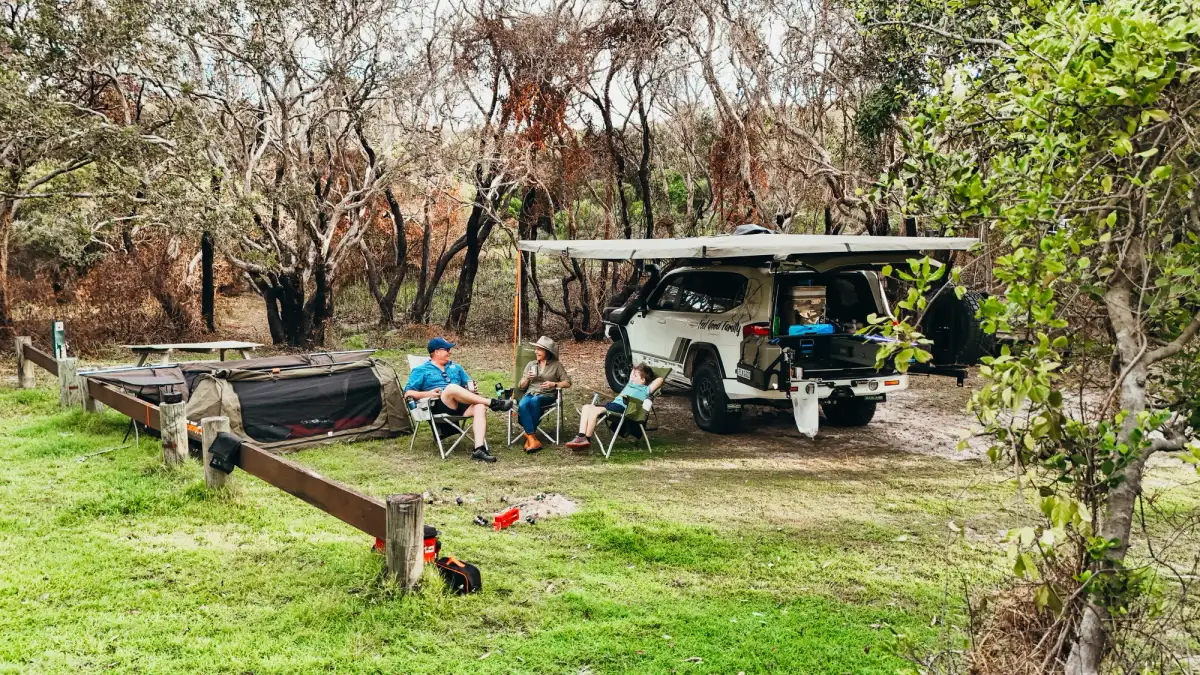
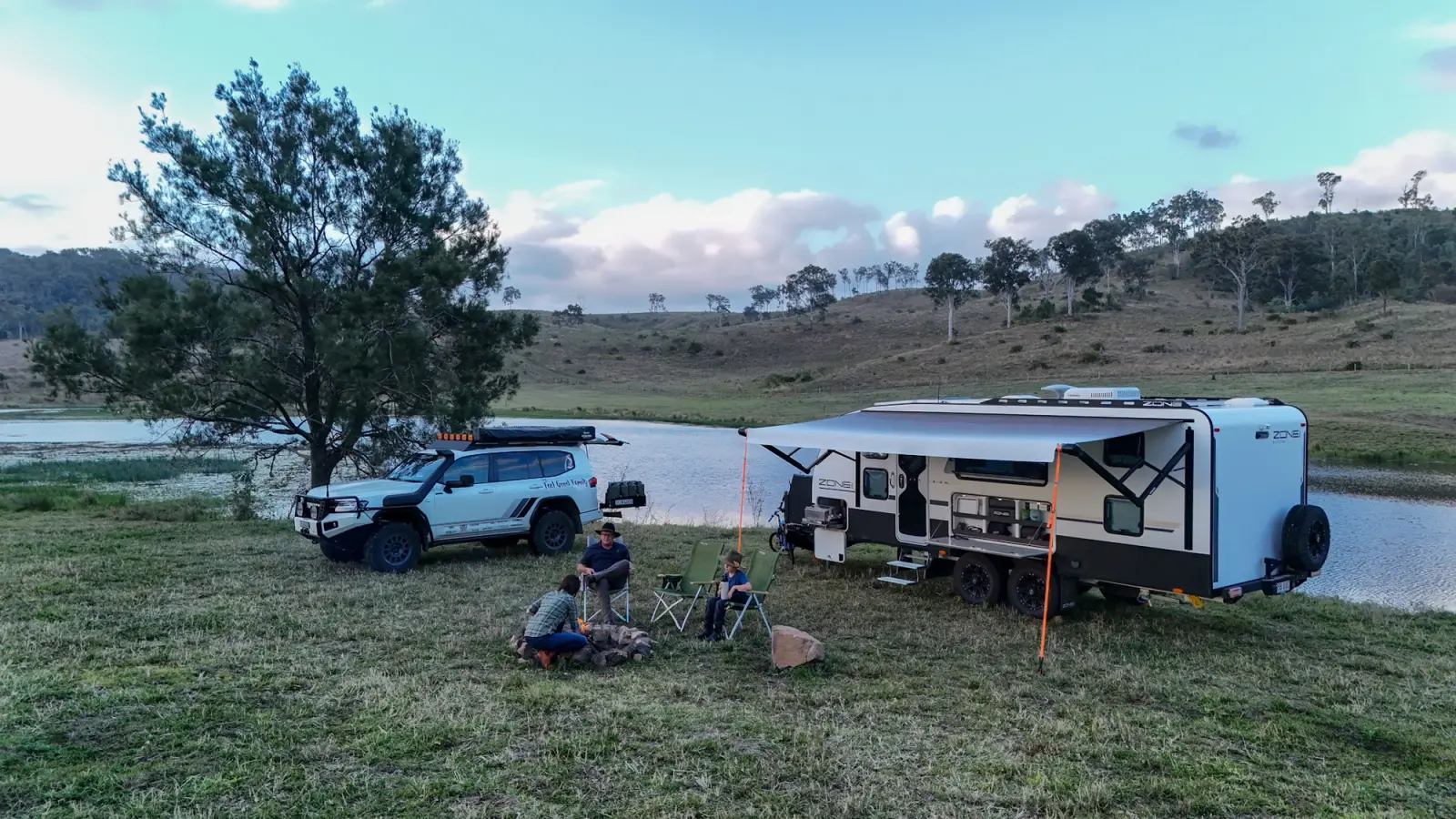
a family and their 4x4 camped under trees
The last thing we do before leaving isn’t mechanical at all.
We stop, turn around, and look back at the campsite.
This check is about responsibility, respect, and protecting the places we love to travel through.
We ask ourselves three simple questions:
- Is all rubbish packed up or binned properly?
Including food scraps and micro litter that’s easy to miss.
- Is the fire completely out?
Not “probably out”, but cold to the touch, ashes dispersed if appropriate.
- Have we left anything behind?
Toys, pegs, rubbish, bits of rope or wire.
Leaving a campsite as you’d love to find it isn’t just good etiquette. It’s how we protect access to free and low-cost camping across Australia and ensure these places remain open for the next travellers.
Why These Checks Matter
Small habits, big consequences
None of these checks are complicated. None of them require experience or expensive gear.
But skipping even one can lead to:
- Vehicle or caravan damage
- Dangerous towing situations
- Fires or environmental harm
- Ruined travel days that didn’t need to happen
We’ve learned that consistency beats complacency every time. Doing the same simple checks, in the same order, every single departure removes guesswork and reduces risk.
It’s not about being perfect. It’s about being prepared.
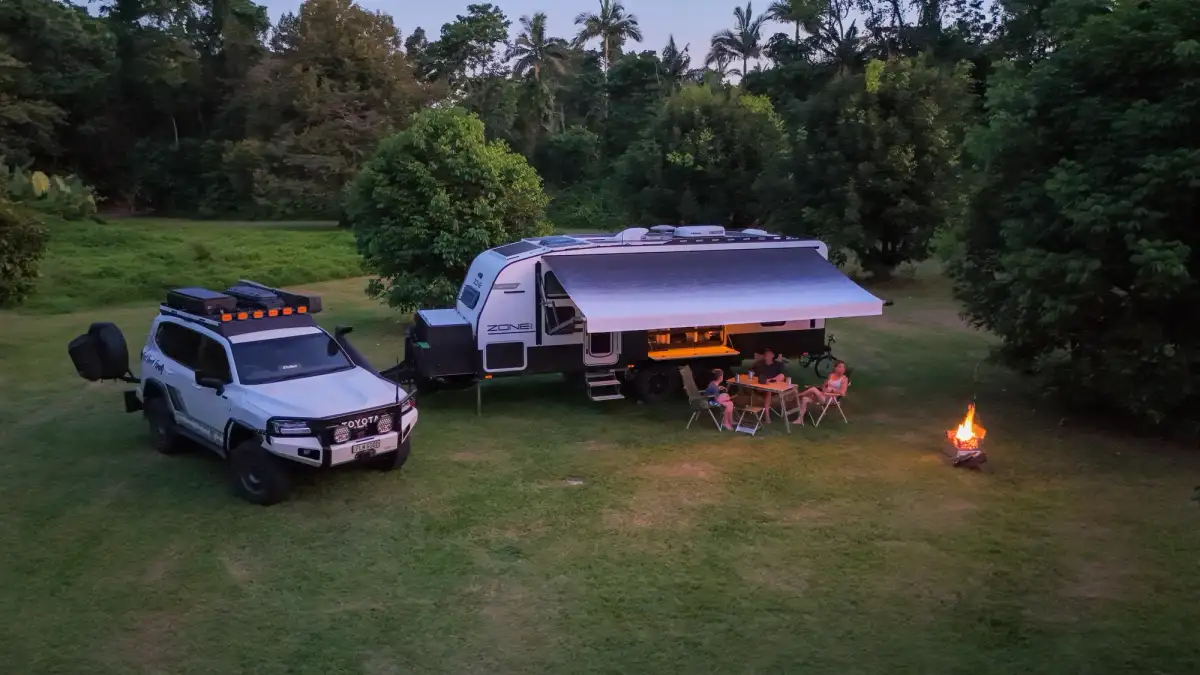
a 4x4 and caravan parked on a campsite with a campfire at sunset
A Final Thought Before You Roll
Less stress, more adventure
Travel days should be exciting, not stressful. These three checks help us start every drive confident, calm, and ready for whatever the road throws our way.
They’ve become second nature for us, and once they’re part of your routine, you’ll wonder how you ever travelled without them.
Three checks. Only a few minutes. Every single time.
Travel safe, and enjoy the adventure!
Checks done?
Cover anywhere you can legally go in Australia.