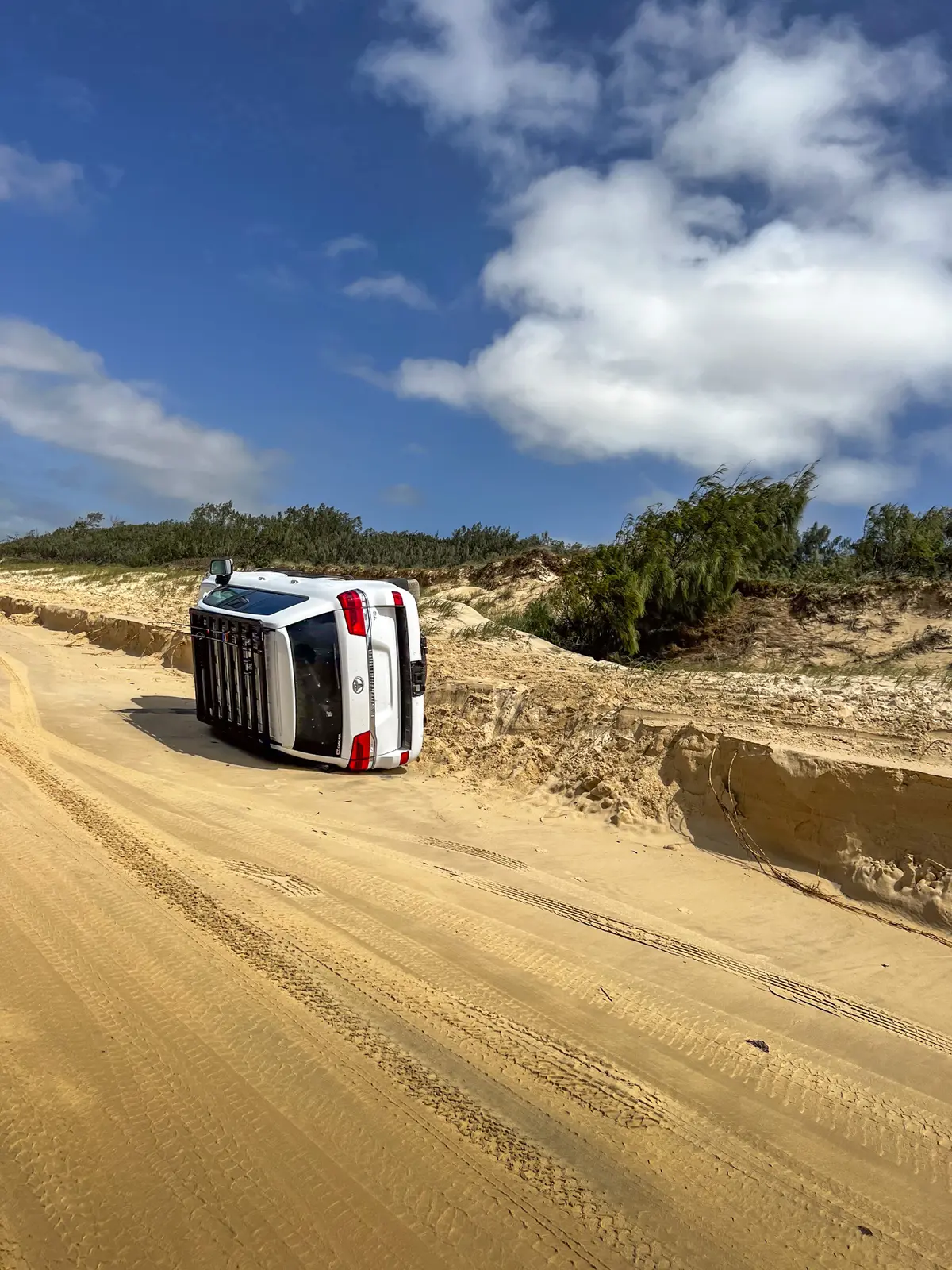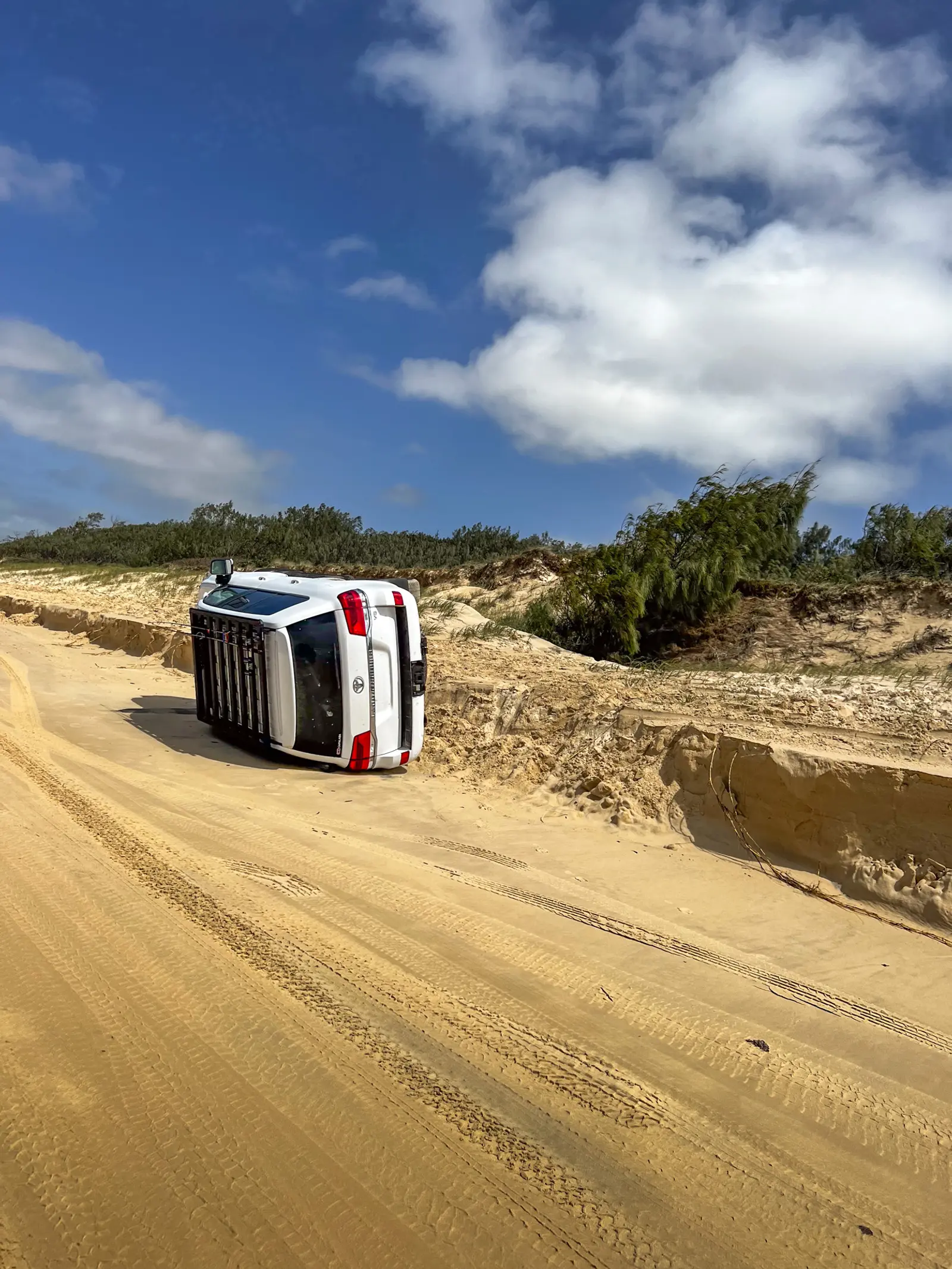
Key Beach Driving Rules & Etiquette
When it comes to driving on the beach, it’s important to be conscious of the rules and laws to remain safe. Road rules still apply. This means speed limits, indicating and giving way are all present, even on the beach.
As always, follow local signs, don’t drive when you’re tired, respect wildlife, carry rubbish home, ensure your vehicle is mechanically sound before visiting and let someone know where you are going and when you expect to return. Following these simple rules will ensure you have a safe trip to remember.
How to Handle Soft Sand & Tides
For the firmest driving experience, aim to drive between the waterline and the high tide mark. When driving on softer sand, it’s important to avoid sharp turns and sudden braking. Steering on sand is as much about throttle input as it is about turning the wheel.
It’s a bit disconcerting when you’re starting out—you turn the wheel to the right and your vehicle wants to keep on going forward. It eventually catches a ridge, and out of nowhere your 4X4 twitches to the right suddenly. By applying a little throttle as you turn in, you’re encouraging your vehicle to head in the direction you want, rather than letting the soft stuff dictate when you’ll actually turn.
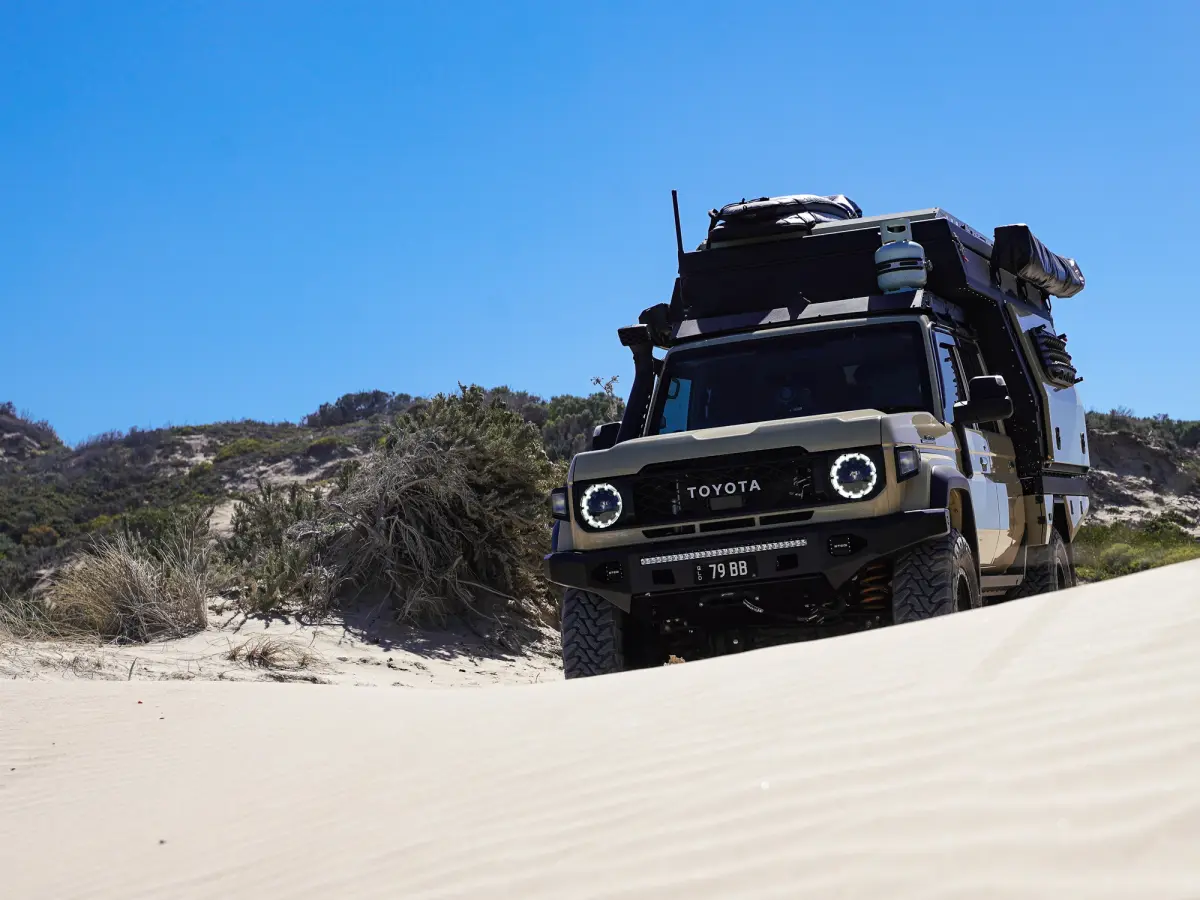
Toyota LandCruiser 70 series driving on sand
While we’re on the subject of turning, make sure you only apply smooth input into the steering wheel too. If you jerk the wheels too sharply, the low tyre pressures you’re running can cause the bead of the tyre to roll off the rim. While this is not the end of the world, it is a pain in the backside. To reseat the bead, clean all the sand out of the rim and tyre and wrap a ratchet strap around the circumference of the tyre before attaching a compressor and reinflating. There’ll be an audible ‘pop’ when the bead resets.
So, you can manage the sand and are now cruising, but what about the water? Obviously you don’t want to be driving through that. Studying a tide chart before heading out will ensure you don’t end up caught out. Any tide above 1.8m is considered a big high and if there’s also large swell it can make for dangerous driving conditions. The push from the swell will cover most of the firmer driving surface in many places along Stockton Beach, so it is recommended to drive at the back against the foot of the vegetation area during these high tide conditions.
Ideally, you want to drive on low tide. Driving on low tide offers more options as the sand is harder closer to the water’s edge and makes driving a lot easier and safer.
Tyre Pressure Guide for Sand Driving
You may be looking forward to cruising along the coastline, dunes on one side, rolling waves on the other, but you need to be prepared. Understanding tyre pressure is a great place to start.
It’s impossible to tell you which pressure to run though, as there are several variables that are dependent on individual vehicles. Weights, tyre sizes and even vehicle types all play significant roles in determining your pressures. Sand as a terrain is also constantly shifting and can have different densities. Down near the water it’ll be firmer and easier to drive on; whereas up in the dunes the drier sand will be much softer, particularly if the area you’re in hasn’t seen rain for a while.
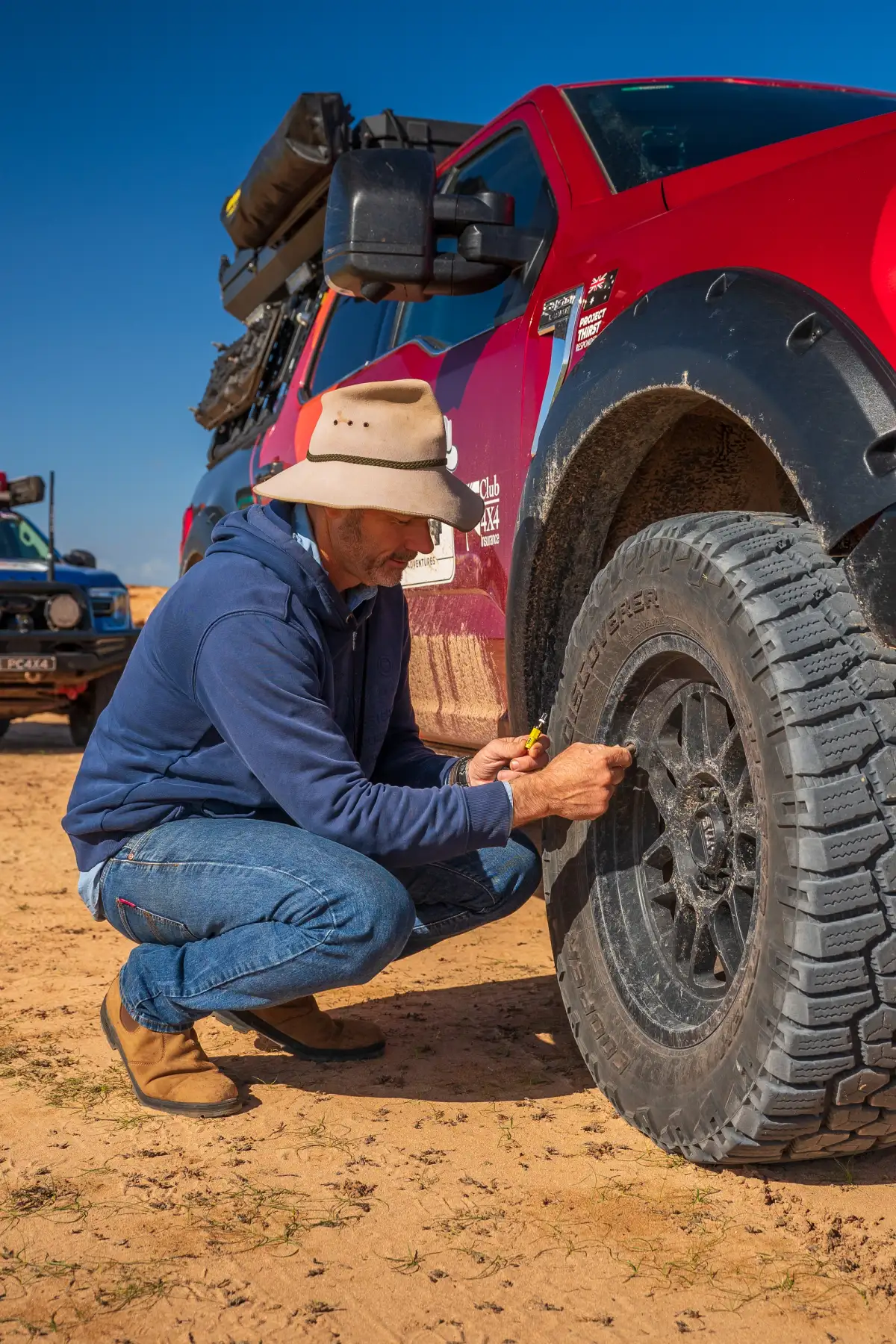
Pat Callinan adjusting tyre pressure on his Ford F-150
As a rule of thumb, if you’re driving a full-size 4X4 wagon, start at around the 20psi mark and head south from there depending on conditions. Don’t go lower than 16psi as you’re starting to run the risk of rolling the tyre bead off the rim below these pressures. With that said, if you’re below the high tide mark and you get stuck it may be worth dumping more air to try and get out. Just make sure you air back up to a safer pressure as soon as you can.
What to Do If You Get Bogged
If you do find yourself bogged, it’s important to start simple. You will find dropping your tyre pressure down to 16 psi or even 12 will have a massive impact. The increased footprint will greatly better the chances of simply being able to drive out of a hole.
If this prove useless, it’s time to grab the recovery boards. Slide the traction boards under the front of the tyres, clear a path, and gently ease onto the throttle. No wheelspin, that just melts the boards and makes you look like you’ve never done this before. This method’s especially handy when you’re solo. No snatch required, just a bit of grunt work and some mechanical sympathy.
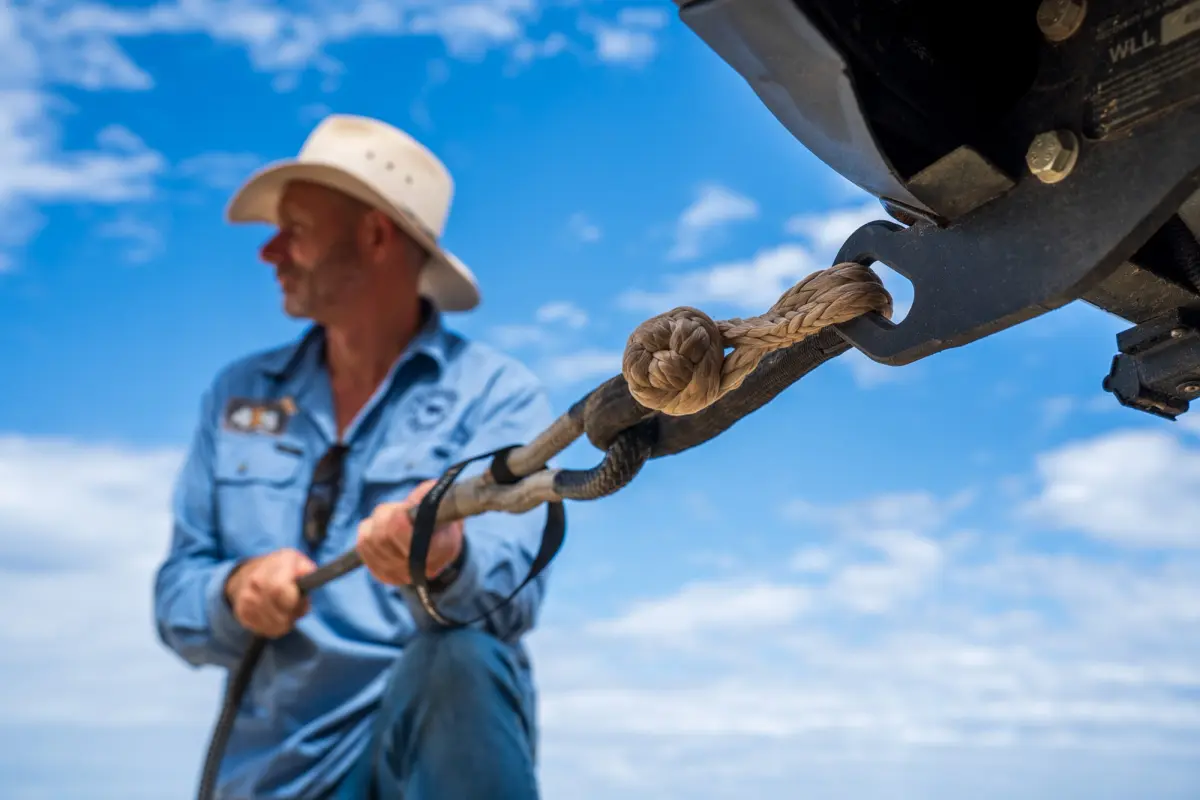
Pat Callinan using a snatch strap
If the basics aren’t working, it’s time to step it up. If you’ve a mate or someone willing to assist, whip out the snatch straps and hook them up. Always use rated recovery points. Never hook to a tow ball unless you’re looking to create a projectile that can take out a windscreen or a someone’s head. Communicate clearly, keep the line straight, and keep people well clear in case something does let go.
If you’re still not budging, it’s important to know when to give up. Make the call. Call the local recovery company and remain patient. This is where packing enough water, food and comms is key. There’s no shame in getting help.
Common Beach Driving Mistakes:
- Driving at high tide
- Not airing down enough
- Turning too sharply
- Overusing throttle (wheelspin)
- Not carrying recovery gear
Must-Have Recovery Gear for Beach Driving
When it comes to beach driving, some recovery gear shines more than others. The humble shovel and recovery board combo is an all-too-common flash of orange spotted on beaches nation-wide. There is, however, a whole arsenal of gear that should probably be kept somewhere in your 4WD, just in case.
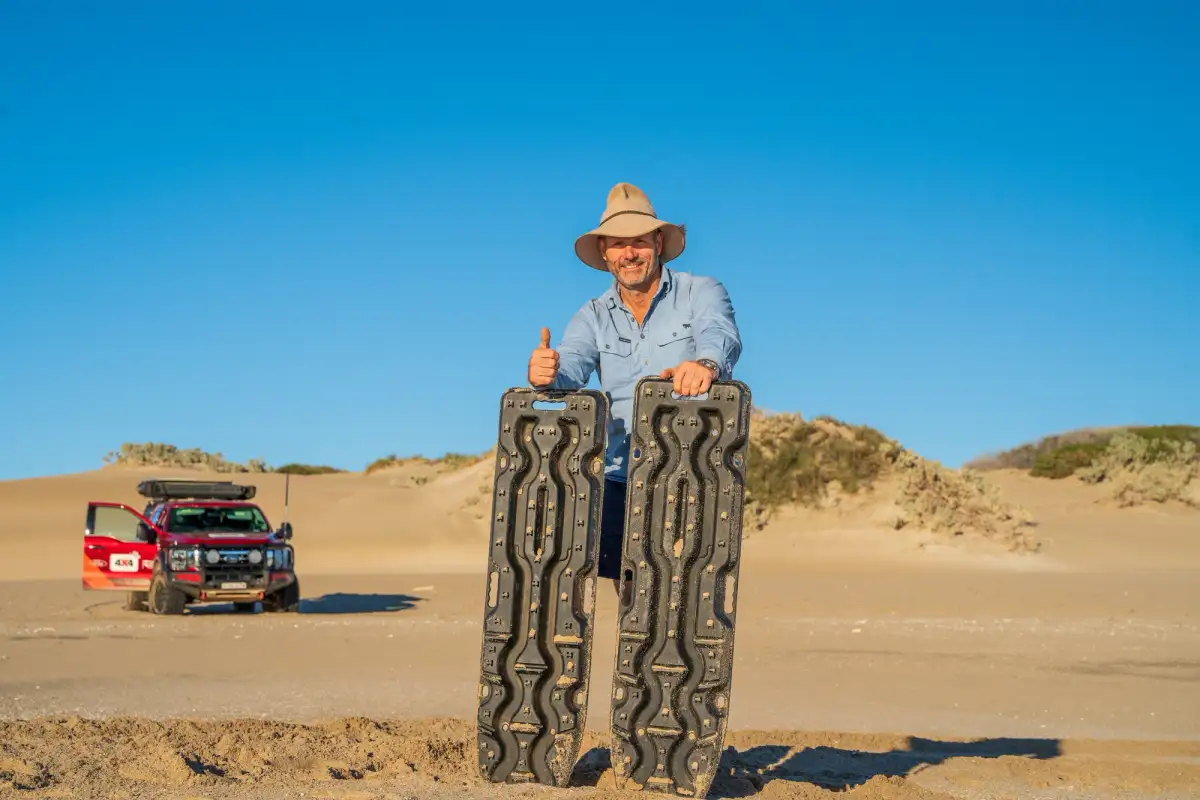
Pat Callinan with recovery boards on sand
Our picks for a basic recovery kit are as follows:
- Snatch strap
- 2x shackles or soft shackles
- Gloves
- Tyre Deflator
- A set of recovery boards
- A jacking plate and vehicle jack
- A long-handled shovel
- A tree trunk protector if you have a winch (optional)
- Recovery dampener
Vehicle Setup Tips for Soft Sand
There are a few bits of gear that are essential for sand driving. Whether full-time mods or temporary fittings for the beach, they make the adventure safer and easier.
Here’s what we would suggest:
- Sand flags for safety
- UHF radios for communication
- Tyre deflator (or a stick)
- Tyre pressure gauge
- Air compressor
Now, realistically, a trip to Stockton Beach probably only requires something to deflate your tyres and the aforementioned recovery gear with the shovel and recovery boards being the minimum in that department.
With nearby service stations equipped with air compressors, phone reception and plenty of beach traffic, this off-road adventure shouldn’t present many opportunities for the rest of the gear, but they can help.
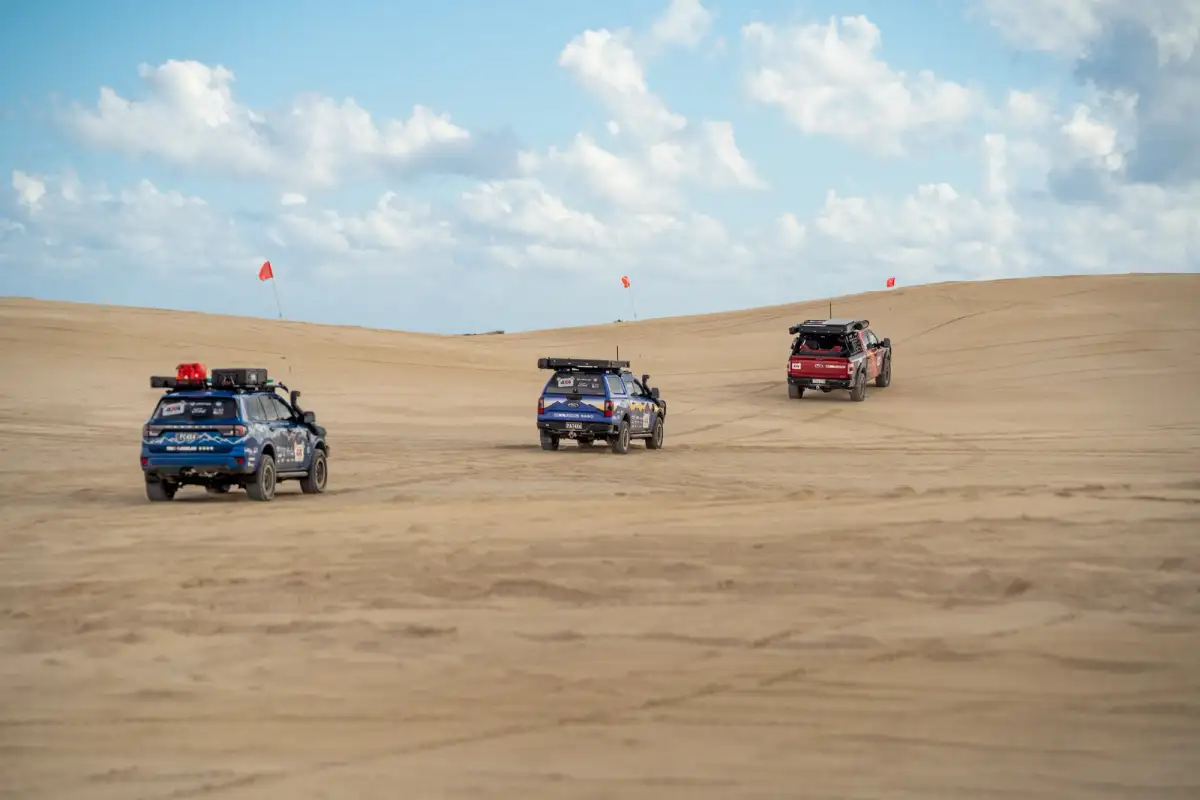
Pat Callinan in convoy with Ford 4X4s with sand flags
If driving through the dunes, a sand flag is a visible warning for other drivers when mounting dunes and works best when fixed to the front of your vehicle.
UHF radios are handy if you are by yourself and get stuck, though the phone service should suffice here. They’re also fun if travelling with others and lets you warn of anything on the beach that could affect driving conditions.
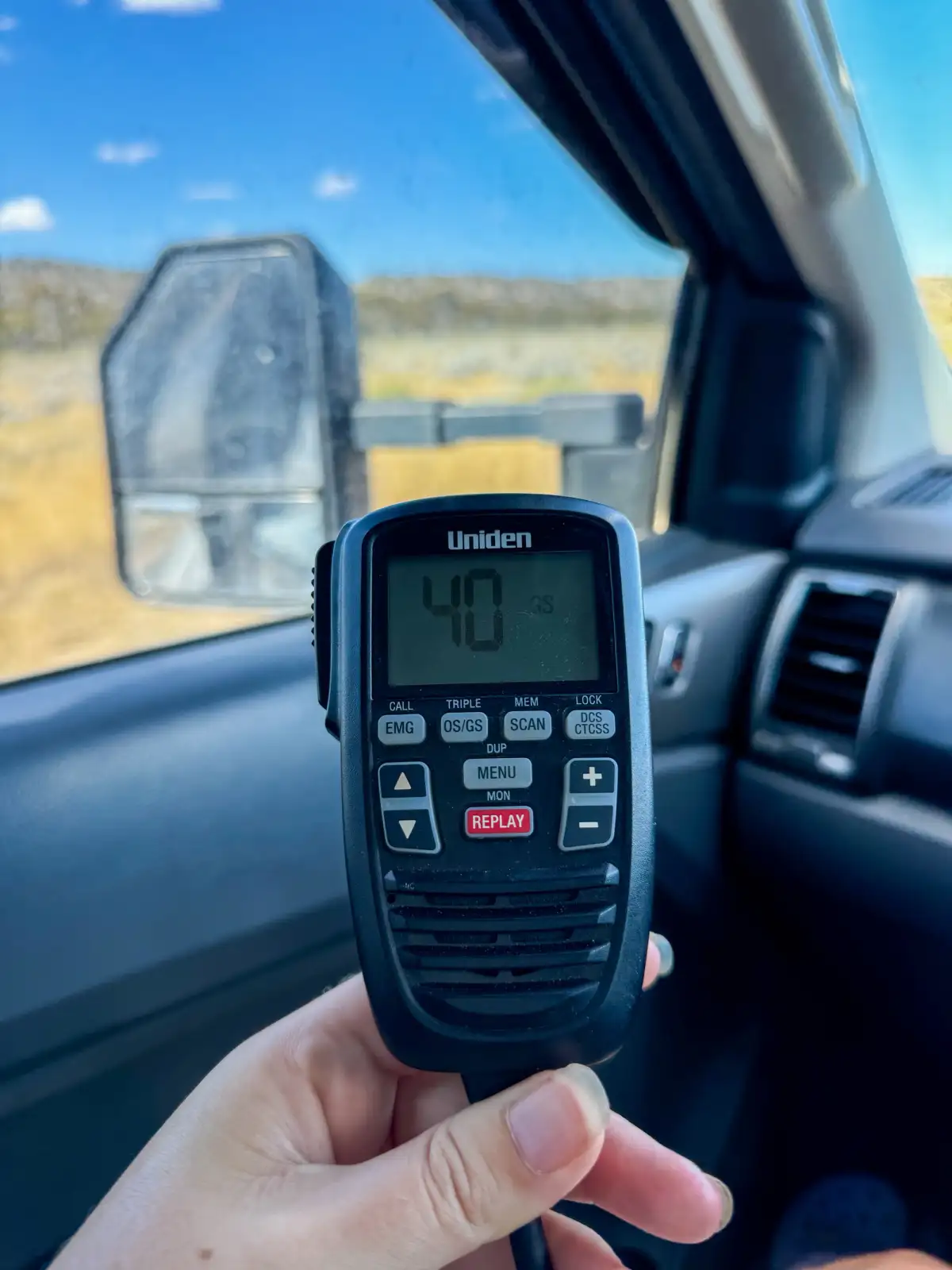
UHF radio
The tyre gear is self-explanatory and while a proper tyre deflator isn’t required, it can help. Anything from a stick to a key will deflate your tyres. Having the portable air compressor is handy if the terrain changes and the pressure gauge will help you accurately judge your psi.
Even with the bare minimum, you should be able to manage a Stockton Beach adventure. As one of the most travelled beach driving destinations in the country, there will always be someone to help if you can’t help yourself. Stay safe, pack smart and have fun.
Beach Driving Golden Rules:
- Air down early
- Keep momentum, not speed
- Avoid sharp inputs (steering + throttle)
- Stick to firm sand where possible
- Always check tides
Is Stockton Beach on your bucket list?
Get comprehensive insurance that can go there too.
Part of our complete guide to Stockton Beach.