Driving on the White Stuff
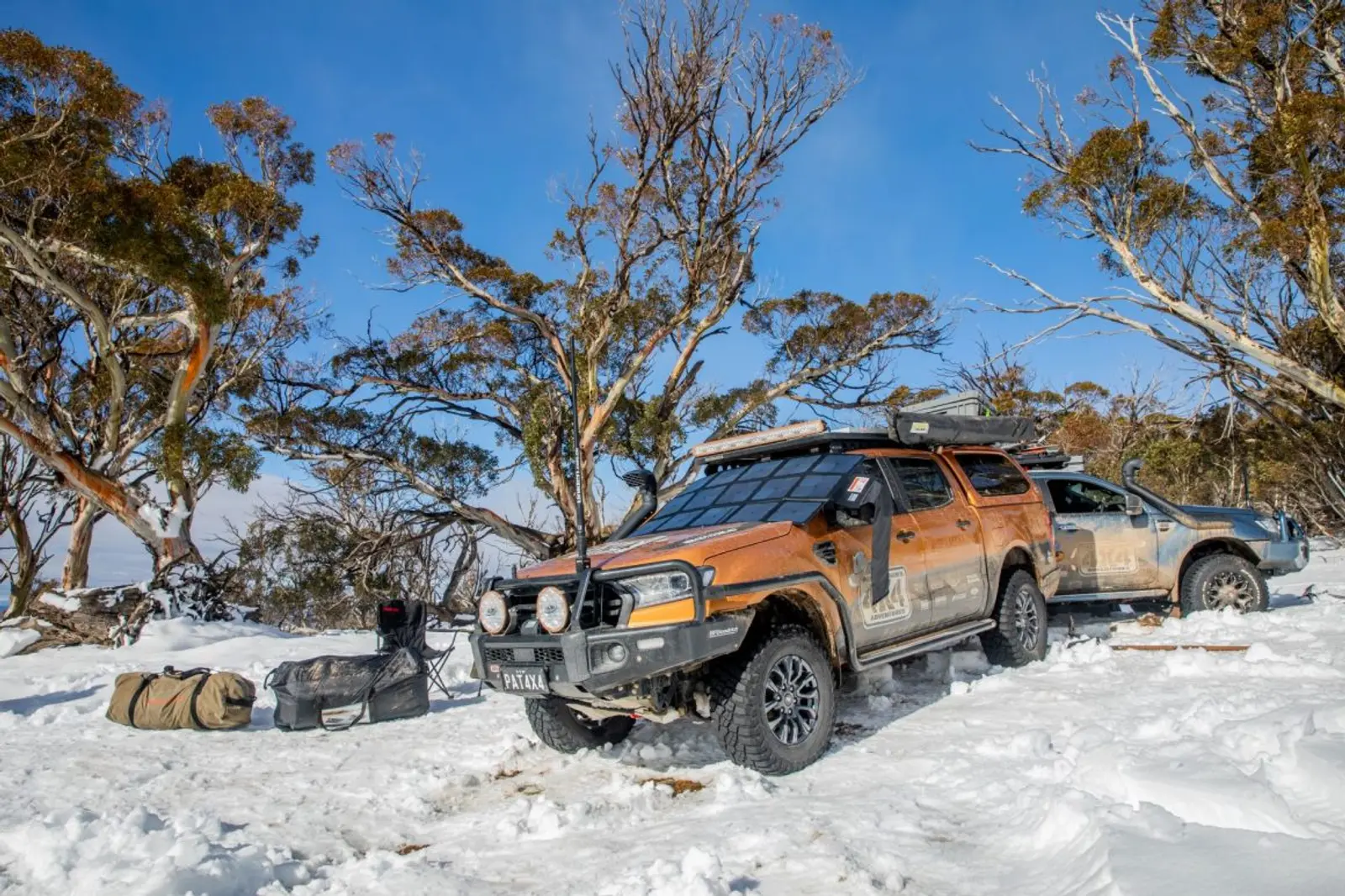
If you’re pointing the bonnet towards the High Country this winter, you need to recalibrate your brain before you even hit the base of the mountains. Snow driving looks magic in the photos. Powdered peaks, frosted gums, steam rolling off the bonnet. In reality? It’ll humble you faster than a chopped-up clay hill after rain.
Snow isn’t sand. It isn’t mud. It’s closer to driving on a skating rink that occasionally turns into quicksand. And if you treat it like any other loose surface, you’ll find out very quickly just how heavy a three-tonne 4X4 feels when it has zero grip.
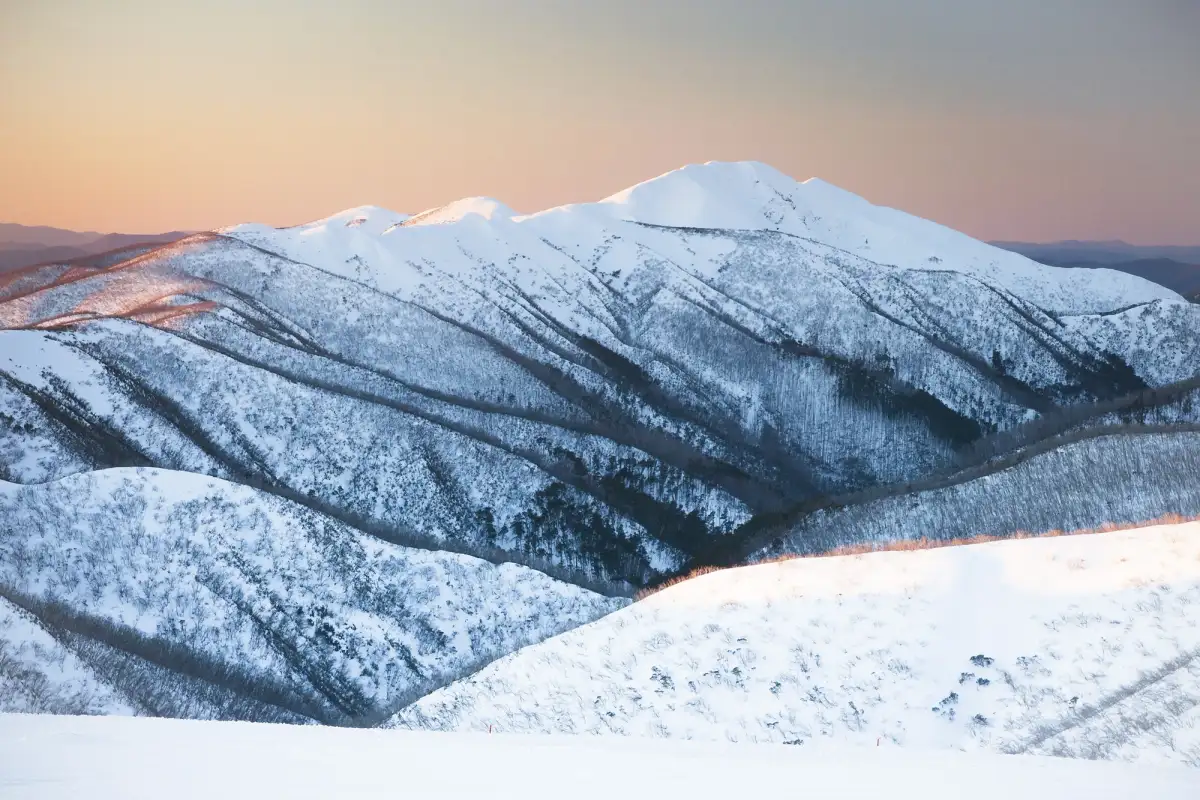
Australian Snowy Mountains
Friction is Everything (And You Don’t Have Much of it)
When you’re driving on snow or ice, you’re playing with a severely reduced friction budget. Every input you make—throttle, steering, brakes—is drawing from the same tiny pool of available grip.
I like to think of it like holding a sledgehammer with soapy hands. If you try and flick it around quickly, it’s gone. Slow, deliberate movements keep it under control. Your tyres are those soapy hands.
Sudden throttle? You spin.
Sharp steering? You slide.
Heavy braking? You’re now a passenger.
The biggest trap I see is people treating snow like soft sand and trying to power through it. That works on dunes because you’re fighting gravity and drag. On snow, you’re fighting physics. And physics doesn’t negotiate. Momentum is useful, but it has to be gentle, rolling momentum.
The Setup
Tyre pressures: Drop them slightly to increase your footprint, but don’t go full sand mode. Around 20–25psi is a solid starting point depending on your load. You’re chasing a bit more of a contact patch, not a bagged-out sidewall.
Low range: If the snow’s getting deep or you’re crawling around tight descents, 4Low is your friend. The extra control and engine braking are gold. Snow descents in high range can get ugly quickly.
Lights on: White sky, white ground, white everything. Visibility can disappear in seconds. Make yourself visible before it becomes critical.
And while we’re here, pack the recovery gear: Shovel, traction boards, rated points and warm gear. Snow doesn’t forgive unprepared travellers.
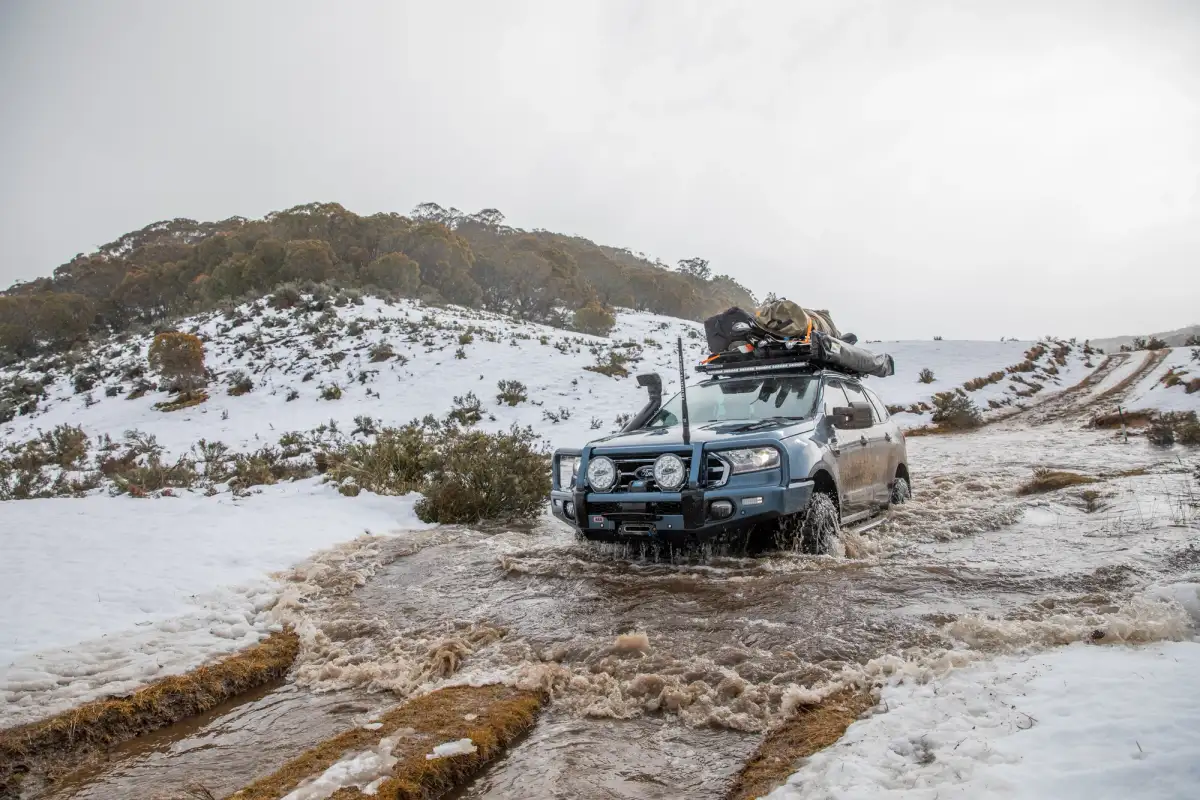
Pat Callinan 4X4 water crossing in Snowy Mountains
Slow is Smooth, Smooth is Fast
Two things can happen on a corner: understeer or oversteer.
Understeering is when you turn the wheel and the front just pushes wide. The steering feels vague. You add more lock, but the vehicle keeps heading straight for the outside of the bend. It usually happens because you carried too much speed in or you’re still braking while trying to steer. The fix? Ease off the pedals, reduce your steering input slightly, and let the front tyres regain grip. Cranking in more steering just makes it worse.
Oversteering is the opposite. That’s when the rear loses grip and starts stepping out, trying to overtake the front. On snow it often comes from too much throttle mid-corner or a sudden weight shift. The recovery is smooth counter steering and gently backing off the throttle.
Smooth inputs win every time. If you do start to slide, the worst thing you can do is stab the brakes. That just locks things up and commits you to the skid. Ease off, steer into the slide, and let the tyres regain grip progressively. Modern traction control helps, but it’s not magic.
Downhill is Where it Gets Real
Climbing in snow feels manageable. Descending is where most dramas happen. Use engine braking. Stay in low range. Pick your line early. The moment you feel the vehicle starting to run away downhill, you’re already behind the eight ball.
This is also where chains earn their keep. On hard-packed snow or ice, they dramatically improve braking and steering control. Yes, they’re noisy and a pain to fit, but they’re worth it.
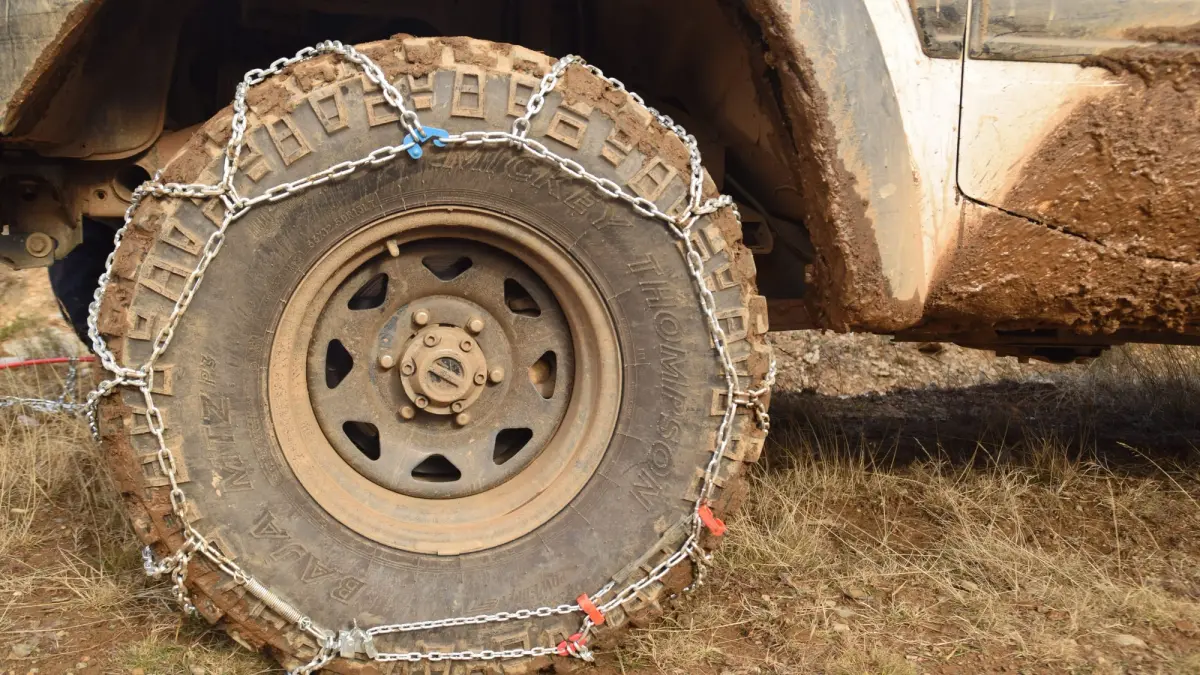
snow chains on a 4X4's tyre
Snow isn’t a Playground, it’s a Privilege
Driving in the snow is one of the best experiences you can have in a 4X4 in Australia. The High Country in winter is next level, but it demands respect. It’s about patience, preparation, and understanding that conditions can change in minutes.
Keep your inputs soft.
Keep your distances big.
Carry the right gear.
Do that, and you’ll come home with epic photos and even better stories. not a recovery bill and a bruised ego.
Keep the shiny side up.
Pat
Mountains calling?
Get comprehensive insurance that can go there too.