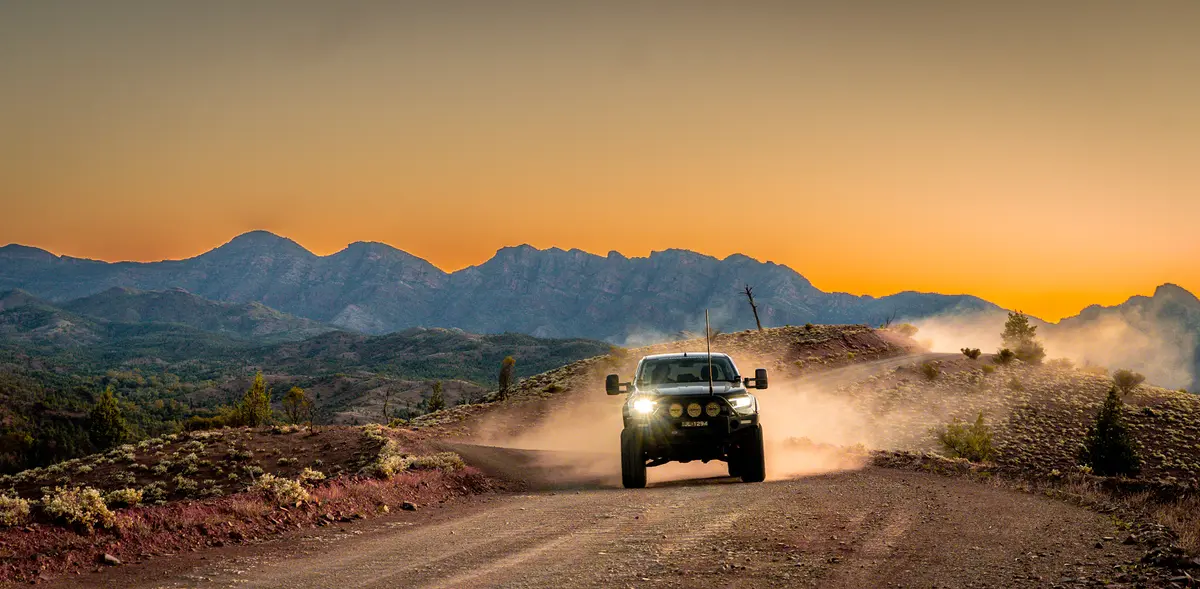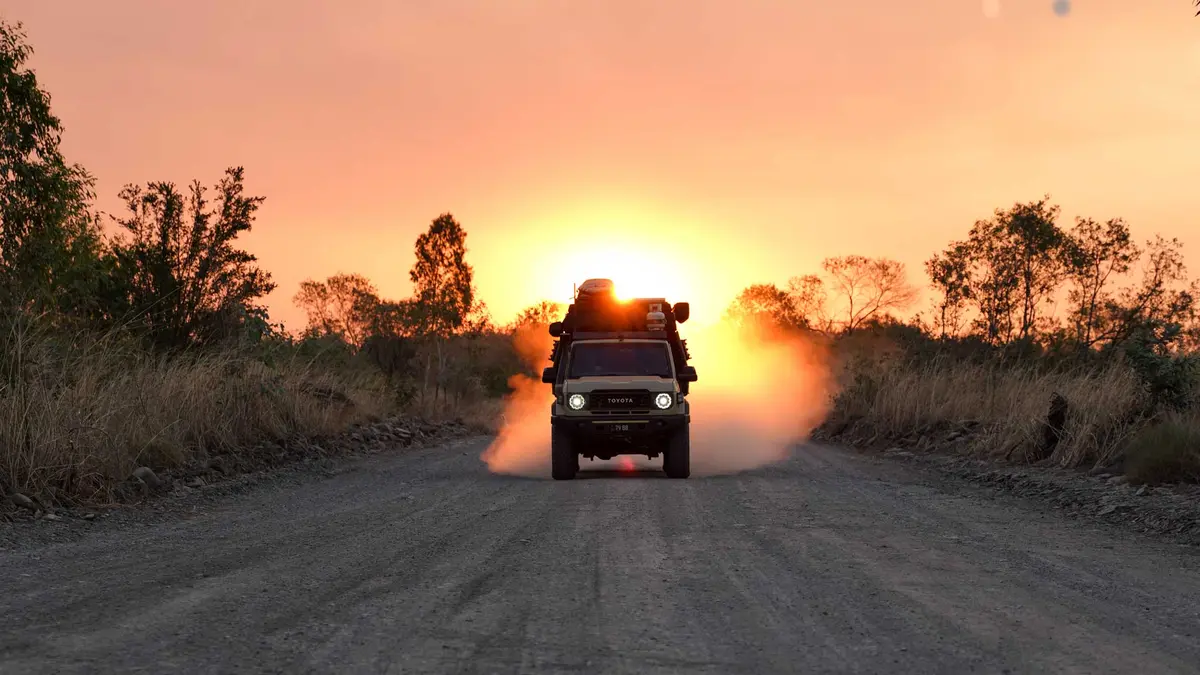
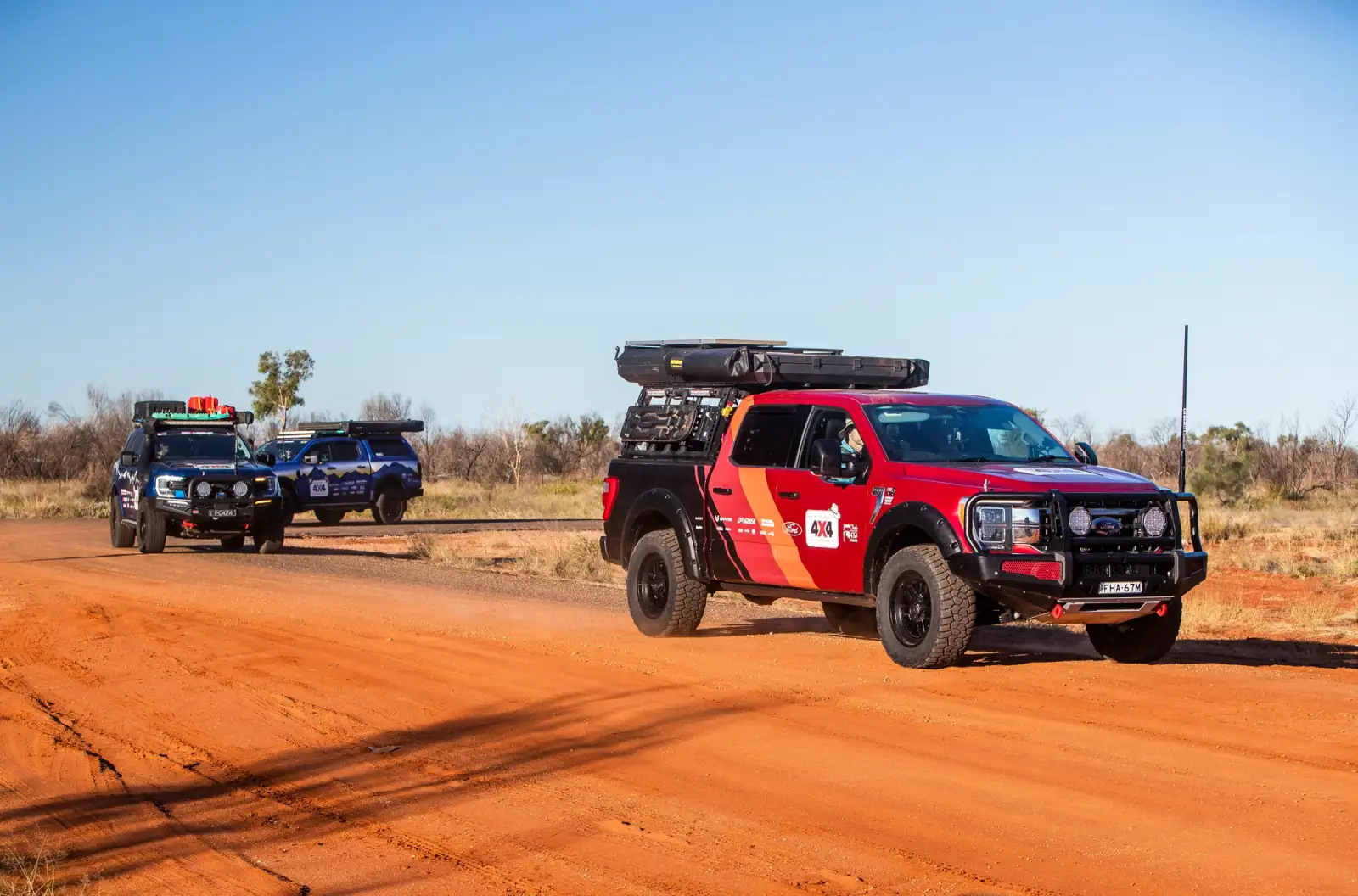
Convoy travel, to me, is the ultimate getaway where you get to share an epic adventure with your mates and your respective rigs. Some of my favourite memories include chatting over the UHF, getting everyone's real-time reactions to campsites and tricky 4x4 tracks, assisting each other with recoveries, sharing advice and collaboratively creating an adventure.
If you’ve spent the better part of your 4x4 adventures as a solo traveller, you may be surprised to learn there are some challenges that come with convoy travel. It’s not all fun, games and yarns over the radio. Here’s what I’ve learnt along the way.
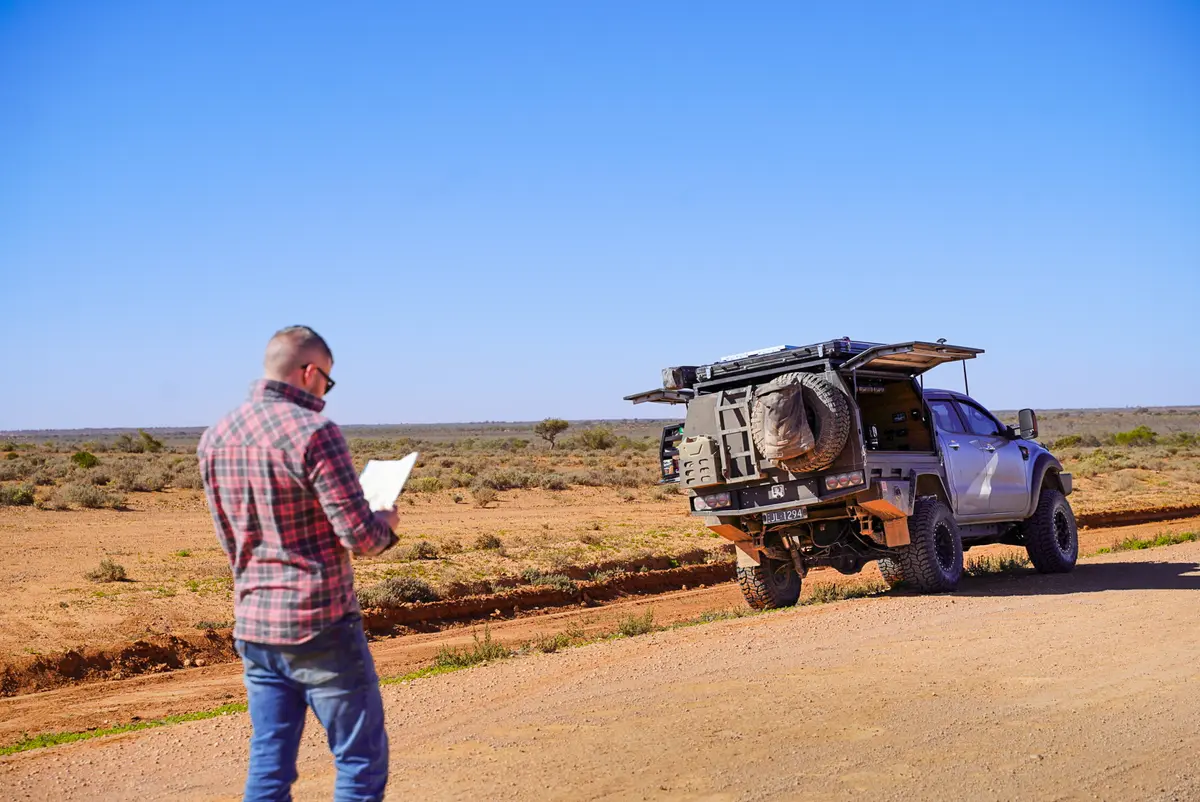
man standing with a 4wd in the outback looking at a piece of paper
A Pre-Trip Brief
Although I love precision and order (you can thank having both parents in the military for that one!) a pre-trip brief isn’t only for type A personalities. It also doesn’t have to bring a corporate or formal vibe to the trip. This discussion assists everyone, allowing you to chat about the route, stops along the way, ideas for campsites, UHF channel, convoy order and where the first-aid kits and recovery gear is located. It eliminates confusion, allows collaboration and ensures everyone feels comfortable with what’s coming up. Do it over beers the night before or a coffee the morning of!
The Order of Vehicles Matters
Some like to nominate a ‘trip leader’ and position them up the front to lead the pack, while others go that extra step and actually order their vehicles. When considering who goes at the front, you’d be looking at the most experienced wheeler, bonus points if they’ve also got the best navigation system and communication devices on board. The slowest or least experienced should never play tail-end Charlie, otherwise they may fall behind and/or may need some extra eyes on them in case they need help. A convoy typically benefits from having someone at the back who has reliable and easily accessible recovery gear, for obvious reasons.
Adjust your Distances Based on the Conditions
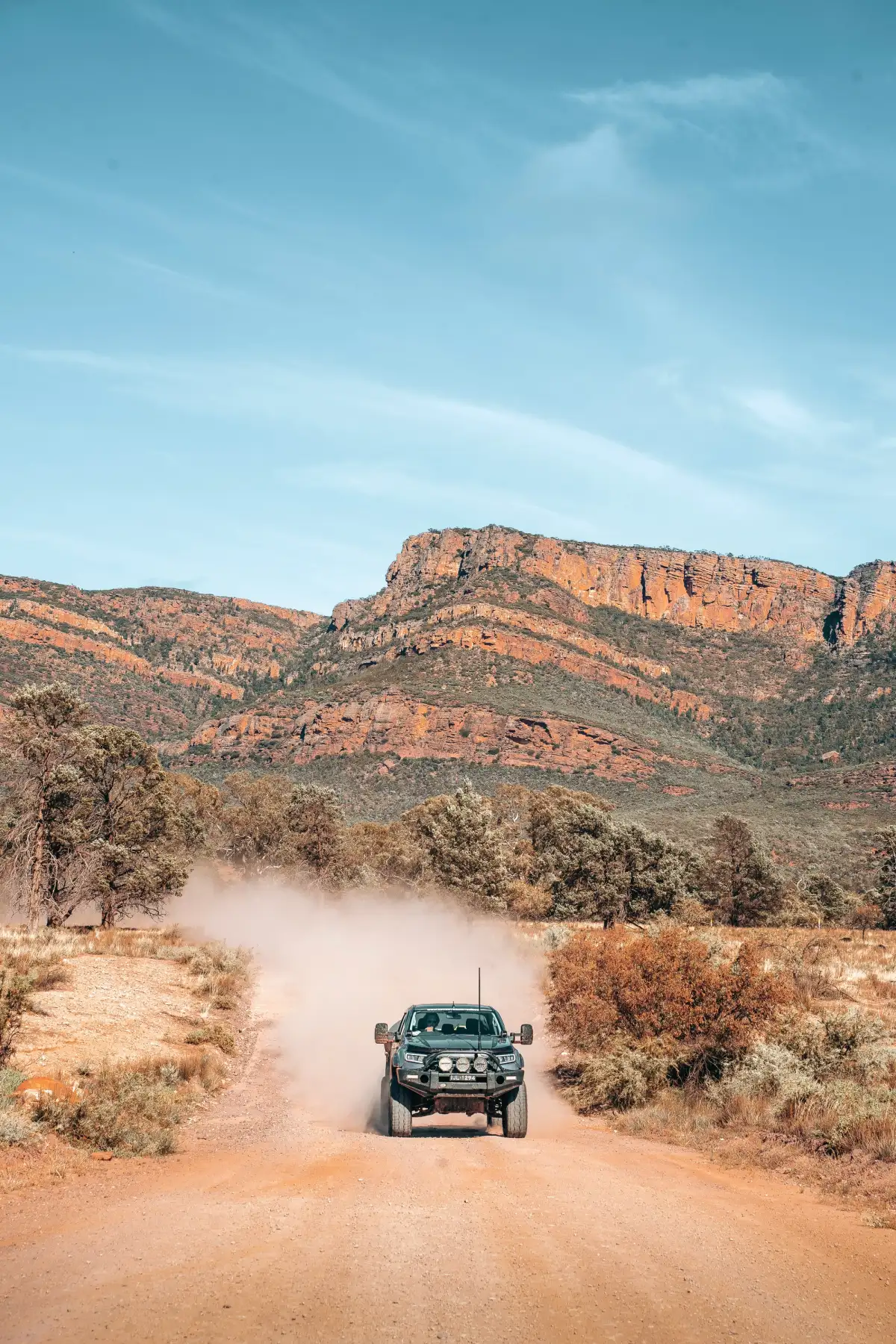
If you’re in bulldust territory, it won’t take long before the vehicle in front encompasses you in a sea of dust. Not only does this inhibit your view, but it’s no good for your vehicle to be sucking all of that dust in. Once you hit the dirt, each vehicle in the convoy needs to increase their distance from the car ahead until clear vision is achieved.
It’s also important when distance is increased that the convoy knows to mark corners. If you’re coming up to a turn, stop and wait until you either have eyes on the rig behind you in your mirror or they radio you to say they’re on your six. It lowers the chance of splitting up the convoy when someone takes a left instead of a right, which then leads to all sorts of delays and confusion. Trust me, I’ve done that before.
4wd driving through a dusty track in the outback
Make Sure Each Rig is Self-Sufficient
It’s easy to think “the other vehicle has it”, but I’d encourage you to ensure all vehicles in your convoy are self-sufficient. This means you’re all carrying spares, everyone has a first-aid kit, plenty of food and water on board and of course, good quality recovery gear. Relying on others can be a recipe for disaster, especially if you find yourself split up or something goes wrong and you’re down a rig. Being prepared means the whole convoy is safer and everyone knows there’s enough to go around.
Plan Regular Stops
Even when you’re not humming down the blacktop, fatigue can hit drivers quickly. Technical 4x4 tracks are also not situations where you can afford to have your attention drift. Make sure you’re taking regular breaks from driving and even swapping drivers, if that’s possible.
It’s a good idea to include in your pre-trip brief that if anyone needs a moment to rest they should say so over the UHF. It may seem obvious, but chances are there’s someone in your convoy who doesn’t feel comfortable to speak up, out of fear of holding others up or looking like they can’t handle it. Plus, who doesn’t like to slow the trip down a touch to enjoy the adventure more? It’s a win-win scenario.
UHF Etiquette
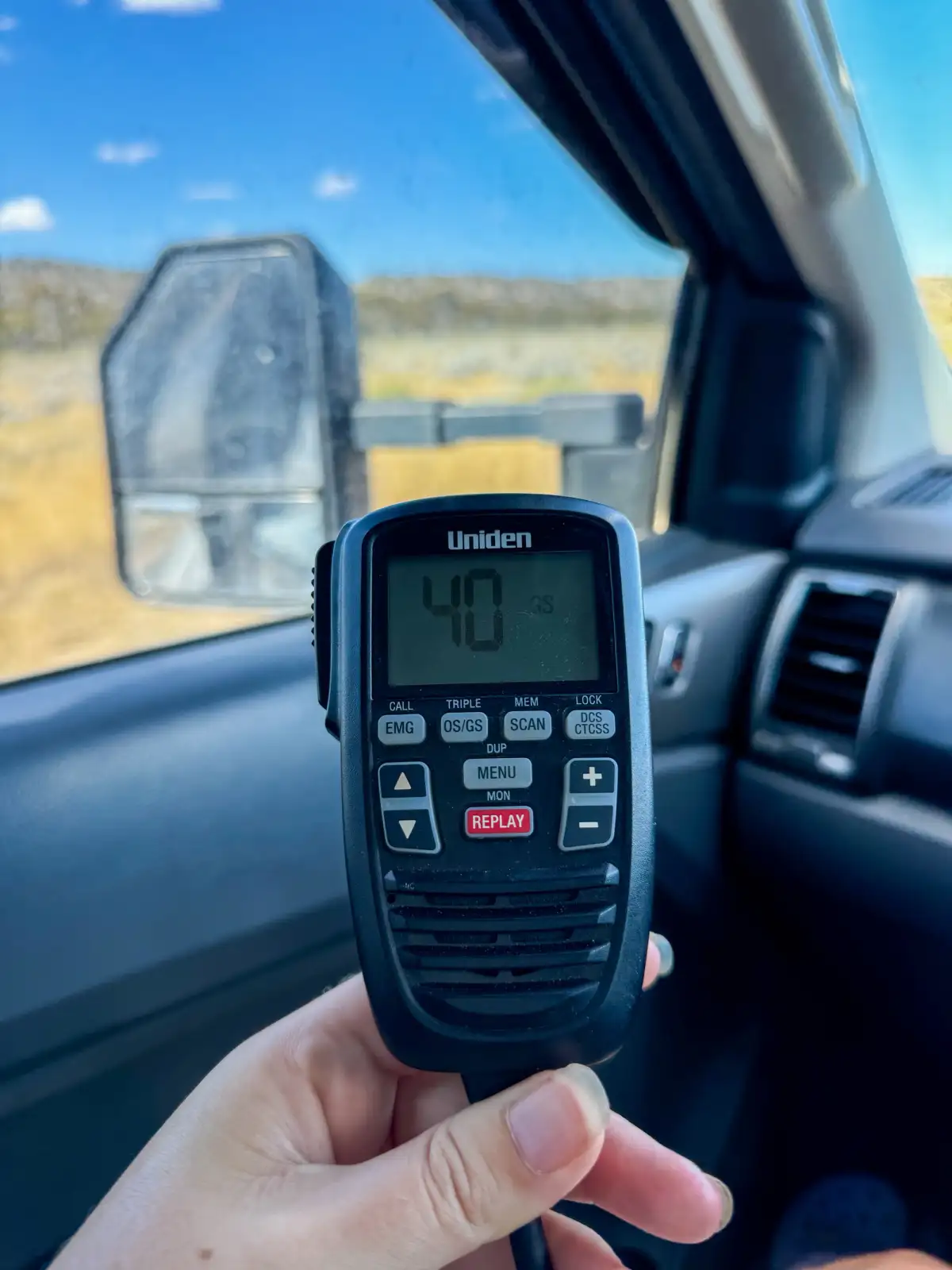
When communicating over UHF, anyone has the chance to chime in at any moment whether to ask a question or simply just yarn. However, when your trip leader calls out a hazard on the road such as “pothole ahead”, it’s important to reply “copy that, pothole ahead” to acknowledge you heard the message and to reiterate it.
To avoid talking over each other, I find it helpful to respond in order of vehicles. For example, if I’m sitting third in the convoy, I’ll allow the second rig to reply before I do. If a vehicle behind me doesn’t respond, I’ll prompt them to ensure they also heard the message.
a UHF radio in someone's hand in a car
Travelling in convoy can be an epic journey shared amongst friends, but like all things there is a way to do it that a) makes more sense and b) allows things to run more smoothly. Avoid looking at these tips as a way to formalise a fun activity, but rather adding in some structure to ensure your adventure stays as safe as possible, stress-free and full of good memories.
Taking the convoy offroad?
Insurance for anywhere you can legally go in Australia