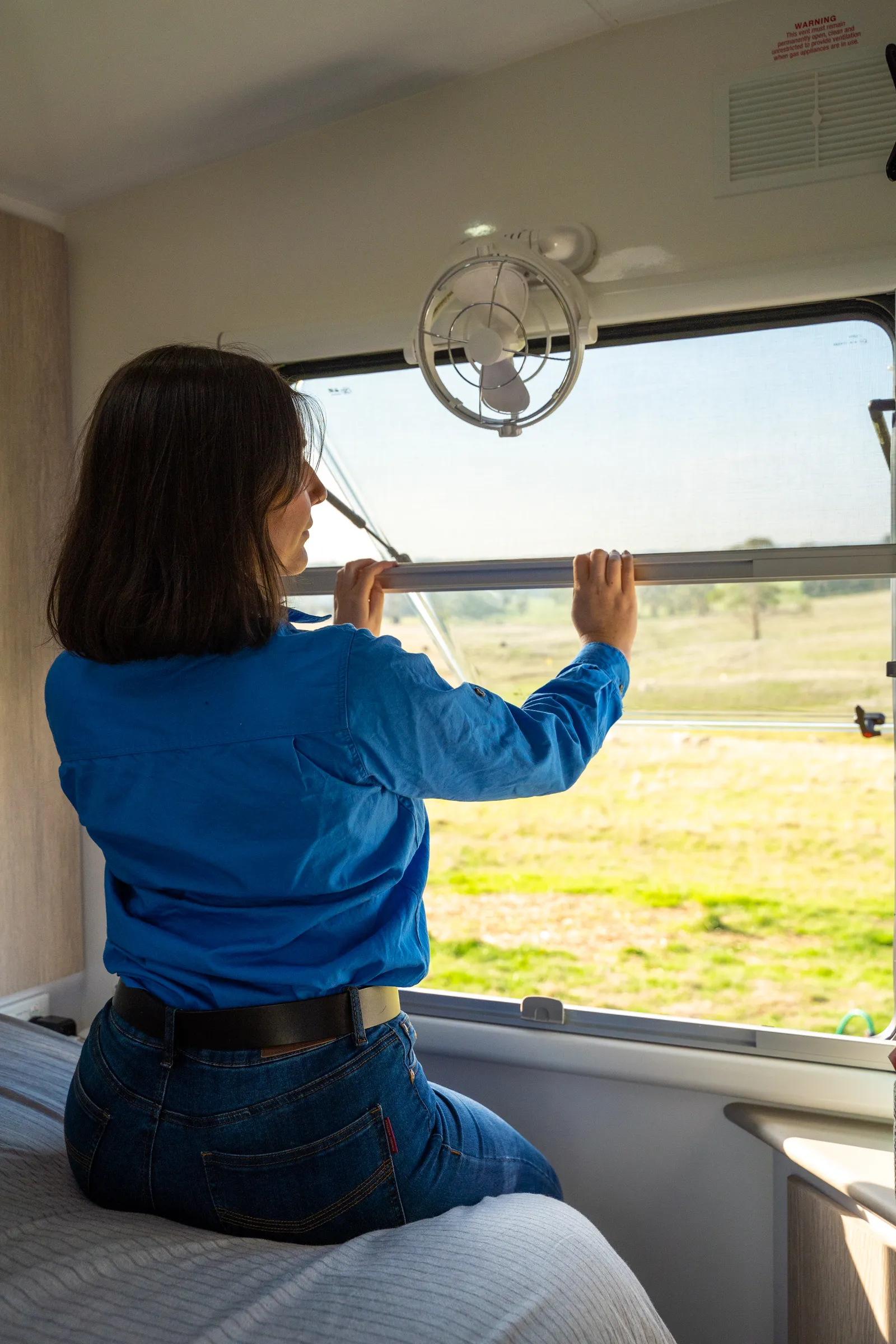
Everyone wants to seem like an expert, but the reality is we were all beginners once. Whether you’ve been a victim of the overpacking bug or forgot that the water tanks don’t magically refill themselves, there are common mistakes almost every full-time traveller makes when they first hit the road.
Although many will turn into funny memories along the way, some are easy to avoid if you know what to watch out for. From my own experiences and yarns shared around the campfire, these are the top six mistakes I think almost all first-time travellers make.
Mistake #1: Overpacking
Before full-time life on the road, I was a notorious overpacker. I’ll be honest — only now with a year of full-time travel under my belt have I fully grasped what living minimally really means.
You don’t know what you don’t know. I’d never had to consider my gear’s overall weight or work with minimal storage options. With an airplane luggage allowance you can always add another 30 kg bag — but when you’re towing a caravan or living in a 4x4 full-time, you can’t just keep adding weight without risking legal or safety limits.
Less really is more when you’re caravanning or living on the road. Before you leave, work out how to best downsize your stuff and only bring what you absolutely need. You’ll be surprised how little you actually need and how good it feels when you’ve pared it back to the essentials.
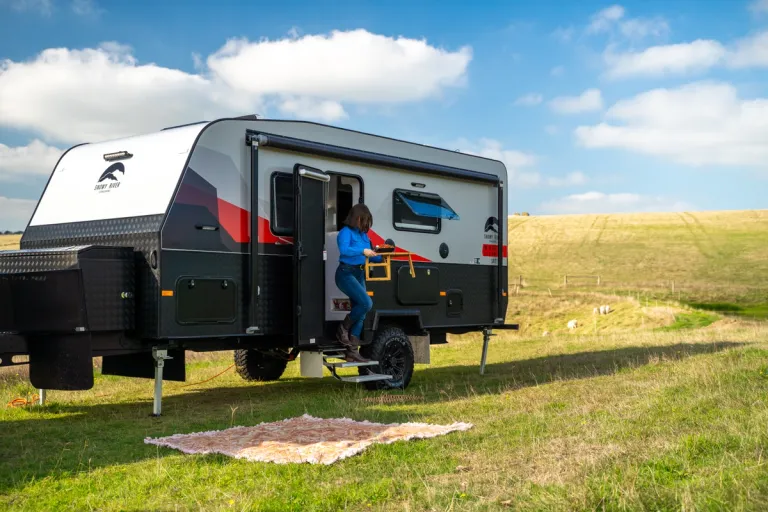
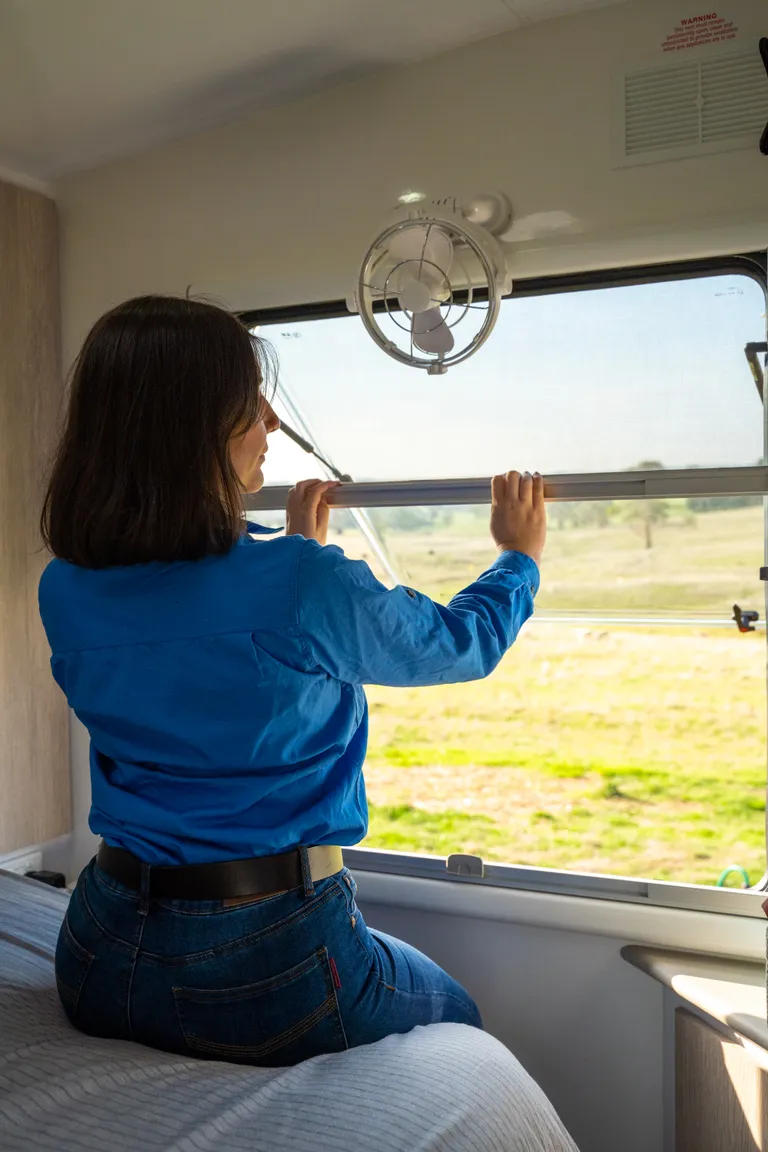
woman at door of caravan
Mistake #2: Not Budgeting or Tracking Spending
Most of us know you can’t hit the road without a sensible amount of money in the bank. For me, that meant having at least two months’ worth of fuel, groceries and camping fees, plus a buffer for emergencies like breakdowns or tyre blowouts (which happen more often than you think).
The mistake many first-timers make is forgetting to stay disciplined once the journey begins. Without regular tracking, it’s easy to overspend — and before you know it, you might find yourself having to cut your trip short.
You can still enjoy life on the road while keeping track. Some banking apps help by showing your income vs outgoing expenses each month, but the more reliable travellers keep a simple list or spreadsheet. It might not be glamorous, but it could save your trip.
Mistake #3: Over-planning Every Detail
Planning ahead is smart — but there’s a fine line between a rough plan and a rigid schedule. Some of us (I’m looking at the fellow Type A’s here) love to plan every stop and every day. The problem is, this leaves no room for spontaneity — and travelling is about discovering unexpected surprises, not ticking boxes on a rigid timetable.
Sure, have a rough idea of where you’re heading or what seasons you want to chase. That’s especially important for destinations that close seasonally (like Gibb River Road in the Kimberley, for example). But don’t build a minute-by-minute itinerary and force yourself to stick to it. You’ll likely miss out on hidden gems or feel trapped in a lifestyle that’s supposed to be freeing.
If you struggle to let go, try giving yourself a two-week window where you deliberately plan nothing. Be open to what the road shows you. I promise, you’ll be pleasantly surprised where you end up.
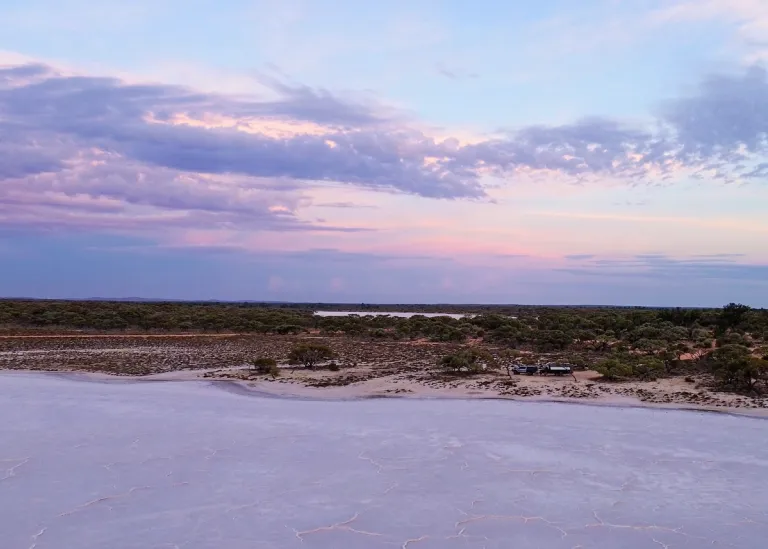
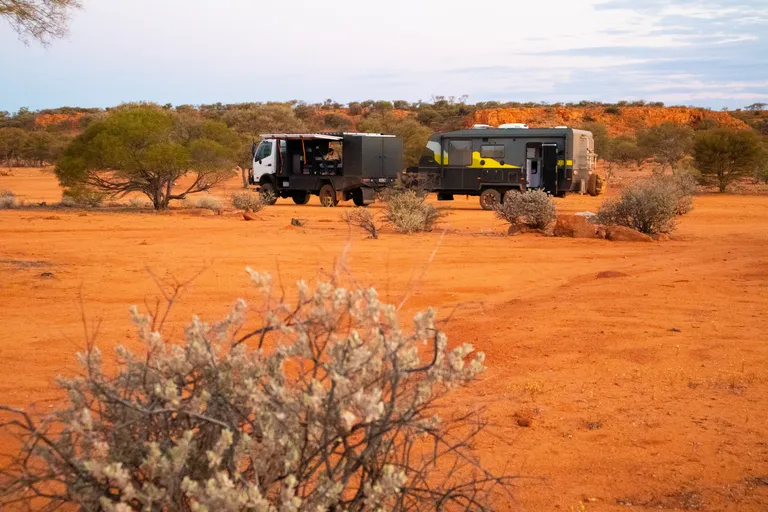
caravan camped at a salt flat
Mistake #4: Underestimating Water Use
It’s easy to forget how precious water becomes once you’re off-grid. On your first remote camp, you might not realise that a 15-minute shower or daily load of dishes could drain your tanks faster than you think. I certainly didn’t — my first night in a caravan, I found that out the hard way.
Water is a lifeline, especially beyond the black stump where clean drinking water can be scarce. Don’t wait until you’re running low to rethink consumption.
If you’re travelling remotely, adopt water-saving habits from day one — short showers, minimal dishwashing, and reuse wherever possible. Your body and your tanks will thank you.
Mistake #5: Rushing the Journey
One of the biggest traps is thinking you have to move camps every second day. That kind of fast-paced touring ramps up fuel costs, adds pressure to keep moving, and robs you of the chance to really soak in a place.
Whether you’re chasing destinations or just chasing the next adventure fix, moving too quickly often leads to fatigue without the real reward.
Take the time to slow down. Stay longer. Explore deeper. Some of the best spots and moments only show up once you stop rushing.
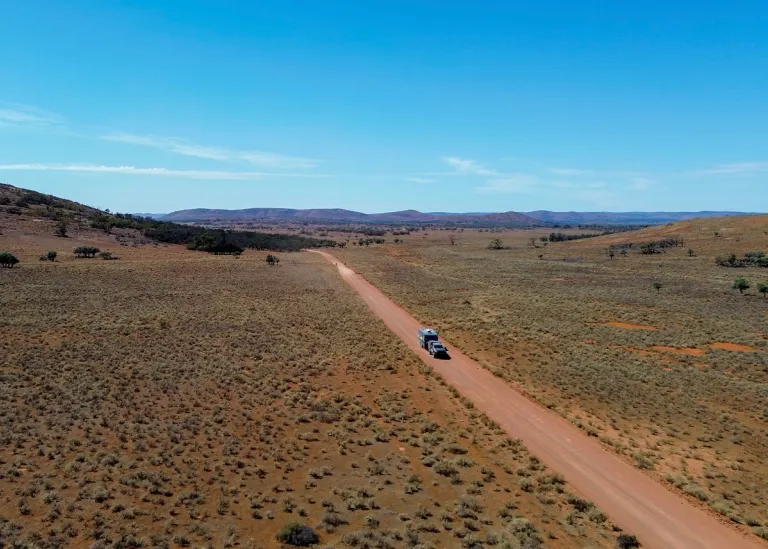
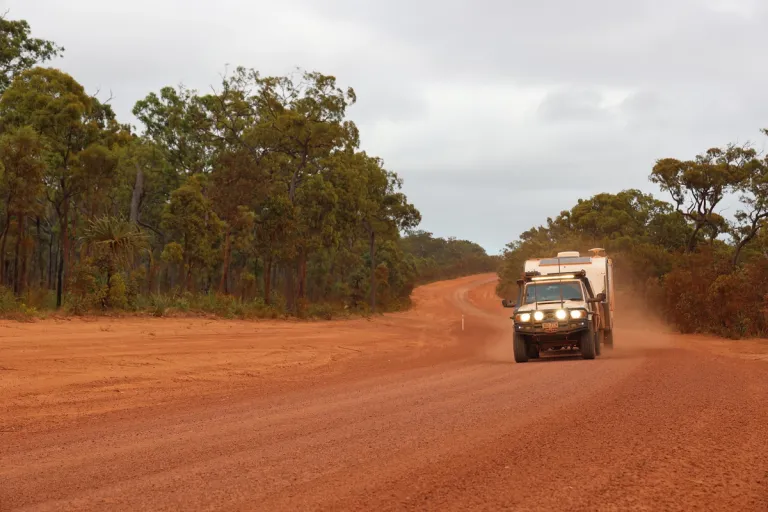
4x4 towing a caravan through ana rid landscape
Mistake #6: Skipping Safety and Preparedness Gear
Whether to save money or just because it slips your mind, one of the biggest long-term mistakes is underestimating the importance of safety gear and preparedness, even if you’re relatively experienced.
I’m talking basics here: a proper first aid kit (with snake-bite capability if you’re in remote country), a fire extinguisher, and easy access so everyone in the vehicle knows where it is.
If you plan to venture remote, I strongly recommend a UHF radio. It’s the real connection between you and other road users — especially large rigs. In many places, UHF is how you communicate on the road and call for help.
For long-haul remote travel, a satellite phone or personal locator beacon (PLB) gives peace of mind when phone signal is non-existent.
And of course, plenty of water, spare tyre, basic tools, recovery gear — all the things listed in a decent off-road checklist.
The difference between those who handle remote travel with confidence and those caught off guard often comes down to being prepared.
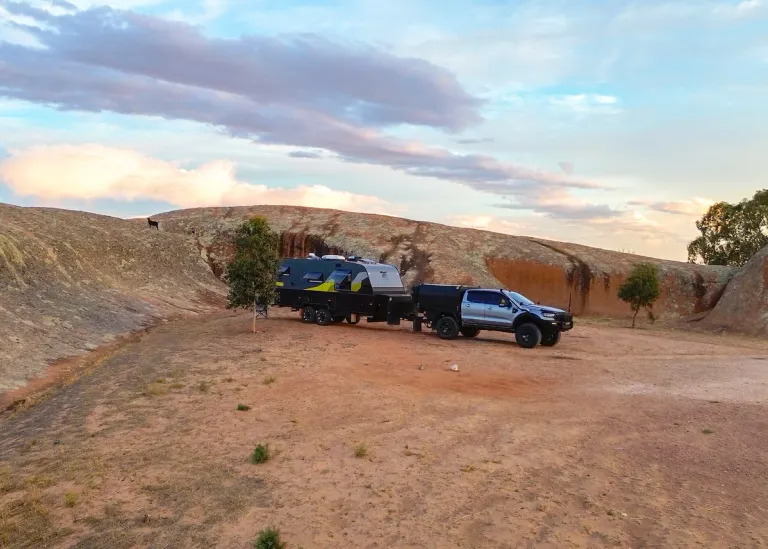
4x4 and caravan in a desert setting
What I Learned — and what you can do Differently
Full-time travel teaches you lessons faster than any planning spreadsheet ever could. The gear I overpacked, the money I burned without tracking, the places I rushed through — they all turn into stories. Some are funny. Some are lessons you better learn before the next lap.
If you can head out a little more prepared, more conscious of water, weight, money, and safety — and leave a little room for surprise and spontaneity — you’ll give yourself the best shot at a real adventure worth remembering.
Laugh at the mistakes. Learn from them. And let them become part of your travel story.
Q: How do I avoid overpacking for a long trip?
A: Make a list of what you actually use daily (clothes, essential tools, water, cooking gear) and lean into multipurpose items. Only pack what you truly need. Once you’re on the road you’ll quickly realise that a lot of gear stays unused.
Q: What kind of budget should I plan for before I hit the road full-time?
A: Plan for at least two months of expenses including fuel, groceries, camping fees — plus an emergency fund for unexpected costs like breakdowns or tyre issues. Once travelling, track all expenses in a simple list or spreadsheet to avoid overspending.
Q: How do I balance planning with flexibility on a long trip?
A: Start with a rough route or ideal season to chase, but don’t schedule every day. Allow blocks of time with no plans. That way you stay open to spontaneous detours, local gems, or just slowing down when you want to.
Q: How can I manage water when travelling remotely?
A: Treat water like gold. Take short showers, avoid unnecessary use, and rinse dishes sparingly. Carry extra water storage if possible and always plan for more than you think you’ll need.
Q: What safety gear is essential for remote 4×4 travel?
A: A good first aid kit (preferably including snake-bite supplies where relevant), fire extinguisher, spare tyre, basic tools and recovery gear, and a reliable communication system like a UHF radio or PLB for when you lose signal.
Q: Why shouldn’t I move camps every couple of days?
A: Constantly moving increases fuel costs, limits your time to explore, and can burn you out. Staying longer allows you to really experience a place — meet locals, find hidden spots, and enjoy the journey instead of rushing through it.
Safe travels — and enjoy every kilometre.
Prepare for adventure
Cover anywhere you can legally go in Australia